Recommended Free Tools
Cherry eye in cats is a prolapse of the tear gland attached to the third eyelid, also called the nictitating membrane. It usually shows up as a pink or red fleshy lump at the inner corner of the eye. Because other problems can look almost identical, a veterinary eye examination is needed to confirm what is protruding. The treatment veterinary sources describe is surgical repositioning of the gland. Home manipulation and non-prescribed drops do not fix it.
What the lump actually is
A cat’s third eyelid sits in the inner corner of the eye and sweeps across the surface to help keep it moist and clean. The tear gland associated with it normally sits at the base of that eyelid, out of sight. When the gland slips out of position and pushes up over the eyelid edge, it forms the bulge people call cherry eye.
The gland matters because it contributes to tear production. The Cat Fanciers’ Association’s 2026 feline ophthalmology article states that the third eyelid is responsible for producing 30% of the tear film for the eye. That is the figure as the CFA gives it, not a measurement taken from every cat, but it explains why an exposed or displaced gland is more than a cosmetic problem.
What causes cherry eye
The working explanation is weakness in the structures that hold the gland in place. Supporting fibers or attachments may be too loose to keep the gland seated, and the gland can then roll or slip forward. Veterinary sources also suggest a hereditary contribution. The American College of Veterinary Ophthalmologists (ACVO) public information page notes that the condition occurs in cats, including Burmese cats. That is a reason to take the history seriously, not a breed risk table; the available evidence does not give reliable breed-specific frequencies for cats.
Outdated Drivers Are Slowing You Down
One free scan finds every outdated or missing driver and matches the right update for your exact hardware.Free scan · exact hardware matchPC Slower Than It Used to Be?
A free scan shows the junk files, broken settings and background clutter dragging Windows down - then fixes them in one click.Free scan · Windows 10 & 11#1 Best Overall

- Daily Eye Hygiene for Dogs & Cats – 30 sterile 1mL vials for gentle, safe daily eye cleaning and hydration with no contamination risk.
- Supports Eye Moisture & Comfort – Hydrates and refreshes dry eyes with soothing hyaluronic acid to maintain healthy tear film balance.
- Soothes Redness, Itching & Irritation – Eases everyday eye discomfort from dust, wind, or allergens—great for sensitive pets.
- Vet-Formulated for Daily Use – Developed by vets for safe, gentle care of dogs and cats eyes—ideal for regular hygiene.
- Free from Harsh Additives – No steroids, alcohol, or antibiotics. Hypoallergenic and cruelty-free formula.
No source establishes the precise cause in an individual cat, so a veterinarian cannot usually say why a particular cat developed it.
Who can be affected
Cherry eye is often discussed as a young-animal problem, but cats are not limited to kittens. A PubMed-indexed case report describes three adult cats with the condition. That report does not show how common cherry eye is in cats or give a population risk estimate, so it should be read as proof that adults can be affected, not as a measure of how often they are.
Signs to watch for
The characteristic sign is a pink or red fleshy lump near the inner corner of the eye, where the third eyelid meets the eye. Irritation can bring other signs with it:
Rank #2
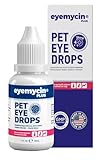
- Daily Cleaning - This eye drop for dogs and cats is suitable for daily eye care of pets, removes tear stains and smudges, restores the shine of the hair around the eyes and soothes canine, feline, and dog eye infection treatments, itchy foreign body discharge and other symptoms
- Effective, Gentle, and Safe - The active ingredient of our eye drops for cats is Hypochlorous Acid (HOCI). HOCI is a naturally occurring substance produced by mammalian white blood cells to boost your pet's immune system. We synthesize a stable immune factor, the HOCI molecule, through EYEMYCIN PET HOCI technology, which has revolutionized safe animal care for all pets and their owners
- Reliable Solution - This dog eye drops for infection are gentle, non-irritating, no alcohol added. Developed to strict standards and trusted by professionals, its natural ingredients and proven effectiveness make it a reliable solution for maintaining optimal eye health in your furry friend
- Easy and Precise Eye Care - EYEMYCIN PET’s innovative nozzle design ensures precise and easy dispensing of each drop, while also protecting your buddies’ eyes from accidental injury. This unique design makes the application of eye rinse quick, safe, and gentle, reflecting our genuine care for your pet’s comfort and health
- For Cats ,Dogs , Horses & Birds - This pet eye drop is suitable for cats and dogs, easy to operate, and can easily provide eye care for your furry friend. Whether indoors or outdoors, it can be used for cleaning anytime and anywhere
- Tearing or discharge from the affected eye
- Squinting or keeping the eye partly closed
- Rubbing or pawing at the eye, with the cat’s face or a paw
These signs show that the eye is irritated, not what is causing the irritation. Owners should not diagnose from a photograph or from appearance alone, because the same lump can have other causes.
Look-alike conditions
A protruding structure at the inner corner of the eye can be something other than the tear gland. The main possibilities named by veterinary sources are:
- Rolled third-eyelid cartilage. The cartilage that supports the third eyelid can turn over and produce a similar bulge.
- A mass or other third-eyelid abnormality. Growths in or around the third eyelid can look like a prolapsed gland.
This is why the treatment decision depends on the diagnosis. Surgery designed to reposition the gland is not the right answer if the tissue is cartilage or a growth.
Rank #3

- LONG-LASTING lubrication engineered for convenience. Designed to be applied as little as twice a day.
- Each Gel drop provides a sheer coating that protects and hydrates with every blink. Ocunovis does not require nearly as many applications as ordinary eye drops.
- Developed by Sentrx Animal Care, BioHAnce is a unique, crosslinked hyaluronic acid (HA) that has been specifically modified for the ocular surface.
- MADE IN USA. The patented technology enhances the natural activity of healing, lubrication, and hydration.
- Provides supplemental support for pets diagnosed with Dry Eye. May also be used for dry, irritated eyes.
How a veterinarian confirms the diagnosis
The veterinarian examines the eye and works out which structure is protruding. Depending on the cat and what the examination shows, the vet may also check tear production and intraocular (inside-the-eye) pressure. Not every cat needs every test; the vet chooses what is clinically appropriate.
A veterinary ophthalmologist or veterinary eye clinic is a reasonable referral when the diagnosis is unclear or surgery is being considered. The sources support specialist consultation as a category but do not rank particular practices.
Treatment: surgical repositioning
Veterinary sources describe surgical repositioning of the gland as the treatment for cherry eye. One approach described places the gland into a pocket made in the conjunctival tissue, the thin membrane that covers the front of the eye and the inside of the eyelids. The goal is to hold the gland in its normal position while keeping its tear-producing role.
Rank #4

- EASY-TO-SQUEEZE bottle now available with the larger size bottle. Try our 10ml (0.34 fl oz) bottle where it's easy to dispense each drop, making lubrication time quick and simple.
Several points remain unsettled for cats:
- The feline evidence available does not compare surgical techniques, so no one method can be named as the best.
- No feline success percentage is established, so the surgeon should explain expected results for the individual cat.
- Recurrence cannot be ruled out on the evidence available, so follow-up checks matter.
Surgery is the veterinary treatment; no cream, ointment, or supplement has been shown to reposition the gland.
Can cherry eye go away on its own?
There is no reliable evidence that cherry eye resolves without treatment, and no safe waiting period has been defined. Prompt assessment is sensible for two reasons. The gland contributes to tears, and prolonged exposure can leave it inflamed or injured. Persistent prolapse may also risk problems with the tear film. Blindness is not an expected outcome of cherry eye, but a cat with a visible lump should be seen by a veterinarian rather than watched at home.
Independent reader supportYour contribution helps us test, update, and keep practical guides available for everyone.Recovery after surgery
Follow the surgeon’s instructions for medication and eye protection. Veterinary client education material notes that an Elizabethan collar, the plastic cone, may be recommended to stop the cat pawing at the eye while it heals. The collar protects the surgical site; it does not treat the prolapsed gland. Whether a collar is needed, and for how long, is the veterinarian’s decision.
Best Value

- Hyaluron and carbomer lubrication for pet eyes in a convenient, easy-to-dispense tube that's ideal for travel and on-the-go
- Rapidly disperses to protect the cornea and conjuctiva
- Clings to the surface of the eye to ease the discomfort of dry eye
- Provides long-lasting lubrication for improved pet comfort
- For use in dogs, cats, and horses
What not to do
- Do not push the gland back in or manipulate the eye at home.
- Do not use leftover or non-prescribed eye drops, ointments, or supplements as a substitute for examination.
- Do not assume a lump that looks like cherry eye is the gland without a veterinary check.
Eye drops, ointments, and supplements are not supported here as alternatives to veterinary diagnosis and treatment. The same reasoning applies to any product marketed for cherry eye at home.
Where the evidence is thin
The most reliable sources for cats are the CFA’s 2026 feline ophthalmology article, the ACVO public information page, veterinary client education material, a veterinary health article, and the three-cat case report. There is no feline comparative surgical study or large outcome series among them. Much of the widely shared cherry-eye material is about dogs, and dog breed statistics, prevalence figures, and outcome estimates do not transfer to cats.
Until more feline-specific data exist, the practical rule is simple: a lump at the inner corner of a cat’s eye is a reason for a veterinary eye examination, and the surgical plan should be built around what that examination shows.
Quick Recap
Product prices and availability are accurate as of the date/time indicated and are subject to change. Any price and availability information displayed on Amazon at the time of purchase will apply.
What’s actually slowing this PC down?
Pick the symptom - the matching free tool is one click away.




