TNVR stands for trap-neuter-vaccinate-return. It is a community-cat program in which free-roaming outdoor cats are humanely trapped, taken to a veterinarian for sterilization and vaccination, given a small ear tip so they can be recognized as already sterilized, allowed to recover, and then returned to their outdoor home when that is appropriate. The aim is to stop new litters without removing cats from the places they live.
What each letter means
- Trap: the cat is caught in a humane live-capture trap, not chased, grabbed or lured into a closed space by hand.
- Neuter: a veterinarian sterilizes the cat. “Neuter” is the common umbrella term for castration of males and spay surgery for females.
- Vaccinate: the cat receives vaccines during the same veterinary visit. In US program descriptions this commonly includes rabies vaccination.
- Return: after recovery, the cat goes back to the area where it was found, unless the individual cat is better suited to a foster or adoptive home.
Some sources say TNVR is a nonlethal way to manage community-cat populations by preventing births. That describes the model’s intent. It does not promise a particular population result for any single colony, because outcomes depend on how many cats in an area are reached and how consistently they are sterilized.
The usual sequence, step by step
Program details differ between cities, counties and countries, so treat the following as the common model rather than a universal protocol.
- Confirm the program and the cat’s location. Local animal services, a TNVR group or a participating clinic will say whether the cat falls within its service area and what trapping and transport they require.
- Trap the cat humanely. The cat is caught in a live-capture trap. Keep the trap covered and in a sheltered spot while waiting, and do not open it to handle the cat.
- Transport to the veterinarian. The trapped cat is taken to a clinic that performs the surgery. New York City’s guidance states that licensed veterinarians provide the medical procedures.
- Sterilize and vaccinate. The veterinarian performs spay or castration and administers vaccines, including rabies in many US programs.
- Ear-tip while anesthetized. A small portion of one ear is removed during the same surgery so the cat can be identified from a distance later.
- Recover. The cat recovers in a safe, quiet space before release. The program or clinic should give aftercare instructions.
- Return or rehome. The cat goes back to its original area, or, if it is friendly or is a kitten, may be placed through foster or adoption when local guidance supports that.
Terms you will see in place of TNVR
The acronym is not used uniformly. The table below shows the variants that appear in official and welfare-organization guidance.
#1 Best Overall

- High Quality Materials:SZHLUX Live Animal Cage Trap use low carbon steel wire and medium frequency welding. In this way, the product surface is flat, the welding is firm, and it is not easy to solder off.Weather and rust resistant.
- Convenient Design: Our cat trap is foldable and can be easily loaded into the trunk of the car.It only takes 4 simple steps to set up,from nearly flat to assembled in seconds--no tools needed.
- Humane Live Animal Trap: Our raccoon trap use oblong support frame to secure the cage shape and use fixing clips to fix rear door,smoothed internal edges protect and prevent trapped animal being injured.All you need is some bait to catch and then release them back to the wild.
- User-friendly Design: The top cover guard board of the cage prevents people injured by the trapped animal's mistake.The connecting rod of the pedal mechanism is set inside the cage to prevent animals from touching the mechanism by mistake.A new tool has been designed to extend the safe distance when releasing the animal.
- Dimensions: Product Size: 32inch*10inch*12inch; Package Size: 38.2inch*11.8inch*3.15inch.Excellent choice when attempting to capture smaller animals such as stray cats, raccoons, squirrel, skunk, mole, groundhog, armadillo, rabbit and small dogs.
| Term | Expansion | What it adds or emphasizes |
|---|---|---|
| TNR | Trap-neuter-return, or trap-neuter-release | The most common shorter name. It omits explicit vaccination in the letters, though vaccination often still happens. |
| TNVR | Trap-neuter-vaccinate-return | Makes the vaccination step explicit. |
| TNRM | Trap-neuter-return-manage | Used by Maryland to emphasize ongoing management of a colony. |
| SNR | Shelter-neuter-return | Used by Maryland for cats returned after sterilization at a shelter setting, rather than in the field. |
When you read a local guide, check which expansion it uses. A program named “TNR” may still vaccinate, and one named “TNVR” should confirm the vaccines it gives.
Who the program is for
“Community cat” and “free-roaming cat” describe outdoor cats that may be fed or watched over by residents but do not necessarily have an owner. Their temperament varies. Some avoid people and cannot be handled safely, while others are friendly. Local programs, including those in Maryland and New York City, distinguish between these groups, and the friendly animals are the ones most often considered for foster or adoption.
Rank #2

- HUMANE CAPTURE: This large live animal trap safely captures raccoons, cats, possums, and other small animals with a 1-door design that allows full entry before closing, reducing escape chances for effective pest control
- HEAVY-DUTY CONSTRUCTION: Built with galvanized wire mesh and solid steel door, this raccoon trap resists rust and corrosion while providing long-lasting durability for outdoor use in all weather conditions
- SAFETY FIRST: Features smooth internal edges to prevent animal injuries and protective handle guards for safe handling, making this humane animal trap ideal for both novice and experienced users in wildlife management
- PROFESSIONAL DESIGN: Engineered with a refined trip mechanism specifically calibrated for heavier animals like bobcats and coyotes, this live trap minimizes false triggers while ensuring reliable capture performance
- VERSATILE SOLUTION: Perfect as a feral cat trap, skunk trap, or armadillo trap, this large animal cage trap handles a wide range of pest control situations effectively for comprehensive wildlife management
Handling is a clear boundary. Official guidance expects a veterinary team to do the medical work. Caregivers should not perform surgery or vaccinate a cat themselves, and NatureScot, Scotland’s nature agency, specifically advises against handling a feral cat outside the trap, even if it appears calm, because it may struggle and injure itself or the person handling it.
What the ear tip indicates
An ear tip is the removal of a small portion of one ear, usually the tip, while the cat is under anesthesia for spay or castration. In a TNVR program it is a visible marker that the cat has been sterilized, so a trapper, caregiver or animal-control officer can recognize it from a distance without re-trapping.
Rank #3
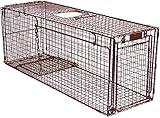
- Works for cats, skunks, rabbits, and other small animals
What it does not reliably document
An ear tip is a quick visual signal, not a medical record. Program guidance such as Columbus Animal Care Services describes the ear tip as the symbol of a neutered and vaccinated cat, which is the agency’s own description of its program. A 2022 survey study indexed in PubMed Central shows that the symbol is not read the same way by everyone.
What the 2022 survey found
The study collected 526 responses from people involved in US TNR programs, and 410 questionnaires were completed. Almost all respondents, nearly 100%, said an ear tip meant the cat had been sterilized. Beyond that, respondents attributed other meanings to it:
Rank #4

- Wide Application: As urban and wilderness ecosystems intertwine, animals may disturb your life. Our cat trap is a versatile solution for various animals, including cats, raccoons, rabbits, groundhogs, armadillos, and opossums. It effectively addresses issues such as farmland invasion, release, and harassment.
- Humanized Designs: We prioritize humane care with our raccoon trap. The L-shaped lever ensures the trap won't harm animals when triggered. The dense mesh prevents escapes and protects against external attacks or stolen food. Smooth wire edges prevent animals from panicking or biting the wire, ensuring their safety.
- Sturdy and Durable: Our animal trap is built to last. It is constructed with sturdy, thickened wires that withstand animal bites and impacts without deformation or cracking. The galvanized coating provides excellent corrosion resistance, ensuring stability and durability in all weather conditions.
- Simple and User-friendly: Our live trap is designed for your convenience. It comes pre-assembled, saving you from tedious setup steps. Just unfold the cage, secure the rear door, and connect the trap mechanism to start using it quickly. This saves time and effort, allowing you to engage in capture work promptly.
- Portable and Easy to Store: Our efficient groundhog trap is portable and easy to store. It features a convenient handle for easy mobility, with an extended design that prevents accidental injuries from animals. The collapsible design allows for easy storage, freeing up space when not in use.
- 22% selected both rabies vaccination and socialization status.
- 19% selected rabies vaccination only.
- 12% selected unsocial status only.
These figures describe what respondents believed the ear tip signified. They do not show that an ear-tipped cat has a verified vaccination history or a particular temperament. Respondents also reported that 81% tipped the left ear and 92% described a straight-across silhouette as ideal. If you find an ear-tipped cat, the tip alone tells you the cat was sterilized; any vaccine or behavior history has to come from the program or clinic that handled it.
Independent reader supportYour contribution helps us test, update, and keep practical guides available for everyone.Before you attempt to trap a cat
- Call local animal services or a TNVR organization first. Ask whether the cat is within the covered area and what they need from you.
- Ask about trap access. Prince George’s County points to local trap banks, so borrowing may be easier than buying a trap. Find out which trap type the program accepts before you buy one.
- Find a clinic that will perform the surgery. Low-cost clinics and program-affiliated veterinarians are the usual route. Confirm the clinic’s willingness to take community cats, its scheduling, and what aftercare it provides.
- Agree on the return plan in advance. Decide whether the cat goes back to its original area or is a candidate for foster or adoption, and who will check on it during recovery.
Officials in New York City emphasize using proper equipment and expert guidance. Do not release a trapped cat without confirming recovery and return steps with the program.
Recommended Free Tools
Best Value

- Safe & Humane Trapping – Designed with animal welfare in mind, this live trap safely captures animals without injury, making it ideal for humane relocation.
- Durable Galvanized Steel Build – Constructed from high-strength, rust-resistant steel for long-lasting performance in any weather condition.
- Reliable Trigger Mechanism – Features a highly sensitive trip plate and spring-loaded door to ensure fast and secure captures, every time.
- Spacious & Versatile Size – Accommodates a range of medium-sized animals including raccoons, groundhogs, armadillos, and stray cats.
- Simple Assembly– Folding to save space and easy assembly with no tools required—perfect for homeowners, farmers, or pest control professionals.
Choosing a path for a particular cat
Not every cat should go back outside. The table compares the realistic options and what to verify for each. Because the sources do not establish a single nationwide eligibility rule, local guidance decides which options are available.
| Option | Typically fits | What to confirm locally |
|---|---|---|
| Return to original outdoor home | Cats that avoid people, with an established territory and a caregiver who can monitor them | Whether the program or clinic approves release after surgery and what aftercare the cat needs |
| Foster or adoption | Friendly cats and kittens that can be socialized | Whether the program accepts placements, the adopter requirements, and whether vaccination and sterilization are completed first |
| Borrowed trap through a trap bank | Anyone trapping a cat for a TNVR program without owning equipment | Whether the trap bank serves your area, the deposit or return rules, and the trap type accepted |
| Local TNVR group or clinic | Caregivers who need trapping help, veterinary care, or coordination | Current service area, scheduling, cost, and whether the group handles community cats in your county or city |
Costs, eligibility and availability for specific programs were not established in the sources, so verify them with the organization before you plan around them.
These options are not exclusive. A cat can be sterilized and vaccinated under one program, then placed through foster or adoption if it proves friendly, or returned if it does not.
Regional guidance for this topic was drawn from Columbus Animal Care Services, Prince George’s County, New York City and Maryland government programs, a welfare-organization page from the Washington County SPCA, and a NatureScot specialist report. Program details can change, so check your local animal services page for the current version.
Quick wins for a faster PC:
Scan for outdated or missing drivers - takes under a minuteDriver Scan →Repair Windows errors before they cause bigger problemsFix Now →Quick Recap
Product prices and availability are accurate as of the date/time indicated and are subject to change. Any price and availability information displayed on Amazon at the time of purchase will apply.




