What’s actually slowing this PC down?
Pick the symptom - the matching free tool is one click away.
Good dental care for a horse comes down to three things: a veterinarian examines the mouth at a sensible interval, you watch how the horse eats and behaves between visits, and any filing or other oral work is done by a veterinarian. Most owners need at least one professional exam a year. Young horses going through permanent-tooth development, older horses with existing problems, and stall-kept horses fed hay and grain often need more frequent checks. The exact schedule should be set with your veterinarian based on age, diet, and findings.
Why horses’ teeth need regular attention
A horse’s teeth keep erupting and wear down as the horse chews, so they need ongoing maintenance rather than a one-time fix. The upper jaw is wider than the lower jaw, which tends to leave sharp enamel points on the outer edges of the upper cheek teeth and the inner edges of the lower cheek teeth. These points can cut the cheeks and tongue and make chewing uncomfortable.
Owners often use the word “floating” for this work. Floating means rasping the tooth surfaces to smooth sharp points and, when needed, to correct imbalances between the upper and lower dental arcades. Floating is not an automatic task performed at every visit. What gets done depends on what the examination shows.
How often a horse should have its teeth examined
Recommended intervals depend on the horse’s age, how it is fed and managed, and whether it already has dental problems. The figures below are guidance ranges from the sources named, not a universal schedule.
Recommended Free Tools
#1 Best Overall

- PROFESSIONAL DESIGN: Veterinary dental float tool with adjustable handle for precise control during dental procedures
- DURABLE MATERIALS: Constructed with premium stainless steel head and sturdy wooden handle for long-lasting performance
- ERGONOMIC HANDLE: Adjustable grip mechanism allows customization of handle position for optimal comfort and control
- VERSATILE USE: Suitable for various veterinary dental procedures with adaptable positioning capabilities
- QUALITY CONSTRUCTION: Precision-engineered connection between handle and head ensures stability during use
| Horse situation | Guidance | Source |
|---|---|---|
| Permanent-tooth development, about 2½ to 5 years old | Dental attention twice a year during this period | Merck Veterinary Manual, “Dental Care of Horses” (last updated September 2024) |
| Adult horse grazing freely or on grass | Usually yearly preventive care | Merck Veterinary Manual, “Dental Care of Horses” (last updated September 2024) |
| Stalled horse fed hay and grain | At least twice-yearly oral examinations | Merck Veterinary Manual, “Dental Care of Horses” (last updated September 2024) |
| Any horse, general baseline | At least one exam per year | AAEP, “Introduction to Equine Dentistry” (reviewed 2025); University of Minnesota Extension, “Caring for your horse’s teeth” (reviewed 2021) |
| Horse over 10 with dental issues | Visits about every six months may be needed | AAEP, “Introduction to Equine Dentistry” (reviewed 2025) |
Young horses during permanent-tooth development
Merck Veterinary Manual notes that a horse’s mouth changes throughout life, with the greatest changes occurring between about ages 2 and 5. Its owner guidance places twice-yearly attention during the period of permanent-tooth development, roughly 2½ to 5 years. This is the stage when a veterinarian is most likely to need to track how the teeth are erupting and wearing.
Older horses
The AAEP owner guide says horses over 10 with dental problems may need visits about every six months. The guide still calls for at least an annual exam for horses in general. An older horse without problems may do well on the annual baseline, but a horse that is already losing condition or showing feeding changes should not wait for the next routine date.
Grazing horses versus stalled horses
Management changes the picture. Merck describes usually yearly preventive care for horses grazing freely or on grass, and at least twice-yearly examinations for stalled horses fed hay and grain. The difference reflects how the teeth are worn and how easily problems are noticed in day-to-day feeding.
Rank #2

- Veterinary Grade Quality: Set of 3 professional Equine Dental Float Rasps crafted from high-quality German Stainless Steel for superior strength, durability, and corrosion resistance.
- Essential Trio of Profiles: Includes Up-Angled, Down-Angled, and Straight rasp profiles, providing comprehensive access to all dental surfaces (upper and lower arcades) for precise floating.
- Optimal Dental Maintenance: Designed for the removal of sharp enamel points, hooks, and ramps, ensuring the horse's oral comfort, promoting proper chewing, and preventing soft tissue damage.
- Ergonomic Comfort & Control: Features long-reach stainless steel shafts and ergonomic blue handles for a secure, comfortable, and non-slip grip, essential for control during prolonged dental procedures.
Daily observation: signs that a horse’s teeth need attention
Owners are usually the first to notice dental trouble, because changes appear in how the horse eats. Watch for:
- Slow or difficult chewing, or stopping partway through a mouthful
- Tilting the head while eating
- Quidding, meaning partly chewed food dropped from the mouth
- Feed packed into one cheek
- Reluctance to eat hard grain
- Whole or uncrushed grain in the manure
Changes in body and general health also matter. Weight or body-condition loss, a poor coat, excessive drooling, blood-tinged mucus, foul breath, one-sided nasal discharge, and swelling of the face or jaw all warrant an exam. So do reluctance to accept the bit, head shaking, and resistance during training.
Dental pain can be subtle. The AAEP warning resource says abnormal behavior should prompt consideration of dental problems. These signs are a reason to investigate, not proof of a particular disorder. Only an examination can establish the cause.
Rank #3
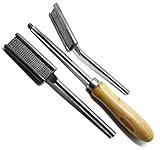
- Manufactured from AISI 420 German stainless steel.
- Product Conforms to ISO 9001, CE-Quality Mark, ISO 13485, FDA and other Quality Standards
- Highly polished finish for aesthetic and corrosion resistance
- High Degree of Precision and Flexibility while conducting the Clinical Procedure.
- Premium Quality Stainless Steel with Superior Craftsmanship.
When to call your veterinarian
Call your veterinarian when a sign is new, persistent, or accompanied by pain or reduced intake. The sources do not establish a single emergency threshold, so do not assume that a sign which seems mild can wait indefinitely. The AAEP puts it this way: “Waiting too long may increase the difficulty of remedying certain conditions or may even make remedy impossible.” (American Association of Equine Practitioners, “Learn to Recognize Your Horse’s Dental Problems,” published June 30, 2026.)
What a professional dental exam involves
A thorough examination of the premolars and molars is hard to do in an awake, unrestrained horse. Merck Veterinary Manual states that full visualization of these teeth requires sedation, a mouth speculum to hold the mouth open, and adequate lighting. The exam covers the cheek teeth as well as the incisors.
Do these 3 things before closing this tab:
1Repair Windows errors before they cause bigger problems2Scan for outdated or missing drivers - takes under a minute3Clear out junk files and repair common Windows errorsRadiographs (X-rays) can reveal problems with tooth roots and the bone that supports them, which cannot be seen above the gumline. Imaging is one reason a dental visit may take longer than a visual check.
Rank #4

- Manufactured from high quality stainless steel
- Floats Set with Blades
- Adjustable/Removable
- Highly polished finish for aesthetic and corrosion resistance
- Same As Picture
Treatment options
Treatment depends on the diagnosis and may include:
- Floating to smooth sharp points and balance the arcades
- Correction of wear abnormalities
- Extraction of a tooth that cannot be saved
- Selected tooth-preserving treatment where it is appropriate
Severe irregular wear may not be fully correctable. In those cases, the veterinarian may recommend a dietary adjustment to reduce the strain on the teeth.
Independent reader supportYour contribution helps us test, update, and keep practical guides available for everyone.Who may perform dental work
The AAEP’s position on equine dentistry, published April 1, 2025 and revised by its board that year, states: “The practice of equine dentistry is an integral branch of professional equine veterinary practice.” The position lists oral surgery, sedation and analgesic administration, removal of sharp enamel points, treatment of malocclusions, extractions, endodontic, periodontal, and orthodontic procedures, dental radiography, and oral endoscopy as veterinary dental procedures. These are to be performed by a licensed veterinarian. The AAEP allows licensed veterinary technicians to assist under immediate veterinary supervision where state or provincial practice law permits.
Best Value

- Includes straight, up, and down float rasps to cover all angles needed for thorough equine dental care.
- Crafted from high-quality stainless steel for long-lasting durability and resistance to corrosion.
- Each float features a precision-patterned rasp head designed to effectively file and smooth sharp points on horse teeth.
- Comfortable black grip handles provide secure control and reduce hand fatigue during extended use.
- Ideal for veterinarians and farriers, this hand float set supports routine equine dental maintenance and care.
Laws vary by state, province, and country, so check your local rules if you have questions about who may perform a given procedure. As an owner, you should not attempt dental work yourself. Floats, rasps, and speculums are not tools for home use, and the AAEP’s owner guidance says dental work requires training.
Setting a dental schedule with your veterinarian
- Note your horse’s age and whether it is still in the permanent-tooth period, roughly 2½ to 5 years.
- Describe the diet and management, including whether the horse grazes freely or is stalled and fed hay and grain.
- Share your observations from eating and behavior, including any changes since the last exam.
- Ask for the interval the veterinarian recommends and the reasons for it.
- Keep a record of each exam’s findings and any treatment, so the next visit can track changes over time.
Your veterinarian can adjust the interval as the horse ages or as new findings appear.
Quick Recap
Product prices and availability are accurate as of the date/time indicated and are subject to change. Any price and availability information displayed on Amazon at the time of purchase will apply.




