PC Slower Than It Used to Be?
A free scan shows the junk files, broken settings and background clutter dragging Windows down - then fixes them in one click.Free scan · Windows 10 & 11Outdated Drivers Are Slowing You Down
One free scan finds every outdated or missing driver and matches the right update for your exact hardware.Free scan · exact hardware matchIn a 2026 case report in the Journal of the American Animal Hospital Association, a cat with hepatic lipidosis developed acute hyperammonemia and neurologic decline within 24 hours of starting partial parenteral nutrition. The amino acid solution contained no arginine and had a low branched-chain to aromatic amino acid (BCAA/AAA) ratio. The authors considered arginine deficiency the most likely explanation, and they did not rule out a contribution from the low ratio. The lesson concerns how clinical nutrition formulations are checked, not a general method for feeding cats with liver disease.
The case in brief
The cat was an eight-year-old spayed female domestic shorthair with one week of anorexia and lethargy. Fine-needle aspiration cytology of the liver showed numerous adipocytes, which confirmed hepatic lipidosis. During hospitalization, her clinical signs and blood analysis improved.
On day 17, the nasoesophageal feeding tube was removed because her appetite and vitality had recovered. Voluntary food intake, however, remained insufficient. That gap is why the clinical team started partial parenteral nutrition (PPN) using an amino acid solution with a low BCAA/AAA ratio and no arginine.
Why the cat needed parenteral nutrition after the tube came out
Removing a feeding tube marked an improvement, not a return to full nutrition. The cat had recovered enough to take the tube out, but she was still not eating enough on her own. Partial parenteral nutrition was the team’s way of supplementing intake without relying on the cat to eat. The report describes the reason for the change in support, but it does not give the full nutritional targets or the complete infusion plan, so those details should not be inferred from this case.
#1 Best Overall

- Liver Health Support Formula: Our liver support supplement is formulated to aid your cat's liver health, supporting their overall well-being; this supplement aids healthy liver metabolism to support hepatic function
- Holistic Feline Hepatic Support: Our hepatic liver support tablets are formulated with a blend of ingredients to support hepatic circulation for cats; this supplement aids healthy bile production and flow
- Liver Support for Cat Health: This cat liver support supplement can be administered as a whole or crushed tablet dosed directly or mixed with food
- Hepatic Tablets Dosing: Administer one feline hepatic support supplement tablet twice per day, or as directed by a medical professional
- About Standard Process: Standard Process has been an industry leader in whole food based nutritional supplements for over 95 years
What happened within 24 hours
Neurologic signs appeared within 24 hours of starting the solution. The published abstract lists vocalization, panting, hyperactivity, and progression to coma. AAHA’s summary of the case describes a broader sequence:
- Vocalization
- Agitation
- Hypersalivation
- Tachypnea (rapid breathing)
- Seizures
- Coma
Can hepatic lipidosis cause neurological signs?
This case does not show that hepatic lipidosis by itself caused the neurologic signs. The clinical team first considered hepatic encephalopathy, the brain dysfunction that can occur when the liver cannot clear toxins such as ammonia. The abstract, however, notes limited evidence of hepatic failure. The authors instead describe the course as most consistent with acute hyperammonemia secondary to arginine deficiency.
Rank #2

- [DAILY LIVER HEALTH & FUNCTION] Milk Thistle, Choline, Dandelion Extract, and Vitamin E work together to support healthy liver function, fat metabolism, bile flow, and antioxidant defenses—making daily liver support easy to add to your cat's everyday routine.
- [HIGHLY PALATABLE & MILD AROMA] These cat treat tubes are made with 50% real chicken and 5% chicken liver for a savory, creamy taste picky cats can enjoy. The smooth texture and mild aroma make daily feeding more pleasant, while the gentle formula helps reduce the likelihood of digestive discomfort.
- [FULLER TUBE & EASY-TEAR] Each cat treat stick contains more creamy puree and less air, with an easy-tear opening for simpler, pill-free care. Gently knead the tube before opening to squeeze out a smooth, even puree. Serve directly, as a cat food topper, or on a lick mat. Perfect for everyday care in multi-cat homes.
- [HYDRATION & LONG-TERM DAILY SUPPORT] The moisture-rich, low-calorie puree helps support daily hydration without adding unnecessary calories. With added Taurine and essential vitamins, it provides balanced nutritional support that fits easily into your cat's long-term daily routine.
- [CLEAN & TRANSPARENT FORMULA] For ingredient-conscious cat parents, our cat treats feature a transparent formula free from carrageenan, gums, corn, wheat, soy, artificial colors, flavors, and added preservatives—a clean foundation for daily liver care, recovery, and detox support.
Hepatic encephalopathy as the first working explanation
Hepatic encephalopathy was a reasonable first explanation for neurologic decline in a cat with a serious liver condition. The team treated it aggressively. The case shows that a cat’s neurologic signs can point toward the liver, while the underlying chemistry may be driven by something else entirely.
The authors’ interpretation: acute hyperammonemia
Further evaluation revealed hyperammonemia, meaning elevated ammonia in the blood. The authors attribute it most likely to arginine deficiency in the solution. Their interpretation keeps the low BCAA/AAA ratio open as a possible additional contributor.
Rank #3

- Comprehensive liver support Designed to help promote healthy liver function, supporting its metabolic activity and aiding in its crucial role in overall health.
- Aids natural detoxification Supports the body's normal waste elimination and detoxification processes, helping to protect the liver from environmental toxins.
- Enhances kidney health Contributes to the maintenance of normal kidney functions, essential for filtering waste and maintaining internal balance in your cat.
- Supports cognitive function Features S-Adenosylmethionine (SAMe), which aids in supporting normal nerve conduction, memory recall, and overall brain function.
- Promotes hepatic cleansing Assists with the normal cleansing of the liver from impurities, contributing to its proper functioning and health.
What caused the hyperammonemia?
The report separates two formulation features of the solution. Arginine was absent, and the BCAA/AAA ratio was low. The authors weighted them differently:
| Formulation factor | Status in the solution | How the authors weighted it |
|---|---|---|
| Arginine | Absent | Most likely explanation for the acute hyperammonemia |
| BCAA/AAA ratio | Low | Possible contributor; the authors say its contribution cannot be excluded |
The authors did not conclude that the ratio was irrelevant. They placed arginine deficiency first and left the ratio as a plausible second factor.
Rank #4
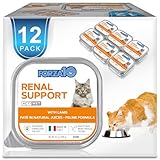
- TRUSTED ITALIAN NUTRITION: Pet food brand for dogs and cats, offering a wide range of recipes crafted with high-quality ingredients and veterinary expertise. Forza10 products are designed to support overall health and well-being, helping pets thrive at every stage of life.
- SUPPORTS HEALTHY KIDNEYS: Specially formulated pet food helps maintain kidney function and supports overall renal and cardiac health. Made with high-quality protein and essential nutrients to promote well-being while providing a taste pets enjoy.
- INGREDIENTS: Formulated with hydrolyzed protein and potato protein for controlled phosphorus and adapted protein content. Enriched with cranberries, dried dandelion, and dried clover extract to support kidney health. Free from GMOs, by-products, wheat, soy, artificial colors, or preservatives.
- WHAT'S INCLUDED: Each pack contains 12 cans of adult wet cat food, 3.5 oz each, in a savory lamb flavor that cats love. Perfect for daily feeding or to mix with dry food for a complete mealtime experience.
- EXPLORE MORE: Discover our full range of premium cat and dog food recipes, crafted with veterinary expertise and high-quality ingredients. Visit the Forza10 store to find the perfect meals to support your pet’s health and well-being
Timeline of the case
- Before presentation: one week of anorexia and lethargy.
- Hospitalization: liver fine-needle aspiration confirms hepatic lipidosis; clinical signs and blood analysis improve.
- Day 17: nasoesophageal tube removed; voluntary intake remains insufficient; partial parenteral nutrition begins with an arginine-free solution that has a low BCAA/AAA ratio.
- Within 24 hours: neurologic signs appear.
- Further evaluation: hyperammonemia is identified. The team treats suspected hepatic encephalopathy aggressively.
- Progression: the cat progresses to coma. According to AAHA’s summary, she died two days later.
What this case does and does not establish
- It establishes that, in one cat, a solution without arginine and with a low BCAA/AAA ratio was followed by hyperammonemia and neurologic decline.
- It does not establish how often this happens. One case cannot provide an incidence or a risk estimate for cats receiving parenteral nutrition or for cats with hepatic lipidosis in general.
- It does not prove that the ratio caused the outcome or that arginine deficiency acted alone.
- It is not a treatment protocol. The report does not say which amino acid solutions are appropriate, what infusion rates to use, or how to monitor a patient receiving them.
What veterinary teams and owners can take from it
For veterinary teams, the practical message is that the amino acid composition of a parenteral product is a safety variable worth checking before use, particularly arginine content and the BCAA/AAA ratio. Because neurologic signs followed within a day in this case, the first hours of support deserve close monitoring.
For owners, this report is not a guide to home care. Parenteral nutrition must be given under veterinary supervision, and no consumer product substitutes for it. If a cat under veterinary care for hepatic lipidosis shows any of the neurologic signs described above, contact the veterinary team immediately.
Best Value

- COMPLETE LIVER SUPPORT FOR CATS: Formulated by feline health experts, Doctor By Cat Liver Guard combines science-backed ingredients with a pet-friendly format to support optimal liver function. Whether your cat is aging, recovering, or simply in need of daily liver maintenance, this gentle yet effective supplement helps promote detox, energy, and overall well-being—without the stress of pills or powders.
- EASY, TASTY SQUEEZE-AND-SERVE FORMAT: Half the battle with any supplement is palatability. If they won't eat it, it won't matter how good a product is. Just squeeze up and serve! A specialized formula designed for liver support, yet as easy and enjoyable as a treat. Helps support healthy liver function, antioxidant protection, and overall vitality in a way your cat will love!
- POWERED BY ARTEMISIA ANNUA (SPB-201) – NATURE’S ANTIOXIDANT HERO: Our formula features SPB-201, a premium extract of Artemisia annua (Sweet Wormwood), known for its powerful antioxidant and hepatoprotective properties. SPB-201 helps defend liver cells from oxidative stress and supports the body’s natural detoxification process, making it a key ingredient for long-term liver health.
- WITH MILK THISTLE – TRUSTED HERBAL SUPPORT FOR LIVER REGENERATION: Milk Thistle (Silymarin) has been used for centuries to promote liver cell regeneration and protect against toxin-related damage. Included in Doctor By Cat Liver Guard for its clinically supported benefits, this ingredient helps maintain normal liver enzyme levels and supports healthy bile flow for better digestion and nutrient absorption.
- PRINCIPLES FOR DEVELOPING NUTRITION FOR OUR BELOVED PETS: The key to developing Doctor By’s nutritional supplements is to support simple, consistent feeding while minimizing stress for both pets and caregivers. Build better daily health through a happy and delicious routine! Doctor By Cat Liver Guard is a gentle formula that can be given to cats from kittenhood through their senior years.
Sources and scope
- PubMed record: “Effect of Parenteral Amino Acid Composition on Hyperammonemia in a Cat with Hepatic Lipidosis,” by Jinyeong Park, Byeong-Teck Kang, Yerim Lee, Taesik Yun, Hakhyun Kim, and Yeon Chae. Journal of the American Animal Hospital Association, 2026 Jan 1;62(1):38–42. DOI 10.5326/JAAHA-MS-7508.
- American Animal Hospital Association, Ben Williams, “JAAHA: A cautionary tale in feline hepatic lipidosis,” published 17 February 2026. AAHA labels its Trends material as informational and not an official AAHA position or endorsement.
This article is based on the published abstract and AAHA’s summary of the case. Dosing, monitoring details, and the full discussion from the complete paper are not covered here.
Quick Recap
Product prices and availability are accurate as of the date/time indicated and are subject to change. Any price and availability information displayed on Amazon at the time of purchase will apply.




