Recommended Free Tools
Hypertrophic cardiomyopathy (HCM) is a common heart muscle disease in cats. It thickens the walls of the left ventricle, the chamber that pumps oxygen-rich blood to the body. Many affected cats show no obvious signs at first, but the disease can progress to congestive heart failure or to blood clots. Two warning signs need same-day veterinary care: fast or labored breathing, and sudden pain, weakness or paralysis in the hind legs. Diagnosis rests mainly on echocardiography, and the monitoring and treatment plan is set individually by a veterinarian.
How common is HCM in cats?
Cornell Feline Health Center’s cardiomyopathy guidance, updated March 2024, estimates that up to 15% of the feline population may be affected. That figure describes the cat population broadly; it does not mean one cat in seven will show signs, and it does not predict whether any particular cat will develop the disease.
What HCM does to the heart
In HCM the muscular wall of the left ventricle becomes thicker, and the chamber inside it becomes smaller. The thickened muscle relaxes poorly and stiffens, so it fills with blood less efficiently. Over time the altered filling can raise the heart rate and the pressure behind the left side of the heart. That pressure backs up into the lungs, where fluid can collect in or around them. Abnormal blood flow inside the enlarged left atrium can also favor clot formation, which is why HCM carries a risk of blood clots as well as heart failure.
Causes and who is at higher risk
The definitive cause of HCM has not been identified. Cornell notes that the disease is more prevalent in several breeds, including Maine Coon, Ragdoll, British Shorthair, American Shorthair, Sphynx, Bengal, Chartreux, Norwegian Forest, Siberian and Persian cats. Mutations in several cardiac genes have been found in some affected cats, which suggests a genetic contribution. Breed is a risk factor, not a diagnosis: a cat of a high-risk breed may never develop HCM, and a cat of a lower-risk breed or mixed ancestry can develop it.
Free tools Windows power users keep installed
One-click scans. No signup required.
#1 Best Overall

- Cat multivitamin for overall health – Your cat has unique nutritional needs. Our formula complements your kitty’s balanced meals to help maintain overall health and well-being.
- 10+ essential vitamins – Our formula supports cardiovascular and overall health with vitamin A, B vitamins, and vitamins C and E for antioxidant support, so your cat can live their best life (all nine of them!).
- Probiotics and other nutrients – Cat Mix supports digestive health with cat-friendly probiotic strains. It also promotes eye, kidney and pancreatic health with amino acids arginine and taurine.
- Science matters – Expert formulators design our supplement formulas, and a Certificate of Analysis is available for every Life Extension product.
- Quality ingredients – The majority of our products are non-GMO, gluten-free and manufactured in the USA with internationally sourced ingredients.
Conditions that can thicken the heart wall too
Other diseases can produce a thickened heart wall that looks much like primary HCM on an ultrasound. The two most important are systemic hypertension (high blood pressure) and hyperthyroidism. Because treating these conditions changes the plan, a veterinarian should check for them before attributing wall thickening to primary HCM. Blood pressure measurement and thyroid testing are standard parts of that work-up.
Symptoms of HCM in cats
Many cats with HCM have no apparent signs in the early stages. A cat that appears well can still have significant disease, which is why routine cardiac evaluation matters for at-risk breeds and for cats that have a heart murmur or an abnormal heart rhythm on examination.
Signs of congestive heart failure
When heart failure develops, the most recognizable signs are rapid or labored breathing, open-mouth breathing and lethargy. Fluid may build up in the lung tissue or in the chest cavity around the lungs. Cats are instinctively good at hiding discomfort, so a change in breathing or energy is often the first sign owners notice.
Rank #2
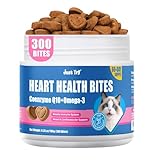
- Advanced Cardiac Support for Cats:Specially formulated with coenzyme q10 in bioactive ubiquinol form and essential taurine for cats to support optimal heart function. The heathy cat treats helps improve pets' cardiovascular function and strength, thereby making them more active and energetic.
- Scientifically Developed Formula:Manufactured with the pharmaceutical-grade standards, combining potent q10 coenzyme with premium taurine supplement ingredients. Just Try stabilized coenzyme q10 formula supports your cat's cardiovascular health.Enriched with salmon oil for Omega-3 fish oil for cats to maintain healthy skin and coat while relieving joint discomfort, for better absorption than standard taurine powder supplements. Multi-Functional Formula supports the heart and boosts cellular vitality.
- Irresistible Chicken-Flavor Chews:Unlike messy taurine supplement for cats powders, Just Try delicious chicken-flavored cat treats make providing q10 supplement nutrition effortless. Even pickier eaters prefer these over traditional cosequin and coq10 liquid for cats formulas!
- Cost-Effective Heart Care Solution:300-chew bottle provides extended coq10 supplementation. As premium animal supplements, this cat vitamins deal for indoor cats, senior cats.they deliver rich Omega3, for heart guards-level protection
- Veterinarian-Trusted Quality:Rigorously tested and free from artificial additives,is healthy cat supplements.. Safer for long-term use, while providing comprehensive taurine and coq10 ubiquinol support.
Signs of a blood clot
A clot, or thromboembolism, can block blood flow to a limb or other tissue. In cats the classic presentation is sudden hind-limb pain or weakness, which can progress to paralysis. This is a true emergency, and it can occur in a cat that seemed stable a few hours earlier.
The Tool Desk
Outbyte PC Repair FREERepair Windows errors before they cause bigger problemsFix Now →Outbyte Driver Updater FREEFix the driver behind crashes, sound loss and screen glitchesFind Drivers →Emergency signs: when to act now
- Rapid or labored breathing, including open-mouth breathing, which can signal heart failure and fluid in the lungs. Seek emergency veterinary care rather than waiting to see whether it passes.
- Sudden hind-limb pain, weakness or paralysis, which can signal a clot. Treat this as an emergency.
- Sudden lethargy or collapse, especially alongside either of the above.
Between these emergencies, a cat with a known or suspected heart condition should be re-checked by a veterinarian if its breathing pattern or energy level changes, even slightly.
Heart murmurs and resting breathing rates
A heart murmur is not proof of heart disease. Cornell reports that approximately 20% of cats with heart murmurs do not have heart disease. A murmur therefore tells a veterinarian that the heart needs a closer look, usually with echocardiography, rather than giving a diagnosis on its own.
Rank #3

- Comprehensive Vitamin & Mineral Support: Provide your feline friend with a complete spectrum of vitamins for cats in this advanced 23 in 1 cat vitamins. Including essential Vitamins A, D3, and B-Complex, these healthy cat treats support overall vitality, immune function, and metabolic health as daily cat essentials for indoor cats
- Vision, Heart & Immune Health: Formulated with Taurine and lysine for cats to support vision, heart function, and respiratory health. With Lecithin to aid digestion and Sodium Hyaluronate for hip and joint comfort, these chews serve as a complete cat immune support supplement for overall wellness
- Supports Heart, Vision & Immune System: Contains Taurine, an essential amino acid critical for maintaining healthy heart function and sharp vision in cats. A powerful blend of antioxidants (Vitamins E & C) and L-Lysine further strengthens your cat's natural defenses, helping to maintain a robust immune system and protect against common health issues
- Enhances Joint Mobility & Comfort: Features Turmeric, a known natural anti-inflammatory, and Sodium Hyaluronate to help lubricate joints, ease stiffness, and support overall joint health and flexibility. This formulation helps cats of all ages, particularly seniors, move comfortably and stay active
- Irresistible Taste & Easy to Administer: Crafted with a delicious, cat-approved flavor that most cats gladly eat as a treat. You can easily hide the tablet in their wet food, a treat pouch, or administer it directly. Just one tablet daily for simple, stress-free nutritional support
Cornell also states that a resting respiratory rate above 35 breaths per minute should prompt a veterinary consultation. This is a reason to call for advice, not a stand-alone diagnosis. The cat’s breathing effort and overall condition matter as much as the number. A cat that is counting above 35 at rest and also looks uncomfortable needs prompt assessment.
How HCM is diagnosed
Echocardiography: the main test
Echocardiography uses ultrasound to image the heart’s structure and function, and it is the principal test for diagnosing HCM. Cornell’s guidance describes it this way: “HCM is diagnosed by echocardiography, a technology that uses sound waves to create an image of the heart.” Depending on what the echocardiogram shows, a veterinarian may also order chest radiographs to assess the lungs or any fluid around them, electrocardiography to evaluate heart rhythm, blood pressure measurement, and tests for other causes such as hyperthyroidism.
Screening tests and their limits
Some cats are assessed with tools other than a full echocardiogram. The table below compares the main options. None of them replaces a veterinary interpretation.
Rank #4

- Cardiovascular support: Fera’s heart supplement with taurine for cats and dogs helps the cardiac muscle with normal blood circulation and promotes a regular heartbeat while boosting your pet’s energy for play.
- No fillers: Our powerful blend of taurine powder, l-carnitine, vitamin E, organic hawthorn berry and CoQ10 for dogs and cats supports cardiovascular function and strength, helping your pet become more active, energetic and playful.
- Powerful CoQ10: These cat and dog heart supplements are formulated with 50 mg Coenzyme Q10, a natural antioxidant used to support optimal heart and neurological health.
- Easy to give: Feed our dog and cat taurine supplement whole, in a pill pocket, or opened and sprinkled (1 capsule per 25 lbs daily); if giving more than 1 capsule daily, divide between morning and night.
- Vet-founded & formulated: Co-founder and veterinarian Dr. Dulake creates formulas for pet parents focused on treating the root cause, not just the symptom; at Fera Pets, we combine Eastern and Western philosophies to deliver long-term wellness for your pets.
| Approach | Purpose | What it can establish | Limits and uncertainty |
|---|---|---|---|
| Echocardiography | Images heart structure and function | The main diagnostic test for HCM | Requires a veterinary cardiology or imaging setting; interpretation by a clinician is required |
| NT-proBNP blood test | Screening aid when echocardiography is not immediately available | An abnormal result indicates that further assessment is warranted | Does not establish a definitive cardiomyopathy diagnosis; a result is not a verdict on its own |
| Chest radiographs | Assess lung status and any pleural fluid | Shows fluid or lung changes that may accompany heart failure | Does not show the heart wall thickness that defines HCM |
| Electrocardiography | Evaluates heart rhythm | Identifies rhythm abnormalities | Does not directly measure wall thickness; not stated as a stand-alone HCM test in the sources reviewed |
| Genetic test | Identifies some known mutations or increased risk in relevant lines | Presence of a known variant in a tested cat | A positive result does not mean the cat will develop disease; a negative result does not rule disease out |
Genetic tests in practice
Genetic tests can identify some known mutations or an increased risk in relevant lines, which can help a breeder or owner make informed decisions. They have important limits. A positive result does not mean every cat carrying the variant will develop disease, and a negative result does not exclude HCM, because not all causative mutations are known. Genetic screening never replaces a clinical examination and echocardiography, and the results should be discussed with a veterinary professional.
Independent reader supportYour contribution helps us test, update, and keep practical guides available for everyone.Treatment and monitoring
There is no established cure for HCM. Treatment aims to manage the complications the disease causes, and the plan is individualized. A cat with no clinical signs may be monitored with periodic re-examination and imaging, while another cat may need medication or emergency care. Which path applies depends on the cat’s echocardiogram, its breathing, its blood pressure and whether a clot or fluid has already occurred.
Goals of treatment
| Complication addressed | What treatment may involve | Urgency |
|---|---|---|
| Heart rate and rhythm | Oral medication for stable cats, selected by the veterinarian | Routine, once the cat is stable |
| Fluid in the lungs or chest | Oxygen and other hospital care; removal of pleural fluid when indicated | Emergency |
| Clot risk and clot events | Management planned by the veterinarian; hospital care when a clot has occurred | Emergency if a clot is suspected |
| Ongoing monitoring | Re-examination and repeat imaging at intervals the veterinarian sets | Individualized; monitoring burden varies by cat |
The specific drugs, doses and intervals are decisions for the treating veterinarian. Do not adjust or start any medication based on general information.
Best Value

- Want to Support Your Cat's Heart Health? This cardiovascular health support formula contains CoQ10, Taurine, DHA and L-Carnitine to help promote healthy heart function
- Targeted Cardiovascular Support: Antioxidant support from Taurine, L-carnitine, DHA and CoQ10 which aids in normal cardiac function and supports cellular energy; Designed for daily use in cats 6 months and older
- NASC (National Animal Supplement Council) Certified Supplement. No artificial flavors, colors or preservatives - perfect for adult cats, senior cats, and breeds that may benefit from cardiovascular support
- Mess-Free Single-Serve Tubes: No pills, powders, liquids or tablets. Each 0.53 oz tube of this Heart support formula for cats is perfectly portioned - just tear, squeeze, and watch the purrs begin!
- Your Cat Will Love this highly palatable puree that was crafted with real chicken breast flavor that appeals to even the pickiest cats.; Administer directly from the tube
Experimental approaches
Cornell describes a small clinical trial of rapamycin in cats with HCM, followed by an enrollment in a follow-up trial. These results are preliminary. Rapamycin is not an established routine treatment for feline HCM, and trial availability changes over time, so ask a veterinary cardiologist about current studies rather than assuming one is open.
Prognosis and survival
Prognosis is highly variable. Cats without clinical signs may live for years with mildly compromised heart function. Congestive heart failure, thromboembolism and hypothermia are considered poor prognostic indicators, although veterinary therapy can improve a cat’s quality of life.
Merck Veterinary Manual reports a median survival time of three months for cats in congestive heart failure from HCM. This is a population-level reference figure, not a forecast for an individual cat. A cat’s age, the severity of its echocardiographic changes, its response to treatment and whether it has already had a clot all shape its outlook, so the figure should be read as a starting point for a conversation with the veterinarian rather than a prediction.
What to do next
- If a cat has emergency signs, go to an emergency veterinary hospital now.
- If a cat is a breed with known HCM risk, or a murmur or rhythm change was found on examination, ask the veterinarian whether an echocardiogram is appropriate.
- If a cat has an HCM diagnosis, ask the veterinarian what monitoring interval, medication and warning signs apply to that individual cat.
- Do not use home products, apps or online checks to diagnose or treat HCM. They cannot replace echocardiography or clinical assessment.
Sources for this article include Cornell Feline Health Center’s “Hypertrophic Cardiomyopathy” page (updated May 2025), Cornell Feline Health Center’s “Cardiomyopathy” page (updated March 2024), the Cornell Cardiology Service’s HCM page, Cornell University College of Veterinary Medicine’s “Pets Get Heart Disease Too” article, the Merck Veterinary Manual entry “Hypertrophic Cardiomyopathy in Dogs and Cats,” and VCA Animal Hospitals’ “Cardiomyopathy in Cats.” The Cornell Cardiology Service and VCA pages and the Cornell “Pets Get Heart Disease Too” article were undated in the versions reviewed.
Do these 3 things before closing this tab:
1Repair Windows errors before they cause bigger problems2Fix the driver behind crashes, sound loss and screen glitches3Clear out junk files and repair common Windows errorsQuick Recap
The Bottom Line
“”
Product prices and availability are accurate as of the date/time indicated and are subject to change. Any price and availability information displayed on Amazon at the time of purchase will apply.




