Free tools Windows power users keep installed
One-click scans. No signup required.
The short answer: decide what job you want your dog to do, find a local club or chapter where you can watch and train with experienced handlers, and build obedience and control before you add birds, water, or gunfire. Tests come later, and they are optional milestones rather than a requirement.
This guide assumes you are a beginner handler who either has a young dog or plans to get one for hunting, and who wants to learn to train and handle the dog rather than simply own a pet with hunting ancestry. If you are asking about something narrower, such as hunting without a dog, the legal and safety steps at the end still apply.
Step 1: Decide what job the dog will do
“Bird dog” is a loose term. Different dogs are bred and trained for different work in the field, and the organization you join often depends on that work. Choosing the role first matters more than choosing a breed, because the role determines which training path fits.
| Dog role | What the dog does in the field | Where a beginner usually starts |
|---|---|---|
| Pointing dog | Searches for birds and holds a point, standing still to show the handler where birds are, until the handler arrives | AKC pointing-breed hunt-test clubs, for eligible pointing breeds |
| Flushing dog | Works close to the handler and flushes birds into the air | Not stated in the sources reviewed; ask local clubs which tests and training groups accept flushing breeds |
| Retriever | Finds and delivers downed birds on land and in water | AKC retriever clubs, with retriever-oriented training and field-test options |
| Versatile dog | Combines pointing or flushing with retrieving and water work across upland and water hunting | NAVHDA chapters, which focus on versatile hunting dogs |
Before you pick a breed or a club, answer these questions:
What’s actually slowing this PC down?
Pick the symptom - the matching free tool is one click away.
#1 Best Overall

- Easy-to-blow design
- Long range control
- Protects handler's ear
- Directs sound forward
- What game will you hunt, and is it upland birds, waterfowl, or both?
- What terrain will you work: open grass, thick cover, marsh, or a mix?
- How much water work do you want the dog to do?
- Do you want to compete in structured tests, or mainly hunt and train for your own use?
Step 2: Find hands-on instruction and watch before you buy
Reading can give you vocabulary, but it cannot show you how to read a dog in the field. Local hands-on instruction is the most useful first step, and it costs less than buying equipment you may not need.
- Search the chapter directory on NAVHDA’s website for a chapter near you. NAVHDA describes its chapters as grassroots groups that sponsor training and testing in the United States and Canada.
- Look up AKC pointing-breed or retriever clubs near you through AKC’s club and event resources.
- Attend a training day or a test as an observer. Ask whether novice handlers are welcome and whether a newer handler can watch from a safe position.
- Watch how experienced handlers keep their dogs under control, manage the dog’s excitement, and handle firearms and safety around the group.
- Learn the terms and rules of any test you may enter. AKC recommends reading the rules and learning how tests work before you attend an event.
Chapter activity and access vary widely by location. If no club is practical for you, a private trainer can fill the gap. Ask to observe a session before you hire anyone, and check how the trainer works with both the dog and the handler.
Step 3: Build obedience and control before adding field complexity
AKC’s general hunting-dog training guidance recommends starting obedience early, and the same principle runs through NAVHDA’s program. A dog that cannot hold basic control around distractions will struggle once birds and gunfire enter the picture.
Rank #2

- Easy-to-blow design and convenient key ring connector
- High-pitched sound, excellent for puppies and close-work
- Will not freeze, making it ideal for colder weather
- No trill, pealess design
- Dependable recall. The dog comes when called, in progressively more distracting places.
- Walking with the handler. The dog moves beside you without pulling or ranging away on command.
- Calm control. The dog settles and responds to you when excited, rather than only when it is relaxed at home.
- Positive cooperation. The dog works with you willingly, and you reward the behavior you want.
- Confidence. The dog handles new surfaces, people, vehicles, and environments without freezing or shutting down.
Practice these skills in ordinary places first, then move to quieter field settings. Each new setting is a step up in difficulty, so return to an easier setting if the dog loses focus.
Recommended Free Tools
Step 4: Introduce birds, retrieves, water, and gunfire gradually
Do not assume a dog is automatically ready to hunt because it has good instincts. Each new element should be introduced slowly, and with experienced guidance, particularly if you are the inexperienced one in the group.
Birds
Introduce birds only once the dog is controllable around distractions. Work with an experienced trainer or club member who can manage the birds, the setup, and the dog’s responses. A dog that becomes frantic or unsafe around birds needs a slower progression, not more exposure.
Rank #3
- Ergonomic & Ear-Friendly - The SportDOG Roy Gonia Special Whistle features a comfortable, easy-to-blow design that protects handler's ears during everyday use and obedience whistle training
- Long Range Projection: Lower-pitched, loud whistle with a forward sound output carries commands far for effective field training, long-distance pet communication, and hunting dog recall
- Durable & Visible – This comfortable training device features a rugged tough build with durable plastic construction and high visibility colors for easy spotting and reliable outdoor use
- Built for the Field: SportDOG gear was designed by professionals who demand durable, no-nonsense tools that perform in real-world conditions without fail
- Trusted by Serious Trainers: Professionals rely on SportDOG for proven performance, consistent control, and expert-backed training guidance that gets results
Retrieves and bumpers
AKC’s training guidance describes bumpers in retrieve and quartering drills. A training bumper or retriever dummy is useful but optional. Match its size and material to the dog and the terrain you will work, and introduce the retrieve in short, controlled sequences.
Water
Introduce water entry in a safe setting, with someone experienced present. Start where the footing is secure and the dog can exit easily, and let the dog’s confidence lead the pace.
Gunfire
Gunfire is the element beginners most often rush. Do not treat it as a casual do-it-yourself exercise. Desensitization should be gradual and supervised by experienced people. The dog should stay relaxed at a distance and at low volume before the exposure is increased. If the dog shows fear, stop and go back a step.
Rank #4
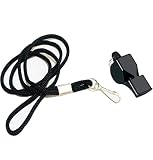
- Versatile Pealess Whistle – Ideal for hunters who want to avoid their whistle failing in cold weather due to freezing, jamming, or deterioration this small dog whistle doesn’t contain a pea to ensure it works in any condition.
- Enhanced ABS Plastic Construction – Crafted with high-impact ABS plastic our bird dog whistle is completely waterproof and works even when you’re out there hunting waste deep in your favorite pond, so you can be prepared for real-world training.
- Compact and Portable – As a bird hunter you’re always on the move and putting yourself in pretty uncomfortable situations to get the right angle, shot, or placement which is why our dog whistle training tool fits in pockets, bags, and pouches.
- Sharp, Clear Whistle Tones – We want to ensure your dog can respond to your calls quickly and with precision which is why when you’re looking for a dog whistle to make dogs come to you get a HuntEmUp that never fails you out there in the field.
- Trusted US-Based Company – As an American-made company we take pride in the quality of our products and the responsiveness of our customer support, so you can be sure every order comes with unmatched US-based service that can’t be beat.
Signaling tools
AKC’s general training guidance mentions whistles and other signaling tools for guiding a dog during blind retrieves. These can be useful later in training, but they are not a universal beginner purchase.
Step 5: Use tests as feedback, not as a requirement
Tests are optional structured milestones. They show where a dog stands against a written standard and what judges look for, but a passed test does not mean a dog is ready to hunt in the field. Different organizations test different skills, so choose the system that matches your dog and your goals.
| Organization and test | What it evaluates | Key rules and notes |
|---|---|---|
| AKC pointing-breed hunt tests, Junior Hunter | Finding a bird, holding point until the handler reaches the dog, then flushing the bird | Noncompetitive pass/fail tests; AKC describes each dog as assessed independently |
| NAVHDA Natural Ability | Field, tracking, water, and physical evaluation | No game is shot and no retrieve is required; minimum of 20 minutes in the field phase; prize eligibility ends on the day the dog reaches 16 months (NAVHDA eligibility and test pages, as of 2026) |
| NAVHDA Gun Dog | Not stated in the sources reviewed | Check NAVHDA’s current test page for requirements |
| NAVHDA Utility | Not stated in the sources reviewed | Check NAVHDA’s current test page for requirements |
| NAVHDA Invitational | Not stated in the sources reviewed | Check NAVHDA’s current test page for requirements |
NAVHDA judges dogs against standards, usually one dog at a time, and recognizes the Natural Ability, Gun Dog, Utility, and Invitational tests. For pointing breeds, AKC’s own description reads: “Pointing Breed Hunting tests are non-competitive pass/fail tests which assess each dog independently based attributes such as display of desire, boldness, independence, speed with a useful pattern of running across difficult or confusing scent patterns to pinpoint the location of birds.”
Best Value

- Preferred by Labrador, Retriever, Collie, Greyhound and larger breeds. Offers a longer range than the 210.5, approximately 450-500 yards.
- Developed over four years in collaboration with World Champion dog trainers to create an unrivalled whistle. Patented sound chambers offer a more efficient use of air. That means brighter sound giving you better command and a more responsive dog, close- to and over distance.
- Standardized Frequency: 5400Hz. The Acme 211.5 Alpha maintains a standardized frequency, ensuring your dog recognizes your call. Choose a different color whistle for your partner, family members, dog walker, or even to match an outfit for a special occasion, knowing that your dog will respond to the whistle, whoever is blowing it!
- Made from BPA-free plastic to food-grade standards, with new and improved all over ergonomic grip offers softness in the mouth and perfect handling in all conditions.
- Genuine ACME whistle made and rigorously tested in the UK by specialists with over 150 years of experience.
Do I need a finished dog?
No. Nothing in the guidance above requires a finished dog. Beginners commonly start with a young dog that has some natural drive and no formal training, and they learn alongside it. What matters most is a healthy dog that shows interest in the work and a handler willing to learn the basics, take feedback, and move slowly.
Which path should you choose?
| Path | Best fit | What it offers | Trade-off |
|---|---|---|---|
| NAVHDA chapter | Versatile-dog goals spanning upland and water work | Local training, education, mentorship, and standardized tests | Chapter activity and training access vary by location; some test content is broad |
| AKC pointing-breed hunt-test club | Pointing-breed goals and interest in hunt tests | Club events, rules, seminars, and Junior, Senior, and Master progression | Limited to eligible pointing breeds and their test standards |
| AKC retriever club | Retriever-oriented goals | Retriever training and field-test options | Different skills and rules from pointing-dog or NAVHDA routes |
| Independent professional trainer | Individualized coaching, or limited access to local clubs | Tailored instruction for the dog and the handler | Quality, methods, scope, and costs vary; vet the trainer and ask to observe |
Organizational rules, test names, and club availability change over time. Confirm them directly with each organization before you commit to a path.
Check local law and safety before any field work
Hunting regulations depend on where you live and which species you pursue, so no single set of rules applies to every reader. Before you train near birds or guns, or enter a hunt, confirm the following with your state or provincial wildlife agency and any hunter-education authority:
- Hunter education requirements and whether you need a certificate before hunting or taking part in some training
- Licenses, permits, and any dog-related requirements
- Seasons and bag limits for each species
- Access permissions for public and private land
- Rules that apply to training dogs on birds, including any restrictions on released birds
- Visibility requirements for people and dogs
What equipment do you actually need?
Start with instruction and basic control rather than gear. Some items are useful later: a training bumper or retriever dummy for retrieve drills, and a whistle or other signaling tool for blind retrieves. None of these is a starting requirement. An e-collar, a firearm, or an expensive tracking system is not necessary for the early stages described here, and you should not buy one because a website calls it essential.
Crashes, No Sound, or Screen Glitches?
Random freezes, missing sound and display glitches usually trace back to one bad driver. Find and replace yours safely.Free scan · under a minuteWindows Errors? Fix Them Before They Spread
Repair common Windows errors and clear accumulated junk for a smoother, more stable PC - no reinstall needed.Free scan · no reinstallQuick Recap
Product prices and availability are accurate as of the date/time indicated and are subject to change. Any price and availability information displayed on Amazon at the time of purchase will apply.




