Do these 3 things before closing this tab:
1Scan for outdated or missing drivers - takes under a minute2Repair Windows errors before they cause bigger problems3Fix the driver behind crashes, sound loss and screen glitchesShelters can expand veterinary capacity by combining workforce development, accessible clinical services, community partnerships, and operational changes that prevent avoidable bottlenecks. No single model fits every community: the right mix depends on which care is delayed, which staff and facilities are available, and whether animals can receive follow-up.
What veterinary capacity means in a shelter
Capacity is not simply the number of veterinarians on staff. It is the shelter’s ability to get each animal appropriate care, at the right time and place, and to complete follow-up. Staffing, technician availability, surgery slots, transport, referral access, length of stay, intake, and the complexity of medical and behavioral needs all affect that ability.
The scale of the U.S. system underscores why local planning matters. ASPCA’s page reporting 2025 figures says 5.8 million dogs and cats entered shelters and rescues that year, based on Shelter Animals Count data; 4.2 million shelter animals were adopted and approximately 597,000 were euthanized. ASPCA also reports that 25% of dogs and 23% of cats entering shelters arrived already spayed or neutered. These national totals describe the landscape, but they do not identify the bottleneck at any particular shelter. See ASPCA’s U.S. animal shelter statistics.
Before choosing a solution, establish a local baseline. Track caseload and medical case mix, time to appointment or surgery, surgery throughput, length of stay, staff vacancies, referral availability, and follow-up completion. Disaggregate where practical by animal type and care need. A long surgery wait may point to a different intervention than a shortage of routine exams, difficulty transporting animals, or cases remaining in the shelter because an external referral is unavailable.
#1 Best Overall
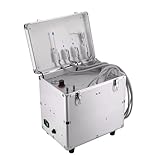
- PORTABLE DESIGN: Compact veterinary dental delivery unit designed for easy transport and setup in veterinary dental clinics, pet clinics, and mobile veterinary practices
- INTEGRATED AIR COMPRESSOR: Built-in air compressor provides consistent air pressure for dental handpieces and tools, eliminating the need for separate compressed air systems
- SUCTION SYSTEM INCLUDED: Features an integrated suction system for efficient removal of fluids and debris during dental procedures, maintaining a clear working area
- COMPLETE DELIVERY SYSTEM: All-in-one unit combines essential dental equipment components in a single portable package for streamlined veterinary dental procedures
- PROFESSIONAL VETERINARY USE: Specifically designed for veterinary dental applications in clinical settings, providing reliable performance for pet dental care procedures
Build and retain a shelter-medicine workforce
Training and recruitment take time, but they can grow capacity that is difficult to buy through short-term contracts alone. Relevant approaches include veterinary and technician student placements, internships, residencies, mentorship, continuing education, and retention plans that make shelter work sustainable. A pipeline only helps if the organization can supervise trainees, provide appropriate clinical oversight, and offer roles they can fill under local practice rules.
Scholarships and training
ASPCA launched its Veterinary Scholarship Program in 2026 for veterinary and veterinary technician students who commit to at least three years of animal-welfare work after graduation. Its inaugural cohort included 41 students from 28 schools across the United States and St. Kitts. The program page lists maximum awards of up to $100,000 for veterinary students and up to $20,000 for veterinary technician students; these are program limits, not guaranteed individual awards. Details are available on the ASPCA Veterinary Scholarship Program page.
Training can also strengthen existing teams. ASPCA reports that more than 700 veterinary professionals received in-person training in 2025 through its programs. Its 2025 annual-report page says the ASPCA Spay/Neuter Alliance trained more than 300 veterinary professionals and fourth-year veterinary students in 2024. These are program outputs, not evidence that any particular training model will resolve a shelter’s staffing shortage. Explore ASPCA veterinary-care programs for examples of training and service delivery.
Increase access to spay and neuter services
High-quality, high-volume spay/neuter services can serve shelter animals as well as animals from rescues, foster homes, and the wider community. The practical challenge is to identify what limits throughput before adding more surgeries. The constraint might be trained staff, operating space, equipment, scheduling, transport, affordability, or safe recovery and aftercare. Increasing volume without protecting appropriate standards, staffing, and follow-up can shift rather than solve the problem.
Free tools Windows power users keep installed
One-click scans. No signup required.
Rank #2

- Professional Apron Protection: Designed to follow proper lead apron storage guidelines, this wall-mounted apron hanger holds vests by the shoulders, preventing folding and creasing that can damage the lead lining and outer fabric. Correct hanging helps extend the service life of your protective gear
- Upward-angled anti-slip pegs: Each of the 8 pegs measures 4.7 inches long and is tilted upward at the end to securely grip heavy lead aprons. This lead apron hanger wall mount design effectively keeps vests from sliding off, ensuring safe, organized storage and quick access in busy settings
- Heavy-duty alloy steel with 45 lbs capacity: Built from rugged alloy steel, the pegs are directly welded to the main body for a solid one-piece structure that won't loosen over time. This X-ray apron rack holds up to 45 lbs, easily supporting multiple lead aprons, and is finished with a smooth white powder coating for anti-corrosion durability
- Compact wall-mount design with hardware included: Measuring just 17" (L) x 3" (H), this space-saving X-ray apron rack wall mount frees up valuable floor space. The 8-peg layout accommodates up to 4 lead aprons. All mounting screws and anchors are included for effortless, secure installation right out of the box
- Smooth powder-coated finish, easy to clean: The white powder-coated surface is non-porous and easy to wipe down, helping maintain a hygienic and professional storage environment. Resistant to daily stains and scratches, this apron hanger stays looking clean and tidy in radiology, CT, MRI, dental, veterinary, and ER settings
ASPCA reports that its stationary and mobile clinics performed 79,000 spay/neuter surgeries in 2025. It also reports more than 13.6 million surgeries performed collectively since 2004 by clinics trained through ASPCA Spay/Neuter Alliance programs. These figures describe ASPCA programs and participating clinics; they are not a comparison of effectiveness or a forecast for another organization. Details appear on ASPCA’s veterinary-care page.
For a shelter considering expansion, useful measures include completed surgeries per available operating day, time from referral to surgery, cancellations, staffing coverage, and whether animals receive needed post-operative checks. Community demand and access barriers should also be assessed: a clinic may have open slots while the people and animals who need them lack transportation or cannot meet the cost.
Bring care closer through mobile clinics and partnerships
Mobile and community clinics can reduce distance between animals and basic or preventive services. They may also provide a route for shelter partnerships when a shelter cannot offer every service on site. ASPCA describes a mix of stationary and mobile clinics, community medicine, spay/neuter services, training, and partnerships; its hospitals and clinics served more than 109,000 animals in 2025. That is an organizational output, not a causal estimate of national shelter capacity.
Before adopting a mobile or partnership model, determine which geography and case types it can realistically serve. Clarify who schedules care, transports animals, maintains records, makes referrals, and follows up after treatment. Mobile access can be valuable for predictable services, but complex cases may need a staffed facility, diagnostics, specialty referral, or repeat visits. A written agreement can make clinical responsibility and handoffs clear across shelter, clinic, and community teams.
The Tool Desk
Outbyte Driver Updater FREEFix the driver behind crashes, sound loss and screen glitchesFind Drivers →Outbyte PC Repair FREEClear out junk files and repair common Windows errorsFree Scan →Rank #3

- PORTABLE/ MOBILE: Portable bag with light weight make doctors move it freely. It's ideal for doctors who need to make house calls.
- COMPLETE FUNCTION: The unit consists of related operation system inside the dental treatment unit, such as Air system, Water system, Saliva absorption system and Drainage.
- BUILT-IN COMPRESSOR: The integrated air compressor ensures consistent and reliable air supply for your equipment, allowing for seamless operation.
- FREE MAINTENANCE: Oil free motor with no lubricated oil and drainage bottle is more convenient to remove and cleaning.
- APPLICATIONS: Suitable for veterinary clinics and dental laboratories, etc.
Use veterinary telemedicine selectively and lawfully
Telemedicine may extend access when a veterinarian is off-site or when animals are in foster homes, and ASPCA says it can support animals in shelter custody through shelter or third-party veterinarians. It is not suitable for every case: some conditions require hands-on examination, diagnostics, procedures, or urgent in-person care.
Rules depend on jurisdiction. ASPCA notes that most states require a veterinarian-client-patient relationship (VCPR), and requirements differ, including whether a VCPR may be established remotely and whether prescribing is allowed after an in-person examination. A shelter should review current veterinary practice law and board guidance for its state before setting a telemedicine policy. The ASPCA’s position is available at Position Statement on Veterinary Telemedicine.
Operationally, define which cases are appropriate for remote review, what information and images staff must collect, how urgent concerns are escalated, who documents advice, and how in-person care is arranged. Confirm how medical records and communications are handled when an outside veterinarian is involved.
Coordinate veterinary care with shelter operations
Clinical capacity depends in part on the flow of animals through the organization. Intake practices, foster availability, disease control, return-to-owner work, community services, and shelter processes can affect caseload, length of stay, and the time staff have for medical care. These measures do not replace needed treatment; their value should be assessed through animal welfare and operational outcomes rather than assumed.
Quick wins for a faster PC:
Clear out junk files and repair common Windows errorsFree Scan →Scan for outdated or missing drivers - takes under a minuteDriver Scan →Repair Windows errors before they cause bigger problemsFix Now →Rank #4

- 𝗗𝗘𝗦𝗜𝗚𝗡𝗘𝗗 𝗙𝗢𝗥 𝗩𝗘𝗧𝗘𝗥𝗜𝗡𝗔𝗥𝗬 𝗪𝗢𝗥𝗞𝗙𝗟𝗢𝗪𝗦 – Keeps syringe and drug labels visible, organized, and ready at the point of care in treatment area, anesthesia stations, pharmacy or surgery areas.
- 𝗖𝗢𝗠𝗣𝗔𝗖𝗧 𝗔𝗡𝗗 𝗘𝗙𝗙𝗜𝗖𝗜𝗘𝗡𝗧 – Small countertop footprint fits on carts, counters, or drawers without cluttering your workspace.
- 𝗗𝗨𝗥𝗔𝗕𝗟𝗘 𝗔𝗖𝗥𝗬𝗟𝗜𝗖 𝗖𝗢𝗡𝗦𝗧𝗥𝗨𝗖𝗧𝗜𝗢𝗡 – Lightweight yet sturdy clear acrylic built to withstand daily clinical use and frequent cleaning.
- 𝗟𝗜𝗡𝗞𝗔𝗕𝗟𝗘 𝗔𝗡𝗗 𝗠𝗢𝗗𝗨𝗟𝗔𝗥 – Connect multiple dispensers to separate categories like anesthetics, opioids, or antibiotics for better organization.
- 𝗖𝗢𝗠𝗣𝗔𝗧𝗜𝗕𝗟𝗘 𝗪𝗜𝗧𝗛 𝗦𝗔𝗙𝗘.𝗩𝗘𝗧 𝗦𝗠𝗔𝗥𝗧 𝗟𝗔𝗕𝗘𝗟𝗦 – Fits standard veterinary syringe label rolls used in anesthesia, surgery, and general practice.
ASPCA recommends that medical, behavior, and sheltering teams work together. Its position on shelter responsibilities frames capacity-of-care decisions around animals’ needs, the organization’s ability to meet those needs, placement likelihood, and public safety. That makes capacity of care a continuing management question, not just a building limit. Read ASPCA’s Position Statement on Responsibilities of Animal Shelters.
Regular cross-team reviews can identify whether clinical delays stem from treatment demand, preventable disease transmission, unclear triage, delayed placement decisions, or handoffs between shelter and foster settings. Shelter software, sanitation and disease-control protocols, foster expansion, and return-to-owner approaches may support the system, but each should be tied to a locally observed problem and monitored for its effects on animals and staff.
Compare models against the local bottleneck
| Approach | What it can add | Questions to resolve locally |
|---|---|---|
| Workforce pipeline and retention | More trained veterinarians and technicians over time; added skills through education, mentorship, and shelter-medicine training. | How long until staff are available? Is there supervision and a retention plan? Which tasks may technicians perform under local rules? |
| High-volume spay/neuter | More sterilization access for shelter, rescue, foster, and community animals. | Is the constraint surgical time, staffing, space, transport, or affordability? Can quality, recovery, and aftercare keep pace? |
| Mobile and community clinics | Services closer to underserved communities and partner shelters. | Which locations and case types can be served? How will transport, referrals, records, and follow-up work? |
| Shelter-medicine consultation and partnerships | Access to additional expertise or services through on-site and remote consultation and community providers. | Which cases need in-person evaluation or specialty referral? Who holds clinical responsibility at each stage? |
| Veterinary telemedicine | Remote support for suitable shelter or foster cases when a veterinarian is off-site or external. | What does state law allow? Which cases are unsuitable, and how will examination, prescribing, privacy, and escalation be handled? |
| Operational and preventive changes | Potentially fewer avoidable delays and better coordination of shelter, foster, clinic, and community care. | Which process bottleneck consumes clinical time or extends stays? What welfare and operational measures will show whether a change helps? |
The available examples do not establish a head-to-head ranking or comparative cost-effectiveness across these models. Shelters should treat interventions as locally testable choices: specify the bottleneck, set a baseline, define the expected change, and review whether access, timeliness, animal outcomes, and staff workload actually improve.
Independent reader supportYour contribution helps us test, update, and keep practical guides available for everyone.Find funding and professional guidance
Funding opportunities
ASPCA announced $14 million in 2026 funding for U.S. shelters and spay/neuter providers. Its announced categories included $25,000–$100,000 for critical shelter infrastructure and shelter essentials, $10,000–$100,000 for increasing spay/neuter surgeries and special projects, and $100,000–$500,000 for major spay/neuter capital projects. These are announced ranges, not confirmation that an application is open or funds remain available; check the live program page for current deadlines, eligibility, terms, and availability. See ASPCA grants.
Recommended Free Tools
Best Value

- Medical-Grade Premium Stainless Steel, Institutional Long-Term Durability:Engineered exclusively for commercial medical institutional use, this lead apron rack adopts high-purity rust-proof stainless steel material, far outperforming ordinary metal racks in corrosion resistance and oxidation resistance. It is professionally built for long-term high-humidity working environments of radiology departments, examination rooms and medical centers. No deformation, fading or rusting after years of high-frequency institutional reuse, effectively reducing equipment replacement frequency and daily maintenance costs for medical institutions.
- Heavy-Duty Commercial Load-Bearing, Hospital-Grade Stable Storage:Designed for hospital high-intensity daily operation, the thickened reinforced stainless steel frame provides excellent load-bearing performance, safely storing multiple lead aprons, lead collars and full sets of X-ray protective gear at one time. Different from fragile plastic and thin lightweight brackets, this heavy-duty structure avoids bending, breaking or sagging under long-term heavy load, fully meeting the 24/7 high-frequency use needs of professional radiology departments and clinics.
- Detachable & Portable Structure, Cost-Effective Bulk Deployment:Featured with a fully detachable modular structure, this wall-mounted medical storage rack can be disassembled into compact parts, greatly saving shipping and storage space for bulk institutional orders. Tool-free simple assembly enables fast on-site installation and flexible position adjustment, perfectly adapting to newly renovated clinics, mobile medical units, temporary medical stations and multi-room hospital deployment, improving the overall layout efficiency of medical facilities.
- Integrated Protective Glove Rack, Maximize Medical Gear Service Life:Comes with an integrated top dedicated glove rack with fully polished smooth edges, solving the common problem of scratch and tear damage to X-ray protective gloves caused by rough ordinary racks. This all-in-one storage design realizes classified storage of lead aprons and protective gloves, effectively extending the service life of high-value medical protective equipment and reducing the daily equipment loss cost of medical institutions.
- Universal Medical Compatibility & Tool-Free Fast Installation. This institutional X-ray apron hanger is compatible with all standard medical lead aprons, panoramic protective aprons and mainstream X-ray protective accessories in the U.S. medical industry. Equipped with complete installation hardware kits, it supports fast wall mounting on all solid walls within minutes. Ideal for radiology technicians, private clinics, community medical centers and large general hospitals, it standardizes medical equipment storage and improves on-site work efficiency.
A grant proposal is strongest when it connects a defined local constraint to a specific capacity change and a way to measure it. For example, explain whether funding addresses staffing, surgical throughput, facility access, transport, or a referral gap, and how the organization will monitor use and outcomes.
Standards and reference material
The Association of Shelter Veterinarians’ second-edition Guidelines for Standards of Care in Animal Shelters is a professional reference for shelter care. The association says bound English copies are available by donation. Consult the ASV guidelines page.
Shelter Medicine for Veterinarians and Staff, second edition, is another reference for veterinarians, technicians, and shelter professionals. ASPCApro describes coverage including management, husbandry, infectious disease, cruelty, programs, behavior, and spay/neuter. See ASPCApro’s book overview.
Quick Recap
Product prices and availability are accurate as of the date/time indicated and are subject to change. Any price and availability information displayed on Amazon at the time of purchase will apply.




