Outdated Drivers Are Slowing You Down
One free scan finds every outdated or missing driver and matches the right update for your exact hardware.Free scan · exact hardware matchWindows Errors? Fix Them Before They Spread
Repair common Windows errors and clear accumulated junk for a smoother, more stable PC - no reinstall needed.Free scan · no reinstallA cat that rarely or never scratches in front of you is not automatically unwell. Scratching is a normal feline behavior, but the veterinary and animal welfare sources reviewed for this article do not set a minimum number of scratches or a required frequency that an owner should see. What matters more is whether the behavior is longstanding or has recently changed, and whether any pain, appetite change, or shift in social behavior accompanies it. If the change is recent, or if other signs appear, contact a veterinarian.
Why cats scratch, and why you may not see it
Cornell University’s Feline Health Center describes scratching as innate behavior. When a cat scratches, it deposits scent from glands in its paws and removes the worn outer sheath of its claws. Cornell’s guidance on feline destructive behavior is the most detailed of the sources reviewed (Cornell Feline Health Center, “Feline Behavior Problems: Destructive Behavior,” updated March 2018).
The UC Davis School of Veterinary Medicine adds exercise and stretching to that list (UC Davis, “Inappropriate Scratching in Cats,” April 10, 2019). Cats Protection, a UK charity, also links scratching to claw condition and to communication with other cats through visual and scent marks (Cats Protection, “Cats and Scratching: Why Do Cats Scratch?”, publication date not stated on the page).
Those functions can happen when nobody is watching. A cat may stretch and scratch at night, at a window, on a bed frame, or outdoors, so an owner’s observation window is often too narrow to judge how much a cat scratches. None of the sources reviewed sets an expected frequency, and none says that an owner must witness scratching for the cat to be healthy.
What’s actually slowing this PC down?
Pick the symptom - the matching free tool is one click away.
#1 Best Overall
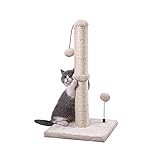
- Premium Quality Materials - This product is made of 100% natural sisal hemp.The base and top is a weighted MDF covering the carpet.Nature High Quality Sisal Safe Plush Long Lasting Usage Stable basement, never tip over easily.
- Protect your furniture - Grab sticks and plush toys combine to attract cats to play and grab, natural sisal is suitable for cats to grab, effectively preventing cats from grabbing furniture
- Designed for indoor use - Neutral colors work well with existing decor in your home.ideal for any living room, bedroom, or home office
- 22"Tall Cat Scratching Post -11.8 x 11.8 x 22 Inches,design for kitties or smaller cats.
- Easy Assemble - ust screw all parts together,Assemble needed, all tools and instructions included.Please contact us if you have any further questions.
What to check before you worry
Before deciding whether anything has changed, answer these questions about your own cat:
- Has the cat ever scratched a post, pad, or other object in your home, or only in a few places?
- Do you find claw sheaths or shredded material elsewhere, such as on furniture, carpet, or the base of a door?
- Does the cat scratch outdoors or in places you do not regularly visit?
- Is this a longstanding pattern, or did it start recently?
- Has anything else changed, such as eating, litter box use, grooming, play, or how the cat interacts with people or other pets?
These questions reflect the factors the sources emphasize, including preferred surfaces, orientation, and location. They do not identify a cause for any particular cat, and a cat that scratches rarely may still be entirely healthy.
Rank #2
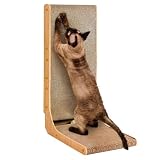
- HIGH QUALITY MATERIALS: The surface of the cat scratching board is made of non-toxic and high-density corrugated paper, which is durable enough to withstand cat scratching.
- INNOVATIVE DESIGN: Our cat scratcher for indoor cats features an L-shaped design. Please place it against wall and sofa to protect your furniture. The L-shaped cat scratcher provides more scratching area for cats to scratch in a variety of positions.
- MULTIFUNCTIONAL USE: Cats can scratch, relax and stretch on our cardboard cat scratcher. Our cat scratch pad also comes with a toy ball to play with. It provides a safe and comfortable environment for cats.
- MULTIPLE SIZES: We offer three sizes of cat scratching pad for you to choose from. The smallest size is specially for kittens. No matter what size your cat is, it enables your cat to scratch and play to its heart's content!
- EASY INSTALLATION: Our cat scratching board adopts a simple installation method and comes with instructions and necessary tools. We also provide an installation video so that you can install it quickly and easily.
When a change deserves a veterinary visit
The sources do not offer a dedicated emergency checklist for a cat that is not seen scratching. They do support professional advice when behavior changes or pain may be involved.
- Usually a normal variation: a cat that has always scratched lightly or in private places, and has no other changes.
- Worth a veterinary conversation: a recent drop in scratching in a cat that used to scratch regularly, especially if you cannot identify a new scratching location that explains it.
- Contact a veterinarian promptly: reduced scratching together with a change in appetite, litter box habits, social behavior, or signs of discomfort.
The Feline Veterinary Medical Association’s 2025 guide, “Living with a Clawed Cat,” recommends a physical examination to look for pain when scratching frequency increases (FVMA, “Guide: Living with a Clawed Cat,” 2025). VCA Animal Hospitals recommends a veterinary consultation when behavior changes occur alongside changes in appetite or social behavior (VCA Animal Hospitals, “Scratching Behavior in Cats: Various Approaches”, page date not confirmed). The same principle applies in both directions: a change that is new, or that comes with other signs, is a reason for an exam rather than an assumption that the cat simply dislikes its scratcher.
Rank #3

- Scratching post provides a place for cats to sharpen their claws and keep nails healthy
- Includes a single pillar scratching post in neutral colors with a replaceable dangle toy
- Natural jute fiber provides an optimal scratching surface
- Sturdy wood base helps prevent the post from tipping
- Ideal for redirecting cats away from scratching household carpet or furniture; spot clean as needed
If your cat has a scratcher but ignores it
A cat that never uses a post may not have a health problem at all. It may simply not like the object. Cornell suggests observing what your cat already scratches, including carpet, wood, drapes, or another material, and whether it scratches vertically or horizontally. Adjust the outlet to match.
Match the surface
Cornell describes sisal or rope-like surfaces for some cats, and a flattened cardboard pad for cats that prefer to scratch horizontally. The FVMA guide recommends trying different types and textures to find a cat’s preference.
Rank #4

- Scratching post provides a place for cats to sharpen their claws and keep nails healthy
- Includes a single pillar scratching post with a replaceable dangle toy
- Natural jute fiber offers an optimal scratching surface
- Sturdy base helps prevent the post from tipping
- Ideal for redirecting cats away from scratching household carpet or furniture; spot clean as needed
Match the orientation and size
A post should be stable so it does not tip when the cat pulls on it, and tall enough for the cat to stretch its full body. A horizontal pad suits a cat that scratches on the floor or the arm of a sofa.
Place it where the cat already scratches or rests
Put the outlet near a site the cat already uses, or near its sleeping area. Cornell notes that rewarding voluntary use works better than trying to force the behavior. The FVMA guide recommends immediate positive reinforcement when redirecting a cat to an appropriate outlet, such as offering a treat or praise as soon as it uses the post.
Quick wins for a faster PC:
Repair Windows errors before they cause bigger problemsFix Now →Scan for outdated or missing drivers - takes under a minuteDriver Scan →Clear out junk files and repair common Windows errorsFree Scan →Best Value
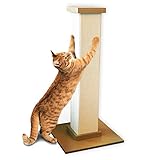
- 32″ height allows cats to stretch fully and tone muscles
- Sturdy 16″ by 16″ base eliminates tipping and wobbling
- Fibrous and durable woven sisal naturally inspires scratching
- Superior to carpeted posts that may snag nail
- Assembles with two included screws
Avoid forcing the behavior
Do not hold a cat’s paws against an object or punish it for not scratching. Those approaches do not address the cat’s preferences and can make the cat more reluctant to approach the area.
Independent reader supportYour contribution helps us test, update, and keep practical guides available for everyone.Limits of the available guidance
The sources reviewed are useful for general behavior and care, but they do not give a benchmark for how often a healthy cat should scratch, nor do they measure how common absent scratching is across cats. The Cornell page was last updated in March 2018 and the UC Davis page in April 2019, so newer clinical guidance may exist. For a cat whose behavior has changed, the most reliable check is an examination by a veterinarian who knows the cat’s history.
Quick Recap
Product prices and availability are accurate as of the date/time indicated and are subject to change. Any price and availability information displayed on Amazon at the time of purchase will apply.




