Kitten season is the warm-weather stretch when cats breed most and shelters take in a large share of their year’s kittens. The ASPCA has described it as typically running from March through October, though the timing differs from one part of the country to another. Shelter Animals Count’s 2026 mid-year data, as reported by the ASPCA, shows how heavy the load is this year: 674,000 kittens entered U.S. shelters and rescues in the first half of 2026. Foster homes are one of the most direct ways to take the youngest of those kittens out of a crowded building and give them individual care until they are old enough, or healthy enough, to be adopted.
What kitten season is and when it happens
Kitten season is a seasonal pattern, not a fixed national calendar. Warmer months bring more litters, and those litters arrive at shelters and rescues in a concentrated wave rather than evenly across the year. In a 2019 announcement, the ASPCA described kitten season as typically March through October, with the exact timing varying around the country. Treat that window as general context. A shelter in your area may see its peak earlier, later, or over a narrower stretch, so ask your local organization when its intake rises.
How large the intake is in 2026
Shelter Animals Count’s mid-year figures for 2026 are the most current national numbers available for this topic. They cover the first half of 2026 and compare it with the same period in 2025.
| Measure (first half of 2026) | Figure | What it covers |
|---|---|---|
| Kittens entering U.S. shelters and rescues | 674,000 | Kittens only; Shelter Animals Count 2026 mid-year data, as reported by the ASPCA |
| Juvenile cats entering care | 311,000 | Highest mid-year total on record, per the same data |
| Cats and dogs entering shelters and rescues | About 3.7 million | Both species combined |
| Change in cat intake | +59,000 (+3.5%) | Compared with the first half of 2025 |
| Entries beyond exits | 213,000 more animals | Animals who entered minus those who left through adoption, transfer, reunification, or other outcomes |
The intake figures show how many animals came in. They do not measure how many foster homes are needed, and no current national estimate of foster-home need appears in the figures cited here. What the numbers do show is that intake is running ahead of outcomes: 213,000 more animals entered than left during the same six months.
Do these 3 things before closing this tab:
1Fix the driver behind crashes, sound loss and screen glitches2Repair Windows errors before they cause bigger problems3Scan for outdated or missing drivers - takes under a minute#1 Best Overall
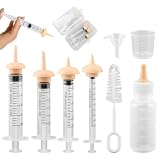
- One-Stop Scientific Feeding: Designed specifically for newborn kittens, puppies, and various small animals, this kit includes a 50ml professional feeding bottle, four precision syringes of different capacities (1ml, 3ml, 5ml, 10ml), four biomimetic nipples, as well as a funnel and measuring cup. From precise feeding immediately after birth to supplemental feeding during the transition period, this single kit meets all your care needs.
- Precise Measurement for Safe Feeding: Recognizing that newborn pets are extremely sensitive to feeding amounts, the kit includes four syringes of different sizes, each featuring clear, durable graduations. This allows you to control feeding with milliliter-level precision based on your pet’s weight and age, effectively preventing choking or digestive strain caused by overfeeding.
- Bio-Mimetic Nipples: Made from ultra-soft, food-grade silicone, these bio-mimetic nipples replicate the natural feel of a mother dog or cat’s mouth. They are bite-resistant and gentle on the mouth. Multiple nipple shapes are available to suit pets of different sizes and developmental stages, increasing the success rate of feeding.
- Easy to Clean, Comes with a Dedicated Storage Case: The included cleaning brush easily reaches the bottom of bottles and syringes, ensuring no milk residue remains. All accessories are neatly stored in a transparent storage jar/container, making it convenient for home storage and keeping your tools organized and ready to use—whether you’re traveling with your pet or on the go.
- Essential Professional Tools for Young Pets: Whether caring for orphaned puppies or kittens, administering medication to sick adult pets, or providing nutritional support for frail premature pets, this multifunctional kit offers the most professional support. The included measuring cup and funnel make the process of mixing formula more precise and spill-free, making it the ideal assistant for pet owners and animal rescuers.
Earlier local and campaign figures
Older figures from the ASPCA are useful as historical context, but they describe a single place or campaign in 2019 and should not be read as current national totals.
- In 2019, the ASPCA reported that 90% of the nearly 34,000 kittens entering Los Angeles County and Los Angeles City shelters each year arrived during kitten season.
- In the same 2019 report, kittens made up 84% of felines entering Animal Care Centers of NYC during that period.
- In the first year of its Meow For Now campaign, the ASPCA reported that 69% of 644 participating shelters and rescues saw an increase in foster parents, and 68% of those organizations attributed the increase to the campaign.
Why shelters rely on foster homes
A shelter can house kittens, but it cannot always give a newborn or very young kitten the individual attention it needs. In a May 10, 2019 announcement, ASPCA president and CEO Matt Bershadker said: “With kitten season threatening so many kittens, fostering is essential to protect their lives as well as ease the strain on overcrowded local shelters.”
The ASPCA’s broader explanation says fostering can protect vulnerable kittens from shelter stress and disease, provide care and socialization, and free space and resources for other animals. These are potential program benefits, not guaranteed outcomes for every kitten. Fostering is also needed when adoption interest already exists, because some kittens are too young to be adopted or need extra care first.
Rank #2

- SQUEEZE BOTTLE - 60ml nursing bottle for newborn kittens and puppies, 2.1 ounce capacity, small animal feeding bottle is easy to squeeze and easy to control the amount of milk.
- SMALL ANIMAL FEEDER SET - 1ml for small nipples, 3ml, 5ml, 10ml for medium and large nipples, 60ml feeding bottles can be freely combined with (small, medium, large) nipples.
- 5 REPLACEABLE NIPPLES - Different sized nipples to meet the needs of small animal at every stage, the soft rubber-tipped nipple prevents scratching the gums of newborn kittens and puppies.
- 5ML BROWN FEEDER - The brown 5ml syringe is made of light-safe material to prevent photosynthesis of medication, use a separate dedicated feeder for better use when your pet is sick.
- NEWBORN KITTENS & PUPPIES GIFT - Suitable for newborn and not yet teething small animals, kittens, puppies, hamsters, chinchillas, squirrels, rabbits, etc. you will be a very gentle owner, take care of it, love it and grow with it.
What fostering involves
Requirements differ by organization, and the kitten’s age matters more than anything else. The ASPCA’s New York City program is a useful example of what one large program asks of its fosters, but it is not a standard that other shelters or rescues must follow.
Recommended Free Tools
Time commitment and length
The ASPCA’s NYC program reports foster periods of one to ten weeks. Its NYC nursery page gives a narrower average, two to eight weeks, for kitten foster periods. These are program-specific ranges, not a promise for any individual placement. A neonatal kitten that needs round-the-clock feeding and warmth will ask much more of your schedule on any given day than an older kitten that is eating and using a litter box on its own.
Supplies, medical care, and costs
The ASPCA says its NYC foster program covers medical care and expenses and provides caregivers with food, equipment, and supplies. Other programs may cover less, or cover different things. Before you agree to a placement, ask which items the organization supplies, which it expects you to buy, and how veterinary bills are handled.
Rank #3

- NURSING KIT - This kit was designed to feed Esbilac, KMR, Goat’s Milk KMR, Goat’s Milk Esbilac, PetLac, or other liquids to small animals.
- WHAT’S INCLUDED - The kit includes a 2 oz. nursing bottle with cap, 5 silicone nipples (3 regular, 1 elongated for smaller mouths, 1 balloon for larger mouths), and a bottle brush.
- PROMOTES NATURAL FEEDING - Our flexible, latex-free nipples simulate the milking action of a mother’s nipple, which develops facial muscles and stimulates the normal flow of saliva. Bottle feeding also allows the animal to refuse formula when full.
- EASY TO USE - Marked with gradations, the included bottle makes monitoring food intake easier and helps prevent over or under feeding. It’s durable enough to stand up to repeated use, and is easy to clean thoroughly with the brush.
- ABOUT US - PetAg is a trusted leader in pet wellness, with science-backed formulas in our milk replacers, health supplements, and grooming products helping pet owners to proactively enhance the lives of their pets, for more healthy years together.
Eligibility, training, and household requirements
For its NYC program, the ASPCA requires fosters to be at least 18 and able to reach its Manhattan facilities as requested. It offers orientation, and for neonate fosters it provides hands-on bottle-baby training. If you have resident pets, the NYC program asks that their vaccinations be current and that you provide a separate space where new kittens can be introduced to them gradually. Local programs may set different rules, so confirm them directly.
Questions to ask any foster organization
The table below lists the points to compare across offers. The middle column shows how the ASPCA’s NYC program answers each one, so you can see the kind of detail to request.
| Question to ask | Why it matters | ASPCA NYC example (source: ASPCA NYC foster information and nursery pages) |
|---|---|---|
| How old is the kitten, and what care does it need? | Neonatal kittens may need round-the-clock care and bottle-feeding, while older kittens need less frequent care | Neonatal kittens may need round-the-clock care; neonate fosters receive bottle-baby training |
| How long is the foster period? | Determines how long you commit to the placement | Reported range of one to ten weeks; nursery average of two to eight weeks |
| Do I need to visit or transport the kitten? | Affects travel time and whether you can keep the placement near home | Foster must be able to reach Manhattan facilities as requested |
| What training and staff support are provided? | Determines whether you can care for a kitten that needs specialized feeding | Orientation and hands-on bottle-baby training for neonate fosters |
| What food, equipment, and medical costs are covered? | Sets your out-of-pocket spending | Medical care and expenses covered; food, equipment, and supplies provided |
| What household rules apply? | Affects whether your home is suitable, especially with resident pets | Resident pets must have current vaccinations and a separate space for gradual introductions |
| Who is eligible? | Determines whether you can apply | Must be at least 18 and able to reach Manhattan facilities as requested |
Caring for newborn and unweaned kittens
Newborn and unweaned kittens are the most demanding placements. They may need round-the-clock care, bottle-feeding, warmth, and frequent monitoring. The ASPCA’s NYC nursery uses foster volunteers for these kittens and offers bottle-baby training. Tina Reddington, identified by the ASPCA as Director of its Los Angeles Volunteer Program, put the stakes plainly: “A foster parent can make the difference between life and death because tiny kittens can’t survive on their own in a shelter.”
Rank #4

- Angled Bottle Design for Natural Feeding: 45 angled kitten bottles allow nursing pet babies to drink milk while lying down, which is the most natural way for pet babies to feed. The ergonomic design provides comfort during feeding sessions, and holding the kitten feeding bottle for extended periods will not cause fatigue. The kitten nipple can be used in conjunction with a syringe for accurate milk portion control, especially useful when weak kittens need syringe feeding
- Three Silicone Nipple Sizes for All Ages: Three different sizes of pacifiers ensure kitten feeders can be used from birth to weaning. The soft silicone nipple is appealing for kittens and puppies. If the nipple's milk outlet needs adjustment, scissors can be used to widen the opening for better flow
- Ventilation System to Reduce Choking: Bottle features a ventilation system similar to human baby bottles, eliminating the need for manual ventilation during feeding and reducing the probability of choking on milk. Provides a safety protection comparable to infant feeding products
- Complete Feeding Kit Included: The product includes 1 x 60ml bottle, 1 x 5ml syringe, 1 x small nipple, 1 x medium nipple, and 1 x large nipple, providing everything needed for feeding kittens at various stages of development
- Safety Precaution for Teething Pets: When pet babies develop sharp teeth, use the feeding products with caution as nipples can be easily bitten off or swallowed by accident. Monitor your pet during feeding to ensure safe usage
Best Friends Animal Society points to eight weeks as a milestone in kitten development, citing work by Dr. Julie Levy, a University of Florida shelter-medicine researcher. Use that as background, and let your organization set the schedule for your kitten.
If you are feeding a bottle-fed, unweaned kitten, kitten milk replacer powder is the product designed for that purpose. Use it only under the instruction of your shelter, rescue, or veterinarian, and do not assume every foster needs to buy formula or other supplies. Where a program supplies food and equipment, as the ASPCA’s NYC program does, use what it provides.
Independent reader supportYour contribution helps us test, update, and keep practical guides available for everyone.If you find a kitten
The ASPCA’s kitten nursery directs people who find kittens to its step-by-step found-kitten guide. Rules for found kittens vary by situation and by organization, so this article does not give a universal instruction to move or leave them. Follow this order instead:
Outdated Drivers Are Slowing You Down
One free scan finds every outdated or missing driver and matches the right update for your exact hardware.Free scan · exact hardware matchWindows Errors? Fix Them Before They Spread
Repair common Windows errors and clear accumulated junk for a smoother, more stable PC - no reinstall needed.Free scan · no reinstallBest Value

- Soft silicone pacifier: Soft silicone pacifier, even if the newborn kitten and dog without teeth can suck and drink smoothly, and will not choke when drinking milk
- Pinhole liquid outlet: As long as the newborn kittens and puppies suck or nibble, the milk can flow out smoothly, thus achieving the purpose of feeding
- Anti-choking valve design: The bottle body is controlled by the pressure valve, which can limit the flow in the drop inlet and control the milk flow to prevent choking
- Capacity: 20 ml
- Note the kitten’s approximate age, whether it appears to be alone or near a mother cat, and the exact location where you found it.
- Contact your local shelter, rescue, or veterinarian promptly and describe what you observed.
- Ask what you should do next, including whether to bring the kitten in, and request the found-kitten guidance that organization uses.
- Follow that organization’s instructions rather than general advice from a website or a friend.
How to find a foster opportunity near you
Openings, eligibility, training, and supplies change over time, so confirm current details with the organization itself before you commit.
- Search for shelters and rescues in your area that list kitten fostering on their websites or in their volunteer pages.
- Ask each organization the questions in the table above, and request the answers in writing if you can.
- Confirm the kitten’s age and care needs before you accept a placement, since a neonatal kitten requires far more time than an older one.
- Check your own schedule, living space, and any resident pets against the organization’s requirements before the first placement.
Ms. Julie Castle, CEO of Best Friends Animal Society, said: “Foster volunteers are critical in saving the lives of pets in shelters.” Whether you take one kitten or a litter, the most useful first step is a conversation with a local organization about what it needs.
Quick Recap
Product prices and availability are accurate as of the date/time indicated and are subject to change. Any price and availability information displayed on Amazon at the time of purchase will apply.




