Recommended Free Tools
No. Barracudas are marine fishes in the family Sphyraenidae, not freshwater fish. The great barracuda (Sphyraena barracuda) can enter brackish estuaries and mangrove swamps, especially as a juvenile, but brackish water is a mixture of seawater and freshwater—not freshwater habitat. Adults are typically associated with the open sea, coastal waters and reefs.
What “freshwater,” “brackish” and “marine” mean here
Freshwater has very little dissolved salt, as in most lakes and rivers. Marine water is seawater. Brackish water lies between those categories because tidal seawater mixes with river water in places such as estuaries, lagoons and mangrove channels.


Species accounts for the great barracuda classify its habitat as marine and brackish. They do not identify it as a freshwater species. A barracuda seen near a river mouth is therefore in an estuary or another coastal transition zone, not evidence of a freshwater population.
Where great barracuda live at different ages
| Life stage | Typical settings | How to interpret the salinity |
|---|---|---|
| Juveniles | Estuaries and mangrove swamps; generally inshore | Often brackish, where river water and seawater mix |
| Adults | Open sea, coastal water and areas close to reefs | Predominantly marine |
The Food and Agriculture Organization describes juveniles as usually occurring in mangrove swamps or river estuaries and contrasts them with adults in the open sea and near reefs. This age-related shift explains why a young great barracuda may be encountered well inside a sheltered coastal system without becoming a freshwater fish.
The Tool Desk
Outbyte Driver Updater FREEScan for outdated or missing drivers - takes under a minuteDriver Scan →Outbyte PC Repair FREEClear out junk files and repair common Windows errorsFree Scan →#1 Best Overall

- Fully Updated for 2026 Regulations: This new edition integrates the 2026 Fishing Regulation Updates, including current seasons and size limits for Gag Grouper, Red Snapper, and the April 1st Lane Snapper changes. No more checking websites while on the water—everything you need is right at your fingertips
- Set of 4 Waterproof Fishing Cards:This 8.2"L x 6"W ring-bound set features 4 double-sided durable PVC cards—essential saltwater fishing gear for Florida anglers. Rugged, tear-resistant, and waterproof, it’s ideal for salt water fishing, boats, beaches, or diving. Bend, or wipe clean without damage
- True-to-Life Fish Identification:Vibrant, double-sided photographs make identifying 80+ Atlantic fish and sharks effortless—even in sunlight. Perfect for shark fishing gear kits or saltwater fishing trips
- Essential Fishing Rules & Regulations:Covers size limits, catch rules, and regulations to ensure legal and responsible fishing. A must-have salt water fishing stuff guide for Florida visitors or locals targeting compliant catches
- Ring Binding for Portability & Convenience:Secured with a sturdy ring binding, these compact cards stay organized and fit in tackle boxes (great for saltwater fishing gear storage), backpacks, or glove compartments. Take them anywhere—pier, boat, or fridge—without losing a page
“Barracuda” is a group of species, not one fish
The common name covers multiple species in Sphyraena. The FAO identification guide treats several species separately, so a range or habitat documented for S. barracuda should not automatically be applied to every barracuda.
Great barracuda
The great barracuda is described as coastal and oceanic, occupying the water column from near the bottom toward the surface and using reef- and mangrove-associated habitats. A Greater Caribbean species record gives a broad circumtropical distribution in that region from Massachusetts to Brazil. The FAO account describes it as widespread in tropical seas except the eastern Pacific. These are species-account descriptions, not a universal range statement for the entire family.
Why species-level identification matters
Different Sphyraena species can have different geographic ranges, sizes and preferred environments. Confirm the scientific name before treating a sighting, map or aquarium label as evidence about “barracudas” generally.
How to recognize a great barracuda
- Elongated, robust body
- Long pointed snout
- Lower jaw that projects beyond the upper jaw
- Many sharp teeth
- Two dorsal fins separated widely from each other
- Oblique dark bars on the upper body
- Possible black blotches on the posterior underside
Color and markings can vary, so they should support—not replace—careful identification using body shape, jaw structure, fin placement and location.
Outdated Drivers Are Slowing You Down
One free scan finds every outdated or missing driver and matches the right update for your exact hardware.Free scan · exact hardware matchWindows Errors? Fix Them Before They Spread
Repair common Windows errors and clear accumulated junk for a smoother, more stable PC - no reinstall needed.Free scan · no reinstallRank #3

- Comprehensive Fish Information: Includes size, weight, location, food quality, and coloring details for accurate species identification
- Easy-to-Use Fish Identification: Features visual illustrations for quickly identifying various freshwater fish, suitable for both beginners and experienced anglers
- 100% Waterproof Construction: Built with high-quality, weather-resistant materials to withstand the rigors of outdoor use, ensuring long-lasting reliability on every fishing trip
- Portable & Lightweight Design: Convenient, travel-friendly size fits in tackle boxes or fishing bags, allowing you to have it on hand whenever you need to identify a new species
- Versatile Gift Option: Suitable for beginners, seasoned fishermen, kids and scouts, and any outdoor enthusiasts looking to master fish identification
Do barracudas ever live in rivers or lakes?
The cited habitat records establish marine and brackish use for the great barracuda, including estuaries and mangroves. They do not establish a freshwater population in lakes or wholly freshwater rivers, and no reliable figure quantifies barracuda occurrence in freshwater. A fish photographed upriver may be in a tidal, brackish reach, or it may have been misidentified.
Distribution, diet and fishing context
Great barracudas are active predators found from near-bottom areas to the surface. The Greater Caribbean account describes a circumtropical coastal and oceanic distribution, while the FAO account supplies the tropical-seas qualification and excludes the eastern Pacific.
Rank #4
The FAO guide reports that Sphyraena species catches in the Western Central Pacific totaled about 29,400 to 47,100 metric tonnes per year during 1990–1995, as reported from the FAO Yearbook of Fisheries Statistics. That historical figure covers the genus in that region and period; it is not a current catch estimate and does not represent great barracuda alone.
Independent reader supportYour contribution helps us test, update, and keep practical guides available for everyone.Food-safety note
The FAO guide states that large adult great barracudas are often ciguatoxic. “Often” is important: the statement does not mean every barracuda is toxic in every location. Anyone considering eating a barracuda should follow current local fish-consumption advisories, which can vary by reef, region and fish size.
Quick Recap
Best Value
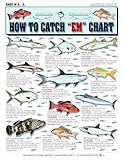
- Includes Size, Weight, Location, Fishing Methods, Food Quality, And Coloring.
- Easy-to-Use Fish Identification: Features visual illustrations for quickly identifying various saltwater fish, perfect for both beginners and experienced anglers. Ideal for inshore, offshore, and big game fishing.
- Perfect Gift for All Anglers: Ideal for beginners, seasoned fishermen, kids and scouts, and any outdoor enthusiasts looking to master fish identification.
A quick way to classify a barracuda sighting
- Identify the fish as accurately as possible, preferably to species rather than relying only on the common name.
- Check the setting: mangrove creek or estuary suggests a potentially brackish juvenile habitat; offshore or near a reef is consistent with adult marine habitat.
- Ask whether the water is tidal and mixed. A river mouth can look freshwater while still being brackish.
- Do not infer a freshwater species from a single inland-looking location without salinity and species information.
Product prices and availability are accurate as of the date/time indicated and are subject to change. Any price and availability information displayed on Amazon at the time of purchase will apply.




