
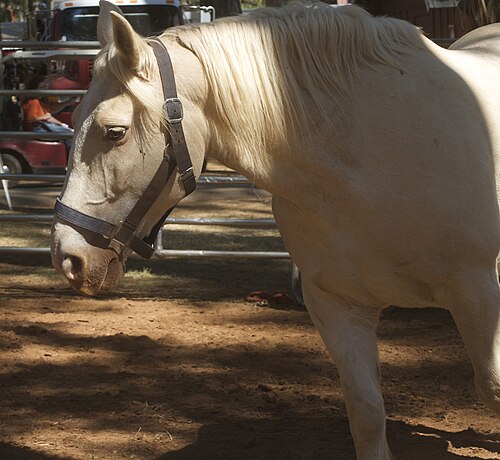
 Photo: Jean · CC BY 2.0
horse breed · 671 on Animalso
American Cream Draft
- Animal
- Horse
- Type
- Draft horse
- Origin
- United States
- Height
- 1.61 cm
- Weight
- 850 kg
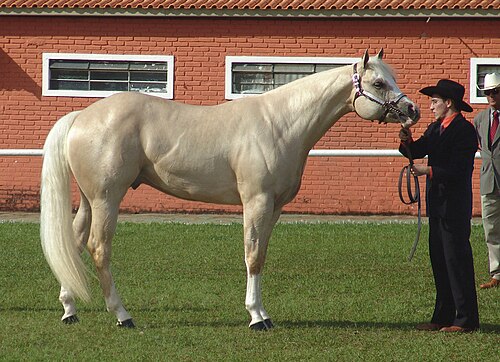
The American Cream Draft is a rare American draft horse breed developed in Iowa during the early twentieth century. Its defining feature is a cream or “gold champagne” coat. A registry began in 1944, later went inactive as farming mechanized, and reopened in 1982. The breed’s conservation status is considered critical.
What the American Cream Draft is
The American Cream Draft is a draft horse breed from the United States. It is recognized for a cream or “gold champagne” coat.
Its recorded height is 1.61 m, and its recorded weight is 850 kg.
Origins and development
The breed began in Iowa during the early twentieth century from a cream-colored mare named Old Granny.
A breed registry formed in 1944. It later became inactive for several decades as farm mechanization reduced breed numbers, then reopened in 1982.
Notable points
The cream or gold champagne coat gives this American draft breed a clearly documented appearance.
The registry’s reactivation in 1982 supports the breed’s continued record keeping, while population numbers have slowly grown since then.
What to consider
The American Cream Draft is rare, and its conservation status is considered critical by The Livestock Conservancy and the Equus Survival Trust.
Its history is closely tied to falling numbers during the mechanization of farming.
Pricing
The available facts do not provide a purchase price for an American Cream Draft.
Who may want another breed
Someone seeking a readily available horse may need to look beyond this rare breed. Compare it with other horse breeds or horse breeds from the United States.
Verdict
Choose the American Cream Draft if its American origin, draft-horse type, and cream-colored coat match what you are looking for. Its rarity and critical conservation status are central parts of the breed’s story, so availability may be limited. Readers comparing several options can use the wider horse-breed lists before deciding which breed fits their plans.
What stands out
- Distinctive cream or gold champagne coat
- American draft breed developed in Iowa
- Registry reactivated in 1982
- Population has slowly grown since reactivation
Worth knowing
- Rare breed with limited numbers
- Conservation status is considered critical
- Numbers fell during farm mechanization
Suits
- Readers interested in a rare American draft horse
- Those drawn to cream-colored or gold champagne coats
Think twice if
- You need a commonly available horse
- You prefer a breed without a critical conservation status
In short
The American Cream Draft stands out for its cream or gold champagne coat and its Iowa origins. It is a substantial draft horse, recorded at 1.61 m and 850 kg. The breed has also faced sharp population pressure: its registry went inactive after mechanized farming reduced numbers, then returned in 1982. Because the breed remains rare and is considered critically conserved, it suits readers drawn to a distinctive American breed and willing to investigate availability carefully.
Questions
Where did the American Cream Draft originate?
It was developed in Iowa, United States, during the early twentieth century.
What type of horse is it?
It is an American draft horse breed.
What color is the American Cream Draft?
Its coat is described as cream or “gold champagne.”
How tall and heavy is it?
The recorded height is 1.61 m and the recorded weight is 850 kg.
When was its breed registry formed?
A registry was formed in 1944. It was reactivated in 1982 after being inactive for several decades.
Is the American Cream Draft rare?
Yes. It is considered rare, and its conservation status is considered critical by The Livestock Conservancy and the Equus Survival Trust.
More horse breeds from United States
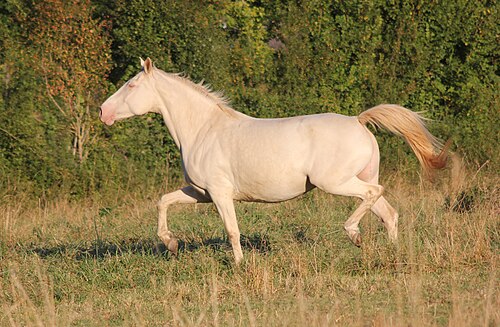
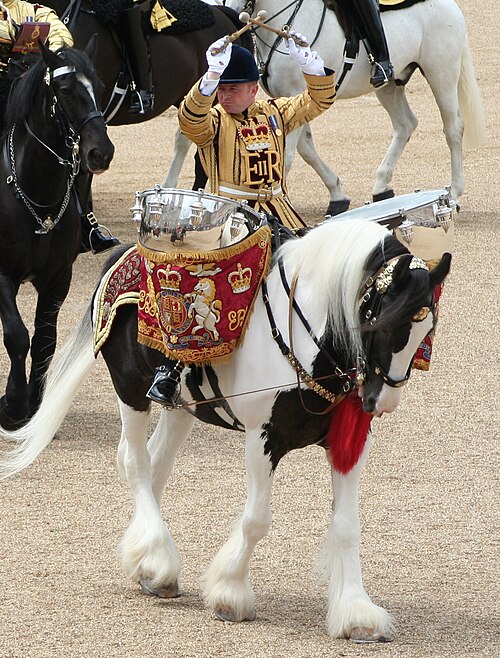 American Drum Horse United States Photo: Ultra7 · Public domain
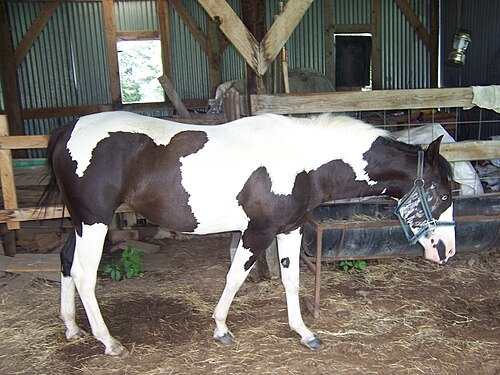
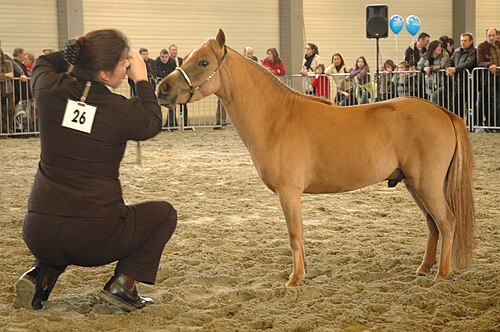
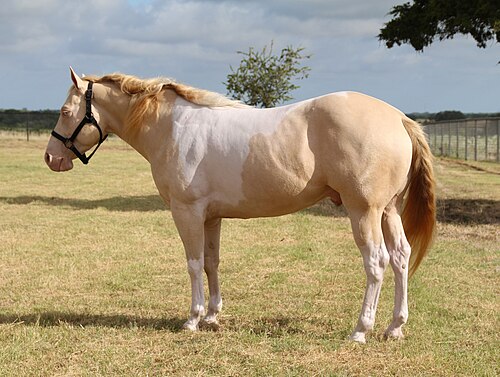
Other draft horse breeds
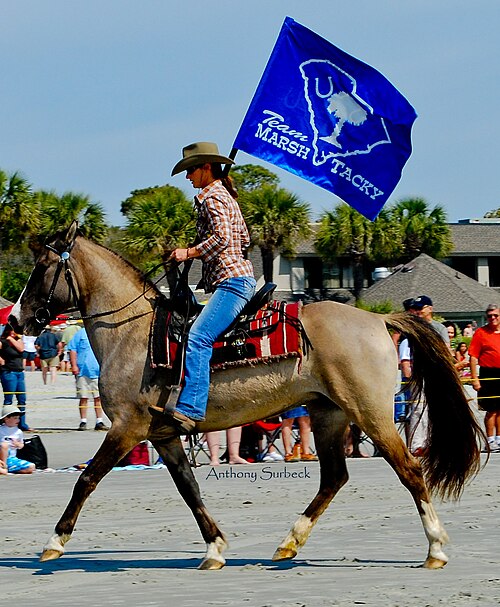
Photo credits17 photographs on this page
- American Cream Draft — Jean · CC BY 2.0 · file page
- American Bashkir Curly — Eponimm · CC BY-SA 3.0 · file page
- American Belgian Draft — Richard · CC BY 2.0 · file page
- American creme and white horse registry — GOETZ Christine · CC BY-SA 4.0 · file page
- American Drum Horse — Ultra7 · Public domain · file page
- American Indian horse — JD Lamb · CC BY 2.0 · file page
- American Miniature Horse — agriflanders · CC BY 2.0 · file page
- American Paint Horse — Betty Wills · CC BY-SA 4.0 · file page
- American Quarter Horse — José Reynaldo da Fonseca · CC BY 2.5 · file page
- American Saddlebred — Just chaos · CC BY 2.0 · file page
- American Shetland Pony — Montanabw · CC BY-SA 4.0 · file page
- American Warmblood — Josette · CC BY-SA 4.0 · file page
- Appaloosa — Darrell Dodds · CC BY-SA 3.0 · file page
- AraAppaloosa — Heather Moreton · CC BY 2.0 · file page
- Banker horse — Tania Gail · CC BY 2.0 · file page
- Camarillo White Horse — Haase B and others · CC BY-SA 2.5 · file page
- Carolina Marsh Tacky — Anthony Surbeck · CC BY 2.0 · file page
Photographs come from Wikimedia Commons under the licence each one names. How Animalso credits photographs.