
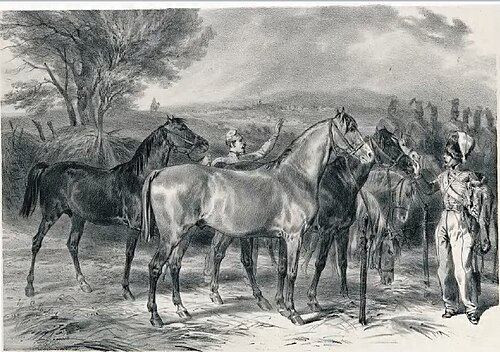
 Photo: Eugène Gayot · Public domain
horse breed · 671 on Animalso
Angevin Horse
- Animal
- Horse
- Origin
- France
The Angevin was an extinct population of small, hardy bay horses bred near Angers in France. Under the French National Stud, breeders crossed it with Thoroughbreds. The larger result became a saddle half-bred called the Angers half-bred, noted for military use from 1833 to 1850.
What the Angevin horse was
The Angevin was a small, hardy bay horse from near Angers, France. It is now extinct.
Its breeding changed under the influence of the French National Stud, which introduced Thoroughbred blood and produced the Angers half-bred saddle horse.
How its history began
The original population was bred near Angers. Later crossing with Thoroughbreds increased its size and changed its type.
The resulting Angers half-bred became particularly known for military use during the 19th century, from 1833 to 1850.
What stands out
The Angevin is described as hardy, with a bay coat and a small build.
From 1833 to 1850, the Angers half-bred was especially renowned for military use.
Limits to keep in mind
The Angevin population is extinct, so it is not a living breed available for ownership today.
Thoroughbred crossing altered the original horse into a larger saddle half-bred known as the Angers half-bred.
Pricing
There is no current purchase price for the Angevin because the population is extinct.
Who should skip it
Anyone seeking a living horse to buy or keep should skip the Angevin, since it is extinct. For other French breeds, see horse breeds from France.
Verdict
The Angevin is mainly a historical breed for readers interested in French horse development and military history. Its story leads from a small bay horse near Angers to the larger Angers half-bred created through Thoroughbred influence.
What stands out
- Bred near Angers in France
- Described as small and hardy
- Bay horses formed the original population
- Linked to French military use through its Angers half-bred successor
Worth knowing
- The original Angevin population is extinct
- Thoroughbred crossing changed its size and type
- No current ownership option exists for this population
Suits
- Readers tracing French horse origins
- History-focused study of military horse breeding
Think twice if
- You need a living horse breed to buy or keep
- You want current care, size or lifespan guidance
In short
The Angevin horse matters as a record of French breeding near Angers and of how the National Stud redirected a local type. Its hardy, small bay form did not remain unchanged: Thoroughbred crossing produced a larger saddle horse, the Angers half-bred, which gained a military reputation between 1833 and 1850. Because the original population is extinct, this is a breed to study rather than a practical choice for present-day ownership. Readers wanting living French breeds should explore other entries in the atlas.
Questions
Where did the Angevin horse originate?
It was bred near Angers in France.
Is the Angevin horse still alive as a breed?
No. The Angevin was an extinct horse population.
What did the Angevin horse look like?
It was described as small, hardy and bay.
What changed the Angevin horse?
The French National Stud influenced breeding, and Thoroughbred crossing increased its size and changed its type.
What was the Angers half-bred?
It was the larger saddle half-bred that developed from the Angevin after Thoroughbred influence.
When was the related horse used by the military?
The Angers half-bred was particularly renowned for military use from 1833 to 1850.
Where can I find other French horse breeds?
Browse horse breeds from France.
More horse breeds from France
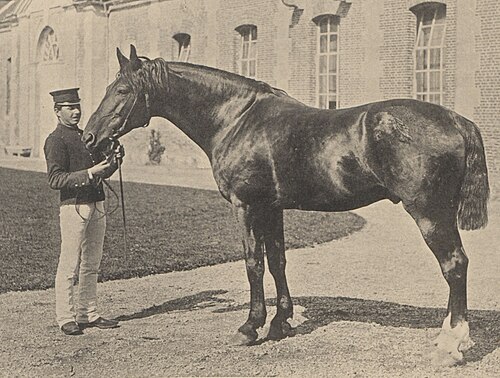 Anglo-Norman horse France Photo: Wikimedia Commons contributor · Public domain
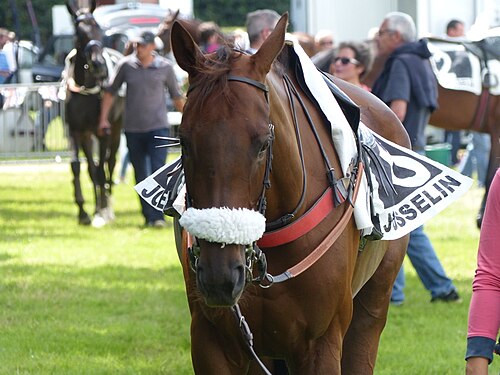 AQPS France Photo: Tsaag Valren · CC BY-SA 4.0
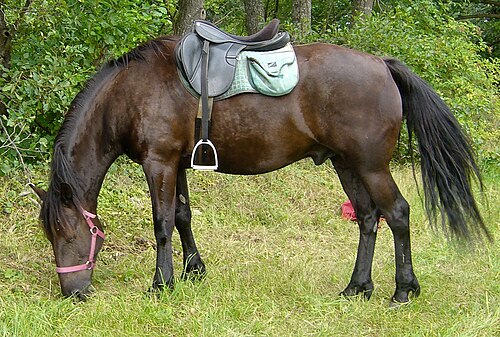
 Berrichon horse France Height 1.58 cm Photo: Wikimedia Commons contributor · Public domain
 Bidet breton France Photo: Revue Sport universel illustré · Public domain
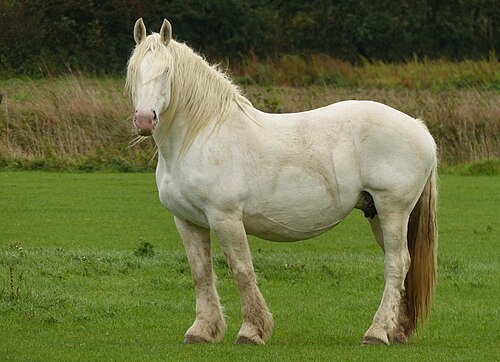
Photo credits9 photographs on this page
- Angevin horse — Eugène Gayot · Public domain · file page
- Anglo-Norman horse — Wikimedia Commons contributor · Public domain · file page
- AQPS — Tsaag Valren · CC BY-SA 4.0 · file page
- Auvergne horse — Stephanemartin · CC BY-SA 3.0 · file page
- Auxois — Cjp24 crop by Peli · CC BY 3.0 · file page
- Barraquand horse — Michael Barbereau WMFr · CC BY-SA 4.0 · file page
- Berrichon horse — Wikimedia Commons contributor · Public domain · file page
- Bidet breton — Revue Sport universel illustré · Public domain · file page
- Boulonnais — Amélie Tsaag Valren · CC BY-SA 4.0 · file page
Photographs come from Wikimedia Commons under the licence each one names. How Animalso credits photographs.