
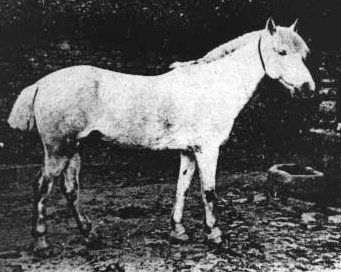
 Photo: Revue Sport universel illustré · Public domain
horse breed · 671 on Animalso
Breton Bidet: A Small Horse from Brittany
- Animal
- Horse
- Origin
- France
The Breton bidet was a small horse type from Brittany, France. It was bred for working strength and could move at an amble. Records place it in use from at least the fifth century through the nineteenth century, when it served for many kinds of work. It disappeared around the start of the twentieth century.
What it was
The Breton bidet was a small horse type bred in Brittany, France. Its ambling movement and working strength were central to its role.
From the Middle Ages through the nineteenth century, people used these horses for work that called for a low-value horse. The type was widespread in Brittany until the mid-nineteenth century.
Historical context
The breed has been recorded since the fifth century. In the Middle Ages, it may have been crossed with oriental horses brought by the House of Rohan.
Modern transport changed demand in the nineteenth century. Draft horses became more sought after, and the Breton bidet disappeared at the dawn of the twentieth century.
What stands out
Its small size suited the work for which it was used. The Breton bidet was also noted for an ability to move at an amble.
Working strength made it useful for many tasks in Brittany. You can compare it with other horse breeds from France and the wider set of horse breeds.
Limits of the record
The Breton bidet is described as having disappeared around the beginning of the twentieth century, so it is a historical type rather than a current choice for most owners.
The available facts do not give a recorded height, weight, life expectancy, or present-day availability. The possible medieval crossing with oriental horses is not certain.
Price and availability
No purchase price or current availability is provided for the Breton bidet. Its disappearance means buyers should not assume that live examples can be found.
Who should look elsewhere
Skip this type if you need a living horse with documented size, lifespan, or current breeder availability. Consider another entry in horse breeds instead.
It may not fit someone seeking a modern draft horse, since transport changes helped make draft horses more sought after and the Breton bidet later disappeared.
Verdict
The Breton bidet is most useful to readers studying Brittany's horse history. It links a small, ambling working horse with rural tasks that lasted for centuries.
For a present-day horse search, treat it as historical background and compare living breeds from France or elsewhere.
What stands out
- Small horse type suited to the work it was bred to do
- Known for an ambling way of moving
- Working strength supported many kinds of labor
- Long history in Brittany, dating back at least to the fifth century
Worth knowing
- Disappeared around the start of the twentieth century
- No current availability is given
- Height, weight, and lifespan are not provided
- Possible medieval oriental crossing is uncertain
Suits
- Readers tracing Brittany's horse history
- Research into historical working horse types
Think twice if
- You need a currently available horse
- You require recorded size or life-expectancy figures
In short
Choose the Breton bidet as a subject for historical study, not as a straightforward modern ownership option. Its identity is clear: a small horse from Brittany with an ambling gait and a reputation for working strength. Its story runs from at least the fifth century through the transport changes of the nineteenth century, after which it disappeared. The facts do not provide current breeders, measurements, lifespan, or a price, so anyone seeking a horse to buy should investigate other living breeds instead.
Questions
Where did the Breton bidet originate?
It originated in Brittany, in France.
What kind of animal was the Breton bidet?
It was a small horse type, also called a bidet.
What was the Breton bidet bred for?
It was bred for working strength and used for many kinds of work that called for a low-value horse.
Could the Breton bidet amble?
Yes. The type was characterized by an ability to move at an amble.
When did the Breton bidet disappear?
It disappeared at the dawn of the twentieth century, after transport changes in the nineteenth century increased demand for draft horses.
How large or long-lived was it?
The available facts do not provide height, weight, or life-expectancy figures.
More horse breeds from France
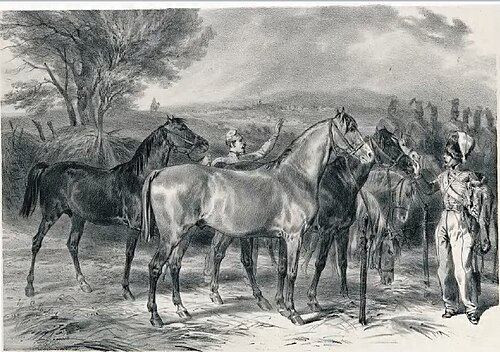 Angevin horse France Photo: Eugène Gayot · Public domain
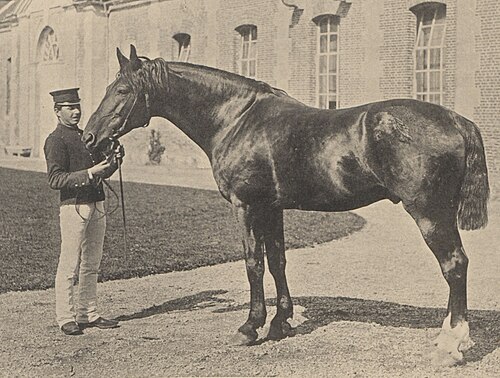 Anglo-Norman horse France Photo: Wikimedia Commons contributor · Public domain
 AQPS France Photo: Tsaag Valren · CC BY-SA 4.0
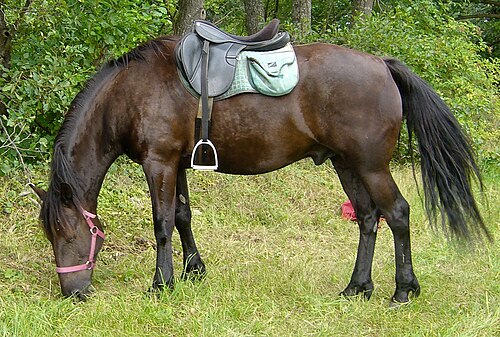
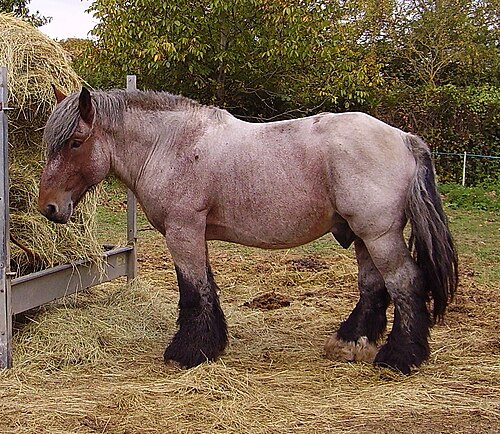
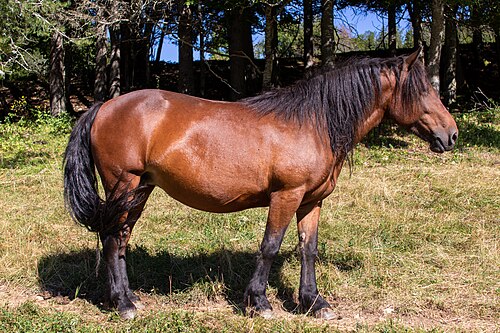
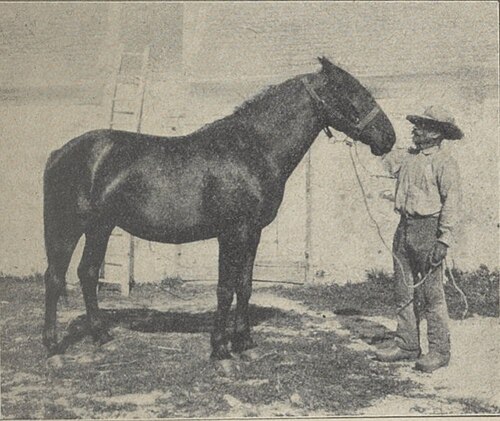 Berrichon horse France Height 1.58 cm Photo: Wikimedia Commons contributor · Public domain
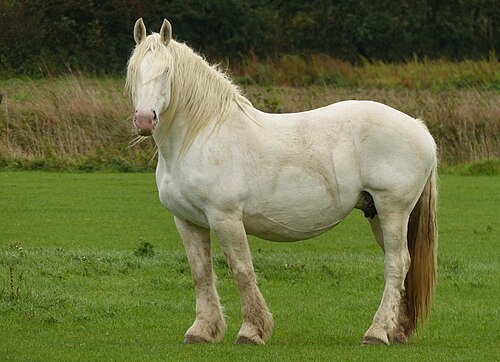
Photo credits9 photographs on this page
- Bidet breton — Revue Sport universel illustré · Public domain · file page
- Angevin horse — Eugène Gayot · Public domain · file page
- Anglo-Norman horse — Wikimedia Commons contributor · Public domain · file page
- AQPS — Tsaag Valren · CC BY-SA 4.0 · file page
- Auvergne horse — Stephanemartin · CC BY-SA 3.0 · file page
- Auxois — Cjp24 crop by Peli · CC BY 3.0 · file page
- Barraquand horse — Michael Barbereau WMFr · CC BY-SA 4.0 · file page
- Berrichon horse — Wikimedia Commons contributor · Public domain · file page
- Boulonnais — Amélie Tsaag Valren · CC BY-SA 4.0 · file page
Photographs come from Wikimedia Commons under the licence each one names. How Animalso credits photographs.