
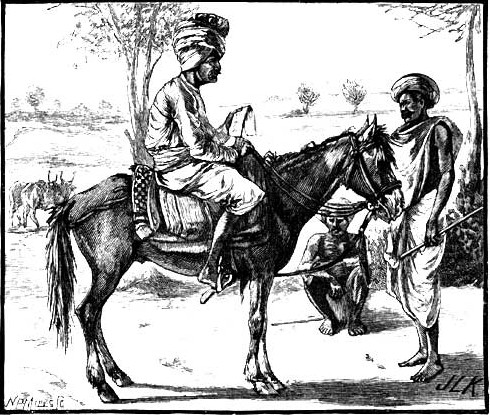
 Photo: John Lockwood Kipling · Public domain
horse breed · 671 on Animalso
Bhimthadi Horse (Deccani): Origin and History
- Animal
- Horse
- Origin
- India
The Bhimthadi horse, also called the Deccani horse, comes from India. Historical accounts place its use in Pune district during the 17th and 18th centuries under Maratha rule. In December 2023, ICAR recognized it as Maharashtra’s indigenous horse breed. The available record does not state its height, weight, or lifespan.
What the Bhimthadi horse is
Bhimthadi, also called Deccani, is an Indian horse breed. It was used in Pune district during the 17th and 18th centuries under Maratha rule.
Origin and background
The breed’s recorded background is Indian and centered on Pune district. In December 2023, ICAR recognized it as Maharashtra’s indigenous breed.
What stands out
Bhimthadi has a clear connection to Maharashtra’s horse history and to the Maratha period. Its recognition as an indigenous Maharashtra breed gives that regional identity a current official marker.
Points to keep in mind
The Bhimthadi is described as almost extinct. Its known historical use is tied to Pune district, with the recorded period limited to the 17th and 18th centuries.
Pricing
No pricing details are stated for the Bhimthadi horse.
Who may want another breed
If you are looking for a horse breed described as common today, compare other horse breeds. Readers focused on Indian origins can browse horse breeds from India.
Verdict
Bhimthadi suits readers tracing Maharashtra’s equine heritage and the horses associated with Maratha-era Pune. It is a historical breed profile rather than a guide to a widely available modern horse. Its almost-extinct status makes its preservation story central to understanding the breed.
What stands out
- Indian origin
- Used in Pune district during Maratha rule
- Recognized as Maharashtra’s indigenous breed in December 2023
Worth knowing
- Described as almost extinct
- Known historical use is tied to Pune district
- Recorded working period is the 17th and 18th centuries
Suits
- Readers tracing Indian horse breeds
- Those interested in Maratha-era horse history
Think twice if
- You want a horse breed described as common today
- You need modern working details beyond the historical record
In short
Bhimthadi is worth exploring if your interest is the history of Indian horses and Maharashtra’s regional breeds. The breed is linked to Pune district and to Maratha rule in the 17th and 18th centuries, giving it a specific historical setting. ICAR’s December 2023 recognition adds a recent point in its story. Because the breed is described as almost extinct, readers seeking a readily encountered horse may need to look elsewhere. For broader context, compare it with other horse breeds.
Questions
What is the Bhimthadi horse?
Bhimthadi, also called the Deccani horse, is an almost extinct breed of Indian horse.
Where does the Bhimthadi horse come from?
The Bhimthadi horse comes from India and is associated with Maharashtra.
What was the Bhimthadi used for?
It was used in Pune district during the 17th and 18th centuries under Maratha rule.
What is another name for Bhimthadi?
The breed is also known as the Deccani horse.
When was Bhimthadi recognized as an indigenous Maharashtra breed?
ICAR recognized it as Maharashtra’s indigenous breed in December 2023.
More horse breeds from India
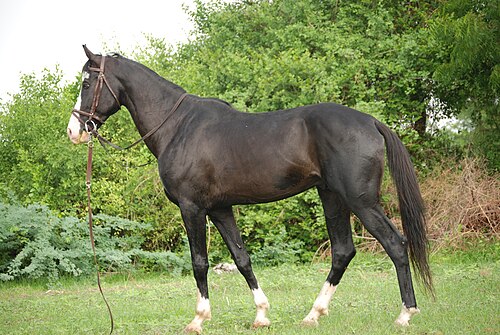
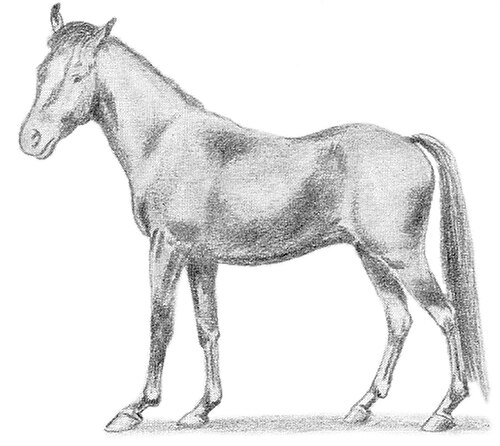 Manipuri pony India Photo: Wikimedia Commons contributor · Public domain
 Marwari horse India Photo: Virendra.kankariya · Public domain
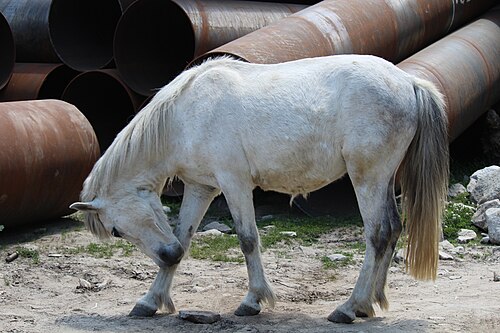
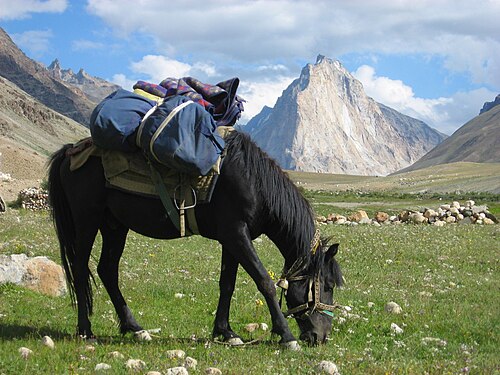
Photo credits7 photographs on this page
- Bhimthadi horse — John Lockwood Kipling · Public domain · file page
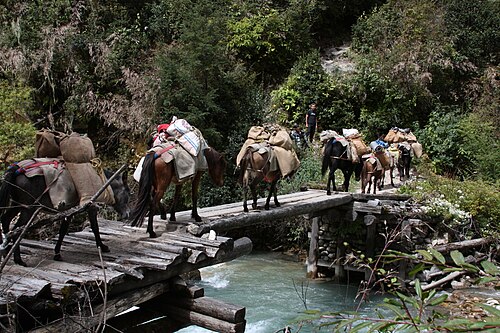
- Bhutia Horse — Andreas Lederer · CC BY 2.0 · file page
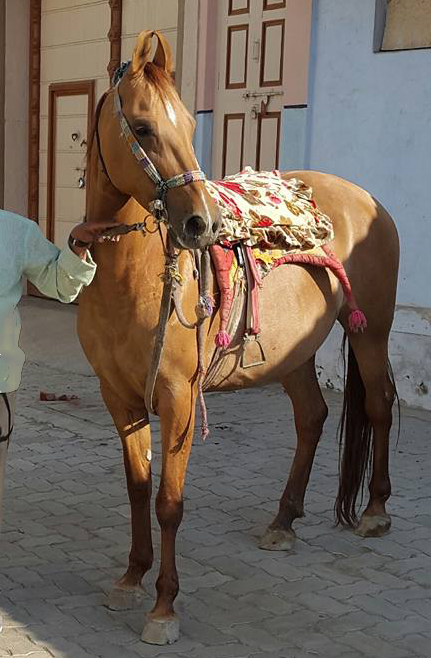
- Kathiawari — Raghvendra99674010 · CC BY-SA 4.0 · file page
- Manipuri pony — Wikimedia Commons contributor · Public domain · file page
- Marwari horse — Virendra.kankariya · Public domain · file page
- Spiti Horse — Anshul24Sharma · CC BY-SA 4.0 · file page
- Zaniskari — BasinField · CC BY-SA 3.0 · file page
Photographs come from Wikimedia Commons under the licence each one names. How Animalso credits photographs.