
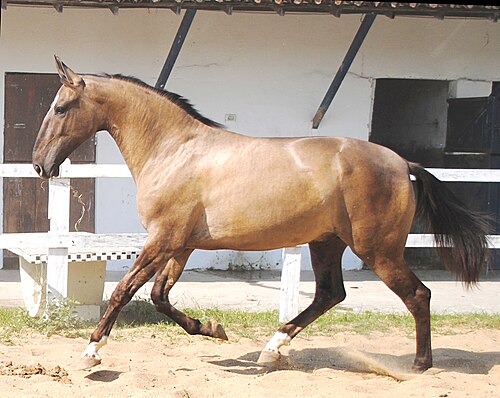
 Photo: Amazona01 · CC BY-SA 3.0
horse breed · 671 on Animalso
Campolina Horse
- Animal
- Horse
- Type
- List of gaited horse breeds
- Origin
- Brazil
Campolina is a Brazilian horse breed named for Cassiano Campolina, the farmer who developed it. Several horse breeds were used in its development from 1870 onward. Campolinas rank among Brazil’s larger breeds, occur in most colors, and have an ambling gait. Their main uses are leisure riding and driving, while dressage use is increasing in Brazil.
What it is used for
Campolina is a gaited horse from Brazil. It has an ambling gait and is used mainly for leisure riding and driving, with dressage use increasing within Brazil.
Getting to know the breed
Beginning in 1870, breeders developed Campolina with several different horse breeds. Cassiano Campolina, the farmer who developed it, gave the breed its name.
Notable traits
Campolina ranks among the larger Brazilian horse breeds. Its coat can come in most colors, and it has an ambling gait. You can browse horse breeds from Brazil for related breeds.
Points to check
Dressage use is described as increasing within Brazil, while the main uses remain leisure riding and driving.
Cost
The breed is used mainly for leisure riding and driving.
Who may want another breed
Campolina may not suit someone looking specifically for a non-gaited horse. Compare other horse breeds before choosing.
Verdict
Campolina is a Brazilian gaited breed with an ambling gait and a history tied to Cassiano Campolina. Its documented work centers on leisure riding and driving, with dressage gaining ground in Brazil.
What stands out
- Has an ambling gait.
- Developed in Brazil from several horse breeds.
- Used increasingly for dressage within Brazil.
- May appear in most colors.
Worth knowing
- Dressage use is noted as increasing within Brazil.
- The breed’s main recorded uses are leisure riding and driving.
Suits
- Riders interested in a Brazilian gaited horse.
- Leisure riding, driving, or dressage in Brazil.
- Readers exploring horse breeds from Brazil.
Think twice if
- You specifically want a non-gaited horse.
In short
Choose Campolina if you want a Brazilian horse with an ambling gait and interests in leisure riding, driving, or dressage in Brazil. Its history reaches back to development work begun in 1870, and its name honors the farmer who created the breed. Its broad color range and large Brazilian type add useful identity, but the stated purpose remains practical riding and driving.
Questions
Where does the Campolina horse come from?
Campolina comes from Brazil.
Who developed the Campolina breed?
Cassiano Campolina developed the breed, which bears his name.
What gait does a Campolina have?
Campolina is a gaited breed with an ambling gait.
What is the Campolina used for?
It is used mainly for leisure riding and driving, and dressage use is increasing within Brazil.
When did Campolina development begin?
Development started in 1870 and drew on several different horse breeds.
More horse breeds from Brazil
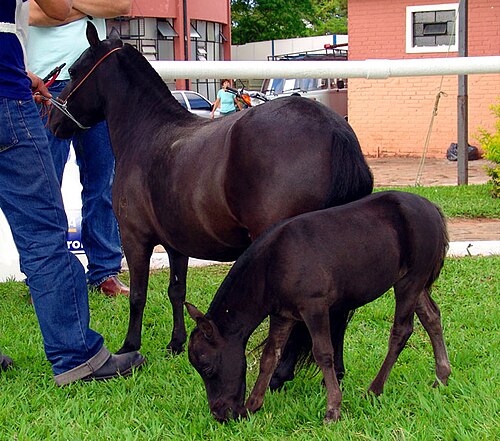

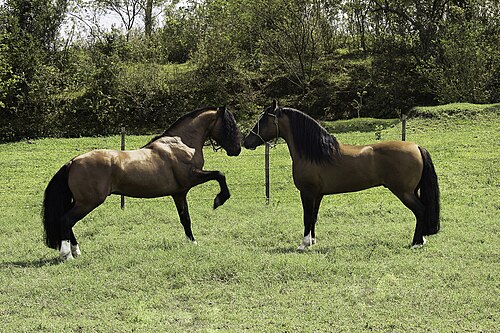 Crioulo Brazil Photo: Kc.sminsights · CC BY-SA 4.0
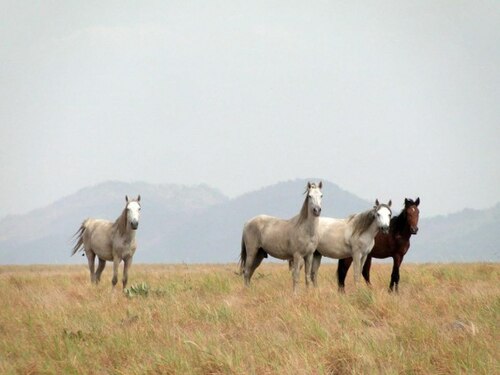 Lavradeiro Brazil Photo: Carlos Marques · CC BY-SA 2.0
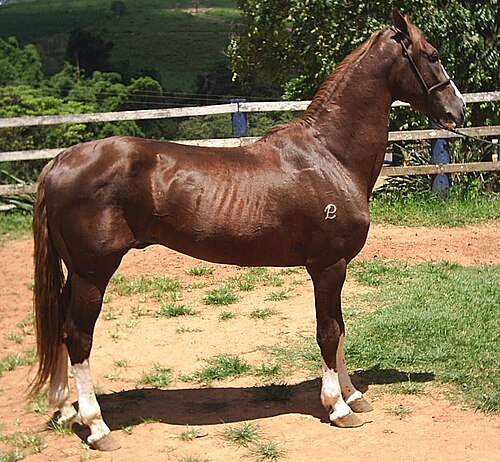 Mangalarga Brazil Photo: Wikimedia Commons contributor · Public domain
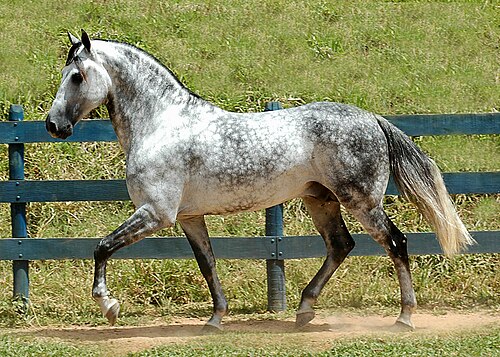
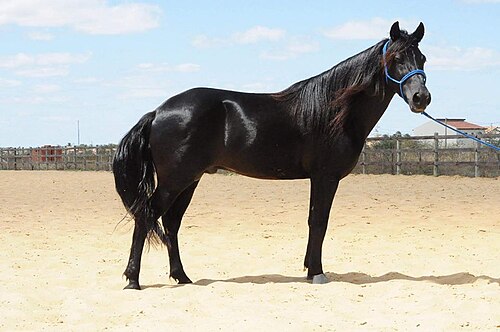
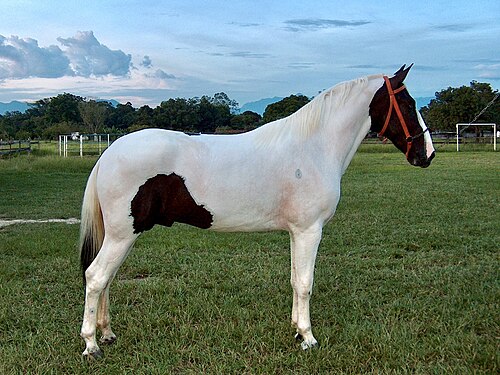 Pampa Horse Brazil Photo: Amazona01 · CC BY-SA 3.0
Other list of gaited horse breeds breeds
Photo credits13 photographs on this page
- Campolina — Amazona01 · CC BY-SA 3.0 · file page
- Brazilian pony — Wikimedia Commons contributor · CC BY 2.5 · file page
- Brazilian Sport Horse — Henry Bucklow/Lazy Photography · CC BY-SA 3.0 · file page
- Crioulo — Kc.sminsights · CC BY-SA 4.0 · file page
- Lavradeiro — Carlos Marques · CC BY-SA 2.0 · file page
- Mangalarga — Wikimedia Commons contributor · Public domain · file page
- Mangalarga Marchador — Fábio Vidigal · CC BY-SA 2.5 · file page
- Northeastern horse — Euzeli Cipriano dos Santos Junior · CC BY-SA 4.0 · file page
- Pampa Horse — Amazona01 · CC BY-SA 3.0 · file page
- Pantaneiro — Vicente Bissoni Neto · CC BY-SA 4.0 · file page
- American Saddlebred — Just chaos · CC BY 2.0 · file page
- Costa Rican Saddle Horse — Arsdelicata · CC BY-SA 3.0 · file page
- Guba — Naturefriends · CC BY-SA 4.0 · file page
Photographs come from Wikimedia Commons under the licence each one names. How Animalso credits photographs.