
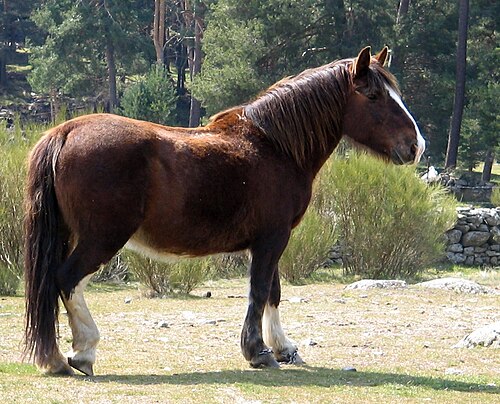
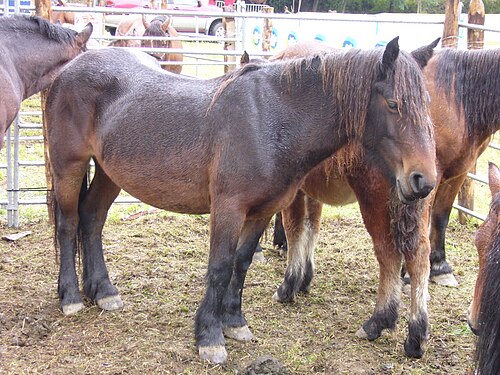
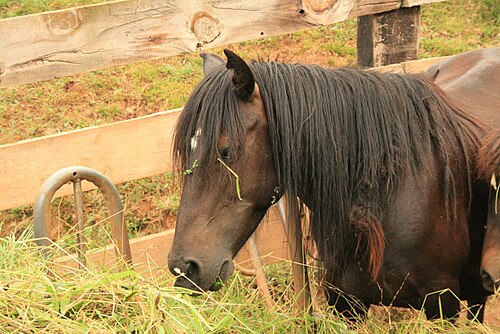
 Photo: Chaluco · Public domain
horse breed · 671 on Animalso
Hispano-Bretón Horse
- Animal
- Horse
- Type
- Meat horse
- Origin
- Spain
The Hispano-Bretón is a Spanish draught horse. It was developed by crossing imported Breton horses with native Pura Raza Española stock. The breed is found mainly in Castile and León, neighboring Cantabria, and the Catalan Pyrenees. Spain lists it among its native breeds in danger of extinction. It is reared principally for horse-meat.
What the Hispano-Bretón is
The Hispano-Bretón is a Spanish draught horse, reared mainly for horse-meat. It belongs among horse breeds from Spain.
Its foundation combines imported Breton horses with native Pura Raza Española stock.
Where it began
The breed developed in Spain. Today, its main areas are Castile and León, parts of neighboring Cantabria, and the Pyrenees of Catalonia.
What stands out
Its identity is clear: a heavy draught breed with a documented Spanish origin and a meat-producing role.
The Hispano-Bretón also has a defined cross-bred background, linking Breton horses with Pura Raza Española stock.
Points to weigh
Spain lists the Hispano-Bretón in its official catalog of native breeds in danger of extinction.
It is chiefly reared for horse-meat.
Pricing
This breed profile has no plan or purchase pricing.
Who should look elsewhere
Look beyond the Hispano-Bretón if you want a breed described here for riding or sport. For a wider starting point, see horse breeds.
Verdict
Choose the Hispano-Bretón when you want to understand a Spanish heavy horse tied to draught work and horse-meat production. Its Breton and Pura Raza Española ancestry gives the breed a specific historical identity. Its restricted northern-Spanish distribution and endangered listing matter to anyone considering its place in Spain’s native livestock heritage.
What stands out
- Spanish draught breed with a documented Breton and Pura Raza Española foundation.
- Bred principally for horse-meat.
- Main areas in northern Spain are clearly recorded.
- Recognized in Spain’s catalog of native breeds.
Worth knowing
- Spain lists the breed as in danger of extinction.
- Its role is centered on draught work and horse-meat.
- Its recorded distribution is concentrated in northern Spain.
Suits
- Readers tracing Spanish draught-horse origins
- People studying native Spanish livestock breeds
Think twice if
- You want a riding or sport breed rather than a draught, meat horse.
- You are comparing breeds outside Spain’s native horse heritage.
In short
The Hispano-Bretón is a Spanish heavy horse with a focused purpose and a traceable origin. Breton imports were crossed with Pura Raza Española horses, creating a draught breed now associated mainly with horse-meat. Its strongest sense of place comes from northern Spain, especially Castile and León, neighboring Cantabria, and the Catalan Pyrenees. Spain records it as a native breed in danger of extinction. It suits readers studying Spanish working horses and livestock history more than those seeking a riding-breed profile.
Questions
What is the Hispano-Bretón?
It is a Spanish breed of draught horse, reared principally for horse-meat.
Where does the Hispano-Bretón come from?
It originated in Spain and is found mainly in Castile and León, neighboring Cantabria, and the Pyrenees of Catalonia.
Which breeds helped create it?
The Hispano-Bretón resulted from crossing imported Breton horses with native Pura Raza Española stock.
Is the Hispano-Bretón endangered?
Spain lists it in the Catálogo Oficial de Razas de Ganado de España among native breeds in danger of extinction.
What was the Hispano-Bretón bred to do?
The facts identify it as a draught horse reared mainly for horse-meat.
How common is it in Spain’s horse-meat industry?
The Hispano-Bretón is one of four heavy horse breeds that together account for about 90% of horses slaughtered for horse-meat in Spain.
More horse breeds from Spain
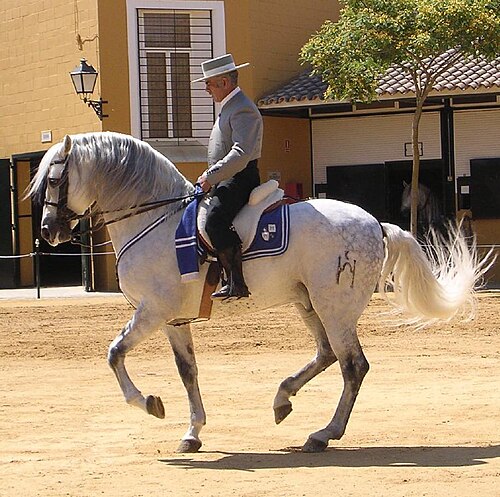 Andalusian horse Spain Photo: Fresco Tours · CC BY 2.0
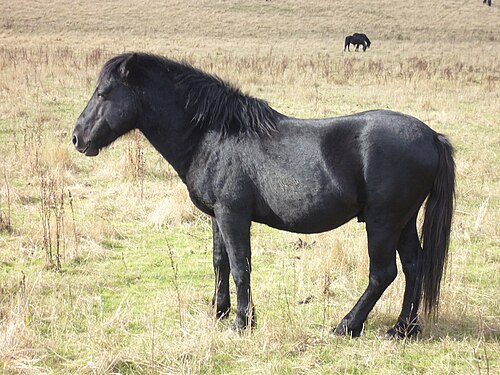
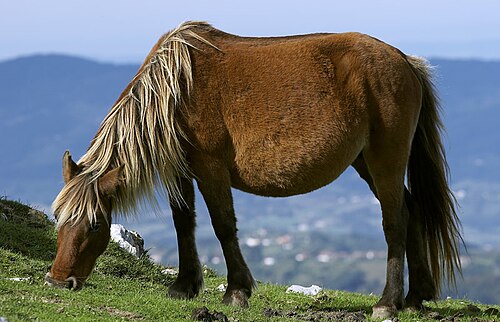 Asturcón Spain Photo: fagf · Public domain
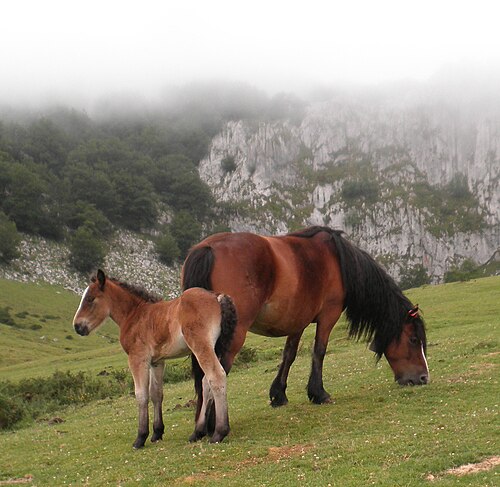
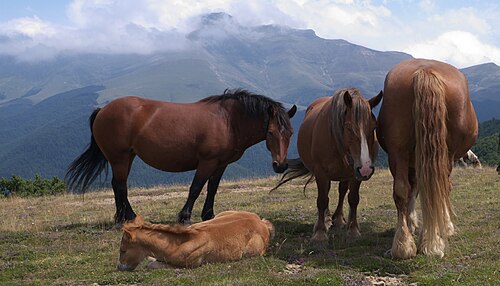 Burguete horse Spain Photo: buztanki · CC BY-SA 3.0
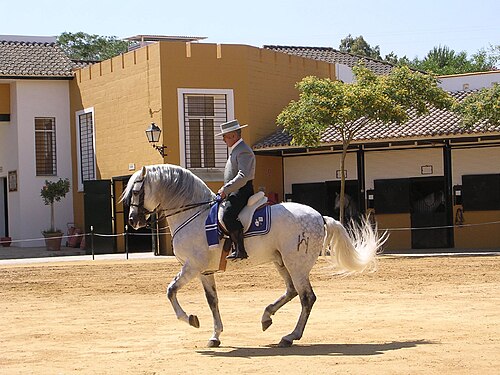 Carthusian Spain Photo: Fresco Tours · CC BY 2.0
Other Meat horse breeds
 Losino horse Spain Photo: Gorritxiki2 · CC BY-SA 3.0
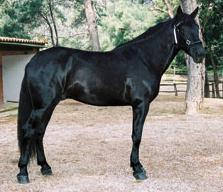
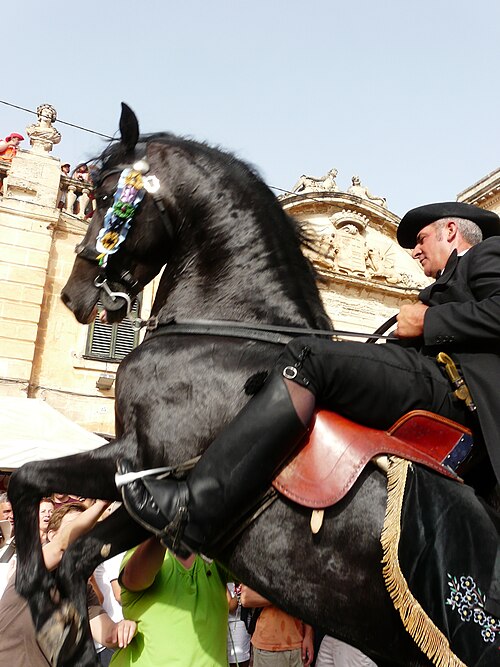
 Monchino Spain Photo: Stromare · CC BY-SA 3.0
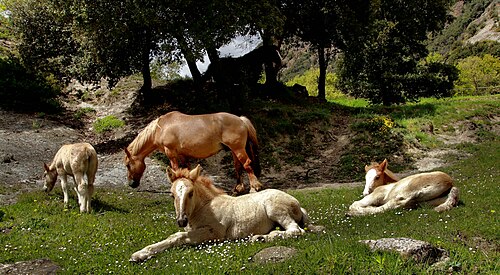 Pirenenc Català Spain Photo: Merdaseca · CC BY-SA 3.0
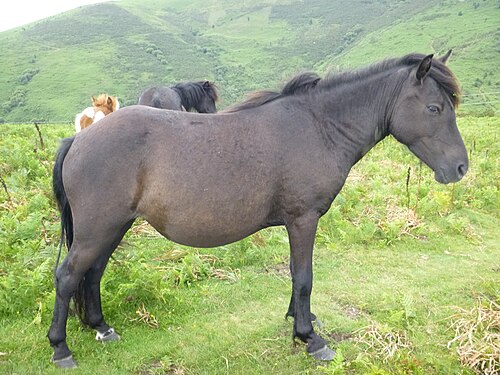 Pottok Spain Photo: Joxemai · CC BY-SA 4.0
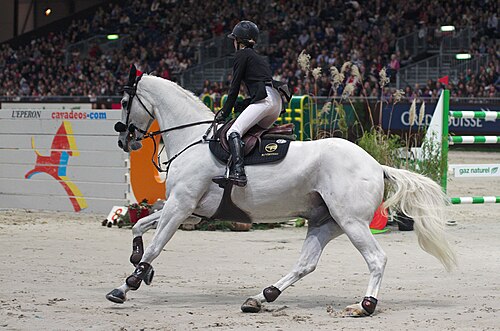
Photo credits17 photographs on this page
- Hispano-Bretón — Chaluco · Public domain · file page
- Andalusian horse — Fresco Tours · CC BY 2.0 · file page
- Asturcón — fagf · Public domain · file page
- Basque Mountain Horse — Joxemai · CC BY-SA 3.0 · file page
- Burguete horse — buztanki · CC BY-SA 3.0 · file page
- Carthusian — Fresco Tours · CC BY 2.0 · file page
- Galician Pony — HombreDHojalata · CC BY-SA 3.0 · file page
- Hispano-Árabe — Manuel Gómez · CC BY-SA 2.0 · file page
- Jaca Navarra — LANKIDE GORRITXIKI · CC BY-SA 3.0 · file page
- Losino horse — Gorritxiki2 · CC BY-SA 3.0 · file page
- Mallorquín — Govern de les Illes Balears · CC BY-SA 3.0 · file page
- Menorquín horse — Marta Ensesa · CC BY-SA 4.0 · file page
- Monchino — Stromare · CC BY-SA 3.0 · file page
- Pirenenc Català — Merdaseca · CC BY-SA 3.0 · file page
- Pottok — Joxemai · CC BY-SA 4.0 · file page
- Pura Raza Española — Yeguada San Joaquin · CC BY-SA 4.0 · file page
- Spanish Sport Horse — Clément Bucco-Lechat · CC BY-SA 3.0 · file page
Photographs come from Wikimedia Commons under the licence each one names. How Animalso credits photographs.