
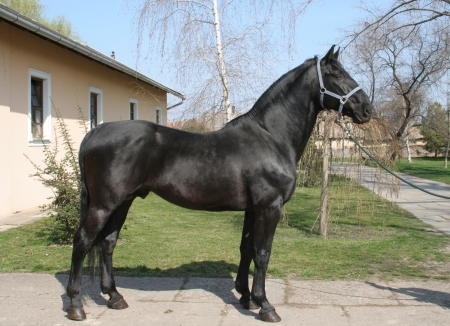
 Photo: Tommy lieven · Public domain
horse breed · 671 on Animalso
Nonius Horse: A Hungarian Light-Draft Breed
- Animal
- Horse
- Origin
- Hungary
- Weight
- 550 kg
The Nonius is a Hungarian horse breed named for its Anglo-Norman foundation sire. Developed at the Imperial Stud at Mezőhegyes, it served as a light draft and utility horse for Hungary’s military before becoming an agricultural horse. Today, preservation breeders keep it for agriculture, leisure riding and competitive driving.
What the Nonius is used for
The Nonius began as a light draft and utility horse for Hungary’s military. During the 20th century, it also became an agricultural horse.
Current uses include farm work, leisure riding and competitive driving sports.
Getting to know the breed
The breed was developed at the Imperial Stud at Mezőhegyes in Hungary through careful linebreeding. Its name comes from its Anglo-Norman foundation sire.
The largest numbers are still at Mezőhegyes, while representatives are found in other eastern European nations. See horse breeds from Hungary for related origins.
Strengths
The Nonius combines a light-draft role with driving and riding uses. Its history covers military service, agriculture and modern driving competition.
Its preservation breeding keeps a distinct Hungarian horse tradition in use.
Points to consider
World War II sharply reduced the breed’s population. Later, as horse use declined in Hungary, many Nonius horses were sent to slaughter.
The largest numbers are still found at Mezőhegyes, with representatives in other eastern European nations.
Pricing
No price is stated for Nonius horses.
Who may want another breed
Someone seeking a horse outside the Nonius’s Hungarian light-draft, agricultural and driving tradition may want to compare other horse breeds.
Verdict
Choose the Nonius if its Hungarian history and mix of farm, riding and driving roles match your plans.
Look elsewhere if you need a breed with a different working background.
What stands out
- Hungarian breed developed at the Imperial Stud at Mezőhegyes
- Bred for light draft and utility work
- Used in agriculture, leisure riding or competitive driving
- Preservation breeders continue the breed
Worth knowing
- World War II caused a major population decline
- Horse-use changes in Hungary led many to slaughter
- Largest numbers remain concentrated at Mezőhegyes
Suits
- Owners interested in Hungarian light-draft and driving breeds
- Agriculture, leisure riding or competitive driving
Think twice if
- You want a breed with a different working history
In short
The Nonius suits owners drawn to a Hungarian breed with roots in military utility and later farm work. Its present-day roles extend to leisure riding and competitive driving, giving it more than one practical setting. Preservation breeders continue the line, while the largest numbers are still found at Mezőhegyes. Before choosing one, consider whether this history and regional concentration fit your access and intended use.
Questions
Where does the Nonius horse come from?
The Nonius comes from Hungary. It was developed at the Imperial Stud at Mezőhegyes.
What was the Nonius bred to do?
It was first bred as a light draft and utility horse for Hungary’s military, then became useful in agriculture.
What is the Nonius used for today?
Modern uses include agriculture, leisure riding and competitive driving sports.
How much does a Nonius horse weigh?
The recorded weight for the Nonius is 550.
Why is the Nonius population small?
World War II reduced its numbers. Later, declining horse use in Hungary led many horses to slaughter.
Where are most Nonius horses found?
The largest numbers are still at Mezőhegyes, and representatives are present in other eastern European nations.
More horse breeds from Hungary
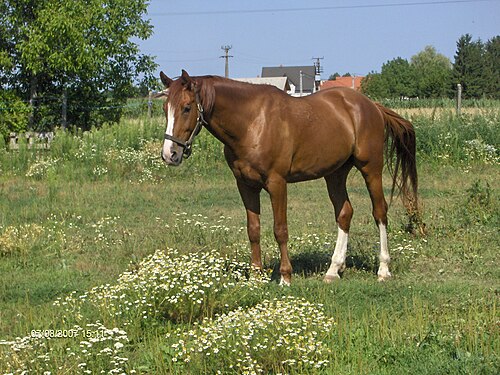
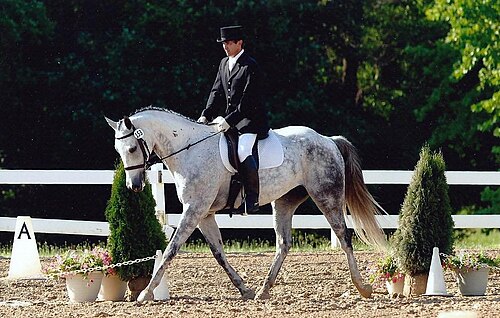
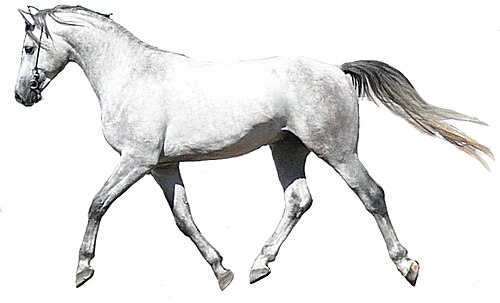
Photo credits5 photographs on this page
- Nonius horse — Tommy lieven · Public domain · file page
- Gidran — Siheder · CC BY-SA 3.0 · file page
- Hungarian Sport Horse — Joe Haupt · CC BY-SA 2.0 · file page
- Kisber Felver — én · CC BY-SA 4.0 · file page
- Shagya Arabian — Véronique Mestre Gibaud · CC BY-SA 3.0 · file page
Photographs come from Wikimedia Commons under the licence each one names. How Animalso credits photographs.