Most fish fertilize their eggs externally. During spawning, the female releases eggs and the male releases sperm (milt) into the water, where sperm and eggs meet. Internal fertilization is also normal in all sharks and rays and in some bony fish, including guppies and mosquitofish.
Where fertilization occurs is not the same as where the embryo develops. An internally fertilized fish may lay eggs, retain them until they hatch, or give birth to live young.
How external fertilization works in most fish
In external fertilization, sperm and egg unite outside the female’s body, usually in water. A spawning female releases eggs while one or more males release milt over them. Fertilization can happen within seconds, but success depends on timing, water movement, sperm concentration and whether predators or debris interfere.
Salmon and many freshwater fish use this pattern. Species that shed both gametes into the water are often called broadcast spawners. A female may release many eggs because a large proportion can be eaten, swept away, fail to develop or never encounter viable sperm.
What’s actually slowing this PC down?
Pick the symptom - the matching free tool is one click away.
#1 Best Overall

- Made of non-toxic plastic material, hatching for raising fish eggs
- Suction tube clamp soft, easy to install, not easy to scratch the incubator director
- Mesh uniform and dense to ensure smooth flow of water and improve hatchability
- Biochemical cotton can avoid the impurities in the fish tank into the incubation chamber
- Hatching fish eggs, you need to use the same fish tank water, so that fish eggs adapt to the environment
What happens after spawning
External fertilization does not determine the level of parental care. Depending on the species, adults may leave the eggs, guard a nest, fan the eggs to improve oxygen flow, or attach them to plants, rocks or another substrate. Burbot, for example, is documented as an external broadcast spawner.
How internal fertilization works
With internal fertilization, sperm is transferred into the female and unites with the egg inside her reproductive tract. All sharks and rays use internal fertilization. Some bony fish do as well, including guppies and mosquitofish.
Structures that transfer sperm
- Gonopodium: Male mosquitofish and related live-bearing bony fish use a modified anal fin to deliver sperm.
- Claspers: Male sharks and rays use paired appendages at the pelvic fins to transfer sperm into the female.
Internal fertilization can protect sperm and early embryos from dilution and some external hazards, but it is not automatically “better.” Each reproductive system reflects the species’ habitat, anatomy, energy budget and survival strategy.
Rank #2

- This specialized Fish Egg Incubator is designed for mouth-brooding cichlids, featuring a gentle tumbling action that mimics natural parental care for optimal hatch rates.
- Crafted from aquarium-safe materials, this Egg Tumbler includes a secure suction mount and fine mesh walls that maintain excellent water flow while protecting delicate eggs.
- The 50mm breeding chamber features precision mesh that keeps eggs in constant motion, significantly improving fry survival rates.
- An essential Cichlid Breeding Supply, this hatchery includes filter wool to block tank debris, creating an isolated safe environment for egg development.
- Easily install this Aquarium Egg Tumbler using water from your main tank to maintain consistent water parameters, ensuring eggs remain in their familiar environment.
Fertilization and embryo development are separate questions
Ask two different questions: Where does sperm meet the egg? and Where does the embryo develop? The combinations below occur in real fish species.
Do these 3 things before closing this tab:
1Fix the driver behind crashes, sound loss and screen glitches2Repair Windows errors before they cause bigger problems3Scan for outdated or missing drivers - takes under a minute| Reproductive pattern | Where sperm meets egg | What happens to the fertilized egg or embryo | Main food source |
|---|---|---|---|
| External fertilization with egg-laying | Outside the female, usually in water | Eggs are laid and develop outside the parent | Yolk in the egg |
| Internal fertilization with egg-laying | Inside the female | Fertilized eggs are later laid; embryos develop in those eggs | Primarily yolk |
| Ovoviviparity (often called aplacental viviparity) | Inside the female | Fertilized eggs are retained; embryos hatch inside or shortly before release | Mostly yolk |
| Viviparity | Inside the female | Embryos remain inside and young are born live | Yolk plus some maternal nutrition, varying by species |
Oviparous fish
Oviparous fish lay eggs outside the body. The eggs may have been fertilized externally before release or internally and then laid later. In either case, the embryo develops in the egg and uses its yolk reserve.
Ovoviviparous fish
In ovoviviparity, the female retains fertilized eggs. Embryos are nourished mainly by yolk rather than through a placenta, and they hatch inside the parent or just before the young are released. Some sources group this condition under aplacental viviparity, so the underlying nutrition and retention pattern matters more than the label.
Rank #3

- Fish eggs incubator: Made of non-toxic plastic and other material, for raising hatching fish eggs.Quality assurance, environmental protection and safety.
- Easy to install: Suction tube clamp is soft and easy to install, but still not easy to scratch the incubator director. Mesh uniform and dense to ensure smooth flow of water and improve hatch ability.
- Fish incubator: Air-lift joints with a 45 degree camber make the water flows more smoothly, which can be driven by a small air pump. The bracket is transparent tube for easy observation.
- Incubation purpose: Allow fresh water to circulate over cichlid eggs that have been separated from the parents, a fresh supply of clean water allows the eggs to develop in an oxygen rich environment.
- Sweet tips: Hatching fish eggs, you need to use the same fish tank water, so that fish eggs adapt to the environment.
Viviparous fish
Viviparous fish retain embryos and provide additional maternal nutrition to some degree. The young are born live. Sharks show several forms of internal development: some species lay eggs, while others retain embryos and give birth.
What is inside a fish egg?
Yolk is the basic food reserve for a fish embryo. After fertilization, the developing embryo uses yolk for energy and building materials until it can feed independently. In some internally developing sharks, embryos also receive nutrition from maternal tissues or, in certain species, other eggs. Thus, “inside the mother” does not always mean the embryo is fed in the same way as a mammal fetus.
Quick wins for a faster PC:
Fix the driver behind crashes, sound loss and screen glitchesFind Drivers →Repair Windows errors before they cause bigger problemsFix Now →Do fish lay unfertilized eggs?
Yes. A female can release eggs that never become fertilized if no compatible sperm reaches them, the timing is wrong, the sperm is not viable, or the species requires a particular spawning cue. An unfertilized egg may still look like a normal egg at first, but it does not begin normal embryonic development and usually deteriorates.
Rank #4

- [Our fish egg hatching kit contains]a set of cichlid fish egg incubator, a set of aquarium Fish Breeding Box, an aquarium air pump, a small bubble stone, an aquarium control valve, two hoses, a small fish catching net, and one Aquatic tweezers
- [Fish egg incubator uasage instruction]Our fish egg incubator is made of high-quality acrylic and PMC material. It is detachable and easy to clean after use. The cichlid fish egg incubator is equipped with four powerful aquarium suckers, which can be firmly installed on the inner wall of the fish tank. There is a black biochemical filter at the bottom of the fish egg incubator, which can isolate the impurities in the fish tank.
- [How to install fish incubator and air pump]After the fish egg incubator is installed according to the instructions in the manual, make it be sucked on the inner wall of the fish tank glass then connect the aquarium air pump to the bubble stone, and put air stone into the upper part of the incubator. Remember to open the fine-tuning valve to let the air stone to bubble in order to let water flow in the incubator. Please refer to the manual for the specific installation method.
- [Isolation fish breeding box function instruction]There is also a set of Acrylic Isolation Fish Breeding Box in the product package. After the small fish eggs hatched, the small fish can be kept in the Isolation Fish Breeding Box which can be a good place to take more care and grow the small fish and can also prevent the newly hatched fish from being eaten by the big fish in your aquarium tank.
- [Small fish net and small aquarium tweezer function instruction]There is also a small fishing net in the product set that can be used to catch small fish. There is also a small aquarium tweezers, which can be used to catch impurities or waste floating on the surface of the fish tank.
In aquarium settings, eggs can therefore be present without fry appearing. Removing dead, opaque or fungus-covered eggs may reduce spread to nearby viable eggs, but the correct practice depends on the species and tank conditions.
Independent reader supportYour contribution helps us test, update, and keep practical guides available for everyone.Do fish fertilize eggs after they are laid?
In species with external fertilization, sperm is commonly released over eggs as they are being released or immediately afterward, so the eggs are fertilized in the surrounding water rather than later by a separate delayed process. Once an egg’s outer layer hardens and the fertilization window closes, sperm generally cannot fertilize it.
In internally fertilizing species, sperm reaches the egg before the egg is laid or before the embryo is released. A rare species may release eggs soon after internal insemination, so the timing is not an absolute rule for every fish; the species’ reproductive anatomy determines the sequence.
Recommended Free Tools
Best Value
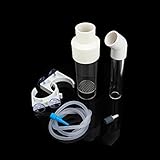
- PREMIUM MATERIAL: Made of non-toxic plastic material, Hatching for raising fish shrimp eggs, Such as American Cichlids, African Cichlids, Tropheus, Shrimp, etc.
- EASY TO INSTALL: Suction tube clamp soft, easy to install and clean, not easy to scratch the incubator director. Mesh uniform and dense to ensure smooth flow of water and improve hatchability.
- FISH EGGS INCUBATOR: Biochemical cotton can avoid the impurities in the fish tank into the incubation chamber. Good light transmission, which is convenient for observing the hatching process.
- INCUBATION PURPOSE: Allowing fresh water to circulate over cichlid eggs separated from their parents, a fresh supply of clean water allows the eggs to develop in an oxygen-rich environment.
- SWEET TIPS: Hatching fish eggs, you need to use the same fish shrimp tank water, so that fish eggs adapt to the environment. If you have problem with our product, please feel free to contact us.
External versus internal fertilization: the practical trade-offs
| Comparison | External fertilization | Internal fertilization |
|---|---|---|
| Where sperm meets egg | Outside the female, generally in water | Inside the female’s reproductive tract |
| Typical egg or embryo location | Eggs usually develop outside the body | Eggs may be laid, retained until hatching, or developed to live birth |
| Embryo food | Usually yolk in an external egg | Yolk, with additional maternal nutrition in some species |
| Specialized structures | Often no intromittent organ is needed for spawning | Examples include gonopodia in mosquitofish and claspers in sharks and rays |
| Common ecological exposure | Eggs and sperm face dilution, currents, predators and changing water conditions | Sperm and early embryos receive more physical protection inside the female |
| Typical reproductive output | Often many eggs, with survival spread across a large number of offspring | Often fewer, more developed young, although species vary widely |
| Parental care | May be absent, or involve nest defense, fanning or egg attachment | Protection is provided during retention; care after birth or release varies |
These are comparison axes, not a ladder from “primitive” to “advanced.” External spawning can be highly successful when a habitat supports large numbers of eggs, while internal development can be advantageous when protecting a smaller number of embryos is more effective.
Examples you can recognize
Salmon and many freshwater fish
The female deposits eggs and the male releases milt over them. Fertilization takes place in the water, and the eggs then develop outside the parents.
Guppies and mosquitofish
These bony fish use internal fertilization. Females retain developing young and commonly give birth to live offspring, illustrating why fertilization location and birth mode must be described separately.
Sharks and rays
All sharks and rays fertilize internally using claspers. Some species are egg-layers, whereas others retain embryos and release live young. Their different development modes occur despite the shared internal fertilization step.
Quick Recap
Key takeaways
- External fertilization is the usual pattern in fish: eggs and sperm meet in water during spawning.
- Internal fertilization is used by all sharks and rays and by some bony fish such as guppies and mosquitofish.
- An internally fertilized fish may lay eggs, retain yolk-fed embryos, or provide additional maternal nutrition and give birth live.
- Yolk feeds most fish embryos; some species add maternal or egg-derived nutrition.
- Unfertilized eggs can be released, and externally fertilized eggs are fertilized during spawning rather than at an arbitrary later time.
Product prices and availability are accurate as of the date/time indicated and are subject to change. Any price and availability information displayed on Amazon at the time of purchase will apply.




