Deep-sea fish survive by combining pressure-tolerant physiology, energy-saving behavior, specialized senses and carefully targeted uses of light. The deep ocean is cold, dark, high-pressure and usually short of food, but it is not one uniform habitat. A fish’s adaptations depend on its depth, temperature, available light, prey, predators and evolutionary lineage.
What makes the deep sea such a demanding habitat?
Below the sunlit surface waters, conditions change together:



- Pressure rises with depth. Cells, proteins and membranes must continue working despite intense compression.
- Temperature is generally low. Biochemical reactions and membrane processes must remain functional in the cold.
- Sunlight becomes scarce and then absent. Vision based on ordinary daylight is no longer enough for every species.
- Food is unpredictable. Meals may be small, widely separated or suddenly much larger than a fish can normally handle.
- Predators and prey can detect flashes. Any light-producing or reflective surface can reveal an animal unless it is used carefully.
These pressures do not produce one standard deep-sea body plan. Some fishes invest heavily in eyes and light organs; others reduce their eyes and rely on smell, touch or vibration detection.
How do deep-sea fish tolerate pressure and cold?
Flexible, water-rich bodies
Many deep-sea fishes have tissues that are relatively flexible and water-rich. Because water is difficult to compress, this general body design helps reduce the structural damage that a rigid, air-filled or heavily mineralized form could suffer. It is a broad pattern rather than a universal solution: different lineages combine body design with their own physiological adjustments.
The Tool Desk
Outbyte Driver Updater FREEScan for outdated or missing drivers - takes under a minuteDriver Scan →Outbyte PC Repair FREERepair Windows errors before they cause bigger problemsFix Now →#1 Best Overall
Biochemistry that keeps cells working
Pressure and cold affect proteins, membranes and chemical reactions inside cells. Deep-sea fishes therefore require biochemical arrangements that keep these structures functional under both stresses. The exact mechanisms differ among groups, so there is no single pressure adaptation shared by every species. Their physiology is better understood as a set of lineage-specific solutions to the same physical problems.
How do fish see in the deep ocean?
Large eyes for the last available photons
Where even a little downward light remains, enlarged eyes can collect more of the very small number of available photons. This is useful for detecting silhouettes, movement and the faint glow of other organisms. A large eye is costly to build and maintain, however, so it is most valuable where visual information is still reliable.
Reduced eyes and stronger nonvisual senses
In darker settings, some fishes invest less in vision and more in chemoreception and mechanosensation. Smell can reveal dissolved chemical traces, while touch and vibration-sensitive systems can detect nearby movement. This is why the statement that all deep-sea fish are blind is wrong: vision ranges from highly developed to reduced, according to the light available and the animal’s way of finding food.
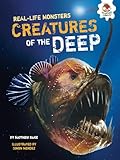
Why do anglerfish and other fishes glow?
Bioluminescence is light produced by an organism through a chemical reaction. Fish may generate it in photophores or obtain it from symbiotic bacteria. NOAA Ocean Exploration’s 2020 update estimates that about 80 percent of animals living between 200 and 1,000 metres are bioluminescent, although the percentage describes animals in that depth range, not every fish species.
Free tools Windows power users keep installed
One-click scans. No signup required.
Luring prey
Anglerfish use a light-producing lure to bring prey close enough to seize. This strategy can replace the energy-intensive task of continuously searching through empty water. NOAA describes 167 primarily bathypelagic anglerfish species in 11 families, illustrating that “anglerfish” covers a diverse group rather than one identical design.
Illuminating nearby food
A light organ can function as a short-range searchlight, revealing prey close to the mouth. In a habitat where food is sparse, seeing a meal at the last moment can be more useful than maintaining a large, constantly scanning visual system.
Communication and mating
Species-specific flashes or glows may help individuals find one another or signal identity. The exact pattern and meaning differ among species.
Confusing or deterring predators
A sudden flash can startle a predator, obscure the direction of escape or make an attacker hesitate. Light may also draw a larger predator toward the original attacker, producing a “burglar alarm” effect in some interactions.
Do these 3 things before closing this tab:
1Scan for outdated or missing drivers - takes under a minute2Clear out junk files and repair common Windows errors3Fix the driver behind crashes, sound loss and screen glitchesRank #3
Counterillumination camouflage
Some fishes produce light on their underside to match the faint light coming from above. Viewed from below, this counterillumination can erase the fish’s dark silhouette. Lanternfish are a useful contrast with anglerfish: their light organs are associated with concealment and signaling rather than a lure at the end of a fishing appendage.
Bioluminescence does not have one fixed purpose. NOAA notes that the main function is not known for every species, so a glow should not automatically be interpreted as a lure, warning or mating signal.
How does color work when sunlight is gone?
Red can become stealthy
Seawater removes red wavelengths relatively quickly. At depth, a red body can therefore appear black because the red light needed to reveal its color is no longer present. This makes red useful as camouflage for animals that would be conspicuous near the surface.
Dragonfish use a private red searchlight
Most animals cannot see red light at depth, but dragonfish can both produce and detect it. That ability gives a dragonfish a private searchlight: it can illuminate and locate red prey that other nearby animals are unlikely to see.
Ultra-black skin absorbs bioluminescent flashes
Dark brown and black surfaces reduce reflected light, including flashes made by other animals. An especially absorbent form, often called ultra-black skin, can be even harder to detect. A 2020 Current Biology study measured reflectance below 0.5 percent in 16 species spanning seven fish orders. In the study’s comparison, predators detected those ultra-black fish at a distance more than six times shorter than fish with 2 percent reflectance. That result applies to the tested species and conditions, not to every black deep-sea fish.
Independent reader supportYour contribution helps us test, update, and keep practical guides available for everyone.How do deep-sea fish find and capture scarce food?
Energy-saving ambushes
When prey encounters are rare, waiting for food can be cheaper than swimming continuously. A lure, a sensitive vibration detector or an expanded field of chemical sensing can bring information to a fish that is conserving energy.
Large mouths and expandable stomachs
Some deep-sea predators have large mouths and stomachs that can accommodate prey that is surprisingly large relative to the predator. These traits are valuable when the next meal may not arrive for a long time, but they are examples of particular lineages, not universal features of deep-sea fish.
Vibration, touch and smell
Lateral-line systems and other vibration-sensitive structures can detect water movement from nearby prey or predators. Chemoreception and touch become especially important where visual range is short or absent. The result is a sensory trade-off: a fish may spend less energy on eyes and more on detecting chemical, mechanical or tactile clues.
Quick wins for a faster PC:
Repair Windows errors before they cause bigger problemsFix Now →Scan for outdated or missing drivers - takes under a minuteDriver Scan →Best Value
How adaptations differ among deep-sea fish
| Example | Light environment | Key sensory investment | Light-organ role | Feeding or survival strategy |
|---|---|---|---|---|
| Anglerfish | Very dim to absent sunlight in primarily bathypelagic habitats | Light detection combined with other senses | Glowing lure that brings prey within striking range | Ambush predation that limits the cost of searching |
| Lanternfish | Low light where silhouettes are dangerous | Vision and light sensing suited to moving through the water column | Often associated with counterillumination, signaling or concealment | Reducing the silhouette seen by predators below |
| Dragonfish | Darkness in which red wavelengths are rarely visible | Ability to produce and detect red light | Red illumination for detecting prey | Searching for prey with a wavelength most nearby animals cannot see |
The table shows why “deep-sea adaptation” is not a checklist. Two fishes living in darkness may solve the same problem in opposite ways: one may make itself harder to see, while another produces a wavelength that helps it see prey.
What these adaptations reveal about deep-sea survival
Deep-sea fishes succeed by matching investment to the conditions they actually encounter. Where faint light remains, large eyes can pay off. Where light is unreliable, smell, touch and vibration detection may be better investments. Where prey is scarce, lures, ambushes and expandable feeding structures reduce the energy cost of obtaining a meal. Where flashes expose an animal, red coloration, dark skin or counterillumination can restore concealment.
The deep sea therefore favors combinations rather than a single defining trait. Pressure-tolerant tissues and cold-adapted cell chemistry keep the body functioning; specialized senses locate food and danger; and bioluminescence or unusual pigmentation manages the risks and opportunities created by darkness.
Quick Recap
Product prices and availability are accurate as of the date/time indicated and are subject to change. Any price and availability information displayed on Amazon at the time of purchase will apply.
What’s actually slowing this PC down?
Pick the symptom - the matching free tool is one click away.




