What’s actually slowing this PC down?
Pick the symptom - the matching free tool is one click away.
The key difference is salinity: freshwater is essentially 0‰ salt, while normal seawater is about 35‰. That gap changes how fish control water and ions in their bodies, where they can live, and how their aquariums must be maintained. Freshwater fish generally gain water and lose salts to their surroundings; marine bony fish generally lose water and gain salts.
The differences at a glance
| Feature | Freshwater fish | Saltwater fish |
|---|---|---|
| Typical environment | Rivers, lakes, ponds and wetlands | Coastal waters and the open ocean |
| Surrounding salinity | About 0‰ | About 35‰ in normal seawater |
| Water movement across the body | Water tends to enter through gills and skin | Water tends to leave through gills and skin |
| Salt and ion balance | Ions diffuse out, so fish actively absorb them | Fish gain excess ions and must remove them |
| Urine | Large amounts of dilute urine | Smaller amounts of more concentrated urine |
| Typical aquarium priorities | Dechlorination, nitrogen-cycle tests, hardness, pH and temperature | Marine salt mixing, salinity measurement and expanded chemistry control |
Salinity is measured in parts per thousand (‰). Seawater contains a mixture of dissolved ions, not just sodium chloride, so adding table salt is not a substitute for a formulated marine salt mix.
How their bodies keep water and salts balanced
Freshwater fish constantly gain water
A freshwater fish’s body fluids are saltier than the surrounding water. Water therefore moves into the fish across permeable surfaces such as the gills, while important ions tend to diffuse outward. The fish does not normally drink large quantities. Instead, specialized cells in the gills actively take up ions, and the kidneys produce copious dilute urine to remove the incoming water without wasting as much salt.
Marine bony fish constantly lose water
For most marine bony fish, seawater is saltier than their body fluids. Water leaves the body, and salts enter. These fish drink seawater, absorb water in the gut, and use ion-transporting cells in the gills to excrete excess salts. Their kidneys produce a smaller volume of relatively concentrated urine.
Free tools Windows power users keep installed
One-click scans. No signup required.
#1 Best Overall

- QUIET AQUARIUM FILTER: The Tetra Whisper IQ Power Filter with Stay Clean technology contains a sound shield for quiet filtration less than 40 dB.
- SELF PRIMING: Submerged motor starts up with no priming required.
- CAPACITY: The Tetra Whisper IQ 20 Power Filter works in filters up to 20 gallons (130 GPH).
- STAY CLEAN TECHNOLOGY: By maintaining healthy pH levels, creates easier maintenance for healthier fish.
- CARTRIDGE REFILLS: Change cartridges monthly; uses large-sized Tetra Whisper Bio-Bag Filter Cartridges (refills sold separately).
These are physiological adaptations, not traits that can be switched instantly. A fish moved abruptly into water with a very different salinity can suffer severe osmotic stress even when the water looks clean.
Where each type lives—and where the categories overlap
Freshwater habitats
Freshwater fish occupy inland waters whose salinity is close to zero: flowing rivers and streams, lakes, ponds and wetlands. Conditions still vary with temperature, minerals, evaporation, rainfall and pollution, so “freshwater” does not mean every river or lake has identical chemistry.
Rank #2

- QUIET AQUARIUM FILTER: The Tetra Whisper IQ Power Filter with Stay Clean technology contains a sound shield for quiet filtration less than 40 dB.
- SELF PRIMING: Submerged motor starts up with no priming required.
- CAPACITY: The Tetra Whisper IQ 45 Power Filter works in tanks up to 45 gallons (215 GPH).
- STAY CLEAN TECHNOLOGY: By maintaining healthy pH levels, creates easier maintenance for healthier fish.
- CARTRIDGE REFILLS: Change cartridges monthly; uses large-sized Tetra Whisper Bio-Bag Filter Cartridges (refills sold separately).
Marine habitats
Saltwater fish live in seas and oceans, including coastal habitats where salinity, temperature and oxygen can change with tides and freshwater runoff. Open-ocean water is not the only marine environment; bays, lagoons and tidal marshes can also support marine species.
Estuaries and brackish water
Estuaries are transition zones where river water and seawater mix. Their salinity changes with tides, rainfall and the amount of freshwater flowing downstream. They are often described as nurseries of the sea because many animals reproduce there or spend their early life stages. Fish that tolerate a broad salinity range are especially important in these habitats.
Recommended Free Tools
Rank #3

- WITH ROTATING BIO-WHEEL: Patented Bio-Wheel technology provides excellent wet/dry biological filtration.
- MULTI-STAGE FILTRATION: Delivers mechanical, chemical and biological aquarium filtration to maintain a clean aquatic environment.
- MARINELAND FILTRATION PRODUCTS: Count on Marineland brand for the most reliable, technically advanced aquariums and accessories on the market.
- COMPATIBILITY: Use with Marineland Rite-Size Filter Cartridges (see individual filter for sizing recommendations).
- FIVE SIZES: Available in 75 GPH, 100 GPH, 150 GPH, 200 GPH and 350 GPH sizes.
Migratory and euryhaline fish
“Freshwater fish” and “saltwater fish” are useful shorthand, not an absolute division. Euryhaline species can tolerate a wide range of salinities, and some migrate between environments after a controlled physiological adjustment. Atlantic salmon, for example, grow in the ocean and later transform physiologically so they can enter freshwater to reproduce. The safe salinity range depends on the species, life stage and acclimation history.
What this means for aquarium care
Freshwater aquariums
A freshwater setup usually starts with tap water treated before fish are added. A suitable conditioner neutralizes chlorine, chloramines and heavy metals. Routine monitoring should include:
Rank #4
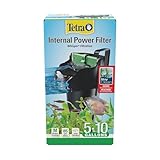
- INTERNAL POWER FILTER: Tetra Whisper Internal Power Filter for 5- to 10-gallon aquariums uses medium Whisper BioBag filter cartridges that are easy to change.
- QUIET 85 GPH MOTOR: The internal pump efficiently filters up to 85 gallons per hour.
- POWERFUL FILTRATION: Water flows through the cartridge floss, trapping debris and fish waste, while Ultra-activated carbon helps remove odor and discoloration.
- SPACE-SAVING DESIGN: Your aquarium can be 1” from the wall with the internal filter designed to clip directly on your aquarium wall and be hidden by décor.
- EASILY ADJUSTABLE: Adjustable clip allows for a variety of setups to easily adjust to high or low water levels.
- Ammonia and nitrite, which should remain at safe, effectively undetectable levels in an established aquarium
- Nitrate, which indicates the accumulation of nitrogen-cycle waste and is managed with maintenance and water changes
- pH and hardness, matched as closely as practical to the inhabitants
- Temperature, kept within the species’ required range
Use a test kit appropriate to the fish and test new water as well as the aquarium when diagnosing a problem.
Marine fish-only aquariums
Marine water must be made with a formulated marine salt mix and purified or properly dechlorinated water. Mix it fully before use and measure salinity or specific gravity with a calibrated hydrometer or refractometer; do not estimate it by eye. A saltwater test kit commonly measures high-range pH, ammonia, nitrite and nitrate. Marine substrate, circulation and filtration also need to suit the species and tank size.
Best Value

- QUIET AQUARIUM FILTER: The Tetra Whisper IQ Power Filter with Stay Clean technology contains a sound shield for quiet filtration less than 40 dB.
- SELF PRIMING: Submerged motor starts up with no priming required.
- The Tetra Whisper IQ 60 Power Filter works in tanks up to 60 gallons (300 GPH).
- STAY CLEAN TECHNOLOGY: By maintaining healthy pH levels, creates easier maintenance for healthier fish.
- CARTRIDGE REFILLS: Change cartridges monthly; uses large-sized Tetra Whisper Bio-Bag Filter Cartridges (refills sold separately).
Reef aquariums
A reef tank adds corals and other invertebrates whose chemistry demands are tighter than those of many fish-only systems. In addition to the basic marine tests, reef keepers commonly monitor calcium, carbonate hardness (alkalinity) and phosphate, along with nitrate. The extra measurements are not automatically required for every marine fish tank; they become relevant when the livestock and biological processes in the aquarium require them.
Independent reader supportYour contribution helps us test, update, and keep practical guides available for everyone.Can a fish be moved between fresh and salt water?
Never make the decision from a fish’s appearance or common name. Confirm the species’ natural salinity range and whether that particular life stage migrates. A fish adapted to changing salinity may still need a gradual, managed transition; a strictly freshwater or strictly marine species may not survive one at all.
- Identify the species and its life stage, and check the salinity range recommended for that animal.
- Measure the current and destination water with a reliable instrument rather than guessing.
- If the species is known to require acclimation, change salinity gradually using a method appropriate to the fish and the quarantine or transport setup.
- Watch behavior, breathing, balance and appetite during and after the transition, and stop the transfer if the fish shows acute distress.
Choosing equipment for the type of tank
For a freshwater aquarium, the most directly relevant starting equipment is a water conditioner and a general aquarium test kit. For a marine aquarium, plan on a marine salt mix, a salinity refractometer or hydrometer and a saltwater test kit. A reef system generally needs additional tests for alkalinity, calcium and phosphate. Equipment should follow the livestock and system design, not the label “saltwater” alone.
What is not known from a simple freshwater-versus-marine split
There is no reliable universal percentage that divides all fish species into freshwater and marine categories. Fish lineages, local habitats and life stages create exceptions, especially in estuaries and among migratory species. Treat the two labels as a starting point for research, then verify the requirements of the exact fish you plan to keep.
Do these 3 things before closing this tab:
1Scan for outdated or missing drivers - takes under a minute2Repair Windows errors before they cause bigger problems3Fix the driver behind crashes, sound loss and screen glitchesQuick Recap
Product prices and availability are accurate as of the date/time indicated and are subject to change. Any price and availability information displayed on Amazon at the time of purchase will apply.




