Windows Errors? Fix Them Before They Spread
Repair common Windows errors and clear accumulated junk for a smoother, more stable PC - no reinstall needed.Free scan · no reinstallOutdated Drivers Are Slowing You Down
One free scan finds every outdated or missing driver and matches the right update for your exact hardware.Free scan · exact hardware matchA thermocline changes where freshwater fish can live by separating warm, oxygen-renewed surface water from colder deep water that may gradually lose oxygen. Fish do not automatically stay above or below it. They select the depth where temperature, dissolved oxygen, food, light and species-specific tolerance overlap. In many stratified lakes that means holding at, just above or just below the thermocline; if deep water becomes hypoxic, the usable habitat shifts upward.
What a thermocline is
In a stratified lake, wind keeps the warm upper layer (the epilimnion) mixed while colder, denser water (the hypolimnion) settles below it. The thermocline is the zone where temperature falls most rapidly with depth. The density difference acts as a barrier, so oxygen and heat do not move freely between the layers.
It is not a fixed floor. Wind-driven internal waves can raise or lower it, and autumn cooling eventually breaks down stratification and mixes the water column.
Where fish are during summer stratification
The best depth is the intersection of several requirements, not a temperature number by itself:
#1 Best Overall
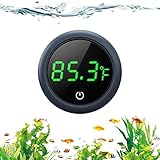
- HD LED Display: PAIZOO Aquarium Thermometer adopts LED screen to display temperature, LED can provide wide viewing angle and the color is saturated, it is easier to read the data no matter day or night. Green environmental protection and energy saving
- Cordless & Touch Design: Stick-on Induction Thermometer senses water temperature through probe, cordless design, no messy wires in the water, providing a clean and safe environment for fish.Touch the button to display the temperature, and the thermometer outside aquarium will enter the sleep state after 5s
- High Accurate Display: Tank Thermometer Aquarium just needs to tear off the adhesive and stick it below the water level on the outside of the tank. The thermometer for terrarium has a reading range of 0-140 °F and is accurate to 0.9 °F. Up to 5s refresh speed allows the naked eye to detect temperature changes more quickly
- Long Battery Life: The fish tank thermometer built-in 3V battery button, the battery is long-lasting. Mini design, easy to use. Digital thermometer is suitable for different water types such as fresh water, tap water, salt water, sea water, etc., to provide the most comfortable water environment for your beloved pets
- 100% Satisfied Customer Service: We provide 12-month warranty. In the event of any product quality defects within the warranty period, we will offer a free replacement without charge. PAIZOO customer service team operates 24/7 to deliver comprehensive, hassle-free support for an optimal user experience
- Temperature: each species and life stage has a preferred and tolerable range.
- Dissolved oxygen (DO): respiration requires adequate oxygen, even in otherwise ideal cold water.
- Food and structure: plankton, baitfish, vegetation, drop-offs and bottom features can concentrate fish at a particular depth.
- Light and clarity: visual predators and prey respond to water transparency and time of day.
- Movement of the layer: internal waves can move the preferred band without an obvious change in surface weather.
Many fish therefore gather near the thermocline, where water can be cooler than the surface while still receiving enough oxygen from above. They may be slightly above it, within the sharp temperature-gradient zone or just below it. Fish remain below the thermocline only while oxygen there remains suitable for that species.
Examples from monitored lakes
| Fish or system | Observed response | What it shows |
|---|---|---|
| Cisco and lake whitefish, Lake Simcoe | Occupied a 5–8 m band just below the thermocline; their depth moved as internal waves moved the layer. | Fish can track a moving thermal habitat. In this monitoring, temperature appeared to be the stronger cue because oxygen was sufficient but not ideal. |
| Lake whitefish, Clear Lake, Maine | Twenty tagged adults descended below a developing thermocline near 9 m when surface water exceeded 20°C, then moved shallower after surface cooling; diel movements also occurred. | Avoidance of hot surface water can drive fish below the thermocline, but depth changes with season and time of day. |
| Lake trout | Habitat predictions improved when temperature and DO were considered together rather than temperature alone. | A simple 8–12°C rule can underestimate or misidentify usable habitat. |
| Central Lake Erie fish community | Hypoxia below about 2–3 mg/L reduced habitat quality; the cited summary reported a mean 35% reduction for adult rainbow smelt and round goby. | Low oxygen can remove otherwise suitable deep habitat, with effects varying by species and life stage. |
The Lake Simcoe monitoring report describes fish depth moving with internal waves “to remain within their preferred thermal habitat.” These examples are lake- and study-specific, not universal depth rules.
Does the thermocline have enough oxygen?
Sometimes, but not always. Bacteria decomposing sinking organic matter consume oxygen in the hypolimnion. Because the thermocline restricts replenishment from the atmosphere, deep-water oxygen can decline through a long summer. The thermocline itself is therefore a transition zone, not a guaranteed oxygen refuge.
Rank #2

- New digital aquarium thermometer: LED display fish tank thermometer with professional LCD visual effect, the fish tank and aquarium water temperature can be displayed clearly, despite the night light, and can be easily read. Mini compact body design is suitable for a variety of different types of fish tanks and aquariums, is a must have fish tank accessories.
- Safe wireless touch design: The digital fish tank thermometer comes with a touch power button, which can be easily awakened by clicking. The built-in high sensor probe measures the water temperature for fish tank, well-organized wire in the fish tank to protect the fish from being swallowed or electrocuted, providing a clean and safe living environment for the pet fish axolotl turtle.
- Simple installation: The tank thermometer does not need any installation tool to remove the adhesive on the back, stick it on the outside of the tank below the tank water level, and after standing for 5 minutes, it can accurately and real-time monitor the aquarium temperature change.
- Accurate data: tank thermometer aquarium measurement range of the tank thermometer is 0°C~60°C, the accuracy is 0.18°C, and the error is ±1 °C. This is suitable for axolotl tank, turtle thermometer, saltwater fish tank accessories, betta fish tank thermometer, etc..
- Long life battery: Thermometer for aquarium fish tank is powered by a CR2032 battery (included), and the battery lasts up to 12 months. The wireless aquarium digital thermometer will automatically enter the sleep mode after 5 seconds of no operation, extend the battery life, and be more environmentally friendly and energy saving.
A cold hypolimnion may be physiologically attractive yet unusable if DO falls too low. Conversely, a warm layer above the thermocline may be less comfortable but provide the oxygen a fish needs. For lake-trout habitat, one cited study evaluated combinations such as temperatures below 12°C or 15°C with DO above 4 or 6 mg/L; these are study criteria, not a universal cutoff for every fish. In a warmer year, that study estimated a 5% reduction in total lake volume meeting its habitat criteria.
Recommended Free Tools
Oxygen conditions also vary horizontally. Decomposition, inflowing water, aquatic plants and lake shape can create different DO profiles in different basins, so a profile from one cove should not be applied to the whole lake.
How effects change through the year
Spring: layers are forming
As the surface warms, stratification develops progressively. Fish distributions can change quickly as new temperature bands appear, and wind can temporarily weaken or rearrange them.
Rank #3

- Wide Application: Ideal for use in water or high moisture environment like aquarium terrarium, or vivarium, suitable for different water types such as fresh water, tap water, salty water, marine water and etc.
- Easy to Read: Comes with a large LCD display that is easy to read clearly.
- Easy to Setup: Submerge probe with suction cup can easily be set in water. (Submerge probe only, do not submerge thermometer in water) Press ''PWR'' for 3 seconds to power off.
- Free LR44: 1 PC LR44 button cell for each thermometer
- Wide Temperature Range: Measure -58°F to +158°F (-50°C to +70°C) with accuracy +/- 1°C
Summer: the strongest separation
Stable stratification produces distinct temperature zones. Coldwater fish commonly use water at or below the thermocline when oxygen is adequate. Continued oxygen consumption can compress that habitat and force fish into warmer water above it. Warmwater species may remain higher, especially where prey and vegetation are concentrated.
Internal-wave periods: depth can change without a new weather pattern
Wind acting on the lake surface can generate seiches and internal waves that tilt the thermocline. Fish may follow the layer, so a productive depth in the morning or on one shoreline can differ later or elsewhere.
What’s actually slowing this PC down?
Pick the symptom - the matching free tool is one click away.
Autumn turnover: the barrier breaks down
Cooling surface water becomes denser and sinks, while wind mixes the water column. Oxygen and nutrients redistribute, the thermocline disappears, and fish locations can change substantially. A summer depth pattern should not be carried into turnover without checking conditions again.
Rank #4
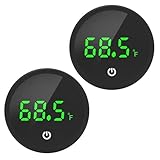
- New Digital Aquarium Thermometer: This new fish tank thermometer is equipped with an LED high-definition display and instant ℃/℉ switching (3-second response). It adopts an innovative circular buckle battery replacement design on the back, which takes care of your user experience in various aspects, meets the needs of different groups of people, and is an ideal for fish tank accessories.
- Safe wireless touch design: The digital fish tank thermometer comes with a touch power button, which can be easily awakened by clicking. The built-in high sensor probe measures the water temperature for fish tank, well-organized wire in the fish tank to protect the fish from being swallowed or electrocuted, providing a clean and safe living environment for the pet fish axolotl turtle.
- Simple installation: The tank thermometer does not need any installation tool to remove the adhesive on the back, stick it on the outside of the tank below the tank water level, and after standing for 5 minutes, it can accurately and real-time monitor the aquarium temperature change.
- Accurate data: tank thermometer aquarium measurement range of the tank thermometer is 0°C~60°C, the accuracy is 0.18°C, and the error is ±1 °C. This is suitable for axolotl tank, turtle thermometer, saltwater fish tank accessories, betta fish tank thermometer, etc..
- Long life battery: Thermometer for aquarium fish tank is powered by a CR2032 battery (included), and the battery lasts up to 12 months. The wireless aquarium digital thermometer will automatically enter the sleep mode after 5 seconds of no operation, extend the battery life, and be more environmentally friendly and energy saving.
How deep should you fish in a stratified lake?
There is no universal depth. Iowa Department of Natural Resources examples put the thermocline at about 5 ft in turbid lakes and more than 16 ft in clear lakes. Water clarity, lake size, depth, wind exposure, nutrient load and weather all matter, so those figures are illustrations rather than targets.
- Map temperature. Use a temperature probe or a temperature-capable fish finder to sample the water column. Identify the depth range with the sharpest temperature change.
- Check oxygen when possible. A DO profile tells you whether water below the thermocline is habitable for the species you are targeting.
- Begin near the transition. Present bait or lures at, just above and just below the thermocline while watching for fish, prey and structure. Start shallower if deep water is oxygen-poor or if your target is warmwater-oriented.
- Recheck after change. Strong wind, a cold front or several hot days can move or reshape the layer. Update your depth rather than assuming yesterday’s mark still applies.
- Interpret sonar cautiously. A fuzzy horizontal line can indicate plankton and suspended material concentrated near the thermocline. As Iowa fisheries supervisor Chris Larson noted, high-resolution depth finders may show this line and help identify the depth, but it is an indicator to investigate—not proof that every fish is on that exact line.
Why species and lakes respond differently
Thermocline effects depend on lake morphometry, water color, nutrient status, oxygen demand, weather, species and life stage. Cisco, lake whitefish and lake trout generally seek cooler water than many warmwater fish, but their usable depth still ends where oxygen becomes inadequate. Lake Erie observations show that hypoxia can remove different proportions of habitat for different species. Brook trout in Adirondack lakes likewise need cool, well-oxygenated water; strongly stratified, low-color lakes can develop anoxic hypolimnia that sharply reduce summer habitat.
For a meaningful comparison between locations or tactics, evaluate the target species’ temperature preference, measured DO, thermocline depth and thickness, prey concentration, clarity and light, and whether wind or internal waves are shifting the layer. Temperature alone cannot locate all freshwater fish.
Quick wins for a faster PC:
Scan for outdated or missing drivers - takes under a minuteDriver Scan →Clear out junk files and repair common Windows errorsFree Scan →Fix the driver behind crashes, sound loss and screen glitchesFind Drivers →What a thermocline means for fish health
Stratification is a natural process, not automatically a danger. It can provide a useful cool refuge from overheated surface water. The risk arises when oxygen depletion shrinks that refuge, concentrates fish into a narrow band or forces coldwater species into stressful temperatures. Sudden turnover can also redistribute oxygen and alter conditions rapidly, so fish may relocate even when the surface looks unchanged.
Quick Recap
Product prices and availability are accurate as of the date/time indicated and are subject to change. Any price and availability information displayed on Amazon at the time of purchase will apply.




