Quick wins for a faster PC:
Fix the driver behind crashes, sound loss and screen glitchesFind Drivers →Clear out junk files and repair common Windows errorsFree Scan →Scan for outdated or missing drivers - takes under a minuteDriver Scan →Freshwater fish gain water and lose salts; saltwater bony fish lose water and gain salts. Their gills, kidneys and— in marine species—intestines work in opposite directions to keep body fluids stable. That is why moving a typical freshwater fish straight into the ocean, or a marine fish into a freshwater tank, can be fatal without physiological adjustment.
The central difference: opposite osmotic gradients
Osmosis drives water across permeable tissues toward the saltier fluid. A typical freshwater fish has body fluids that are saltier than the surrounding water (it is hyperosmotic to its environment). Water continually enters, while dissolved ions such as sodium and chloride tend to diffuse out.
A typical marine bony fish has body fluids that are less salty than seawater (hypoosmotic). Water leaves its body and salts from the environment enter. Virginia Cooperative Extension summarizes the situation as “exactly opposite challenges regarding osmoregulation.”
| Feature | Typical freshwater fish | Typical saltwater bony fish |
|---|---|---|
| Body fluids compared with surroundings | More concentrated than freshwater (hyperosmotic) | More dilute than seawater (hypoosmotic) |
| Net water movement | Water enters the body | Water leaves the body |
| Drinking | Usually little or none | Drinks seawater |
| Gill ion transport | Actively takes up ions | Actively excretes excess ions |
| Urine | Large volume and dilute | Small volume and concentrated |
| Main osmotic danger | Over-dilution and salt loss | Dehydration and salt gain |
How freshwater fish maintain their salt and water balance
They eliminate incoming water
Because water enters across the gills and other permeable surfaces, freshwater fish produce abundant, dilute urine. Their kidneys remove water while retaining as many useful ions as possible.
#1 Best Overall

- QUIET AQUARIUM FILTER: The Tetra Whisper IQ Power Filter with Stay Clean technology contains a sound shield for quiet filtration less than 40 dB.
- SELF PRIMING: Submerged motor starts up with no priming required.
- CAPACITY: The Tetra Whisper IQ 20 Power Filter works in filters up to 20 gallons (130 GPH).
- STAY CLEAN TECHNOLOGY: By maintaining healthy pH levels, creates easier maintenance for healthier fish.
- CARTRIDGE REFILLS: Change cartridges monthly; uses large-sized Tetra Whisper Bio-Bag Filter Cartridges (refills sold separately).
They reclaim salts through the gills
Specialized gill ionocytes, also called chloride cells, actively import sodium, chloride and other ions from very dilute water. This energy-consuming transport replaces salts lost by diffusion and in urine. Freshwater species generally do not need to drink to obtain water.
How saltwater bony fish avoid dehydration
They drink seawater and absorb its water
Marine teleosts lose water osmotically, so they swallow seawater. Their intestines absorb water; physiological mechanisms reduce the disruptive effects of the salts that arrive with it.
They export excess ions at the gills
Marine gill ionocytes reverse the direction used by freshwater fish, pumping sodium, chloride and other excess ions out of the blood and into seawater.
Rank #2

- 【Efficient Filtration Capabilities】 The PondForse canister filter utilizes multiple layers of filtration media to remove particles and impurities from the aquarium water. This comprehensive approach to water filtration helps maintain crystal-clear water and a healthy ecosystem for your aquatic pets.
- 【Adjustable Flow Rate】 The flow rate control valve offers extensive compatibility, making it suitable for a wide range of aquarium sizes and types. You can easily control the flow rate, ensuring proper flow for optimal effect.
- 【Powerful Output Performance】 The energy-efficient motor operates with excellent stability, providing a continuous and reliable power source for the filtration process, and reducing electricity consumption while delivering powerful filtration performance.
- 【Quiet Operation】 Pondforse canister filter built-in high-performance copper brushless motor ensures a quiet aquarium environment, along with 4 denoising rubber feet to minimize noise. This ensures that it won't disturb your daily activities or disrupt the serenity of your aquatic flora and fauna.
- 【Comprehensive Filter Media Kit】Equipped with all essential accessories for creating a highly efficient filtration system in your aquarium. In addition to the whole filter and accessories, you'll also get 1 extra bulb for backup, balls and sponges.
They conserve water in the kidneys
Saltwater bony fish produce relatively small amounts of concentrated urine. The kidneys remove selected ions while limiting water loss, complementing the gills and intestine.
Why a typical freshwater fish cannot simply live in the ocean
In seawater, a freshwater fish would lose water rapidly and gain salts. Its freshwater-adapted gills would not excrete ions efficiently, and its kidneys are geared toward producing plentiful dilute urine rather than conserving water. The resulting dehydration, ion imbalance and cellular stress can impair nerves, muscles and organs.
The reverse problem faces a marine bony fish in freshwater: water floods in, salts diffuse out, and its marine ion-secretion system is unsuited to replacing the losses quickly enough. A sudden transfer can therefore kill either fish even if the water looks clean and has adequate oxygen.
Rank #3

- FILTRATION PRINCIPLE: After power on, the built-in pump generates power to form a filtered water cycle. First, dirty water is sucked in from the bottom of the water inlet pipe, and a small amount of water with an oil film enters from the oil skimmer port. The dirty water flows to the filter box, passes through three filter media, completes the filtration cycle,then clean water flows out of the outlet pipe
- EASY TO USE: The entire filter body is not placed in the tank and does not occupy the space of the aquarium,only one water inlet pipe in the tank. It is suitable for small space tanks, landscaping tanks with aquatic plants and stones, or with fish that are afraid of the sound of motors. It can hang on the aquarium tank, and the fixing clamp can be adjusted, suitable for glass thickness ≤ 0.7inch (18mm),can also be placed next to the fish tank without hanging
- UPGRADE FILTER: The motor pump is on the cover, will not scare the fish, and with the fully enclosed filter box and vibration-absorbianga fixed buckle, overall low decibel work. The all-copper motor water pump has a longer life, anti-dry burning design, if the temperature is too high, it will auto off to prevent dry burning damage to the pump.The height of the inlet pipe can adjust, and pipe with sponge cover at the bottom to prevent small fish and shrimps from being sucked away during operation
- MULTI-FUNCTION FILTER:3 types of water outlet effects can also add functional effects other than filtration. Rain Shower pipe outlet,the dispersed water flow hits the water surface and can also increase oxygen. Duckbill head water outlet,the water outlet direction of the duckbill head can be adjusted to directionally control the water flow. Straight outlet, large flow of water flows out directly, and the water in the tank is powerfully circulated
- 5W SUITABLE SIZE:The hanging filter tank design. The filter material volume box of hygger aquarium filter is larger than that of ordinary hang on filters, 5W canister is 0.22gal,with 150g Ceramic Ball + black Sponge + 8D Sponge, 79GPH suggest for ≤10 gal fish tank. Not suitable for low water turtle tanks
How salmon switch between rivers and the sea
Salmon and other migratory fish are euryhaline: they can tolerate a broader salinity range than specialists by remodeling their osmoregulatory systems. During the freshwater-to-seawater transition, hormones change the number and activity of gill ionocytes, the fish begins ingesting more seawater, the intestine increases water absorption, and urinary water losses decrease. On the return to freshwater, these adjustments reverse.
Estuaries provide a gradual salinity gradient that can reduce the shock of moving between river and ocean. The timing and extent of remodeling vary with species and life stage; a fish that is prepared for seawater is not physiologically identical to one still adapted to freshwater.
Recommended Free Tools
Euryhaline fish and intermediate salinity
Some species can live in brackish water for extended periods. Tilapia, for example, can adjust ion transport and water handling across varying salinities. If compensation fails—because the change is too rapid, the salinity is too extreme, or the fish is stressed—cells, tissues and organs can be damaged.
Rank #4
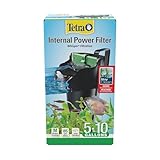
- INTERNAL POWER FILTER: Tetra Whisper Internal Power Filter for 5- to 10-gallon aquariums uses medium Whisper BioBag filter cartridges that are easy to change.
- QUIET 85 GPH MOTOR: The internal pump efficiently filters up to 85 gallons per hour.
- POWERFUL FILTRATION: Water flows through the cartridge floss, trapping debris and fish waste, while Ultra-activated carbon helps remove odor and discoloration.
- SPACE-SAVING DESIGN: Your aquarium can be 1” from the wall with the internal filter designed to clip directly on your aquarium wall and be hidden by décor.
- EASILY ADJUSTABLE: Adjustable clip allows for a variety of setups to easily adjust to high or low water levels.
Chesapeake Bay illustrates the ecological middle ground: Virginia Cooperative Extension described 32 species living year-round in the bay’s intermediate-salinity conditions in 2025. That figure applies to the bay and its survey context, not to all brackish habitats worldwide.
Independent reader supportYour contribution helps us test, update, and keep practical guides available for everyone.What this means for aquariums
Match the fish to the established salinity
Most aquarium fish are specialized for freshwater or marine conditions. Use a measured, stable salinity appropriate to the species rather than assuming a fish can adapt because it survived a brief transfer.
Acclimate only when the species and destination require it
For a known euryhaline fish, gradual changes allow gills, kidneys and intestines time to remodel. Follow species-specific guidance and monitor salinity with a calibrated instrument. Do not attempt to convert a specialized freshwater or marine fish by abruptly changing the water.
Best Value

- Multiple applications: great for cleaning aquarium, fish tank, water pump, filters, pipes, connector, and other hard to reach places; Aside from being the good brush for your aquarium equipment, you can likewise use this for your toilet and kitchen
- Material: the double-ended brush made of quality soft nylon silk and stainless steel, stainless steel is non-toxic and tasteless, and nylon silk is soft and durable, attached firmly on the stainless steel handle, not easy to fall off
- Size: the blue double-ended brush length 61.02 inch/ 155 cm, the yellow double-ended brush length 35.43 inch/ 90 cm, big brush diameter is 1.18 inch/ 30 mm, small brush diameter is 0.7 inch/ 18 mm; The black double-ended brush length 78.74 inch/ 200 cm, big brush diameter is 1.18 inch/ 30 mm, small brush diameter is 0.59 inch/ 15 mm
- Easy to use: it is flexible and bendable, it is great to tidy up the interior of assorted hoses, especially useful for bent pipes, like U-shape tube; Just push it into the pipes gently in the back and forth motion
- Package include: the package contains 3 pieces double ended brush (blue, yellow, black) with different size; One piece of each color, each brush has 2 sizes of brush head, different lengths and sizes provide you with diversified choices
Do not confuse treatment salt with routine salting
University of Florida IFAS describes noniodized table or rock salt for particular freshwater-fish handling and treatment situations: approximately 0.1–0.3% for some handling or transport uses and a 3% dip for certain protozoan problems. These concentrations are treatment instructions, not a blanket recommendation to add salt to every freshwater aquarium. Species, diagnosis, exposure time, filtration, plants and water chemistry must be checked first, and the product label should be followed.
A note about sharks and rays
The comparison above is for typical freshwater fish and marine bony fish (teleosts). Sharks, rays and their relatives use a different strategy, retaining substantial urea and other osmolytes so their body fluids are closer to seawater. They still regulate salts and water, but their physiology should not be used as a simple example of the marine bony-fish pattern.
Quick Recap
Product prices and availability are accurate as of the date/time indicated and are subject to change. Any price and availability information displayed on Amazon at the time of purchase will apply.




