For most established, moderately stocked freshwater aquariums, start with a 10–25% partial water change each week, or about 25% every two weeks. Test the water at least weekly and adjust the timing or amount to the results. New tanks, heavily stocked or heavily fed tanks, messy fish and sensitive species usually need more frequent changes. Always use a tap-water conditioner that neutralizes chlorine or chloramine, and match the replacement water’s temperature before adding it.
There is no single correct calendar schedule
Water-change needs depend on aquarium maturity, fish numbers and species, feeding, tank size, filtration, plants and measured water quality. A calendar is only a starting point: ammonia, nitrite or rising nitrate means you should respond immediately rather than wait for the next scheduled change.
The percentages below are established-care recommendations, not a universal interval demonstrated by one controlled study. A 2018 World Small Animal Veterinary Association Congress reference describes a 25% partial change and notes that one or two changes per month can be normal for an established aquarium. Other aquarium-care guidance commonly recommends smaller weekly changes.
Choose a starting schedule
| Tank situation | Practical starting point | Why it may need adjustment |
|---|---|---|
| Established, moderately stocked freshwater tank | 10% weekly or 25% every two weeks | Use about 25% weekly if tests, stocking or feeding show pollutants are accumulating. |
| New aquarium that is cycling | Test frequently and perform partial changes when results require them; weekly changes are a normal veterinary-care reference | Ammonia and nitrite can change quickly while biological filtration develops. |
| Heavily stocked, heavily fed or messy-fish aquarium | Shorten the interval and/or increase the partial-change percentage | More waste enters the system between maintenance sessions. |
| Sensitive species or a system with recurring test problems | Use a more frequent, test-led schedule | Some livestock tolerate swings or pollutants poorly. |
How much water should you change?
Use partial changes for routine maintenance
A 25% partial change is a widely used maintenance reference. A simple routine is 10% every week or 25% every two weeks. Remove water with a siphon or gravel vacuum so you can also take out settled waste and suspended debris.
The Tool Desk
Outbyte PC Repair FREEClear out junk files and repair common Windows errorsFree Scan →Outbyte Driver Updater FREEScan for outdated or missing drivers - takes under a minuteDriver Scan →#1 Best Overall

- Contains one (1) API TAP WATER CONDITIONER Aquarium Water Conditioner 16-Ounce Bottle
- Neutralizes chlorine, chloramines and other chemicals to make tap water safe for fish
- Prevents tap water chemicals from causing gill destruction, tissue irritation and fish death
- Super strength, high concentration formula
- Use when adding or changing water and when adding new fish to freshwater and saltwater aquariums
Do not routinely replace the whole tank
Changing more than 50% is not recommended as a routine practice in the cited aquarium guidance. Very large changes can alter temperature and water chemistry abruptly, disturb beneficial bacterial colonies and contribute to ammonia or nitrite spikes. The amount should still be driven by the actual problem and the needs of the fish; an abnormal test result may justify a larger or repeated partial change under careful monitoring.
Test before you decide to wait
Check at least weekly for pH, ammonia, nitrite and nitrate. Nitrate is the end product of ammonia breakdown. Plants and algae, bacterial denitrification and partial water changes remove it, so a rising nitrate reading is evidence that the current maintenance pattern is not keeping up.
Rank #2

- POWERFUL TREATMENT: Seachem Prime is a complete and concentrated conditioner for both freshwater and saltwater fish tanks, working hard to remove chlorine and chloramine.
- REMOVER: Seachem Prime immediately and permanently removes chlorine and chloramine, successfully allowing the bio filter to remove ammonia, nitrite, and nitrate while they are detoxified for 48 hours.
- DETOXIFIER: Seachem Prime effectively detoxifies ammonia, nitrite, and heavy metals found in the tap water at typical concentration levels, providing a ideal environment for your betta, tetra, or other fish.
- USE: Use 1 capful (5 mL) of Seachem Prime for each 200 L (50 US gallons) of new or replacement water. For best results, add Seachem Prime to new water first. For exceptionally high chloramine concentrations, a double dose may be used safely. For smaller volumes, use 2 drops per gallon.
- SAFETY: In case of an emergency, the 5x dose of Seachem Prime may be used for both ammonia and nitrite. Use a ½ dose if the water temperature is > 30°C (86°F) and chlorine or ammonia levels are low.
- Ammonia or nitrite detected: perform a partial change, investigate the cause and retest. These compounds are more urgent than following a routine date.
- Nitrate rising: increase change frequency or percentage after checking stocking, feeding, filtration and debris accumulation.
- Abnormal pH or alkalinity: test again, look for the source of the change and avoid trying to correct it with a sudden, unmeasured large replacement.
- Contamination or over-medication: follow the relevant treatment or veterinary advice and monitor the water more closely.
Seachem summarizes the principle this way: the frequency of water changes depends on the results of the tests you perform. Testing turns a guess based on the calendar into a maintenance decision based on the aquarium’s condition.
How to change fish-tank water safely
- Test the aquarium. Record pH, ammonia, nitrite and nitrate, especially in a new tank or one with a history of swings.
- Prepare replacement water. Use water treated with a conditioner or dechlorinator that neutralizes chlorine and chloramine.
- Match the temperature. Bring the replacement water close to the aquarium’s temperature before it goes into the tank.
- Siphon out the planned partial volume. Use a siphon or gravel vacuum and remove accessible waste without stripping the tank of all biological surfaces.
- Add the conditioned water slowly. A gradual refill reduces sudden temperature and chemistry changes and limits stress on fish.
- Retest after corrective changes. If ammonia, nitrite or nitrate was abnormal, test again and repeat appropriately rather than assuming one change solved the cause.
Why new tanks need closer attention
In a new aquarium, the biological filtration that processes fish waste is still developing. Ammonia and nitrite can therefore rise even when the tank looks clean. Test frequently during cycling and let those readings determine when partial changes are needed. Do not add more fish or increase feeding simply because the water appears clear.
Quick wins for a faster PC:
Clear out junk files and repair common Windows errorsFree Scan →Scan for outdated or missing drivers - takes under a minuteDriver Scan →Repair Windows errors before they cause bigger problemsFix Now →Rank #3

- Contains one (1) API STRESS COAT Aquarium Water Conditioner 16-Ounce Bottle
- Makes tap water safe and protects fish with dual-action formula
- Removes chemicals from tap water that are harmful to fish
- Replaces fish’s protective coat damaged by handling or fish fighting with healing power of Aloe Vera extract
- Use when adding or changing water, when adding new fish and when fish are sick or injured
When to change water sooner than planned
- A test detects ammonia or nitrite.
- Nitrate is climbing faster than your normal pattern.
- Fish are unusually stressed or the water has been contaminated.
- Overfeeding, a dead animal, filter failure or an uncleaned buildup has increased the waste load.
- A medication or other treatment has altered water quality.
In each case, change part of the water, identify and correct the underlying cause, and retest. Repeated emergency changes without correcting overstocking, excess food, inadequate filtration or accumulated debris will not create a stable schedule.
Independent reader supportYour contribution helps us test, update, and keep practical guides available for everyone.Common questions about weekly water changes
Do I need to change fish-tank water every week?
Many aquariums do well with a weekly partial change, but not every tank needs the same amount every week. A moderately stocked established tank can begin at 10% weekly or 25% every two weeks; testing determines whether that is enough.
Rank #4

- Contains one (1) API TAP WATER CONDITIONER Aquarium Water Conditioner 32-Ounce Bottle
- Neutralizes chlorine, chloramines and other chemicals to make tap water safe for fish
- Prevents tap water chemicals from causing gill destruction, tissue irritation and fish death
- Super strength, high concentration formula
- Use when adding or changing water and when adding new fish to freshwater and saltwater aquariums
Is a 25% water change enough?
It is a sound maintenance starting point, not a guarantee. It may be sufficient for an established, moderately stocked tank, while a new, heavily stocked, heavily fed or sensitive system may require smaller intervals, a larger partial amount or both.
Should I wait for the scheduled day if ammonia or nitrite is high?
No. Make a partial change, investigate the cause and retest. Water-quality results take priority over the calendar.
Quick Recap
Best Value
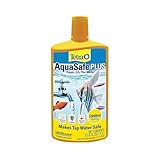
- FOR FRESHWATER AND MARINE AQUARIUMS: Tetra AquaSafe Plus works instantly to make tap water safe for fish.
- ADVANCED FORMULA: Neutralizes or removes harmful chlorine, chloramines and heavy metals.
- PROTECTS FISH: Enhances protective slime coat to help wounds heal.
- CLEAR AND HEALTHY WATER: With natural biopolymers and essential vitamins and minerals.
- WATER CONDITIONER: Use when setting up a new aquarium, with monthly partial water changes, or evaporation replacement.
Product prices and availability are accurate as of the date/time indicated and are subject to change. Any price and availability information displayed on Amazon at the time of purchase will apply.




