Free tools Windows power users keep installed
One-click scans. No signup required.
No. The round goby (Neogobius melanostomus) is not native to the Great Lakes. It evolved in Eurasia’s Ponto-Caspian region and was introduced to North America, where Great Lakes populations are considered invasive.
Where round gobies are native
The species’ natural range includes the Black, Caspian, and Azov Sea basins between Europe and Asia. The U.S. Department of Agriculture’s National Invasive Species Information Center and the Missouri Department of Conservation describe this Ponto-Caspian fish as an Eurasian species rather than a Great Lakes native.



Round gobies are bottom-dwelling fish that tolerate a wide range of conditions. Those traits helped them establish after arriving in the Great Lakes, but tolerance does not make them indigenous to the basin.
How the fish reached the Great Lakes
Cargo-ship ballast water
The documented introduction pathway was ballast water discharged by ocean-going cargo ships. Vessels take on water for stability and may release it, along with organisms, at a destination port. USDA’s invasive-species information identifies ballast water as the route by which round gobies entered the United States through the Great Lakes.
#1 Best Overall
First U.S. discovery
Round gobies were first discovered in the United States in 1990. From their initial Great Lakes foothold, they spread through connected waterways and human-assisted pathways.
Other movement risks
The Great Lakes Fishery Commission identifies ballast discharge, boats, live bait, and other human activities as routes that can move invasive species. Preventing those transfers is therefore part of managing round goby spread, not just a response to the original shipping introduction.
Round goby spread beyond the Great Lakes
USGS reports that the fish colonized the Great Lakes and then expanded east through New York’s canal system. The documented milestones below show why the species remains a monitoring concern:
| Date | Milestone | What it shows |
|---|---|---|
| 1990 | First discovery in the United States | The established North American record begins in the Great Lakes region. |
| 2014 | First documentation in the Mohawk River watershed | Movement had reached a major connected inland watershed. |
| 2021 | Detection in the Hudson River | The eastward expansion had reached the Hudson system. |
These dates are documented detection points, not estimates of when every individual fish arrived or how abundant the population was.
Why non-native status matters for Great Lakes fish
Competition with native bottom-feeders
Round gobies compete with native benthic fish for food and shelter. Their presence can alter interactions on the lake bottom, where many native species feed, spawn, or seek cover.
Predation on eggs
They eat the eggs of nest-building fish, including smallmouth bass. Egg predation can reduce reproductive success in localized spawning areas, especially where gobies are numerous and nests are accessible.
Food-web effects
USGS notes that round gobies may transfer contaminants to predators higher in the food web. At the same time, some predators—including smallmouth bass—may grow faster and reach larger sizes where gobies provide an abundant food source. That mixed effect means “invasive” does not imply that every interaction is harmful to every predator; it describes the species’ introduced status and its capacity to disrupt native communities.
Fishery sustainability
The Great Lakes Fishery Commission lists round gobies among invasive species affecting Great Lakes fisheries. Its management framework emphasizes preventing new introductions and limiting further spread because long-term fishery sustainability depends on controlling these pathways.
What’s actually slowing this PC down?
Pick the symptom - the matching free tool is one click away.
Best Value
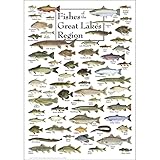
- "This stunning poster includes 106 fish species, both common and exotic, found in the Great Lakes and their tributaries"
- "Illustrations by Duane Raver, Ellen Edmundson, famed illustrator for the New York Conservation Dept."
- "Printed on #80 coated stock using fade resistant inks and the highest production values, it is truly museum quality and suitable for framing"
- Posters measures 19_ X 27_
- Shipped in a heavy-walled 2_ mailing tube with plastic endcaps
Native species versus introduced round gobies
| Comparison | Round goby in the Great Lakes |
|---|---|
| Native range | Ponto-Caspian Eurasia, including the Black, Caspian, and Azov Sea basins |
| Status in the Great Lakes | Introduced and invasive, not native |
| Principal documented entry route | Cargo-ship ballast water |
| First U.S. record | 1990 |
| Recorded subsequent expansion | Through connected waterways, including New York’s canal system |
| Documented inland milestones | Mohawk River watershed in 2014; Hudson River in 2021 |
| Ecological concerns | Competition with native benthic fish, consumption of fish eggs, and possible contaminant transfer to higher trophic levels |
| Management emphasis | Preventing introductions, stopping human-assisted spread, and monitoring new waters |
What anglers and boaters can do
- Do not move live fish or bait between waters. Follow local bait rules and dispose of unwanted bait on land.
- Drain equipment before leaving a launch. Empty water from boats, live wells, bait buckets, bilges, and other compartments.
- Clean and dry gear. Remove mud, plants, and attached organisms from boats, trailers, waders, and fishing equipment.
- Report unusual sightings. State or provincial invasive-species programs can use location, date, and a clear photograph to verify records.
These actions address the human-assisted pathways that can carry round gobies from established waters into new connected or isolated habitats.
Are there Great Lakes-wide population or cost figures?
No single current Great Lakes-wide abundance estimate or annual economic-loss figure is established in the cited agency material. The best-defined dated facts are the 1990 first U.S. discovery, the 2014 Mohawk watershed documentation, and the 2021 Hudson River detection. Treating those detection dates as a basin-wide population trend would overstate what the records show.
Bottom line
Round gobies are Eurasian fish introduced to the Great Lakes, principally through cargo-ship ballast water, not a native component of the lakes’ fish fauna. Their subsequent spread through connected waterways, competition with native fish, and predation on eggs are why agencies classify them as invasive and continue to emphasize prevention and monitoring.
Quick Recap
Product prices and availability are accurate as of the date/time indicated and are subject to change. Any price and availability information displayed on Amazon at the time of purchase will apply.
Recommended Free Tools