Quick wins for a faster PC:
Clear out junk files and repair common Windows errorsFree Scan →Scan for outdated or missing drivers - takes under a minuteDriver Scan →To jig successfully, keep a weighted lure near the depth where fish are feeding, lift it in a controlled rhythm, and let it flutter back while removing slack. In fjords, begin with a metal pirk sized to the depth and current; in rivers and tidal channels, work seams, drop-offs, pools, and eddies while maintaining intermittent bottom contact. Before fishing, verify the current rules for your exact water, species, season, hook style, and licence.
What jigging does
Jigging presents an artificial lure or weighted hook vertically and moves it rhythmically. Seafish defines the method as using “hooks attached to artificial lures” to attract and capture fish. The strike can come during the lift or as the lure falls. The FAO Fishery Manager’s Guidebook explains that visual stimuli from artificial imitations such as lures, jigs, and rubber worms attract fish, while handlining keeps the line vertical from a drifting or anchored vessel or from shore.
A basic cycle is simple:
- Lower the jig until it reaches the intended depth or bottom.
- Lift the rod tip with a deliberate sweep.
- Lower the rod while winding enough line to prevent a slack bow.
- Repeat, changing the lift speed and pause length until fish respond.
Keep the lure under control rather than forcing a particular number of lifts. The useful presentation is the one that stays close to the target depth and remains detectable through the rod.
Jigging in a fjord
Fjord jigging is commonly done from a drifting or mostly stationary boat. A Norwegian Directorate of Fisheries description defines a jig as a hand line with a weight at the end and hooks attached above the weight; the method is used in fjords and nearby coastal areas while a vessel generally drifts with the current.
#1 Best Overall

- Each set includes 5pcs of 30g/1.05oz fishing spoons in 5 different colors, providing options and variety for your fishing adventures.
- Tripquips Saltwater Jigs Fishing Lures are perfect for professional anglers. Made with high qualities, the excellent swimming action of these fishing spoons will attract a wide variety of fish species.
- With ultra-sharp hooks, these sinking metal spoons ensure a secure hookset every time.
- The versatile design of these jigs fishing lures allows for fishing anywhere in the water environment, giving you the flexibility to target different depths and species.
- The high reflective layer coating effect of these metal spoons adds an extra level of attraction, especially in low-light conditions.
Starting tackle for a boat
A Norwegian fjord guide updated 2 July 2026 recommends a 6–8 foot medium-heavy boat rod rated for approximately 150–400 g lures, a 4000–6000 reel, and 30–50 lb braid. These are starting specifications, not a universal outfit. Match the rod’s lure rating, reel capacity, and line strength to the pirk you will actually fish and to the size of fish expected.
Choose pirk weight by depth and current
The same guide gives the following source-specific starting points:
| Water depth or condition | Starting pirk weight | How to use the figure |
|---|---|---|
| 30–50 m | About 150 g | Starting point for ordinary conditions; adjust if the lure will not stay near depth. |
| 50–80 m | About 250 g | Use enough mass to reach bottom and maintain contact without an uncontrolled belly in the line. |
| 80–150 m or strong tidal current | About 350–500 g | Heavier tackle may be needed to keep the lure in the working zone. |
Depth bands do not dictate a mandatory weight. Current, drift speed, line angle, and lure shape all affect control. Increase weight when flow sweeps the pirk away from the target depth; reduce it in shallower or calmer water to limit snagging and fatigue.
Rank #2

- One box including 5pcs of 30g/1.05oz fishing spoons in 5 different colors, suitable for Light Jigging for Fishing such as Bass, Trout, Crappie, Pike, Walleye, Tuna, Blue Fin, Cod, Bonito, Snappers, Groupers and Other Saltwater Fish Species.
- Its realistic appearance, graceful swimming posture, and highly reflective coating effect add extra attraction, vividly attracting target fishes. The hook is sharp and sturdy, once bitten, it can no longer escape, making it very suitable for fishing adventurers.
- The sinking metal spoon has no pressure when casting, and even beginners can throw far. Swinging bait allows you to flexibly aim at different depths and species.
- The fishing lures is made of metal with feather and 2 Ultra-Sharp Hooks, sturdy and durable, making it an essential first choice for anglers.
- Small size portable storage and portability, it is suitable for various waters, whether it is rivers, lakes or oceans, making your fishing experience more convenient and enjoyable.
The lift–drop cadence
After the pirk reaches bottom, reel up 1–2 m to reduce snags. Lift the rod tip roughly 60–90 cm with a moderate sweep, then lower it while reeling slack so the lure flutters on the descent. Cod often respond to a slow, deliberate cadence. Pollock and saithe often respond to faster, more aggressive jigging higher in the water column. Treat these as species-oriented starting patterns rather than guarantees.
Free tools Windows power users keep installed
One-click scans. No signup required.
Finish, color, and lure choice
Metal saltwater jigs, including Norwegian-style pirks, are practical because their weight reaches depth and their flash supplies the visual stimulus described by FAO. Chrome, herring-pattern, and UV finishes are listed as year-round options in the Norwegian guide. No single finish has an established universal catch rate, so carry options that let you change depth control and action as conditions change.
Jigging from shore
Shore jigging requires a position that gives the lure enough depth to work vertically or nearly vertically. Piers, breakwaters, and rock outcrops can provide that depth in some fjords. From a safe casting or drop point, lower the jig beside structure or along a drop-off, keep the line as direct as possible, and lift only as high as needed to animate the lure.
Rank #3

- 12pcs 30g 7.5cm of Metal Spoons Jigging Lures with opp packing
- Metal Lures with Good-Looking and Attractive Color, The vivid eye Looks Totally Real and Hooks are Chemically Sharpened, Twin Assist,Heavy-duty Mustad,Connected Via Heavy Duty Dacron and Rings, Strong enough to Handle the Powerful Runs, Teeth and Slamming Head Action of Pelagic Species.
- The Jigging Lures Give You the Flexibility to Fishing Anywhere in the Water Column. It is this Utility, with the Lures Build Quality that make the Micro Jig Lures and Essential Addition to Your Jigging Tackle Arsenal.
- Suitable for Light Jigging for Fishing such as Small Tuna, Kingfish,Snapper, Amberjack, Cobia, Coral Trout and a Massive Array of Other Saltwater Fish Species.
- Build Quality is Outstanding. This Jigs Fishing Lures will Handle The Punishment of Many Hard Battles.Retrieve Techniques are Limited Only By Your Imagination.
Shore versus boat
| Consideration | From a boat | From shore |
|---|---|---|
| Depth access | The boat can move over deep water and follow a contour. | You need a deep edge, pier, breakwater, or rock outcrop within reach. |
| Drift control | Drift determines line angle; reposition or anchor only where permitted and safe. | The shoreline fixes your position, but wind and tide still alter the line angle. |
| Snag avoidance | Reel 1–2 m above bottom after contact and move with the drift. | Lift clear of rocks, kelp, pilings, or a steep bottom before the lure is carried into them. |
| Presentation | Vertical drops and repeated passes over depth contours are possible. | Cast to depth, or drop vertically where the water is deep enough; keep contact without dragging. |
Never treat a promising drop as worth an unsafe stance. The practical goal is a controlled line angle and a recoverable lure, not maximum distance.
Jigging in rivers and tidal channels
Flow changes the method. Start at places where current is likely to concentrate drifting food: seams beside faster water, drop-offs, deep pools, eddies, and the edges of submerged structure. These are practical applications of the vertical, current-aware approach described by FAO and the Norwegian Directorate of Fisheries, not guaranteed fish locations.
Keep the lure in the strike zone
Use a jig light enough to avoid constant bottom snags but heavy enough to reach the intended depth. In a shallow or slow section, reduce weight. When current sweeps the lure out of position, increase weight or shorten the line so the jig tracks closer to the bottom. The target is controlled, intermittent contact: feel the lure touch or approach bottom, lift it over irregularities, and allow it to fall again.
Rank #4
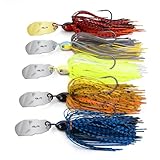
- Bladed Jig Vibrating Action – The new MadBite by KastKing Bladed Jig assortment all have an irresistible vibrating action that is tournament proven to catch bass and a wide variety of fish throughout the year. Great in clear water or low visibility conditions. MadBite by KastKing Bladed Jigs can be use with or without soft plastic trailers to elicit strikes even in tough conditions when other baits just don’t work.
- Multi-Color Silicone Skirts – The soft and supple silicon skirts are available in a wide variety of colors to imitate natural forage and add incredible action and movement to your lure presentations. Color options include Alabama Bream, Bama Bug, Blue with Black, Summer Craw, Green Pumkin/Orange, White/Chartreuse and a Sexy Shad. Jig heads are hard painted to avoid paint chipping and all match the silicone shirt colors.
- Sticky-Sharp Needle Point Hooks – Every MadBite by KastKing Bladed Jig uses only the finest, sharpest and most durable needle point hooks finished in black nickel plating. The sticky-sharp, heavy wire hooks stand up to hard use in heavy cover conditions and will stay strong even with the most violent hook sets.
- Money Saving 5 pc and 3pc Multi-Colored Kits – To save you even more money, MadBite by KastKing Bladed Jigs are packed in either 3 pc kits or for an even better value, 5 pc kits that include the best performing bladed jig colors for use year-round. All MadBite by KastKing Bladed Jigs are packed in durable plastic storage boxes to keep your jigs organized and ready to fish.
- Two Different Weight Options – Color and action are critical to catching more fish but equally as important is using the correct weight of lure to ensure your bait is working at the correct depth. MadBite by KastKing Bladed Jigs are available in two most often used weights – 3/8 oz. and ½ oz. You’ll want to have a nice assortment of colors in both weight ranges to be sure you are ready for any conditions you’ll face.
Work seams and pools
- Position upstream or across the seam so the lure enters the transition between slow and fast water.
- Let it sink to the working depth while controlling slack.
- Use short lifts and a measured drop as the lure crosses the seam.
- Repeat along the edge of the pool or structure, changing angle before changing to a much heavier lure.
In tidal channels, repeat the process as the current accelerates or reverses. A weight that worked during slack water may no longer hold the same depth during peak flow.
Independent reader supportYour contribution helps us test, update, and keep practical guides available for everyone.Match the setup to the situation
Choose tackle on six linked variables: water depth, current speed, target species, lure weight, access method, and local rules.
- Rod: Select a power and lure rating that loads safely with the pirk you intend to lift.
- Reel: Size it for the braid capacity and the depth, not merely for a species name.
- Line: The Norwegian fjord starting point is 30–50 lb braid, but line strength should reflect lure mass, abrasion hazards, and fish size.
- Lure: A metal saltwater jig or Norwegian pirk gives a compact, weighted profile for reaching depth.
- Access: Boat drift and shore casting create different line angles; the same weight will not behave identically in both.
- Rules: Hook configuration and permitted methods can override any tackle preference.
There is no authoritative statistic establishing a universal jigging success or catch rate, and no single knot, color, or cadence is proven best everywhere. Treat local observations as adjustments to presentation, not as guaranteed outcomes.
Best Value
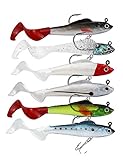
- Soft Swimbaits: Made of environmental friendly quality soft plastic, jig head fishing lures are soft, light but durable with fishy smell to attract freshwater / saltwater fishes.
- Lifelike Culter Bait: Fishing jig soft lure features realistic 3D laser fish eyes, plump trout shaped fish mouth, fish scale and fins to imitate the real culter fish.
- Big Soft Tail: Soft and flexible big tail strongly swings and creates natural swimming action in water can easily attract bass, trout, perch, crappie, pike, walleye, mandarinfish, etc.
- Jig Head Fishing Lure: Weighted jig hook inside the head; a triple hook with a squashed double connecting ring (an optional hook hanger)at the abdomen; reasonable counterweight designed for long casting, deep sinking and high catching rate.
- What You Get: Package comes with 6 PCS fishing baits in 6 colors (blue, green, silver, white, red-white and black-red). Each bass lure is 3.54in long and weighs 0.31oz.
Rules, seasons, and conservation
Jigging regulations vary by river, fjord, tidal zone, species, and date. Check the current authority for the exact water before making a cast, and recheck after seasonal or emergency notices. Confirm:
- whether jigging is permitted in that water;
- open and closed dates;
- species-specific seasons and retention limits;
- line, hook, barb, and lure restrictions;
- licensing and area boundaries.
Canadian examples show why a general rule is unsafe. The Maritime Provinces Fishery Regulations prohibit jigging in specified inland waters and impose a 1–31 March close time for jigging in Nova Scotia tidal waters. Fisheries and Oceans Canada’s 2026 Southern Gulf striped-bass notice requires single barbless hooks for lures in listed tidal waters and sets line and hook limits. Those provisions apply only where stated; they are not a worldwide standard.
Troubleshooting a poor presentation
The lure never reaches bottom
Current may be carrying it away, or the lure may be too light for the depth. Increase weight in a controlled step, reduce excess line, or reposition relative to the flow.
The lure snags repeatedly
Reel up 1–2 m after bottom contact, shorten the lift-and-drop range, or move off the roughest structure. In shallow water, a lighter lure can reduce the force driving hooks into the bottom.
What’s actually slowing this PC down?
Pick the symptom - the matching free tool is one click away.
The line develops a large bow
Wind, drift, or current is defeating contact. Lower the rod while winding slack, change boat position or casting angle, and use only enough weight to restore a manageable line angle.
Fish follow but do not strike
Alter one variable at a time: slow the cadence for cod-oriented work, speed it up and move higher for pollock or saithe, or change the pause on the descent. A different finish may help visibility, but no color is universally established as superior.
Quick Recap
Product prices and availability are accurate as of the date/time indicated and are subject to change. Any price and availability information displayed on Amazon at the time of purchase will apply.




