Recommended Free Tools
To keep fish responsibly, choose a species and an aquarium that suit each other, set up and cycle the tank, and confirm the water is safe before bringing fish home. Fish need a maintained filter, species-appropriate food and regular care; a bowl with flakes is not a suitable plan.
Choose the fish and aquarium together
Start with the fish’s adult size and needs—not the aquarium you happen to have. Before buying, check the species’ temperature and water requirements, diet, social behavior and compatibility with other fish. Some fish grow too large for typical home aquariums; RSPCA UK names certain catfish, giant gourami and pacu as examples of fish that may be unsuitable pets.
| # | Preview | Product | Price | |
|---|---|---|---|---|
| 1 |
|
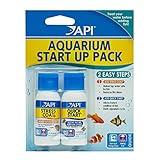
API AQUARIUM START UP PACK Water Conditioner 1.25-Ounce Bottle 2-Pack | $6.99 | Buy on Amazon |
| 2 |

|
API TAP WATER CONDITIONER Aquarium Water Conditioner 16-Ounce Bottle | $8.48 | Buy on Amazon |
RSPCA UK recommends an aquarium larger than 45 x 30 x 30 cm (about 40 litres) as a baseline, not a guarantee that the tank suits every species. Larger volumes tend to be more stable, and a broad tank offers more surface area for oxygen exchange than a tall tank of similar volume. Stocking also depends on filtration, water conditions and care. RSPCA UK gives guidelines of 1.5–2 litres per 1 cm of tropical fish length (excluding tails) and 2 litres per 0.5 cm of goldfish length; treat these as rough guidance, not universal stocking rules. Overcrowding increases waste and can reduce available oxygen. RSPCA UK aquarium guidance
- Choose the aquarium based on adult fish size and behavior, not just the fish’s size at the shop.
- Confirm that all intended tank mates share suitable water conditions and can live together safely.
- Allow room for the filter and other equipment while keeping enough open water for swimming.
Set up the tank before adding fish
Place the aquarium on a sturdy surface, away from direct sunlight and radiators. Consider whether smoke or aerosol products could reach the water. Fit a maintained filter: mechanical filtration traps particles, while biological media supports bacteria that process fish waste. A heater controlled by a thermostat is needed for tropical fish when their species’ temperature requirements call for it; goldfish generally do not need a heater.
#1 Best Overall
- Contains one (1) API AQUARIUM START UP PACK Water Conditioner 1.25-Ounce Bottle 2-Pack
- Makes tap water safe for fish and reduces fish stress.
- Starts aquarium cycle and allows instant addition of fish.
- Comes with two API products, STRESS COAT and QUICK START, for a healthy start-up aquarium.
- Use when starting a new aquarium, changing water, or adding fish. Add STRESS COAT first and then QUICK START.
Temperature needs vary even among tropical fish. RSPCA UK gives guppies at 22–28°C and loaches at 18–26°C as examples, not a universal target range. Check the requirements of the exact species you plan to keep and use a thermometer to monitor the aquarium. RSPCA UK guidance on fish environments
Cycle the aquarium and test the water
Run the filter and establish biological filtration before adding fish. In the nitrogen cycle, beneficial bacteria process ammonia into nitrite and then nitrate. Ammonia and nitrite are toxic to fish; clear water does not prove that either is absent. Use an aquarium water test kit rather than judging safety by appearance. RSPCA UK lists 0 mg/L for both ammonia and nitrite as safe levels. RSPCA UK water-testing guidance
- Set up and run the aquarium with its filter before buying fish.
- During fishless cycling, test the water regularly. RSPCA UK recommends testing every other day and adding fish only after ammonia and nitrite have risen and returned to zero.
- Do not use a fixed number of days as proof that the tank is ready. RSPCA UK says cycling takes at least two weeks but gives no exact duration; RSPCA Australia describes testing every two to three days through the first six weeks as the cycle establishes.
- Add fish only when tests show the biofilter is established and ammonia and nitrite are at zero.
RSPCA Australia gives example tropical-fish readings of ammonia below 0.1 ppm, nitrite below 0.2 ppm, nitrate below 50 ppm, pH 6.5–7.5 and temperature 24–26°C. Those are examples from its tropical-fish guidance, not universal targets for every species or water supply. Track the parameters relevant to the fish you keep. RSPCA Australia tropical-fish care guidance
Maintain water quality with partial changes
Test ammonia and nitrite routinely, and test more often if results show elevated waste. RSPCA UK recommends testing every fortnight as routine care. RSPCA Australia also recommends tracking nitrate, pH and temperature for tropical fish. Follow a consistent partial-water-change routine, remove waste and respond to test results; never replace all the aquarium water as routine maintenance.
The two organizations give different weekly partial-change recommendations: RSPCA UK says 30%, while RSPCA Australia recommends 10–25% once the biofilter is mature. These are source-specific recommendations, not a single universal percentage. During a new tank’s establishment, RSPCA Australia describes more frequent partial changes as needed to reduce toxic levels. RSPCA UK maintenance guidance · RSPCA Australia maintenance guidance
- Use a dedicated aquarium bucket and gravel siphon to remove water and debris from the substrate. Do not start a siphon by sucking on the hose.
- Prepare replacement water with aquarium conditioner according to its label, and avoid a temperature mismatch.
- When filter media needs cleaning, gently rinse it in removed aquarium water. Tap water may contain chlorine or chloramine that can harm fish and beneficial bacteria; over-cleaning can also remove the bacteria the filter needs.
- Never use soap or detergent on aquarium equipment.
Choose compatible fish and provide the right company
There is no dependable one-inch-per-gallon rule that can settle stocking on its own. Adult size, water quality, filtration, behavior, group needs and competition for food all matter. Many shoaling tropical fish—including danios, tetras, rainbowfish, rasboras and many catfishes—should be kept in groups of six or more, according to RSPCA UK. That guidance does not apply to every fish. Goldfish do not need other fish for company, while male bettas may fight. Check the needs and temperament of each species before mixing fish. RSPCA UK guidance on fish companionship
Rank #2
- Contains one (1) API TAP WATER CONDITIONER Aquarium Water Conditioner 16-Ounce Bottle
- Neutralizes chlorine, chloramines and other chemicals to make tap water safe for fish
- Prevents tap water chemicals from causing gill destruction, tissue irritation and fish death
- Super strength, high concentration formula
- Use when adding or changing water and when adding new fish to freshwater and saltwater aquariums
Feed measured portions
Use food suited to the species and adjust the portion to the number and size of fish. RSPCA UK suggests an amount fish can eat within two to five minutes and recommends two or three feedings a day; RSPCA Australia gives a once-daily, under-two-minute example for tropical fish. These are different source-specific routines, so follow the needs of your species rather than treating either frequency as universal. Remove or avoid leftovers: uneaten food decomposes, adds waste and can worsen water quality. RSPCA UK feeding guidance · RSPCA Australia tropical-fish feeding guidance
Buy carefully and acclimate fish gradually
Choose a reputable aquatics retailer or rehoming centre. Look for clean, maintained tanks without dead fish, and fish that swim normally. Avoid fish with split fins, white spots, sores or conspicuously concave bellies. Research the species and its setup before purchase. RSPCA UK advice on choosing fish · CDC fish-care guidance
What’s actually slowing this PC down?
Pick the symptom - the matching free tool is one click away.
- Float the intact transport bag on the aquarium surface for about 30 minutes to an hour so its temperature can adjust.
- Carefully release the fish while minimizing the amount of transport water that enters the aquarium.
- Check the fish daily for unusual swimming, discoloration, appetite changes or swelling.
If a fish appears sick, separate it if you can do so safely and consult a veterinarian experienced in fish medicine rather than guessing at a diagnosis or medication. CDC guidance on fish acclimation and health
Plan for daily checks, holidays and rehoming
Fish care continues between feedings: check the fish and equipment regularly, and keep up with testing and maintenance. For a holiday, RSPCA UK recommends arranging for a responsible person to check the fish and equipment each day. An automatic feeder still needs daily checks, and holiday feeding blocks are discouraged because excess food may rot. RSPCA UK advice for fish owners
If you can no longer care for a fish, contact another fish keeper, an aquarium, school, zoo or veterinarian about rehoming. Never release aquarium fish outdoors: they may die, and some can threaten local wildlife. CDC rehoming and release guidance
Handle aquarium water hygienically
CDC advises wearing gloves when cleaning or caring for aquariums, especially if you have cuts or weakened immunity. When possible, dispose of aquarium water and clean equipment somewhere other than the kitchen sink; if you use a sink or tub, clean it afterward. CDC aquarium hygiene guidance
Free tools Windows power users keep installed
One-click scans. No signup required.
Quick Recap
Product prices and availability are accurate as of the date/time indicated and are subject to change. Any price and availability information displayed on Amazon at the time of purchase will apply.