What’s actually slowing this PC down?
Pick the symptom - the matching free tool is one click away.
Move the injured fish to a clean, well-aerated hospital tank when practical, correct the water-quality problem that may be slowing healing, and remove whatever caused the injury. Use salt or medicine only when the species and suspected problem justify it; worsening wounds or signs of illness need an aquatic veterinarian.
1. Assess the injury and stop further trauma
Before treating the wound, inspect the fish and the aquarium. Look for torn skin or fins, missing scales, bleeding, swelling, white or gray growth, an ulcer, rapid breathing, lethargy or loss of appetite.
Remove sharp décor, aggressive tankmates and sources of crowding. A fish that is repeatedly scraped or attacked will not heal reliably, even with medication.
| What you see | Best next step |
|---|---|
| Small scrape or missing scales; fish is alert, eating and breathing normally | Correct water quality, provide supportive care and monitor closely. |
| Deep tear, persistent bleeding, enlarging ulcer, marked swelling or exposed tissue | Isolate the fish and arrange aquatic-veterinary advice promptly. |
| Wound plus rapid breathing, severe lethargy, refusal to eat or other whole-body signs | Treat it as potentially systemic disease; seek professional diagnosis rather than trying several products. |
| White or gray growth, recurring lesions or multiple fish affected | Check water and tank conditions, quarantine the affected fish and obtain advice on targeted testing and treatment. |
Wound evaluation should include the lesion, the fish’s overall condition, water quality and husbandry—not just the damaged skin.
The Tool Desk
Outbyte PC Repair FREEClear out junk files and repair common Windows errorsFree Scan →Outbyte Driver Updater FREEFix the driver behind crashes, sound loss and screen glitchesFind Drivers →#1 Best Overall

- Contains one (1) API MELAFIX Freshwater Fish Bacterial Infection Remedy 8-Ounce Bottle
- Heals bacterial infections and repairs damaged fins, ulcers and open wounds
- Contains natural, botanical tea tree extract to quickly and rapidly help fish
- Helps treat newly-introduced fish to reduce risk of disease outbreak in freshwater aquariums
- Use daily for a week when treating infections and for 3 days as a preventive when adding new fish
2. Set up a hospital or quarantine tank
Isolation makes observation and treatment easier and protects tankmates from aggression, infectious disease and unnecessary medication. Use equipment reserved for the quarantine setup so you do not move contaminants between tanks.
- Choose a tank large enough for the species to turn and swim normally, with a secure cover if the fish jumps.
- Fill it with dechlorinated water matched to the fish’s current temperature and chemistry as closely as possible; avoid abrupt changes.
- Add a heater or cooling method if the species requires one, a dependable thermometer, strong aeration and gentle filtration appropriate for the tank.
- Provide smooth hiding cover that cannot catch the wound.
- Keep a dedicated net, siphon and other tools with the hospital tank, and label them so they are not returned to the display aquarium.
Quarantine guidance from the Merck Veterinary Manual emphasizes stable conditions, isolation and easier observation and treatment. The Canadian Food Inspection Agency also advises consistent monitoring of temperature, pH and turbidity in quarantine systems.
Rank #2
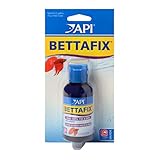
- Contains one (1) API BETTAFIX Antibacterial & Antifungal Betta Fish Infection and Fungus Remedy 1.7-Ounce Bottle
- Heals bacterial infections, repairing damaged fins, ulcers, and open wounds and promotes regrowth of fins
- Treats newly introduced fish to reduce risk of disease outbreak and heal wounds and tissue damage
- Contains healing melaleuca, a variety of tea tree
- Use daily for a week when treating infections and for three days as a preventive when adding new fish
3. Test and correct the water before medicating
Use a freshwater test kit to check:
- Temperature
- pH
- Ammonia
- Nitrite
- Nitrate
Correct readings that are unsafe for the species, keep the tank clean and avoid sudden chemistry swings. Poor water quality and inadequate husbandry are part of the disease process, not merely background maintenance. If the display tank has a problem, fixing only the hospital tank will not prevent reinjury when the fish is returned.
4. Support the fish’s healing
- Maintain stable, species-appropriate temperature and vigorous oxygenation.
- Offer a suitable, high-quality diet in portions the fish can finish. Remove uneaten food so it does not foul the water.
- Perform careful maintenance with temperature-matched, properly conditioned water.
- Keep handling to a minimum. Do not scrub the wound, peel scales, apply household antiseptics or pour products into the tank unless the label specifically allows that use.
Nutrition, oxygenation, water quality and husbandry all influence wound healing in teleost fish. There is no single healing-time figure that applies to every species or injury; recovery depends on the cause, depth, location and the fish’s condition.
Windows Errors? Fix Them Before They Spread
Repair common Windows errors and clear accumulated junk for a smoother, more stable PC - no reinstall needed.Free scan · no reinstallOutdated Drivers Are Slowing You Down
One free scan finds every outdated or missing driver and matches the right update for your exact hardware.Free scan · exact hardware matchRank #3

- Contains one (1) API LIQUID SUPER ICK CURE Freshwater and Saltwater Fish Medication 4-Ounce Bottle
- Treats "ich" white spot disease in fish and secondary bacterial fish infections
- Quickly kills ich parasite, typically within 24 hours of first dose
- Use only in freshwater and saltwater aquariums not with reef aquariums
- Dose every day for five days when symptoms first start occurring
5. Is aquarium salt appropriate?
Merck Veterinary Manual guidance describes salt as useful in several fish-medicine situations and gives 1–3 g/L as a recovery and healing range for freshwater systems. That is guidance for many freshwater situations, not a universal prescription: species differ substantially in salt tolerance, and some plants, invertebrates and biological filters may also be affected.
| Use | Reported concentration | Important qualification |
|---|---|---|
| Recovery and healing support in freshwater systems | 1–3 g/L | Merck figure; confirm species tolerance and follow the product label. |
| Transport of most freshwater fish | 3–5 g/L | Merck says most freshwater fish tolerate this for several hours or days during transport; it is not a routine wound-treatment dose. |
Use a measured aquarium or veterinary salt product. Do not substitute table salt, scented salt or an improvised mixture. Calculate the dose from the actual water volume, account for water removed during maintenance, and stop if the fish shows deterioration. Ask an aquatic veterinarian before using salt with a salt-sensitive species or a mixed quarantine tank.
Rank #4
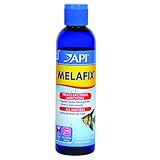
- Contains one (1) API MELAFIX Freshwater Fish Bacterial Infection Remedy 4-Ounce Bottle
- Heals bacterial infections and repairs damaged fins, ulcers and open wounds
- Contains natural, botanical tea tree extract to quickly and rapidly help fish
- Helps treat newly-introduced fish to reduce risk of disease outbreak in freshwater aquariums
- Use daily for a week when treating infections and for 3 days as a preventive when adding new fish
6. Use medication only for a defined problem
Do not add antibiotics, antifungals or “general cure” products merely because a fish has a scrape. Merck discourages prophylactic medication without diagnostic testing. Unnecessary drugs can stress the fish, damage the biofilter and make later treatment more difficult.
External versus internal disease
Baths and topical treatments are mainly suited to external disease. Internal disease may require a different route, and the correct choice depends on examination and diagnosis. A wound caused by trauma may need only corrected husbandry, while an ulcer, spreading lesion or systemic illness may require targeted therapy.
Best Value
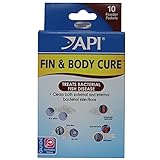
- Contains one (1) API FIN and BODY CURE Freshwater Fish Powder Medication 10-Count Box
- Treats body slime, eye cloud, fin and tail rot, open red sores, gill disease, and hemorrhagic septicemia
- Causes slight discoloration of water that can be fixed by adding activated charcoal
- Use only in freshwater aquariums
- Use daily for four days when symptoms of bacterial diseases appear
Check the approved indication
Regulatory approval is indication-specific. For example, 35% PEROX-AID has approved uses for certain freshwater finfish diseases; that approval does not mean it is appropriate for every open wound. Follow the exact label, species directions, withdrawal requirements and local regulations, and do not combine products unless a veterinarian directs you to do so.
Independent reader supportYour contribution helps us test, update, and keep practical guides available for everyone.7. Monitor every day and know when to escalate
Record the fish’s appetite, breathing, activity, waste, wound size and appearance each day. Photographing the lesion from the same angle can reveal gradual enlargement that is easy to miss.
- Improving: the fish remains active and eating, the wound is stable or smaller, and no new growth or swelling appears. Continue stable husbandry and observation.
- Not improving: the lesion stays unchanged despite corrected water and supportive care. Contact an aquatic veterinarian for examination and advice on microscopy or targeted treatment.
- Worsening: the wound enlarges, develops new growth, bleeding or swelling, or the fish develops breathing difficulty, severe lethargy or loss of appetite. Seek veterinary help promptly.
Do not delay professional care while cycling through multiple over-the-counter remedies. A veterinarian can distinguish trauma from bacterial, fungal, parasitic or water-quality problems and select a treatment that fits the diagnosis.
8. Protect yourself while treating the tank
Aquarium water and fish can carry germs. Wear gloves when cleaning the tank or handling the fish, especially if you have cuts on your hands. Wash any scratch or cut with soap and water. Seek medical care if a wound becomes red, painful, warm or swollen.
Quick Recap
Choosing an approach
| Situation | Reasonable approach | Why |
|---|---|---|
| Minor injury, normal behavior, acceptable test results and a clear source of trauma | Remove the cause, provide hospital-tank supportive care and monitor | Many superficial injuries heal when repeated trauma and environmental stress are removed. |
| Uncertain water quality, crowding or aggression | Quarantine, test and correct the environment before choosing medication | Husbandry problems can maintain the wound and undermine any drug. |
| Progressive ulcer, abnormal growth, multiple affected fish or systemic signs | Veterinary examination and targeted treatment | The likely cause may be infectious or internal and cannot be identified reliably by appearance alone. |
| Species with uncertain salt tolerance, or a tank containing sensitive plants or invertebrates | Get species-specific advice before adding salt | The commonly cited 1–3 g/L recovery range is not safe for every aquarium. |
Product prices and availability are accurate as of the date/time indicated and are subject to change. Any price and availability information displayed on Amazon at the time of purchase will apply.




