Free tools Windows power users keep installed
One-click scans. No signup required.
Matching dinosaur trackways found in northeastern Brazil and Cameroon are about 120 million years old, not 240 million years old. The more than 260 footprints were made when South America and Africa were still joined in Gondwana; the opening of the South Atlantic later left the sites more than 3,700 miles (6,000 kilometers) apart.
What was discovered?
An international team led by paleontologist Louis L. Jacobs identified matching sets of Early Cretaceous dinosaur footprints in Brazil’s Borborema region, including the Sousa Basin, and in Cameroon’s Koum Basin. Together, the sites contain more than 260 tracks.
Most are three-toed footprints attributed to theropods, the group that includes meat-eating dinosaurs and their close relatives. Some tracks may have been made by sauropods or ornithischians, but a footprint alone does not always allow scientists to identify the exact dinosaur species.
How old are the tracks?
The dated discovery described by Southern Methodist University is approximately 120 million years old, during the Early Cretaceous. The age is supported by fossil pollen in the sediment and by the sites’ stratigraphic relationships. The 240-million-year figure in the original headline does not match this Brazil–Cameroon footprint discovery and likely refers to a different fossil story.
#1 Best Overall

- Fantastic Grallator Dinosaur Footprint track Fossil Replica
- Great classroom resource for earth science
- Great dinosaur gift
- 7" x 6"
- Sturdy and lightweight
Were Brazil and Africa connected when dinosaurs walked there?
Yes. Around 120 million years ago, northeastern Brazil lay against what is now Cameroon as part of the connected landmass of Gondwana. Jacobs described the narrow connection near the elbow of northeastern Brazil and Cameroon’s present Gulf of Guinea coast as one of the youngest and narrowest geological links between the continents.
As tectonic forces stretched the crust, the connection broke apart and the South Atlantic opened. The tracks therefore record movement across a once-continuous terrestrial region, not a crossing of an ocean.
Rank #2
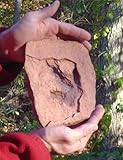
- Grallator Dinosaur Footprint, cast from the original fossil
- Cast from the the fossil from Chinle Formation, Late Triassic, 210 MYA
- Made of durable, lightweight resin
- Dimensions: 6" x 7"
- Makes a great dinosaur gift!
Are these the exact same dinosaur footprints?
No. “Matching” refers to the tracks’ similar shapes, ages and geological settings. The evidence does not show that one individual dinosaur made a single trail that was later split between continents. Instead, it indicates that similar dinosaurs could travel through the connected Brazil–Cameroon corridor before continental separation.
Jacobs summarized the comparison this way: “We determined that in terms of age, these footprints were similar. In their geological and plate tectonic contexts, they were also similar. In terms of their shapes, they are almost identical.”
Do these 3 things before closing this tab:
1Fix the driver behind crashes, sound loss and screen glitches2Clear out junk files and repair common Windows errors3Scan for outdated or missing drivers - takes under a minuteRank #3
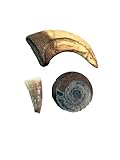
- Three-Item Fossil Set – Includes one Velociraptor claw replica, one Mosasaur tooth (B-grade), and one genuine small ammonite fossil
- Educational and Collectible – A great hands-on way to explore prehistoric life and paleontology
- Genuine Fossils Included – Both the Mosasaur tooth and ammonite are real fossil specimens
- Realistic Replica Claw – Velociraptor claw cast features high quality texture and curvature
- Ready for Display or Teaching – Great for collectors, educators, or science-themed gifts
Why do the Brazilian and Cameroonian sites match?
| Evidence | Brazil | Cameroon | What it indicates |
|---|---|---|---|
| Age evidence | Fossil pollen and stratigraphy indicate about 120 million years | Fossil pollen and stratigraphy indicate about 120 million years | The tracks formed during the same broad interval |
| Footprint form | Mostly three-toed theropod tracks; possible sauropod or ornithischian tracks | Mostly three-toed theropod tracks; possible sauropod or ornithischian tracks | Comparable dinosaur trackmakers used both regions |
| Depositional setting | Mud and silt beside ancient rivers and lakes | Mud and silt beside ancient rivers and lakes | Similar wet environments could preserve footprints |
| Tectonic setting | Half-graben basin formed as the crust stretched | Half-graben basin formed as the crust stretched | The basins developed during the rifting that opened the South Atlantic |
| Distance today | More than 3,700 miles (6,000 kilometers) apart | The modern gap reflects continental drift after the tracks formed | |
How were the footprints preserved?
Dinosaurs walked across soft mud and silt along ancient river and lake margins. If the impressions dried or were quickly covered by additional sediment, later layers could protect them from erosion. Over millions of years, burial, compaction and geological uplift exposed some of those layers again for researchers to study.
The rocks belong to rift-related half-graben basins. These fault-bounded depressions formed as Gondwana began to split, creating the geological setting in which the tracks and pollen were preserved.
Rank #4

- Step into Prehistory: This Toob contains 10 expertly hand-painted mini figurines of ancient fossils, including a Dinosaur Footprint, Giant Crab, Ammonite, Raptor Claw, Fossilized Frog, Trilobite, T-Rex Tooth, Fossilized Fish, Dinosaur Skin, and a Sea Scorpion.
- Ignite Curiosity and Learning: The ancient fossils Toob can inspire children's interest in paleontology, encouraging educational exploration and discovery.
- Premium Quality and Detail: Each figurine is meticulously crafted with precise details, made from durable materials to withstand endless excavation adventures.
- Safe and Suitable for Children: Our products are non-toxic and BPA free, ensuring the safety of children during play. Suitable for children aged 3 years and older.
- Perfect Size for Little Hands: This Fossil Toob measures 1.5 inches long, 1.5 inches wide, and 12.8 inches tall, slightly larger than a standard American ruler. The figurines inside range from 1.25 to 3.75 inches tall, perfect for young paleontologists.
What do the tracks reveal about Gondwana?
- Land connections shaped dinosaur movement: dinosaurs could disperse across northeastern South America and west-central Africa while the continents were joined.
- Similar habitats existed on both sides of the future ocean: rivers, lakes, mud and silt provided comparable places to walk and leave impressions.
- Plate tectonics explains the modern separation: the footprints are now thousands of miles apart because the South Atlantic opened after the animals passed through the region.
- Trace fossils preserve behavior and geography: footprints show where animals walked and the environments available to them, even when bones are absent.
What the discovery does—and does not—prove
The Brazil–Cameroon tracks provide a strong match in morphology, age and depositional and tectonic context. They support a terrestrial dispersal corridor across joined Gondwana. They do not identify every trackmaker to species, prove that a single dinosaur traveled between the two sites, or establish that the sites were connected by one uninterrupted trackway.
Quick Recap
Product prices and availability are accurate as of the date/time indicated and are subject to change. Any price and availability information displayed on Amazon at the time of purchase will apply.
The Tool Desk
Outbyte Driver Updater FREEFix the driver behind crashes, sound loss and screen glitchesFind Drivers →Outbyte PC Repair FREERepair Windows errors before they cause bigger problemsFix Now →



