The freshwater fish best suited to strong current are stream and rapid specialists: many suckermouth catfish (loricariids), some loaches, Anostomus and Leporinus, most danios, many rainbowfish, and certain Central American cichlids. In nature, torrentfish and bluegill bullies are rapid specialists too. In an aquarium, reproduce the river’s pattern—not a tank-wide blast—by combining broad, oxygenating flow with rocks, wood, or layout features that create calm resting and feeding areas.
Which freshwater fish prefer strong current?
Fluval identifies these freshwater groups as commonly associated with strong-current environments:
- Suckermouth catfish, including many loricariids
- Anostomus and Leporinus
- Some loaches
- Most danios
- Many rainbowfish
- Certain Central American cichlids
New Zealand habitat guidance also identifies torrentfish and bluegill bully as rapid-preferring fish. These are broad groups, not a guarantee for every species or life stage. Check the particular fish’s natural habitat, adult size, temperature range, oxygen needs, and swimming ability before designing a high-flow tank.
Fish that use rapids, riffles, and runs
Rapid specialists usually have a way to remain in place despite moving water. Some cling to rocks or vegetation, some shelter in cracks between stones, and others swim powerfully enough to resist the current. Streamlined bodies, stiff or gripping fins, small size, and sucker-like mouths are recurring adaptations.
Crashes, No Sound, or Screen Glitches?
Random freezes, missing sound and display glitches usually trace back to one bad driver. Find and replace yours safely.Free scan · under a minutePC Slower Than It Used to Be?
A free scan shows the junk files, broken settings and background clutter dragging Windows down - then fixes them in one click.Free scan · Windows 10 & 11#1 Best Overall

- SAFETY - Fully submersible with epoxy sealed motor. Each product has been submerged in water and tested with super high voltage to avoid electricity leakage.
- PERFORMANCE – Energy efficient with permanent magnet rotor and specially designed impeller. Max. Flow 135GPH (500L/H), Max lift 2.5ft (0.75m), and 4.8W power. Great for tank size of 10-40 gallons. BUY 2 PCS if you have a large tank! Put 1PC at both sides at the back to get the best circulation and aeration in your tank!
- AERATING AQUARIUM - Comes with air tubing and air venturi to supplement oxygen supply in the aquarium.
- MOVING WATER- Creates a nice underwater current that will give your fish something to swim against, which is appreciated by active river fish. In the meanwhile the moving water will bring fish excrement to the filter for a healthy environment in the aquarium.
- HELPING HEATING – The powerhead moves water around the tank so that the heater keeps working till the water in the whole tank reaches the ideal temperature to avoid “cold spot” in your tank.
River fish that do not want a torrent
“River fish” is not synonymous with “strong-current fish.” Different parts of one river provide different habitats. NOAA notes that trout thrive in highland streams, whereas catfish use slow-moving bottom water. Earth Sciences New Zealand/NIWA likewise distinguishes rapid specialists from fish that prefer pools, banks, or slower runs; eels occur across nearly every freshwater habitat. A catfish, cichlid, or other fish collected from a river may therefore need gentle flow, shelter, or a quiet bottom area rather than a powerful pump.
How strong is “strong” in the wild?
Current preference varies enormously among species. A peer-reviewed study in the North American Journal of Fisheries Management (2008) measured emerald shiners at an average swimming speed of 81.4 ± 5.46 cm/s, compared with 15.7 ± 1.36 cm/s for largespring gambusia. The study also found a positive association between swimming speed and habitat velocity. These are measurements for the studied fish and conditions, not universal aquarium targets or safe speeds for every species.
Rank #2
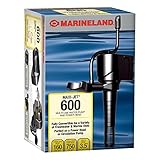
- Three Pumps in One
- Turns powerhead in to a prop style circulation pump
- The most fully adaptable pump available
- Model Number: ML90510
- Age Range Description: All Ages
One agency description of River Redhorse spawning habitat gives a sense of how fast a specialized site can be: cool, clear riffle-run water with surface velocity of 0.6–1.2 m/s over coarse substrate. Juveniles use slower backwaters. The example shows why adult and juvenile requirements can differ and why a single “ideal current” number is misleading.
Adaptations that let fish handle fast water
| Adaptation | How it helps | Typical use |
|---|---|---|
| Clinging or sucker-like mouth | Holds the fish against rock, glass, or other solid surfaces | Many suckermouth catfish and other bottom-oriented specialists |
| Stiff, enlarged, or gripping fins | Braces the body and limits sliding in turbulent water | Fish that remain on rock faces or the stream bed |
| Streamlined body | Reduces drag and makes sustained swimming more efficient | Open-water stream swimmers such as many danios |
| Small size and crevice use | Lets the fish exploit boundary layers and sheltered gaps between stones | Rapid specialists that retreat from the main force of the flow |
| High swimming capacity | Allows the fish to hold position or move between feeding sites | Strong-swimming river and riffle fish |
Even an adapted fish does not spend every minute in maximum velocity. Natural streams contain slower margins, eddies, pools, submerged wood, and spaces behind rocks. Those refuges are part of the habitat, not optional decoration.
Rank #3
- SAFETY - Fully submersible with epoxy sealed motor. Each product has been submerged in water and tested with super high voltage to avoid electricity leakage.
- PERFORMANCE – Energy efficient with permanent magnet rotor and specially designed impeller. Max. Flow 265GPH (1000L/H), Max lift 4.6ft (1.38m), and 12W power. Great for tank size of 60-80 gallons. BUY 2 PCS if you have a large tank! Put 1PC at both sides at the back to get the best circulation and aeration in your tank!
- AERATING AQUARIUM - Comes with air tubing and air venturi to supplement oxygen supply in the aquarium.
- MOVING WATER- Creates a nice underwater current that will give your fish something to swim against, which is appreciated by active river fish. In the meanwhile the moving water will bring fish excrement to the filter for a healthy environment in the aquarium.
- HELPING HEATING – The powerhead moves water around the tank so that the heater keeps working till the water in the whole tank reaches the ideal temperature to avoid “cold spot” in your tank.
How to create a strong-current aquarium safely
1. Choose broad, diffuse circulation
Use a circulation pump or filter outlet that produces a wide stream rather than a narrow, high-pressure jet. Broad flow moves more of the aquarium while reducing the risk that one outlet pins a fish against the glass or substrate.
2. Move the surface for gas exchange
Aim part of the circulation across the surface so it creates visible but not violent agitation. Surface movement supports gas exchange and helps distribute oxygen-rich water through the tank.
Rank #4
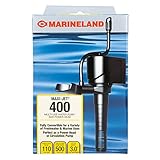
- 3 PUMPS IN 1: Marineland Maxi-Jet Multi-Use Water Pump acts as a power head, utility pump and circulation pump.
- MULTIPLE USES: Powers undergravel filters, protein skimmers, calcium reactors and refugiums.
- CONVERSION KIT: Turns the power head into a prop-style circulation pump.
- AERATION: Venturi pump allows for fully adjustable aeration.
- FOUR SIZES: Maxi-Jet 400 (110 to 500 GPH); 600 (160 to 750 GPH); 900 (230 to 1000 GPH); and 1200 (295 to 1300 GPH).
3. Build low-flow refuges
Arrange rocks, wood, plants, and tank geometry so fish can leave the main flow. Place caves or sheltered pockets behind hardscape and keep some bottom and corner areas comparatively calm. A fish should be able to rest, feed, and sleep without continuously fighting the pump.
4. Increase flow gradually
- Start the pump at a low setting or point the outlet toward a wall.
- Observe swimming, breathing, feeding, and resting for several days.
- Increase circulation in small steps while preserving a refuge.
- Reposition the outlet or hardscape if the current forms a single overpowering channel.
5. Maintain the equipment
Clean the impeller and intake routinely. Debris reduces pump performance and can make output erratic; a partially blocked system may produce a harsh jet instead of the broad circulation you intended. Follow the pump manufacturer’s maintenance schedule.
Best Value
- SAFETY - Fully submersible with epoxy sealed motor. Each product has been submerged in water and tested with super high voltage to avoid electricity leakage.
- PERFORMANCE – Energy efficient with permanent magnet rotor and specially designed impeller. Max. Flow 210GPH (800L/H), Max lift 4.2ft (1.27m), and 10.5W power. Great for tank size of 40-60 gallons.BUY 2 PCS if you have a large tank! Put 1PC at both sides at the back to get the best circulation and aeration in your tank!
- AERATING AQUARIUM - Comes with air tubing and air venturi to supplement oxygen supply in the aquarium.
- MOVING WATER- Creates a nice underwater current that will give your fish something to swim against, which is appreciated by active river fish. In the meanwhile the moving water will bring fish excrement to the filter for a healthy environment in the aquarium.
- HELPING HEATING – The powerhead moves water around the tank so that the heater keeps working till the water in the whole tank reaches the ideal temperature to avoid “cold spot” in your tank.
How to tell whether the current is too strong
Watch the fish, not just the pump’s flow rating. Persistent struggling to hold position, inability to reach food, repeated tumbling, rapid breathing, or sheltering constantly are warning signs. First check outlet direction and create a calmer area; then verify temperature, oxygenation, water quality, and compatibility with tank mates. If symptoms continue, reduce the flow and reassess whether the species actually uses rapids rather than pools or banks.
Matching current to a fish’s whole life cycle
Adults and juveniles may occupy different parts of a river. River Redhorse, for example, uses fast riffle-run habitat for spawning while juveniles use slower backwaters. Before setting one flow level permanently, account for age, condition, feeding behavior, and seasonal or breeding needs. A community aquarium should be designed around the least strong-current-tolerant fish, with high-flow zones available to species that seek them.
A practical decision checklist
- Natural habitat: Is the species documented from rapids, riffles/runs, pools, banks, or backwaters?
- Attachment or swimming ability: Can it cling, shelter, or swim continuously against moving water?
- Oxygen and temperature: Does it require cool, highly oxygenated water, and can the aquarium maintain those conditions?
- Life stage: Do juveniles or breeding fish use slower habitat?
- Tank design: Are there genuine low-flow refuges as well as the main current?
- Behavior: Can every fish feed and rest without persistent effort?
The safest interpretation of “likes a strong current” is therefore needs access to moving, oxygen-rich water with places to get out of it. Species names alone are not enough; habitat and behavior determine the correct flow.
Quick Recap
Product prices and availability are accurate as of the date/time indicated and are subject to change. Any price and availability information displayed on Amazon at the time of purchase will apply.
Recommended Free Tools




