Bass and wrasse are generally not close relatives. Wrasse is a scientific family, Labridae. Bass is a common name applied to fish from several unrelated lineages; temperate basses, for example, belong to Moronidae. Their main connection is that some species can share coastal marine habitats, not that one is a kind of the other.
Are bass and wrasse related?
Only in the broad sense that both are ray-finned marine fishes. Wrasses form the family Labridae, a recognized evolutionary group. “Bass” does not identify one family, so a relationship cannot be determined until the particular bass is named.
Temperate basses are placed in Moronidae, not Labridae. Other fishes sold or described as bass belong to other families. Consequently, there is no single bass family, bass body plan, or bass diet to compare with wrasses.
What family do wrasse fish belong to?
Wrasses belong to Labridae. A molecular phylogenetic study by Westneat and Alfaro (2005) described Labridae—including lineages historically treated as scarines and odacines—as containing 82 genera and about 600 species. That diversity includes markedly different sizes, colors, habitats, and feeding behaviors.
The Tool Desk
Outbyte Driver Updater FREEScan for outdated or missing drivers - takes under a minuteDriver Scan →Outbyte PC Repair FREEClear out junk files and repair common Windows errorsFree Scan →#1 Best Overall

- QUIET AQUARIUM FILTER: The Tetra Whisper IQ Power Filter with Stay Clean technology contains a sound shield for quiet filtration less than 40 dB.
- SELF PRIMING: Submerged motor starts up with no priming required.
- CAPACITY: The Tetra Whisper IQ 20 Power Filter works in filters up to 20 gallons (130 GPH).
- STAY CLEAN TECHNOLOGY: By maintaining healthy pH levels, creates easier maintenance for healthier fish.
- CARTRIDGE REFILLS: Change cartridges monthly; uses large-sized Tetra Whisper Bio-Bag Filter Cartridges (refills sold separately).
Wrasses are found in tropical and temperate coastal waters, including coral reefs, rocky shores, seagrass beds, tidal pools, sandy bottoms, and continental-shelf environments. Their specialized teeth and pharyngeal jaws help different species exploit different foods. The Australian Museum also identifies labriform swimming—using the pectoral fins for propulsion—as a family characteristic.
How do bass and wrasse compare?
| Feature | Wrasse (Labridae) | Bass |
|---|---|---|
| Taxonomy | One scientific family | Common name spanning multiple families; temperate basses are Moronidae |
| Diversity | About 82 genera and 600 species, according to Westneat and Alfaro (2005) | No single bass-wide species count applies to the common name |
| Habitat | Tropical and temperate coastal habitats, reefs, rocky shores, grass beds, pools, sand, and shelf waters | Depends on the named bass lineage and species |
| Feeding | Species include fish predators, zooplanktivores, molluscivores, herbivores, plankton feeders, and predators of worms, crabs, corals, and other reef resources | Depends on the named bass lineage and species |
| Body and jaws | Wrasse dentition and pharyngeal jaws are adapted to varied feeding strategies | No single structure can be assigned to every fish called bass |
| Reproduction and social behavior | Must be assessed by species | Must be assessed by species and family |
Do bass and wrasse live together?
Some can. Because wrasses occupy many coastal settings, a wrasse and a fish called bass may occur in the same reef, rocky-shore, estuarine, or shelf region. Shared habitat is ecological overlap, not evidence of close ancestry. Other basses may live in environments or regions where a particular wrasse does not occur.
Rank #2

- QUIET AQUARIUM FILTER: The Tetra Whisper IQ Power Filter with Stay Clean technology contains a sound shield for quiet filtration less than 40 dB.
- SELF PRIMING: Submerged motor starts up with no priming required.
- CAPACITY: The Tetra Whisper IQ 45 Power Filter works in tanks up to 45 gallons (215 GPH).
- STAY CLEAN TECHNOLOGY: By maintaining healthy pH levels, creates easier maintenance for healthier fish.
- CARTRIDGE REFILLS: Change cartridges monthly; uses large-sized Tetra Whisper Bio-Bag Filter Cartridges (refills sold separately).
To assess a real overlap, identify both species and compare their geographic ranges, depth, substrate, and habitat use. A statement about “bass and wrasse” without those names is necessarily broad.
Are cleaner wrasses related to sea bass?
No. Cleaner wrasses are labrid wrasses, while “sea bass” is a common name used for fish outside Labridae, including temperate basses in Moronidae and other lineages depending on the species.
Rank #3
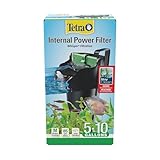
- INTERNAL POWER FILTER: Tetra Whisper Internal Power Filter for 5- to 10-gallon aquariums uses medium Whisper BioBag filter cartridges that are easy to change.
- QUIET 85 GPH MOTOR: The internal pump efficiently filters up to 85 gallons per hour.
- POWERFUL FILTRATION: Water flows through the cartridge floss, trapping debris and fish waste, while Ultra-activated carbon helps remove odor and discoloration.
- SPACE-SAVING DESIGN: Your aquarium can be 1” from the wall with the internal filter designed to clip directly on your aquarium wall and be hidden by décor.
- EASILY ADJUSTABLE: Adjustable clip allows for a variety of setups to easily adjust to high or low water levels.
Cleaner behavior describes an ecological interaction, not a taxonomic relationship. Cleaner wrasses remove parasites and other material from larger client fishes. Depending on species and circumstances, they may also take mucus, scales, fin tissue, or eggs. A bass can potentially be a client fish in a particular setting, but that does not make it a wrasse or a close relative.
Why the common name “bass” causes confusion
- It is not a family name: the same word is applied to fish from different evolutionary branches.
- Common names vary by region: a “bass” in one fishery or aquarium context may not be the same lineage called bass elsewhere.
- Traits do not transfer across the label: habitat, jaw design, diet, size, and reproduction must be checked for the identified species.
How to make a precise comparison
- Record the complete common name and, if possible, the scientific name of the bass.
- Place the bass in its family; do not compare it with Labridae solely because both names are used for marine fish.
- Compare range and habitat, including reef, rocky coast, estuary, open shelf, depth, and substrate.
- Compare feeding mechanisms and documented prey rather than assuming all bass are predators or all wrasses are cleaners.
- Only then examine body form, jaw structure, social behavior, reproduction, and ecological role.
Bottom line
A wrasse is a member of Labridae; bass is a broad common-name category. Temperate basses are in Moronidae, and other basses belong to still other families. They may overlap as coastal fishes—and a cleaner wrasse may interact with a larger fish called a bass—but they are not generally close relatives.
Quick Recap
Best Value

- WITH ROTATING BIO-WHEEL: Patented Bio-Wheel technology provides excellent wet/dry biological filtration.
- MULTI-STAGE FILTRATION: Delivers mechanical, chemical and biological aquarium filtration to maintain a clean aquatic environment.
- MARINELAND FILTRATION PRODUCTS: Count on Marineland brand for the most reliable, technically advanced aquariums and accessories on the market.
- COMPATIBILITY: Use with Marineland Rite-Size Filter Cartridges (see individual filter for sizing recommendations).
- FIVE SIZES: Available in 75 GPH, 100 GPH, 150 GPH, 200 GPH and 350 GPH sizes.
Rank #4

- Powerful Pump: 300 GPH water pump effectively filters 55-150 gallons; ideal for large aquariums, turtle tanks, and ponds.
- Enhanced Aeration: Equipped with an adjustable valve to increase oxygen levels, promoting healthier, more active fish and turtles.
- Double Deep Filtration: Dual-stage black biochemical sponge removes odors and impurities; keeps water clear and fresh.
- Dynamic Water Flow: Boosts wave size and surface movement; improves circulation for a healthier aquatic environment.
- Adjustable Body: The aquarium filter features a detachable design. For tanks under 15 inches tall, you can lay the filter flat or remove the lower half of the filter sponge for a better fit.
Product prices and availability are accurate as of the date/time indicated and are subject to change. Any price and availability information displayed on Amazon at the time of purchase will apply.




