The Tool Desk
Outbyte Driver Updater FREEFix the driver behind crashes, sound loss and screen glitchesFind Drivers →Outbyte PC Repair FREERepair Windows errors before they cause bigger problemsFix Now →The Chicago Archaeopteryx is a nearly complete, uncrushed fossil that has revealed feather, bone and soft-tissue details researchers had not been able to see in earlier specimens. It was not newly discovered in 2025: a private collector found it before 1990, the Field Museum acquired it in 2022, and the museum put it on display in 2024. A 2025 study described its anatomy, while a 2026 follow-up reported additional details inside its mouth.
What made this Archaeopteryx fossil special?
Archaeopteryx lived about 150 million years ago in the Jurassic. It was both an early bird and a feathered dinosaur; the Chicago specimen is the 14th known fossil of the animal. The fossil came from the Solnhofen Limestone deposits near Solnhofen, Germany.
The Field Museum says a private collector found it before 1990. It remained in private hands from 1990 until the museum acquired it in August 2022 with help from supporters. Much of the skeleton was still hidden in limestone when it arrived. Museum preparators spent more than a year exposing it, and the specimen went on public display in 2024. Field Museum
“Nearly complete and uncrushed” is more accurate than “intact”: the fossil preserves much of the skeleton and fine details, but it is not an untouched, complete animal. Its condition let researchers examine features that are difficult to make out in other Archaeopteryx fossils.
#1 Best Overall

- 2-in-1 Archaeopteryx Model Set**:This kit includes 1 lifelike Archaeopteryx reconstructed model and 1 fossil slab replica. It shows both the exterior appearance and fossil remains of this prehistoric creature for intuitive observation.
- Solid Material & Fine Details**:Made of sturdy resin with delicate sculpted details. The model and fossil plate can be used for long-term display, suitable for classroom demonstration and exhibition.
- Biology & Paleontology Teaching Aid**:Suitable for science teachers, students and fossil enthusiasts. Helps learners observe transitional anatomical features between dinosaurs and ancient birds.
- Defined Display Dimensions**:Reconstructed model stands **14.57 inches** in height; fossil replica plate measures **14.57 in × 11.81 in**. The clear shape and anatomical details support teaching demonstration and personal collection.
- Protective Carton Packaging**:Packed in a rigid cardboard box, outer box size: **14.96 in × 12.01 in**, to reduce damage risk during shipping. Great for science classrooms, homeschool learning and paleontology collections.
How did researchers uncover details without damaging them?
Preparators used micro-computed tomography (micro-CT) to examine the fossil and guide their work through the surrounding stone. The Field Museum describes it as the first complete Archaeopteryx to be CT scanned with the data made available. Ultraviolet light also helped reveal fluorescent soft tissues, allowing preparators to recognize and preserve features such as scales on the undersides of the toes. Nature Field Museum
What did scientists find in the Chicago Archaeopteryx?
Feathers that may have helped shape the wing
The fossil preserves long feathers on the upper arm called tertials, which had not previously been seen in Archaeopteryx. The researchers say these feathers may have helped fill a gap between the wing feathers and the body created by the animal’s long upper arm. That makes the specimen relevant to questions about how early birds’ wings worked, but it does not establish that Archaeopteryx flew as efficiently or in the same way as living birds. Field Museum
Rank #2

- Dimensions (in Inch): 8 H x 8 W x 0.5 D
- Functional and decorative
- Made out of Solid wood
- Inset high gloss 6" x 6" ceramic tile
- Corner foam pads keep surfaces scratch free
Skull and backbone features
The 2025 study reports a palate with features between those of troodontids and later Cretaceous birds, a vertebral column with paired proatlases, and a tail longer than previously recognized. These are anatomical observations that add detail to the fossil record; they do not, on their own, settle Archaeopteryx’s exact place in the evolution of birds. Nature
Traces in the hands and feet
Preserved soft tissues in the hands and feet support interpretations that Archaeopteryx spent time walking on the ground and may have climbed trees. Those are inferences from anatomy, not direct observations of how the animal behaved. Field Museum
Rank #3
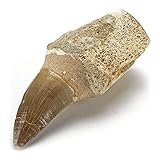
- Experience what it's Like to Own an Authentic Prehistoric Mosasaur Tooth Fossil Dated To Be 90 Million Years Old!
- Trilobites, Meaning "Three-Lobed", First Appeared In Our Oceans About 570 Million Years Ago Before Going Extinct around 240 Million Years Ago.
- These Fossils are Hand-Selected with an Average Size of 2.5 Inches; However, Please Allow for small Variations in Size, Shape, & Color.
- Our Trilobite Fossils are Insured with a Money-back Guarantee. The KALIFANO family has been serving customers in the United States since 1912. If for any reason you are not satisfied, we are happy to offer a full value refund. Order with confidence. We guarantee every item we sell. You will receive the same high quality on Amazon that we offer in our retail stores in Las Vegas at The Grand Canal Shoppes @ The Venetian and The Forum Shops @ Caesars Palace.
- Interested in Fossils and Minerals? 💎 Explore The KALIFANO Store Today!
Could Archaeopteryx fly?
The Chicago fossil contributes evidence to the discussion of early flight, especially through its feathers and wing anatomy. The Field Museum describes Archaeopteryx as the earliest known dinosaur with evidence for feather-powered flight. The newly visible tertials may have helped close a gap between the wing and body, but a fossil cannot show the animal’s flight in action or establish its precise performance. Researchers therefore treat the anatomy as evidence relevant to flight mechanics, not proof that Archaeopteryx flew like a modern bird. Field Museum
What did the 2026 follow-up reveal about its mouth?
A follow-up paper in The Innovation, featured by the Field Museum on February 2, 2026, described oral papillae on the roof of the mouth, a small tongue bone, and openings near the beak tip interpreted as traces of nerves. The researchers suggest those openings could be an early analogue of the bill-tip organ found in modern birds. These features may inform ideas about feeding, but their function in the living animal cannot be observed directly from the fossil. Field Museum
Rank #4
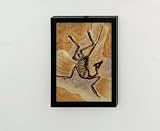
- ✅【Size】8.86" L(255MM) X 7.7" W(195MM).
- ✅【Package Include】1x Model, 1x Original box.
- ✅【Material】Made of Resin , Safe and Eco-friendly.
- ✅【Feature】Animal Model Collector, Decoration Scientific Art Model.
- ✅【 Note】Please refer to the measurement. The tiny measuring error is allowable in the normal range. There might be a little color difference due to the monitor, camera or other factors, please refer to the physical item.
What the fossil can—and cannot—tell us
The specimen adds unusually clear anatomical evidence, but preserved structures and interpretations of their function are not the same thing. Its feathers, bones and soft tissues help researchers investigate flight, movement and feeding; they do not provide direct recordings of behavior, exact flight ability or diet. Nor does the fossil establish that Archaeopteryx was the direct ancestor of living birds. Its importance lies in what it preserves and the new questions those details allow scientists to examine.
Quick Recap
Best Value

- Made in United States
- The Package Length of the Product is 30.0 inches
- The Package Width of the Product is 2.0 inches
- The Package Height of the Product is 2.0 inches
Product prices and availability are accurate as of the date/time indicated and are subject to change. Any price and availability information displayed on Amazon at the time of purchase will apply.
Recommended Free Tools




