Yes—people can expose chimpanzees to respiratory and other infectious diseases, so visitors should keep the distance required by the site, wear the required mask, and stay away if ill. A mask reduces one route of exposure; it does not make a close encounter safe or replace screening, hand hygiene, and other local precautions.
Can people give chimpanzees a cold or another infection?
People can carry pathogens that threaten great apes, including chimpanzees. The IUCN’s great-ape health guidance says there is abundant evidence that great apes are susceptible to human respiratory pathogens, and an illness that is mild in a person can be serious in an ape. Its COVID-19 statement applied a precautionary assumption about SARS-CoV-2 while susceptibility was uncertain; it did not claim that the risk had been fully measured. IUCN health monitoring and disease prevention guidance


That is why conservation guidance aims to prevent exposure rather than wait for a confirmed transmission event. IUCN’s 2025 supplement to its great-ape health guidance covers disease prevention at visitation sites as well as employee health programmes, surveillance, diagnostic sampling, and health interventions. The organization summarizes the rationale this way: “It is evident that preventing disease is both more effective and cost-efficient than attempts to treat, control or eradicate a disease once introduced.” IUCN, June 2025
Why wear a mask around chimpanzees?
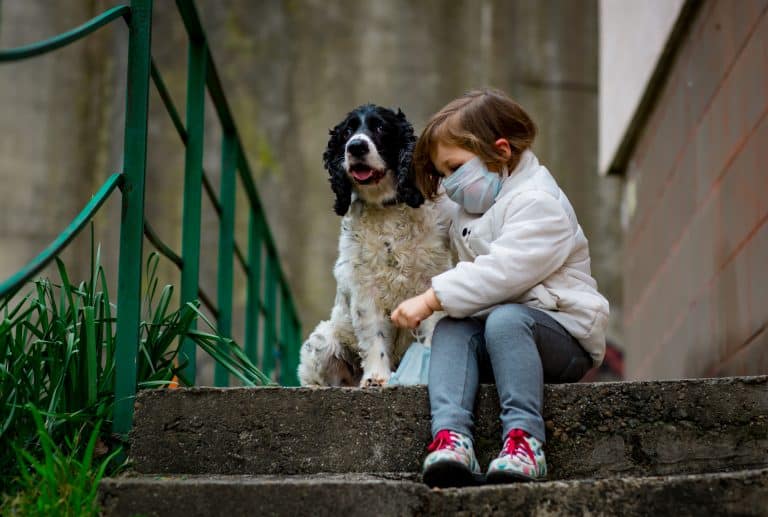
A mask can reduce the chance that respiratory droplets from an infected person reach an ape. But it is only one precaution, not a guarantee against infection. IUCN warns: “Close proximity to great apes, even if wearing a mask, can increase the risk of disease transmission and can be stressful for apes.” IUCN visitor guidance
What’s actually slowing this PC down?
Pick the symptom - the matching free tool is one click away.
#1 Best Overall
Mask recommendations differ by setting and source. IUCN’s current visitor advice asks visitors to bring surgical masks and spares, wear a clean surgical or two-layered mask fitted over the nose, mouth, and chin, and avoid masks with valves. UNESCO’s 2010 tourism guidance recommends surgical-quality N95 respirators for tourists and staff likely to approach habituated apes within 10 metres. That older recommendation is not a universal current rule: visitors should follow the destination’s latest instructions.
Neither recommendation gives permission to approach. UNESCO also cautions that mask use must not weaken distance, hygiene, or time limits. UNESCO, Best Practice Guidelines for Great Ape Tourism (2010)
How far away should visitors stay?
IUCN’s current visitor guidance states a minimum separation of 7 metres, while noting that some sites require more. UNESCO’s 2010 guidance discusses N95 respirators in the context of people likely to approach habituated apes within 10 metres. These figures describe different guidance and contexts, not a single universal chimpanzee rule. The operator’s current distance limit governs; if it is greater than 7 metres, keep the greater distance. IUCN visitor guidance
Distance also limits stress and exposure opportunities that a mask cannot address. IUCN’s COVID-era statement put minimizing direct and indirect contact at the center of prevention: “There is no more effective measure for prevention of the introduction of SARS CoV-2 to great apes than to minimize direct and indirect contact between great apes and infected people.” Its outbreak-era advice included at least 7 metres and strongly advised 10 metres in that context; those figures should not be mistaken for a permanent rule at every site. IUCN COVID-19 statement
Free tools Windows power users keep installed
One-click scans. No signup required.
Why do hygiene and behavior matter too?
Exposure is not limited to breathing near an animal. In a 2021 observational study of chimpanzee-tracking excursions in Uganda’s Kibale National Park, researchers recorded an average of 125.84 ± 34.45 face touches per excursion and 230.14 ± 108.66 touches to large tree trunks or branches per excursion. Chimpanzees might later touch those surfaces, creating a potential indirect pathway. The study observed behaviors; it did not document a transmission event, calculate a visitor’s infection probability, or test whether a mask policy prevented infection. American Journal of Primatology study (2021)
Useful visitor precautions include:
- Clean your hands as directed by the site, and avoid touching chimpanzees or surfaces they may use.
- Keep your mask fitted over your nose, mouth, and chin; turn away and cough or sneeze into your arm.
- Follow any site rules on clean clothing, disinfected footwear, group size, and time near the animals.
- Never treat mask use as a reason to shorten the distance.
Should you visit if you feel sick?
No. Do not visit when you have symptoms or after contact with someone sick if the site’s rules exclude you. Current IUCN visitor guidance says not to visit in those circumstances. Its COVID-era statement specifically recommended excluding people who were ill or had contact with an ill person during the preceding 14 days; that period belongs to that outbreak-era guidance and is not a universal current travel rule. Check the destination’s current screening and cancellation policy before going. IUCN visitor guidance
Independent reader supportYour contribution helps us test, update, and keep practical guides available for everyone.How do managed sanctuaries protect chimpanzees?
Visitor precautions sit alongside professional animal-health measures. In the United States, federal chimpanzee sanctuary standards require a facility veterinarian to establish and implement a health-monitoring system, prioritize prevention, and consider appropriate vaccines at the veterinarian’s discretion. The regulation notes that chimpanzees are susceptible to many vaccine-preventable diseases of human childhood. These requirements apply to U.S. sanctuaries and do not replace a facility’s veterinary protocols or define rules for other countries. 42 CFR § 9.6
Quick Recap
Best Value
Product prices and availability are accurate as of the date/time indicated and are subject to change. Any price and availability information displayed on Amazon at the time of purchase will apply.
Quick wins for a faster PC:
Scan for outdated or missing drivers - takes under a minuteDriver Scan →Clear out junk files and repair common Windows errorsFree Scan →Fix the driver behind crashes, sound loss and screen glitchesFind Drivers →