PC Slower Than It Used to Be?
A free scan shows the junk files, broken settings and background clutter dragging Windows down - then fixes them in one click.Free scan · Windows 10 & 11Outdated Drivers Are Slowing You Down
One free scan finds every outdated or missing driver and matches the right update for your exact hardware.Free scan · exact hardware matchThe U.S. criticism was a September 2025 allegation about cattle movement controls and fly-trap checks near the border—not a proven finding that Mexico broke a bilateral agreement. Mexico disputed the account, saying the trap-check interval was agreed with U.S. officials and that the detection came through the joint action plan. By September 2026, the U.S. had reopened the Douglas, Arizona, port to Mexican cattle under a jointly agreed protocol, while further openings remained conditional.
What prompted the U.S. criticism?
On September 25, 2025, U.S. Agriculture Secretary Brooke Rollins criticized Mexico after New World screwworm was detected in Nuevo León, a Mexican state bordering Texas. Reuters reported that the detection was less than 70 miles (113 km) from the U.S. border. The United States had kept its border mostly closed to Mexican cattle imports since May 2025.

Rollins said Mexico had not adequately enforced cattle movement controls in infected areas and was not checking fly traps as often as promised. She said USDA staff traveled to the region after learning about the case, and that reopening livestock trade depended on full compliance with agreed surveillance protocols. Reuters quoted her as saying: “Unfortunately, what we found is Mexico has failed to enforce proper cattle movement controls in infected regions and is not tending to fly traps daily as promised, which hinder our real-time detection capabilities. This is unacceptable.” Reuters reporting, September 25, 2025.
How did Mexico respond?
Mexico’s animal-health agency, SENASICA, disputed the account of the trap-check requirement. It told Reuters that traps were checked every three or four days, a frequency it said had been jointly determined with the U.S. Animal and Plant Health Inspection Service (APHIS). SENASICA also said inspectors were using double inspections at livestock origin and that the northern case was detected through the bilateral action-plan protocol.
What’s actually slowing this PC down?
Pick the symptom - the matching free tool is one click away.
#1 Best Overall
SENASICA’s statement to Reuters said: “Regarding the detection of a case of New World screwworm in northern Mexico, it should be noted that this finding was possible thanks to the application of a protocol established in the bilateral action plan.”
What is established—and what is disputed?
The two governments’ accounts differ on the expected trap-check schedule and the adequacy of movement controls. The Reuters report records those competing claims, but the underlying bilateral plan, inspection records, and an independent compliance audit are not available in the cited material. It therefore does not establish whether Mexico breached an agreed protocol.
Rank #2
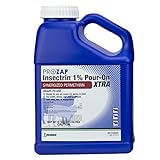
- Ready-To-Use as a pour-on, spray or mist
- Contains 1% Permethrin and 1% PBO
- For use on lactating and non-lactating dairy cattle, beef cattle and calves
- Controls lice, horn flies, face flies, horse flies, stable flies, house flies, mosquitoes and black flies
- Mix with mineral oil for use with backrubbers
Reuters also reported that Mexican President Claudia Sheinbaum said Mexico had not been notified by USDA of a change to the expectation that the U.S. would reopen the border before November. She said controlling livestock movement within Mexico was complicated. Those remarks described Mexico’s position at the time; they are not a current reopening forecast.
What changed after the dispute?
The outbreak in Mexico was detected in November 2024, according to Associated Press reporting in July 2026. After the September 2025 criticism, U.S. policy shifted toward a phased reopening rather than an immediate return to unrestricted cattle trade.
Quick wins for a faster PC:
Repair Windows errors before they cause bigger problemsFix Now →Fix the driver behind crashes, sound loss and screen glitchesFind Drivers →Rank #3

- PROTECTS ANIMALS - This water-based formula protects horses, beef & dairy cattle, goats, sheep, swine, poultry, & dogs. It can be sprayed directly on livestock when used as directed.
- BUG KILLER - Our product controls horn flies, face flies, house flies, horse flies, fruit flies, stable flies, & deer flies. It also controls species of mosquito, gnat, poultry lice, mite, flea, tick, cockroach, spider, cricket, ant, & more.
- INDOOR & OUTDOOR USE - Horse & Stable Fly Spray can be used indoors for spot applications only. Outdoor applications include lawn & soil treatment & around building foundations to prevent insect infestations.
- LONG-LASTING RESULTS - Horse & Stable Fly Spray's fast-acting formula will keep working up to 4 weeks.
- READY TO USE - This product is conveniently ready to use when it arrives. The spray nozzle makes this product easy to deploy.
USDA’s July 2026 announcement identified Sonora and Chihuahua as lower-risk states because of established inspection programs and their distance from southern Mexico, where cases had been concentrated. The plan reopened the Douglas, Arizona, port on August 24, 2026, under a jointly agreed, science-based import protocol. APHIS’s status page, last modified September 28, 2026, said possible openings at Santa Teresa and Columbus depended on the initial reopening, action-plan milestones, and risk assessments. USDA said it could pause openings if it identified increased risk. The timetable remained flexible. APHIS current status of New World screwworm, September 28, 2026.
Independent reader supportYour contribution helps us test, update, and keep practical guides available for everyone.Why does the dispute matter to livestock trade?
New World screwworm is a serious animal-health threat because its larvae infest living tissue. USDA says the issue is not a food-safety concern and that the current risk to animals and people in the United States is very low. The agency lists surveillance, trapping, livestock movement protocols, and production and dispersal of sterile flies among its response tools. USDA said planned production capacity would approach approximately 500 million sterile flies per week; that is a planned capacity figure, not evidence of a particular level of field effectiveness. USDA APHIS screwworm response information, last modified September 21, 2026.
Rank #4

- Concentrated insecticide formulation
- Use on beef and dairy cattle, horses, sheep, goats, swine, and poultry
- Use outdoors or in non-food areas of dairies, barns, swine houses, and kennels
The import suspension also carried economic stakes. Associated Press reported in August 2026 that Mexico’s cattle-export business was worth $1.2 billion in the prior year and that the Mexican livestock sector estimated multimillion-dollar losses from the suspension. The AP report did not provide a precise loss total. These figures describe trade and industry impacts; they do not establish the cost attributable to any single policy decision or compliance dispute. Associated Press, August 22, 2026.
Quick Recap
Best Value

- For Big Fly Problems — Catch and kill up to 40,000 flies with the Big Bag Fly Trap. Perfect for outdoor areas, barns, stables, and yards where you need serious fly control.
- Fast Acting — This trap uses an attractant bait that flies can’t resist. Lured by the scent, flies enter the trap through the cap and drown in the water.
- Easy to Use — Follow the easy directions on the bag to expose the trap entrance. Add water to activate bait and hang the trap outside, at least 20 feet away from any living spaces.
- Outdoor Use Only – Once activated, these traps have a strong odor. Only use this trap outdoors, and at least 20 feet away from any living areas.
- Made in the USA – At RESCUE!, our goal is to design and manufacture the safest and most effective pest control solutions available. We proudly manufacture our products in the USA!
What readers should take away
- The September 2025 criticism focused on movement controls for cattle in infected regions and how often fly traps were checked near the border.
- Mexico said the three-to-four-day trap-check interval was jointly agreed with APHIS and that the northern detection resulted from the bilateral action plan.
- The available reporting does not independently resolve which account of the agreed requirements is correct.
- By September 2026, Douglas had reopened under a joint import protocol; additional port openings were still subject to conditions and risk assessments.
Product prices and availability are accurate as of the date/time indicated and are subject to change. Any price and availability information displayed on Amazon at the time of purchase will apply.
The Tool Desk
Outbyte Driver Updater FREEScan for outdated or missing drivers - takes under a minuteDriver Scan →Outbyte PC Repair FREEClear out junk files and repair common Windows errorsFree Scan →



