A baby tortoise enclosure works when it gives the animal four things at once: a warm basking spot under good UVB, a cooler area to retreat to, a secure hide, and shallow water it can climb into and out of safely. The exact footprint, temperatures, humidity, and substrate depend on the species, so the ideas below are layout options to adapt, not one blueprint to copy. As a starting size, The Tortoise Table’s indoor-housing guidance recommends a 3 ft x 2 ft (91 cm x 61 cm) open-top table for a hatchling, with more room as the animal grows. That is the site’s own recommendation for indoor housing, not a universal legal or veterinary standard.
Ten layout ideas that meet a hatchling’s needs
Each idea below solves one functional problem. Read the species note in each one before you build, because the same feature can be right for one tortoise and wrong for another.
1. Open-top tortoise table
An open-top table gives a hatchling a broad, stable floor, room for a temperature gradient, and enough substrate depth to dig. The Tortoise Table lists 3 ft x 2 ft as its hatchling minimum. Keep the sides high enough to contain the animal, and set the table where curious pets and children cannot knock it over. Plan to upgrade the footprint as the tortoise grows, because a space that is comfortable at hatching becomes cramped within a few seasons.
2. Basking end and cool end
Put the heat source at one end so the tortoise can choose its temperature by moving. The Tortoise Table’s routine-care guidance describes about 30°C (86°F) at basking height and 20°C (68°F) at the opposite end. That guidance does not state which species the figures apply to. UC Davis School of Veterinary Medicine, in a 2019 page on desert tortoises, gives a 70°F to 90°F (about 21°C to 32°C) indoor daytime range. These are different guidance contexts, so treat them as separate reference points and confirm your own tortoise’s species before choosing targets.
Free tools Windows power users keep installed
One-click scans. No signup required.
#1 Best Overall

- Multifunctional Tortoise House: The legs of this turtle cage are designed to be removable, you can put it on the table without installing the table legs or install legs to place the lizards cage on the floor.
- Adjustable Heat Lamp Holder: Tortoise house comes with a adjustable light stand. Height of lamp stand: about 11"-31". Width of hanging heating lamp: about 13"-21.1". The roof is freely open with holder's 360 rotation.
- Acrylic Viewing: Reptile cage design with acrylic viewing on activity area,easier to observe your petsand provide a full brightness.Weatherproof hiding area offers safe shelter for your beloved pet.
- Two-bedroom Design: Provide larger and more comfortable living space. In addition to being suitable for turtles, cages can also be used for small reptiles such as snakes, lizards, chameleons and other small animals etc.
- 【INDOOR & OUTDOOR USE】You can trust it with indoor use to protect tortoise from too cold or too hot temperatures or to escape bad weather.Turtle house features with moisture-proof finish, you can also use it outdoors to provide natural sunlight in warm days.
3. UVB paired with the basking zone
Position the UVB fixture so its output covers the active basking area. The Tortoise Table’s indoor guidance identifies specialist, good-quality UVB bulbs as essential. Fixture type, mounting height, and coverage differ between products, so follow the manufacturer’s instructions for each. The same guidance mentions a reflector cover for a UVB tube and a dimming thermostat as possible equipment choices. Follow the manufacturer’s safety instructions for any lamp or controller you install.
4. Dry hide in the corner away from the light
UC Davis recommends a dark retreat placed away from the basking light for desert tortoises. The hide gives the animal a place to get out of direct heat and light, and it should sit at the cool end of the enclosure rather than under the lamp. Check that the entrance is wide enough for the hatchling to come and go without wedging itself in.
Rank #2

- TORTOISE HABITAT: The large tortoise enclosure house wooden is with dimensions of 40.2*20.87*16.1 inches and a door size of 9.6*7.5 inches, this tortoise habitat turtle enclosure provides ample space for raising multiple small animals, such as rabbits, tortoises, lizards, snakes, turtles, hamsters, and quail, making it a versatile indoor enclosure for breeders
- CONVENIENT & COMFORTABLE: The box turtle habitat features a unique half tray and half wooden board design, providing a comfortable resting area for your rabbits, tortoises and others small animals on the wooden board, while the tray serves as a convenient space for their daily activities such as eating, excreting, and playing
- TORTOISE ENCLOSURE OUTDOOR: The tortoise enclosure indoor outdoor is with its portable design, this wooden tortoise habitat large can be conveniently moved and placed in different locations, allowing you to create a diverse activity space for your small animals
- LARGE WOOD TORTOISE HOUSE: This tortoise enclosure outdoor indoor offers a multifunctional design that meets the needs of different small animals, providing them with a place to have fun and develop. The turtle habitat can be used in various scenarios such as homes, pet shops, or breeding farms, and can be easily moved and placed in different locations
- SAFE AND SECURE: The large tortoise house wooden features a sturdy wooden board structure that provides a secure and comfortable resting area for small animals. The waterproof and durable ABS material tray ensures the safety of your furry friends during their activities
5. Humid hide for species that need one
Zoo Med’s sulcata guidance calls for a humidity chamber or humid hide large enough for the tortoise to fit completely inside. This is a sulcata recommendation. Do not apply it to every species, because a humid hide suited to one tortoise can be wrong for a desert or Mediterranean animal that needs drier conditions. Use the species table below to decide whether a humid hide belongs in your build.
6. Diggable substrate zone
For Mediterranean species, the Tortoise Table suggests about 50% topsoil mixed with 50% play sand. Digging behavior is natural for these tortoises, so a substrate deep enough to dig in gives them an outlet. Substrate advice varies by species and by humidity needs, so do not use this mix as a default for other tortoises without confirming the species requirement first.
Windows Errors? Fix Them Before They Spread
Repair common Windows errors and clear accumulated junk for a smoother, more stable PC - no reinstall needed.Free scan · no reinstallCrashes, No Sound, or Screen Glitches?
Random freezes, missing sound and display glitches usually trace back to one bad driver. Find and replace yours safely.Free scan · under a minuteRank #3

- 【MULTI-SPECIES REPTILE HABITAT DESIGN】Spacious tortoise habitat and reptile enclosure designed for tortoises, geckos, bearded dragons, snakes, and other small reptiles. Provides a stable indoor-outdoor environment that supports natural behavior and comfortable daily living space.
- 【ADJUSTABLE LIGHTING ARM INCLUDED】Comes with an adjustable lamp arm for heating or lighting setup, supporting reptile comfort and habitat temperature control. Enhances usability as a functional reptile habitat with lighting system.
- 【MULTI-ROOM OBSERVATION】Features a 2–3 room structured layout with sleeping, activity, and viewing zones. Transparent acrylic panels provide full visibility for monitoring pets, while the secure structure ensures safe containment. Ideal for hobbyists seeking a clean and accessible glass-style reptile habitat display tank.
- 【PREMIUM STRUCTURE】Crafted from durable fir wood with water-resistant coating for long-lasting use. Features detachable legs for flexible placement on floors or tables, making it a versatile wooden tortoise house indoor outdoor enclosure.
- 【EASY CLEANING & SMART STORAGE STRUCTURE】Top-opening dual roof design allows quick access for cleaning and maintenance. Includes upgraded leak-resistant tray design, keeping your turtle cage habitat clean, organized, and hygienic.
7. Stable shallow water station
Choose a shallow dish with a gentle entry and exit, and fill it only deep enough for soaking. The Tortoise Protection Group suggests flattish pebbles in the dish for a new baby, which helps reduce tipping and drowning risk. Replace the water daily and clean the dish regularly, because a shallow bowl in a warm enclosure can become contaminated quickly.
8. Temperature checkpoints at tortoise height
Measure the basking and cool ends at the height where the tortoise actually sits, not only at room temperature. A digital probe thermometer or an infrared temperature gun can confirm the gradient. An infrared gun reads surface temperature, so it tells you how hot the floor or basking surface is, not the air temperature at the animal’s body. The cited sources give gradient guidance but do not endorse any specific thermometer brand.
Rank #4

- Premium Wooden Construction: Crafted from high-quality, safe spruce wood, this habitat ensures a secure and natural environment for your tortoise. Its lightweight and durable design prevents deformation, guaranteeing long-lasting use
- Innovative Dual Chamber Layout: The tortoise enclosure includes a public area with three large observation windows for easy monitoring and exposure to UV light, while the private resting area protects your pet from the elements, ensuring a comfortable retreat
- Indoor and Outdoor Use: You can use it indoors with confidence to protect turtles from too cold or too hot temperatures, or to escape bad weather. The turtle cage is moisture-proof and you can also use it outdoors for small animals such as turtles, lizards, geckos and snakes
- Easy to Clean and Assemble: Note that lights are not included. The Tortoise Habitat is designed with a large removable plastic tray to prevent bottom rot, making maintenance hassle-free. With two operable top lids secured by wooden brackets, assembly takes only 20-30 minutes, ensuring convenience for pet owners
- Spacious Dimensions with Adjustable Lamp Holder: This tortoise habitat measures 38 inches in length, 24 inches in width, and 32 inches in height, providing ample space for your pet to move comfortably while the adjustable lamp holder allows for customized lighting setup
9. Feeding and cleaning zone
Keep food and water in a place where you can inspect them quickly and refresh them each day. The Tortoise Table’s routine-care guidance emphasizes daily observation and routine cleaning. A layout with a clear front, open access, and no dead corners makes spot-cleaning easier and helps you notice a change in appetite or activity early.
10. Supervised outdoor basking pen
An outdoor pen can supplement an indoor setup in suitable weather for suitable species. UC Davis notes that sunlight is a UVB source for desert tortoises. The Tortoise Protection Group warns that hatchlings lose body heat quickly, so a hatchling needs close supervision and a shaded retreat within the pen. Outdoor exposure is not safe in every climate, and it is not a substitute for a controlled indoor enclosure during cold, wet, or very hot weather.
Recommended Free Tools
Best Value
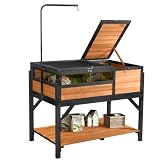
- Multifunctional Tortoise House: The legs of this turtle cage are designed to be removable, you can put it on the table without installing the table legs or install legs to place the lizards cage on the floor.
- Adjustable Heat Lamp Holder: Tortoise house comes with a adjustable light stand. Height of lamp stand: about 11"-31". Width of hanging heating lamp: about 13"-21.1". The roof is freely open with holder's 360 rotation.
- Acrylic Viewing: Reptile cage design with acrylic viewing on activity area,easier to observe your petsand provide a full brightness.Weatherproof hiding area offers safe shelter for your beloved pet.
- Two-bedroom Design: Provide larger and more comfortable living space. In addition to being suitable for turtles, cages can also be used for small reptiles such as snakes, lizards, chameleons and other small animals etc.
- 【INDOOR & OUTDOOR USE】You can trust it with indoor use to protect tortoise from too cold or too hot temperatures or to escape bad weather.Turtle house features with moisture-proof finish, you can also use it outdoors to provide natural sunlight in warm days.
Species differences that change the build
A single generic setup can mislead, because the sources describe materially different conditions for different tortoises. The table below shows what each cited guidance says. Where a source does not state a value, the cell says so.
| Setting | Mediterranean species (Tortoise Table) | Desert tortoise (UC Davis, 2019) | Sulcata (Zoo Med sulcata guidance) |
|---|---|---|---|
| Indoor daytime temperature | Not stated for this species; the routine-care figures of about 30°C basking and 20°C cool end do not name a species | 70°F to 90°F indoor daytime | Not stated in the cited guidance |
| Substrate | About 50% topsoil and 50% play sand, mixed | Not stated in the cited guidance | Not stated in the cited guidance |
| Hide type | Not stated in the cited guidance | Dark, dry retreat placed opposite the basking light | Humidity chamber or humid hide large enough for the tortoise to fit completely inside |
| UVB | Specialist, good-quality UVB identified as essential for indoor setups | Sunlight noted as a UVB source for outdoor exposure | Not stated in the cited guidance |
Two points follow from the table. Humidity and hide design should be decided by species, not borrowed from another tortoise’s care sheet. And the blank cells are not gaps to fill with guesses; they tell you that you need the species-specific guidance before you finalize the build.
Check the setup before the baby moves in
Run the enclosure empty for several days before adding the hatchling. This lets you confirm that the gradient, lighting, and water station work as planned.
- Measure the enclosure against the 3 ft x 2 ft (91 cm x 61 cm) hatchling minimum from the Tortoise Table, and confirm you have room for growth.
- Turn on the heat and UVB, then read the surface temperature at the basking spot and at the cool end with a probe thermometer at tortoise height.
- Confirm that the UVB output covers the basking area at the mounting height in the manufacturer’s instructions.
- Place the dry or humid hide at the cool end, and check that it is dark, secure, and large enough for the animal to enter fully.
- Fill the water dish shallow, place it where the hatchling can enter and leave without a steep drop, and confirm that flattish pebbles are in place if you use them.
- Check that the substrate is deep enough for digging where the species requires it, and that it is not wet or dusty.
Common mistakes with hatchling enclosures
- Relying on room temperature instead of measuring the gradient at tortoise height.
- Placing the only hide under the basking lamp, where the animal cannot escape heat.
- Using one substrate or humidity plan for every tortoise, regardless of species.
- Filling the water dish too deep for a hatchling to exit safely.
- Putting an outdoor pen in full sun without shade or supervision.
The most useful enclosure is the one you can measure and adjust. Choose the species first, use the layout ideas above to build the heat, light, hide, and water zones, and let the species table tell you where the guidance differs. A hatchling does best in a setup that is stable, easy to inspect, and designed for the animal in front of you.
What’s actually slowing this PC down?
Pick the symptom - the matching free tool is one click away.
Quick Recap
Product prices and availability are accurate as of the date/time indicated and are subject to change. Any price and availability information displayed on Amazon at the time of purchase will apply.




