Do these 3 things before closing this tab:
1Scan for outdated or missing drivers - takes under a minute2Repair Windows errors before they cause bigger problems3Fix the driver behind crashes, sound loss and screen glitchesTardigrades are microscopic animals best known as “water bears,” but their real biology is more interesting than the nickname suggests. They have eight legs, live in water films around moss and soil, and can enter a dormant state that helps them endure drying, freezing, radiation, and even exposure to space.
They are not pets in the usual sense: you cannot handle, feed, or observe them without magnification. Still, they are remarkable animals and a useful reminder that survival adaptations are often highly specialized rather than magical.
As an Amazon Associate I earn from qualifying purchases.
1. Tardigrades are tiny, eight-legged animals
Tardigrades belong to the phylum Tardigrada. Their bodies are divided into segments, and they have four pairs of short legs. Each leg ends in claws or adhesive disks that help the animal move through its damp habitat.
Most are microscopic. Even the largest species grow only a little over 1 millimeter long, so a tardigrade is difficult to see clearly without a microscope. Their compact, plump bodies and slow movement are the reason they have been compared with miniature bears.
#1 Best Overall

- High Power Optical Magnification: Equipped with 4X, 10X, 40X objective lenses, a WF25X eyepiece, and a 2X magnification lens, this compound light microscope delivers versatile zoom settings from 100X up to 2000X. Outperforming standard 100x, 400x, and 1000x entry-level light microscope models, its crystal-clear glass optics allow students and adults to easily inspect biological cells, micro-organisms, and plant tissues in high contrast.
- Complete Microscope Kit with 28 Slides: Designed as an all-in-one microscope kit (or microscopio set) ready for immediate science experiments out of the box. Includes 10 pre-prepared specimen slides, 18 blank slides for DIY samples, 1 universal phone clip adapter for digital photography, 1 Bluetooth remote camera shutter, and a dedicated power adapter—providing a complete microscope with slides experience for home or lab use.
- Top & Bottom LED Dual Illumination: Features an adjustable top and bottom LED light system tailored for diverse specimen types. Use the upper light for opaque solid items (offering crisp view for coins and insect wings like a stereo scope) and the bottom light for translucent biological cells. The coaxial coarse and fine focus knobs ensure sharp adjustment superior to basic binocular or monocular setups.
- Age 8-18 & SGS Safety Certified: SGS certified for non-toxic materials and reliable electrical safety, making it a safe STEM microscope for kids 10-12 (with adult supervision) and an ideal microscope for teens aged 12-18. It perfectly satisfies basic to intermediate biology experiment needs as a trusted microscope for students in middle school and high school classrooms.
- Versatile Educational STEM Gift: Whether used for homeschooling science projects, classroom teaching, or entry-level research, this model bridges the gap between toy scopes and a heavy professional microscope setup (without the complex costs of an electron microscope). It is a practical, inspiring educational science gift for curious young researchers and a functional microscope for adults and hobbyists.
2. They are not exclusively marine animals
The name “water bear” can make tardigrades sound like ocean animals, but they live in several kinds of environments. They may be found in:
- Films of water on mosses and lichens
- Leaf litter and soil
- Freshwater habitats
- Marine environments
Active tardigrades need available water to move, feed, grow, and reproduce. A moss-dwelling species may spend part of its life active and part of it dormant when the thin layer of moisture around it disappears.
3. “Water bear” describes how they look and move
Under magnification, a tardigrade’s rounded body and four pairs of stubby legs give it a bear-like appearance. Its slow, clawed walking adds to the comparison. “Moss piglet” is another nickname sometimes used for these animals because many terrestrial species live among mosses and lichens.
Recommended Free Tools
The resemblance is only visual. Tardigrades are not miniature mammals; they are a distinct group of microscopic animals with their own body plan and evolutionary history.
4. Tardigrades use stylets to pierce their food
A tardigrade does not chew food with jaws like a dog or cat. It uses hardened mouthparts called stylets to puncture food and then suck out the contents.
Depending on the species, its diet may include plant cells, algae, bacteria, fungi, or small animals. Some larger tardigrades eat protozoa, nematodes, rotifers, and even other tardigrades. Their diet is therefore not uniform across the group.
5. Their survival state is called cryptobiosis
When conditions become hostile, especially during drying, many terrestrial tardigrades enter a state called cryptobiosis. The animal retracts its legs and head, contracts into a compact, barrel-shaped form called a tun, and reduces its metabolism to an extremely low level or one that cannot be measured by ordinary methods.
In this state, the tardigrade is not actively walking, feeding, growing, or reproducing. It is waiting for conditions to improve. When water becomes available again, some individuals can rehydrate and resume activity.
Cryptobiosis is important context for nearly every claim about “indestructible” tardigrades. Their most famous abilities generally depend on this dormant state, not on being invulnerable while fully hydrated and active.
Rank #2
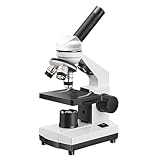
- POWERFUL MAGNIFICATION: Features 40X-2000X magnification range with multiple objective lenses (4X, 10X, 40X) and eyepieces (WF10X, WF25X, 2X) for detailed observation of biological specimens
- DUAL LED ILLUMINATION: Equipped with both upper and lower LED lighting systems with adjustable brightness control, providing optimal illumination for viewing transparent and opaque specimens
- COMPLETE ACCESSORY KIT: Includes phone adapter for capturing microscopic images, blank specimen slides, cover slips, tweezers, and prepared sample slides for immediate use in educational settings
- VERSATILE COLOR FILTERING: Built-in five-color disc diaphragm filter wheel allows for enhanced contrast and detailed viewing of different specimen types and cellular structures
- EDUCATIONAL DESIGN: Ideal for students, school laboratories, and home education with sturdy construction, easy-to-use focus controls, and comprehensive accessories for hands-on learning experiences
6. Extreme survival varies between species
There is no single tardigrade survival limit that applies to every species. Tolerance can differ according to:
- The species involved
- The animal’s life stage
- Whether it is hydrated or desiccated
- How quickly it dries or freezes
- How it is rehydrated
- The intensity and duration of radiation or other stress
Terrestrial tardigrades are generally better studied for survival through drying than many marine and freshwater species. Even within a species, laboratory results can change with the experimental conditions. “Tardigrades can survive anything” is therefore an inaccurate description.
7. Some survived exposure to the vacuum of space
In September 2007, the European Space Agency’s FOTON-M3 mission exposed desiccated tardigrades to space for about 12 days. Many survived exposure to the vacuum. Survival was much poorer when intense, unfiltered solar ultraviolet radiation was included.
This experiment demonstrated a specific ability under specific conditions. It did not show that every tardigrade could survive every space hazard, nor that an active, hydrated animal could casually live in space.
8. Their radiation resistance has limits
Some tardigrades tolerate doses of ionizing radiation that would kill most animals. That makes them valuable subjects for research into DNA protection and survival under extreme environmental stress.
However, radiation still damages tardigrade cells, and tolerance varies among species and experimental conditions. The animals are radiation-resistant, not radiation-proof. Dose, exposure time, hydration state, and the particular species all matter.
The Tool Desk
Outbyte PC Repair FREERepair Windows errors before they cause bigger problemsFix Now →Outbyte Driver Updater FREEScan for outdated or missing drivers - takes under a minuteDriver Scan →9. Dsup can help protect DNA in some tardigrades
Researchers identified a protein called Dsup, short for “damage suppressor,” in Ramazzottius varieornatus. Laboratory studies found that Dsup binds to nucleosomes—the structures around which DNA is packaged—and helps reduce DNA damage caused by hydroxyl radicals.
Dsup is an important clue to how at least some tardigrades cope with stress, but it should not be described as a universal protective force field. Not every tardigrade species necessarily has the same protein or uses the same protective mechanisms in the same way.
Independent reader supportYour contribution helps us test, update, and keep practical guides available for everyone.10. Tardigrades are not immortal
Tardigrades do not live forever. Their active life span varies with species and environmental conditions. A dried individual may remain viable for years, and some studies have reported survival for roughly two decades under particular storage conditions.
Rank #3
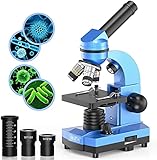
- 40X–1000X Compound Microscope for Kids & Students – High-powered biology microscope with LED illumination, perfect for school labs, homeschool science and beginner experiments. Clear imaging makes it ideal for young scientists and adult beginners.
- 52PCS Microscope Kit – Perfect STEM Educational Gift for Kids 8–12 – Includes prepared slides, blank slides and tools for hands-on experiments. A complete microscope kit for kids, making it a top choice as a science gift, birthday gift or Christmas gift.
- Real Science Microscope for School, Homeschool & Adult Beginners – Designed as a true compound microscope, not a toy. Suitable for students, teachers and entry-level lab use, supporting real biology exploration and STEM learning.
- Dual Light Microscope with Top & Bottom Illumination – Observe both opaque and translucent specimens easily. Adjustable lighting improves clarity, making it ideal for biology class, lab study and home experiments (batteries not included).
- Easy Focus System with 6 Color Filters & Durable Metal Frame – Smooth focusing for beginners, built-in 6 color filters enhance contrast. Sturdy metal construction and rotatable head provide stable and comfortable viewing.
That is dormant survival, not two decades of continuous active life. While in a tun, the animal is not carrying on a normal active life. Repeated cycles of drying and rehydration can also reduce viability.
Outdated Drivers Are Slowing You Down
One free scan finds every outdated or missing driver and matches the right update for your exact hardware.Free scan · exact hardware matchWindows Errors? Fix Them Before They Spread
Repair common Windows errors and clear accumulated junk for a smoother, more stable PC - no reinstall needed.Free scan · no reinstallWhat these animals teach us about survival
Tardigrades are impressive because they combine a simple-looking body with highly specialized survival strategies. Their abilities are conditional: water is essential for active life, cryptobiosis is central to surviving many stresses, and different species respond differently to the same threat.
For pet owners, the useful takeaway is not that microscopic animals are indestructible. It is that an animal’s tolerance depends on its biology and environment. A condition that one species can endure may be harmful or fatal to another.
FAQ
Are tardigrades good pets?
They are not practical pets for most people. Tardigrades are microscopic, require specialized equipment to observe, and need suitable water films or aquatic conditions. They are better treated as organisms for microscopy and education than as conventional companion animals.
Can tardigrades survive anything?
No. Their extreme tolerance is conditional and varies by species, life stage, hydration state, and the type of stress. Active, hydrated tardigrades are much more vulnerable than individuals in a dormant tun state.
Free tools Windows power users keep installed
One-click scans. No signup required.
Can tardigrades survive in space?
Some desiccated tardigrades survived experimental exposure to the vacuum of space for about 12 days during the ESA FOTON-M3 mission in 2007. Survival was much poorer when intense, unfiltered solar ultraviolet radiation was added.
Do tardigrades live for 200 years?
There is no good basis for saying they have a 200-year active life span. Some dried individuals have remained viable for many years, with roughly two decades reported under particular storage conditions, but that is dormant survival rather than continuous active life.
The Bottom Line
Tardigrades are microscopic, eight-legged animals that live in damp environments and feed through piercing stylets. Their famous toughness comes mainly from cryptobiosis, a dormant state in which many species can withstand drying and certain other extremes. They can survive remarkable conditions, including some experimental space exposure, but they are not immortal or universally indestructible.
Quick Recap
Product prices and availability are accurate as of the date/time indicated and are subject to change. Any price and availability information displayed on Amazon at the time of purchase will apply.




