
The Tool Desk
Outbyte Driver Updater FREEFix the driver behind crashes, sound loss and screen glitchesFind Drivers →Outbyte PC Repair FREEClear out junk files and repair common Windows errorsFree Scan →Some links on this page are affiliate links: if you buy through them we may earn a commission, at no extra cost to you.
Your cat notices far more than whether you fill the bowl. It tracks your personal scent, changes associated with stress, voice and location, movement, facial attention, touch, daily timing, household smells and the quality of each interaction. It also monitors whether its environment offers safe places, separated resources, scratching areas and opportunities to hunt through play.
These observations are sensory and learned, not mind reading. A cat may react to odor cues linked with human fear or to a tense posture without understanding a human emotion in the same abstract way a person does. Age, socialization, past experiences and the immediate setting all influence the response.
As an Amazon Associate I earn from qualifying purchases.
1. Does my cat notice my personal scent?
Yes. Your everyday odor is one of the most consistent signals in your cat’s environment, and cats can distinguish familiar from unfamiliar human smells.
In a 2025 PLOS One experiment, cats spent 4.82 ± 0.54 seconds sniffing an unknown person’s odor versus 2.40 ± 0.28 seconds sniffing an owner’s odor. Longer investigation of the unfamiliar sample is consistent with discrimination between known and unknown scents. The authors cautioned that this result does not yet prove that cats can identify one specific individual by odor alone; that question needs more study.
Popular on Amazon
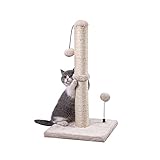
- Premium Quality Materials - This product is made of 100% natural sisal hemp.The base and top is a weighted MDF covering the carpet.Nature High Quality Sisal Safe Plush Long Lasting Usage Stable basement, never tip over easily.
- Protect your furniture - Grab sticks and plush toys combine to attract cats to play and grab, natural sisal is suitable for cats to grab, effectively preventing cats from grabbing furniture
- Designed for indoor use - Neutral colors work well with existing decor in your home.ideal for any living room, bedroom, or home office
- 22"Tall Cat Scratching Post -11.8 x 11.8 x 22 Inches,design for kitties or smaller cats.
- Easy Assemble - ust screw all parts together,Assemble needed, all tools and instructions included.Please contact us if you have any further questions.
Your skin, hair, clothing, bedding and frequently handled objects all contribute to a familiar odor profile. Keeping a few unwashed, familiar items available can help a cat orient itself after a move or other major change.
2. Can my cat tell when I am stressed by my smell?
Cats can respond to odor changes associated with human fear or physical stress, but that is not the same as labeling your emotion exactly as a person would.
Quick wins for a faster PC:
Scan for outdated or missing drivers - takes under a minuteDriver Scan →Repair Windows errors before they cause bigger problemsFix Now →Fix the driver behind crashes, sound loss and screen glitchesFind Drivers →A 2023 Scientific Reports experiment exposed 22 healthy pet cats—10 male and 12 female—to human odor samples collected during fear, happiness, physical stress and neutral conditions. Fear-associated odor produced more stress-related behavior, and stressed cats were more likely to use the right nostril. The samples came from three men, so the finding should not be generalized to every cat, person or emotional state.
If your cat retreats when you come home upset, treat the reaction as information about arousal. Lower your voice, move slowly and leave an escape route rather than forcing contact.
3. Does my cat recognize my voice and know where I am?
Voice identity and location matter even when your cat cannot see you. A report in Nature describing an experiment by Takagi and colleagues found that cats with their eyes closed tracked an owner’s movement by following the owner’s voice.
That ability helps explain why a cat may turn toward your footsteps or call from another room. It does not establish that the cat understands every word; it shows sensitivity to an important, familiar sound and its changing location.
Recommended Free Tools
Also popular on Amazon
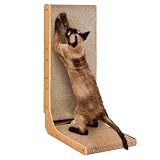
- HIGH QUALITY MATERIALS: The surface of the cat scratching board is made of non-toxic and high-density corrugated paper, which is durable enough to withstand cat scratching.
- INNOVATIVE DESIGN: Our cat scratcher for indoor cats features an L-shaped design. Please place it against wall and sofa to protect your furniture. The L-shaped cat scratcher provides more scratching area for cats to scratch in a variety of positions.
- MULTIFUNCTIONAL USE: Cats can scratch, relax and stretch on our cardboard cat scratcher. Our cat scratch pad also comes with a toy ball to play with. It provides a safe and comfortable environment for cats.
- MULTIPLE SIZES: We offer three sizes of cat scratching pad for you to choose from. The smallest size is specially for kittens. No matter what size your cat is, it enables your cat to scratch and play to its heart's content!
- EASY INSTALLATION: Our cat scratching board adopts a simple installation method and comes with instructions and necessary tools. We also provide an installation video so that you can install it quickly and easily.
4. Does my cat notice my tone and volume?
Yes. Tone, loudness and predictability alter how safe an interaction feels.
Animal-behavior guidance summarized by the American Veterinary Society of Animal Behavior describes cats as sensitive to vocal tone. Veterinary guidance also identifies loud or unfamiliar sounds as potential fear triggers. A calm, consistent voice is therefore a sensible low-stress choice, while shouting, sudden volume changes or repeated startling noises can raise arousal.
Use the cat’s response as the test: relaxed muscles and normal exploration suggest the sound is tolerable; crouching, flattened ears, fleeing or prolonged hiding indicate that you should reduce intensity and give space.
5. Does my cat read my body language and movement?
Your posture and movement speed provide context about whether a situation is safe. Cats can use human body-language cues when deciding how to approach a potentially frightening object or event.
Looming over a cat, reaching rapidly, cornering it or blocking its exit removes control and can increase arousal. Turning your body slightly, slowing your hands and keeping a clear retreat path make the same interaction less threatening. Predictability matters more than performing a special gesture: pause and let the cat choose whether to come closer.
6. Does my cat notice my face, gaze and attention?
Cats are sensitive to facial expression and where your attention is directed, but these signals are interpreted in context rather than as human-style mind reading.
Also popular on Amazon

- Scratching post provides a place for cats to sharpen their claws and keep nails healthy
- Includes a single pillar scratching post in neutral colors with a replaceable dangle toy
- Natural jute fiber provides an optimal scratching surface
- Sturdy wood base helps prevent the post from tipping
- Ideal for redirecting cats away from scratching household carpet or furniture; spot clean as needed
A fixed stare, a face close to the cat’s head or attention paired with sudden movement may feel threatening to an already wary animal. Brief looks, relaxed features and allowing the cat to approach on its own terms are generally easier to tolerate. Watch the cat’s ears, pupils, whiskers and whole-body posture at the same time; those responses tell you whether your attention is welcome.
7. How does my cat judge the way I touch and handle it?
Your cat notices pressure, location, duration and whether it can end the contact. Preferences differ widely: one cat may seek prolonged cheek rubs while another becomes uncomfortable after a few strokes.
Outdated Drivers Are Slowing You Down
One free scan finds every outdated or missing driver and matches the right update for your exact hardware.Free scan · exact hardware matchWindows Errors? Fix Them Before They Spread
Repair common Windows errors and clear accumulated junk for a smoother, more stable PC - no reinstall needed.Free scan · no reinstallStress can build from body tension and flattened ears to avoidance, hissing or flight. Pause at the first subtle change instead of waiting for a bite or scratch. Never restrain a cat to continue petting, grooming or lifting when it is trying to leave; giving control protects trust and makes future handling easier.
8. Does my cat notice changes in my daily schedule?
Yes. Feeding times, sleep, work hours, household occupancy and the sequence of ordinary events form a pattern your cat learns.
Merck Veterinary Manual states that “A predictable and consistent routine is important.” An abrupt change can therefore be noticeable even when no single event seems dramatic: a later breakfast changes the morning sequence, and a new work schedule changes when the home is quiet. When a change is unavoidable, keep meals, litter care and rest periods as consistent as practical and introduce new timings gradually.
9. What new household smells does my cat notice?
Cats rely on familiar odor profiles and on scent marks that help define a secure area. Strong cleaners, heavily scented detergents, citrus odors and fragranced litter may be aversive to some cats.
Free tools Windows power users keep installed
One-click scans. No signup required.
Also popular on Amazon

- Scratching post provides a place for cats to sharpen their claws and keep nails healthy
- Includes a single pillar scratching post with a replaceable dangle toy
- Natural jute fiber offers an optimal scratching surface
- Sturdy base helps prevent the post from tipping
- Ideal for redirecting cats away from scratching household carpet or furniture; spot clean as needed
Rubbing and scratching deposit visual and chemical marks. Removing every familiar scent while adding a powerful fragrance can make a room feel unfamiliar, even if it looks unchanged. Ventilate after cleaning, choose unscented options when possible and retain familiar bedding or furniture during a transition. If a cat avoids a newly cleaned room, restore access to a low-odor safe area rather than carrying it into the space.
10. Does my cat notice whether our interactions feel positive?
Your cat evaluates the outcome of talking, petting, feeding, playing and training through what happens next. Merck lists these as activities some cats enjoy while emphasizing that the cat’s perception determines whether an interaction is positive.
Choice and predictability are central. Reward an approach, stop when the cat signals discomfort and avoid punishment. Punitive handling can damage the human-cat bond and increase fear or aggression, making later care harder. A short interaction that ends calmly is more useful than prolonged contact the cat cannot escape.
Independent reader supportYour contribution helps us test, update, and keep practical guides available for everyone.11. Does my cat notice what I provide for hunting, hiding and marking?
Your cat notices where essential resources are located and whether the home supports normal feline behaviors. Safe hiding places, elevated resting areas, separated food and water, clean toileting areas, scratching surfaces and play opportunities all affect how secure the environment feels.
What’s actually slowing this PC down?
Pick the symptom - the matching free tool is one click away.
The AAFP/ISFM Feline Environmental Needs Guidelines describe environmental needs as essential, not optional, for feline wellbeing. Merck recommends food puzzles and toys that allow batting, chasing, rolling or pawing. A sturdy scratching post gives your cat an appropriate place to mark and stretch; put it where the cat already scratches or near a favored resting route.
Allow for substantial downtime: Merck estimates that cats sleep about 40% of the day, rest 22% and groom 15%. Interactive play should fit around that rhythm rather than constantly interrupt it. Catnip attracts approximately 50–60% of cats, so it is an optional enrichment, not a universal solution.
Also popular on Amazon
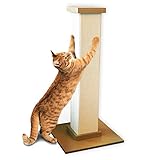
- 32″ height allows cats to stretch fully and tone muscles
- Sturdy 16″ by 16″ base eliminates tipping and wobbling
- Fibrous and durable woven sisal naturally inspires scratching
- Superior to carpeted posts that may snag nail
- Assembles with two included screws
How can I make the signals I send easier for my cat to handle?
You cannot prevent every change, but you can make the important ones more predictable and give your cat control over contact.
- Keep core routines stable. Maintain reliable feeding, litter and quiet-rest periods when work or household schedules change.
- Protect escape options. Do not corner a cat during greetings, grooming or medication; provide a covered bed, perch or other retreat.
- Lower sensory intensity. Use a calm voice, slow movements and low-fragrance cleaning products, especially after a stressful event.
- Offer behavior-appropriate outlets. Provide scratching material, hiding places, elevated spaces and toys or food puzzles that permit chasing and pawing.
- Read the earliest signals. End or modify an interaction when muscles tighten, ears flatten, pupils enlarge or the cat turns away, rather than waiting for overt aggression.
Persistent fear, aggression, major withdrawal or house-soiling needs veterinary advice. A medical problem can change behavior, and environmental adjustments alone should not delay an examination.
Do these 3 things before closing this tab:
1Repair Windows errors before they cause bigger problems2Fix the driver behind crashes, sound loss and screen glitches3Clear out junk files and repair common Windows errorsFrequently Asked Questions
Do all cats react to the same human cues in the same way?
No. Individual history, age, socialization and context can change both sensitivity and preferred distance. A response that is relaxed in one room may be cautious in a carrier, during a move or around unfamiliar visitors.
Can my cat recognize my voice if I am out of sight?
Voice can help a cat track where a familiar person is moving, even with the cat’s eyes closed. Recognition of a voice does not mean the cat understands the literal meaning of every sentence.
What should I do if my cat avoids a newly scented room?
Ventilate the room, remove or dilute the fragranced product and restore access to familiar bedding or another low-odor area. Let the cat return voluntarily instead of carrying it into the room.
When does a reaction to my behavior require a veterinarian?
Arrange veterinary advice for persistent fear, aggression, sudden withdrawal or house-soiling, especially when the change is abrupt. Pain or illness can alter a cat’s tolerance for touch and ordinary household activity.





Leave a Reply