
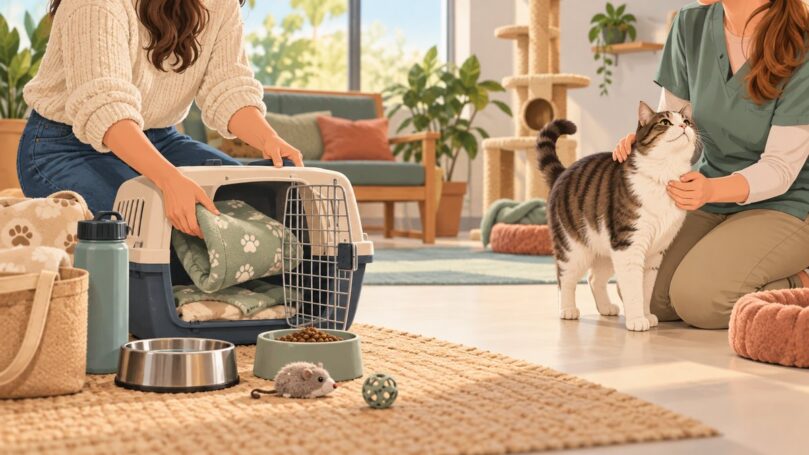
Bring a non-expired government-issued photo ID that shows your date of birth, any proof of address or household information your shelter requests, and a secure cat carrier. Before pickup, have food, bowls, litter supplies, bedding, toys, a scratching surface and identification ready at home. Confirm the shelter’s local rules before you leave, because required documents, fees and included medical services differ by organization.
What to bring to the shelter on adoption day
Adoption-day requirements are set by the individual shelter, not by one universal national rule. Check the shelter’s website, appointment message or telephone line before traveling. Ask whether you need an appointment, which payment methods are accepted, whether every adult household member must attend and whether the shelter can provide a carrier if you do not have one.
As an Amazon Associate I earn from qualifying purchases.
Government-issued photo identification
Bring a current, non-expired government-issued photo ID with your date of birth. The ASPCA lists this as a standard adoption requirement. A driver’s license, state identification card or passport may be accepted, but the shelter decides which documents qualify.
Do these 3 things before closing this tab:
1Scan for outdated or missing drivers - takes under a minute2Repair Windows errors before they cause bigger problems3Fix the driver behind crashes, sound loss and screen glitchesSome locations also ask for proof of your current address, such as a lease, utility statement or official correspondence. Others request the names of adult household members. These checks help the shelter confirm that the cat is going to an appropriate home, but they are not identical everywhere. Ask exactly what is required rather than assuming that your photo ID alone will be enough.
#1 Best Overall
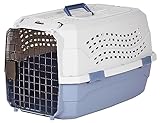
- Hard sided pet carrier with 2 doors for front and top entry; suitable for cat or medium size dog weighing 12 - 20 pounds
- Durable plastic construction with steel wire doors; screws keep the top and bottom sections securely connected
- Spring load latches ensure easy one-handed door opening and closing; top door swings open to the left or right and includes a top carry handle
- Plenty of air ventilation on the sides, top, and back of the carrier
- Note: Be sure to measure the size of the pet when choosing carrier size
A secure cat carrier
Plan to take the cat home in a secure pet carrier. The ASPCA Adoption Center says, “All adopted cats and kittens are required to go home in a secure pet carrier,” and Humane Society Silicon Valley also lists one as mandatory. A cardboard box, open basket or your arms cannot prevent a frightened cat from escaping in a parking lot or during the drive.
Bring the carrier empty and ready to close firmly. If it has been used by another animal, wash it first and allow it to dry. Put a washable towel or small blanket inside so the cat has a stable, nonslip surface. Do not open the carrier in the parking area or in an unfamiliar room; wait until you are inside the prepared room at home.
Payment and adoption paperwork
Ask in advance about the adoption fee, taxes, deposits, payment methods and any separate licensing charge. The amount and what it covers are shelter-specific. Before signing, read the adoption contract and ask which services are included, which are still your responsibility and whether there are deadlines for follow-up veterinary care.
Quick wins for a faster PC:
Fix the driver behind crashes, sound loss and screen glitchesFind Drivers →Repair Windows errors before they cause bigger problemsFix Now →Scan for outdated or missing drivers - takes under a minuteDriver Scan →Request copies of the cat’s medical and behavior records. Confirm the vaccination information, spay or neuter status, microchip number and registration instructions, medications, feeding routine and any recommended follow-up appointment. Do not assume that a general shelter checklist means every cat has received the same services.
Prepare the home before pickup
Set up one quiet room before you leave for the shelter. A smaller, calm space gives a newly adopted cat a manageable starting point and makes it easier to monitor eating, drinking and litter-box use. American Humane recommends beginning with the cat in one room, particularly when other pets already live in the home.
Create a starter room
Place the following items in the room before adoption day:
Rank #2
- [PRODUCT DIMENSIONS] Pet travel carrier size : 17x11x11 inches, recommended up to 15 lb pets, it is suitable for large, medium cats and small dogs. Please don't choose your airline cat carrying case based on weight, please refer to your pet's length and height when choosing a pet carrier size.
- [AIRLINE APPROVED] This cat carrier is designed with airline approved, it can fit comfortably under most flight seats, we can take our pets wherever we want. Dog travel carrier offers two attachment loop handles that can be used as a dual harness or as a luggage strap for balanced carry and secure transport.
- [EXCELLENT MATERIAL] Collapsible cat carrier is made of polyester fabric, supported by a steel ring, washable, wear-resistant and durable. The three sides and the top of this pet carrier are nylon mesh, scratch-resistant and not easy to damage, it can not only check your pet in real time, but also ensure enough air circulation.
- [SAFE AND COMFORTABLE] Dog travel bag has metal zippers on the top and side entrances, durable and not easy to deform, it allows your pets to enter and exit easily. The cat carrying case is equipped with an anti-escape safety buckle, which can effectively prevent pets from accidentally falling. It is suitable for car rides and vet rides.
- [PORTABLE AND FOLDABLE] Pet travel carrier comes with a detachable and hand washable wool pet bed, it can provide a comfortable sleeping space for your traveling pet. The cat travel case comes with an adjustable shoulder strap and handle for easy portability. When not in use, you can fold it up for storage.
- A litter box filled with the chosen litter, positioned away from food and water.
- A food dish and a separate water bowl.
- A bed or open box with a warm blanket or towel.
- A few safe toys, plus a scratching post or pad.
- The carrier, left open with bedding inside so it can serve as a familiar hiding place.
- A perch or other elevated resting place if the room allows it safely.
Keep the door closed at first and let the cat decide when to come out of the carrier. Avoid crowding the room with visitors. A hiding cat is not necessarily rejecting you; hiding is a normal way to reduce stress after transport and a major change in surroundings.
Pet-proof the room
Secure electrical cords, blind cords, loose strings and small objects that could be swallowed. Check window screens, door gaps and other escape routes. Remove toxic plants and confirm that cleaning products, medicines and essential oils are inaccessible. Close the toilet lid and block narrow spaces where a cat could become trapped.
Keep the carrier and all doors closed while the cat is settling in. Even an indoor-only cat can bolt through an open exterior door when frightened. If children live in the home, establish rules before arrival: quiet voices, no chasing, no forced handling and no reaching into the cat’s hiding place.
Supplies to buy before adopting
The ASPCA’s cat-supply checklist includes food, dishes, toys, grooming tools, identification, scratching equipment, litter supplies, a carrier and bedding. Buy the essentials before pickup so the first night does not depend on an emergency store visit.
Food and feeding equipment
Start with the food the shelter has been feeding whenever possible. Best Friends recommends keeping the initial diet and routine consistent during the transition. A sudden change can add digestive upset to an already stressful move. If you want to change foods, ask the shelter or your veterinarian how to transition gradually.
Use sturdy, washable food and water bowls. Many cats prefer wide, shallow dishes that do not press against their whiskers. Keep fresh water available and wash bowls regularly. Ask the shelter how much and how often the cat currently eats; age, medical needs and diet type can make a generic portion suggestion inappropriate.
Rank #3

- High Quality Design:Sturdy steel cage structure and wooden support board maintain good spatial stability and shape. Breathable mesh windows on four sides,which can ensure good air circulation and views,make pets have a comfortable and safe travel.It can also be easy for you to check on your pets.There is a front pocket to store pet toys,treats,etc.
- Dimension and Weight:Made of durable tear-resistant fabric.Four easy entrances for pets. Dimensions: 17 inch x 11 inch x 11 inch (L*W*H), suitable for pets up to 16 lbs.Please don't choose your carrier based on weight only,consider your pet's length and height when choosing a carrier.
- Airline Approved & Safty:Can be placed under the seats of most airplanes(Four non-slip feet on the bottom to prevent movement), and comfortably on the seat next to you in a car or bus.It has a adjustable shoulder strap.Can also be fastened to the car seat with a safety belt or shoulder strap to keep your pet safe.
- Easy to Clean :You can clean the stains and dirt on the surface with a soft cloth.Soft mat inside the pet carrier is removable and washable.You can take it out and wash it easily to solve all stains.
- Easy to Collapsible & Lightweight:When not in use,fold it into a flat,space saving and easy to store.Only 2.2lbs,it's easier to carry around.It can also used as a toy of pet house,allowing pets to play in a safe space to relax and rest.
Litter box and litter
Choose a box the cat can enter comfortably and turn around in. For a kitten, an entry that is low enough to climb over matters; for an older or mobility-limited cat, high sides can be a barrier. Put the box in a quiet, accessible location and scoop it frequently.
If possible, begin with the litter texture used at the shelter. Changes in location, litter and household smells at the same time can make litter-box training harder to interpret. Once the cat is settled, you can test alternatives slowly if needed.
Bedding, hiding places and enrichment
A bed is useful, but a simple box with a washable towel can be just as valuable because many cats feel safer in enclosed spaces. Provide interactive toys that you can supervise, such as wand toys, and simple independent toys that do not have loose parts. Add a scratching post or pad and place it near the cat’s resting area or a surface you want to protect.
Free tools Windows power users keep installed
One-click scans. No signup required.
A stable perch gives the cat a choice to observe from above. Do not place it beside an unsecured window or where a fall could occur. Rotate toys rather than leaving every item out at once; a smaller selection can be less overwhelming.
Grooming and identification items
Have a brush and comb appropriate to the cat’s coat. Ask shelter staff whether the cat tolerates grooming and whether there are mats or skin concerns that need professional attention. Avoid bathing a newly arrived cat unless a veterinarian advises it; handling and a new environment may already be stressful.
Use a properly fitted breakaway collar with an ID tag when a collar is appropriate for your cat. Keep the tag legible and check the fit regularly. The ASPCA states that dogs and cats who venture outside should have up-to-date identification through a collar with an ID tag, a microchip or both. An indoor cat can still escape, so discuss identification with the shelter and your veterinarian rather than treating it as an outdoor-only issue.
Rank #4

- Pet Carrier: 17.5” L x 11” W x 11” H, Recommended max load of 16 lbs cats small dogs. Please do not choose your carrier based on weight--please reference your pet's length and height in selecting a pet carrier size.
- Fits for under-seat dimensions of most airlines. Every airline has a specific set of rules and regulations, please contact with airline before flying with your cats small dogs.
- Mesh windows for ventilation, top and side entry with locking zippers for safety. Carrying handles, adjustable shoulder strap which can also be used as seatbelt, and back strap can fasten the pet carrier to your luggage.
- Pet carrier comes with a removable base insert, which creates a solid surface for your pet to stand on, along with a removable & hand washable cozy fleece pet bed, which offers a cozy sleeping space for your traveling cats small dogs.
- "Toys for pets, of textile materials". Mostly used as a Toy of Fabric Pet Home for pets playing and relaxing.
How to choose a carrier and other basic gear
The shelter determines whether a design is acceptable. When selecting equipment, prioritize safety and the cat’s individual needs over appearance.
| Item | What to compare | Practical choice |
|---|---|---|
| Carrier | Escape resistance, secure fasteners, ventilation, loading ease, cleanability and size | Choose one large enough for the cat to stand, turn and lie down without sliding around; it should still be easy to carry and fit safely in your vehicle. |
| Litter box | Entry height, footprint, cleaning access and the cat’s mobility | Use a low-entry box for kittens or cats with limited mobility; avoid a box so small that the cat cannot turn comfortably. |
| Collar and tag | Breakaway safety, correct fit and secure tag attachment | Use a breakaway style and check that you can slip two fingers between the collar and the cat’s neck. |
| Scratching surface | Stability, texture, height and placement | Pick a base that will not tip and position it near sleeping areas or furniture the cat may otherwise scratch. |
Measure the carrier and check your vehicle before adoption day. The carrier must remain level and closed during transport; never place a loose carrier on a seat where it can slide or fall. A seat-belt attachment designed for that carrier, or a stable position on the vehicle floor, can reduce movement.
Questions to ask before leaving the shelter
Use the handover conversation to collect information that will make the first week safer and easier. Write down answers because stress can make details easy to forget.
- What food, treats and feeding schedule has the cat followed?
- Which litter and litter-box style has the cat used?
- What are the cat’s known medical conditions, allergies, medications or dietary restrictions?
- Which vaccinations were given, and when is the next dose due?
- Has the cat been spayed or neutered? If not, what appointment or deadline applies?
- Is the cat microchipped, and how do you register or update the chip?
- What behavior has staff observed around people, children, cats, dogs, handling and carriers?
- What signs should prompt an urgent call to a veterinarian?
- Does the shelter provide a transition period, veterinary partnership or return process if the placement is unsafe?
Ask for written medication directions and demonstrate that you understand the dose and timing. Confirm the shelter’s contact information and the name of the veterinary clinic used for records. If a document is missing, ask when and how it will be supplied.
The trip home
- Keep the carrier closed from the moment the cat is placed inside until you are in the prepared room at home.
- Place the carrier on a stable, level surface and drive smoothly. Keep noise low and avoid unnecessary stops.
- Do not allow the cat to ride loose, sit on your lap or remain in a parked vehicle.
- Carry the closed carrier directly into the starter room before opening it.
- Set the carrier on the floor, open the door and give the cat time to exit voluntarily.
If the cat cries, pants or appears frightened, do not open the carrier while the vehicle is moving or in an unsecured location. Call the shelter or a veterinarian if you are concerned about breathing, collapse or another emergency symptom.
Crashes, No Sound, or Screen Glitches?
Random freezes, missing sound and display glitches usually trace back to one bad driver. Find and replace yours safely.Free scan · under a minuteWindows Errors? Fix Them Before They Spread
Repair common Windows errors and clear accumulated junk for a smoother, more stable PC - no reinstall needed.Free scan · no reinstallHelping the cat settle in during the first days
Keep the routine predictable: meals at consistent times, a clean litter box and short, calm visits. Sit quietly in the room and allow the cat to approach. Avoid forcing contact, pulling the cat from a hiding place or introducing every family member at once.
Best Value

- AIRLINE APPROVED CARRIER - With airline-approved design, you can take your pet to go to everywhere. This pet carrier provides two connecting loop handles for balanced carrying as a dual seat belt or luggage strap to secure transport
- SAFETY DESIGN - The adjustable shoulder strap help you hands-free carrying and makes it more safe and convenient pet carrier bag for your travel
- DURABLE - This cat carrier is made of durable and lightweight polyester fabric. The four-side mesh will not only give a safe and comfortable travel for your pet, but also easy for you to check on your pet
- PORTABLE & FOLDABLE - This dog carrier is easy to carry and store, which has a padded shoulder strap and handles
- BOTH SIZES AND WEIGHTS - The mediun cat carrier is designed for small and medium pets within 15" x 9" x 9"(smaller than product) and 15 lbs. Please do not choose your carrier only based on weight. Reference your pets' length and height in selecting a carrier size.If carried on board, the maximum dimensions should not exceed 18IN*11IN*11IN.
When the cat is eating, drinking, using the litter box and showing relaxed behavior, expand access gradually. Let the starter room remain available as a retreat. Introduce resident pets through scent exchange and controlled barriers before allowing face-to-face contact; rushing this step can create fear or conflict.
Monitor appetite, water intake, urination, stool, energy and breathing. Contact a veterinarian promptly for breathing difficulty, repeated vomiting, severe diarrhea, collapse, inability to urinate or marked lethargy. For less urgent concerns, ask the shelter whether its adoption agreement specifies a post-adoption examination or partner clinic.
Common mistakes and how to avoid them
Arriving without the required documents
A valid ID is not always the only requirement. Verify proof-of-address rules, adult household information, appointment times and payment methods before traveling.
The Tool Desk
Outbyte PC Repair FREEClear out junk files and repair common Windows errorsFree Scan →Outbyte Driver Updater FREEScan for outdated or missing drivers - takes under a minuteDriver Scan →Assuming the shelter supplies everything
Some adoptions include vaccinations, sterilization, a microchip or medication; others do not, or they require follow-up. Obtain the exact medical record and contract rather than relying on what another shelter provides.
Using an unsafe container
Do not substitute a cardboard box, laundry basket or unsecured soft bag for a carrier. Escape prevention matters most during loading, parking-lot transfers and the drive home.
Changing food and litter immediately
Keep the shelter’s routine initially. Make changes one at a time after the cat is stable so you can identify the cause of digestive or litter-box problems.
Giving the cat the whole house at once
A large unfamiliar space can increase hiding and make it difficult to find food, water or the litter box. Start with one prepared room and expand access based on the cat’s behavior.
What’s actually slowing this PC down?
Pick the symptom - the matching free tool is one click away.
A printable adoption-day checklist
- Non-expired government-issued photo ID with date of birth.
- Proof of current address and adult household information, if requested.
- Secure, clean carrier with bedding.
- Payment method and appointment confirmation.
- Questions about fees, records, vaccinations, sterilization, microchip registration and medications.
- Prepared starter room at home.
- Food, bowls, litter, litter box, bedding, toys, scratching surface and grooming tools.
- Breakaway collar and ID tag when appropriate.
- Plan for safe, closed-carrier transport and a quiet arrival.
The simplest safe plan is to verify the shelter’s rules, arrive with identification and a secure carrier, and prepare a quiet room stocked with the essentials. Confirm every medical service and document in writing, then let the cat settle at its own pace.
Quick Recap
Product prices and availability are accurate as of the date/time indicated and are subject to change. Any price and availability information displayed on Amazon at the time of purchase will apply.



Leave a Reply