Recommended Free Tools
A comfortable outdoor dog kennel should safely contain your particular dog while offering shade, weather-appropriate shelter, a dry and cleanable surface, and room to rest and move. Choose features for your dog’s size, age, health, behavior, climate, and the hours the kennel will be used; no single layout or flooring works for every yard.
Think of these 35 ideas as options to combine—not a claim that every dog should live outdoors. A kennel can offer supervised outdoor access, but design it around the dog’s needs and provide a sheltered retreat, suitable enrichment, and regular care.
Choose the right features
Start with the problems the kennel needs to solve: reliable containment, shade, shelter, drainage, easier cleaning, privacy, or safe enrichment. Observe how your dog jumps, climbs, digs, reacts to passersby, and uses different surfaces before settling on a design.
| Need | Ideas to consider | What to check |
|---|---|---|
| Containment | Modular panels, secure gate, double-gate entry, dig-resistant perimeter | Fit to the dog’s size and jumping, climbing, and digging behavior |
| Shelter and shade | Covered zone, doghouse, windbreak, sheltered resting nook | Protection suited to local weather, with airflow and room to rest |
| Drainage and cleaning | Graded site, cleanable floor, wash-down layout, maintenance path | No persistent standing water; safe, non-slip surfaces |
| Choice and enrichment | Mixed substrates, visual refuge, raised platform, play area | Suitability for the individual dog and safe supervision |
35 outdoor dog kennel ideas
Containment and layout
1. Modular panel run
Arrange outdoor dog kennel panels into a run sized for your yard and dog. Check that connections stay secure and that the panels resist the dog’s attempts to push, climb, or dig out.
#1 Best Overall

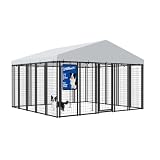
- 【Heavy-Duty Metal Frame】Constructed with a strong metal frame, this outdoor dog kennel offers superior stability and durability for long-term outdoor use. The reinforced structure helps prevent bending or damage, making it suitable for active medium and large dogs.
- 【Full-Cover Waterproof Oxford Cloth Enclosure】The kennel is fully enclosed with waterproof Oxford cloth that surrounds the entire structure, not just the roof. This all-around coverage helps protect pets from rain, sun exposure, wind, and harsh weather conditions while maintaining proper ventilation.
- 【Smooth Swivel Door Access】Designed with a practical swivel door, the kennel allows easy entry and exit for pets while keeping them securely contained. The smooth operation makes daily feeding, cleaning, and interaction more convenient for owners.
- 【Weatherproof Outdoor Shelter】Built specifically for outdoor environments, this weather-resistant dog kennel creates a safe and comfortable shelter for dogs to rest, play, or stay protected throughout the seasons.
- 【Spacious Design for Medium & Large Dogs】The roomy layout provides ample space for medium and large dogs to move comfortably, making it ideal for daily outdoor use, training, or temporary containment in yards or open areas.
2. Covered run
Cover part or all of the run to provide shade and protection from rain. Choose a roof or canopy for local weather, and avoid a design that traps heat or blocks needed airflow.
3. Sheltered resting nook
Place a doghouse or sheltered resting area inside the enclosure so the dog can get out of the weather. Make sure the space allows the dog to stand, turn around, and lie down comfortably.
4. Windbreak by the resting area
Where wind is a concern, position a windbreak to protect the resting zone. Keep the design ventilated and suited to the direction of local weather.
5. Open and sheltered zones
Arrange the kennel so the dog can choose between an open area and a protected place to rest. This can make the space more adaptable as weather and sunlight change.
6. Secure gate and reliable latch
Use a gate that closes securely and a latch suited to your dog. Plan an approach that lets a person enter without creating an easy escape opportunity.
7. Dog-specific fence design
Choose fence construction with the dog’s size and behavior in mind. Consider whether the dog jumps, climbs, or tests the fence, rather than relying on a one-size-fits-all fence height.
8. Dig-resistant perimeter
Add a perimeter detail suited to the site if your dog digs. Cover or secure any mesh edges so paws cannot become caught, and inspect the barrier regularly.
9. Double-gate entry
Create a small transition area with two gates so there is a second barrier while someone enters or exits. Treat it as an extra precaution, not a replacement for supervision or secure latches.
PC Slower Than It Used to Be?
A free scan shows the junk files, broken settings and background clutter dragging Windows down - then fixes them in one click.Free scan · Windows 10 & 11Crashes, No Sound, or Screen Glitches?
Random freezes, missing sound and display glitches usually trace back to one bad driver. Find and replace yours safely.Free scan · under a minute10. Maintenance-friendly access
Place the gate and arrange the interior so a person can reach the floor, shelter, and water point for cleaning and inspection. Leave room to bring in supplies without compromising containment.
Surfaces, drainage, and cleaning
11. Cleanable, non-slip walking surface
Choose a surface that is practical to clean and remains non-slip when wet. Check it underfoot and keep it free of unsafe gaps or damaged areas.
12. Mix of safe substrates
Where the site allows, combine suitable surfaces so the dog can experience different textures. Keep each area clean, stable, and appropriate for the dog’s paws and habits.
13. Raised resting platform
Add a stable platform for resting off the main ground surface. Check for safe footing, trapped-paw gaps, and wear that could create splinters or slipping.
What’s actually slowing this PC down?
Pick the symptom - the matching free tool is one click away.
14. Drainage-conscious site
Choose and prepare a location that does not leave the dog standing in persistent water. Consider runoff from the roof and surrounding yard before installing the kennel.
15. Safe drain covers
If you use a drain, cover it so paws and claws cannot catch. Keep the drain clear and check that it continues to carry water away.
16. Wash-down-friendly layout
Use surfaces and access routes that make routine cleaning manageable. Prevent wash water from leaving standing water in the kennel.
Rank #2
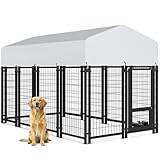
- Durable & Weather-Resistant Steel Frame: Constructed with heavy-duty galvanized welded steel wire, this outdoor dog kennel provides superior resistance to rust, corrosion, and extreme weather. It is engineered to endure strong winds, heavy rain, and prolonged outdoor exposure
- Waterproof & Removable Tarp Roof: Includes a detachable, waterproof cover that protects your dog from sun, rain, and snow. The UV-resistant tarp can be easily removed for cleaning or seasonal changes, guaranteeing comfort throughout the year
- Spacious Outdoor Freedom for Your Dog: Offer your pet ample room to play and unwind in this generously sized outdoor kennel. The open design ensures a secure area for dogs of all breeds to safely enjoy fresh air in your yard or garden
- Secure Lockable Gate for Pet Safety: Equipped with a reinforced latch mechanism, the gate stays securely closed to prevent escapes. This adds an extra layer of safety, keeping your dog protected day and night
- Quick Assembly & Dedicated Support: Designed for easy setup with minimal tools, this kennel can be quickly assembled by one or two people. Our professional customer service team is available to assist you before and after your purchase
17. Separate elimination area
Where practical, set aside a toilet area away from food and bedding. Clean it regularly and make sure the surface is suitable for the dog and easy to maintain.
Quick wins for a faster PC:
Repair Windows errors before they cause bigger problemsFix Now →Scan for outdated or missing drivers - takes under a minuteDriver Scan →Privacy and enrichment
18. Visual screen on a busy side
Use a screen along the side that faces distracting activity. Keep airflow in mind and observe whether the barrier helps or makes the dog more unsettled.
19. Visual-refuge nook
Create a quieter corner where the dog can retreat from outside activity. A private place can be useful for some dogs, but should not become a substitute for attention or behavior support.
20. Viewing opening with a quiet retreat
Offer a safe view of the yard from one area while preserving a less-exposed place to rest. Adjust the balance if watching activity appears to agitate the dog.
21. Safe tunnel or low play structure
Add a tunnel or low play feature only if it suits the dog’s size, health, and play style. Inspect it for damage and places where the dog could become trapped.
22. Maintained digging area
A sandbox or designated digging patch can give a digger an approved outlet. Keep it clean and check that the area contains no hazards.
23. Shallow water-play feature
A shallow pool can be an enrichment option for a dog that enjoys water. Supervise use and keep the feature clean and safe for that dog.
24. Indoor-outdoor transition
Where the home setup allows, connect the kennel to a suitable indoor area. Plan the passage and supervision so the dog can reach a more protected space when needed.
25. Manageable passage between areas
Use a gate or passage that makes transitions between resting, play, and outdoor areas easy for caretakers to control. Keep it secure and clear of obstructions.
Do these 3 things before closing this tab:
1Fix the driver behind crashes, sound loss and screen glitches2Repair Windows errors before they cause bigger problems3Scan for outdated or missing drivers - takes under a minute26. Separate play from rest
Place an active play area away from the resting zone if nearby activity disturbs the dog. Use barriers or layout choices to give the dog a quieter option.
27. Shared shelter sized for the dogs
If dogs share the kennel, make the sheltered area suitable for all of them to rest without competing for cover. Consider separate resting options if they do not comfortably share space.
28. Weather-suited roof or canopy
Select roof or canopy materials for the site’s weather and the shade needed. A canopy provides only the protection its design offers; it is not automatically a complete weatherproof shelter.
29. Doghouse suited to resting
Choose a doghouse that lets the dog stand, turn, and lie down. Consider insulation where cold conditions warrant it, while preserving suitable ventilation.
30. Ventilated shelter
Plan airflow into the resting shelter without sacrificing protection from local weather. Observe the dog’s comfort and adjust if the space becomes stuffy or exposed.
31. Convenient water point
Place water where it is easy to replenish and clean without blocking movement. Choose a stable setup suited to the dog and inspect it routinely.
Rank #3
- 【Heavy-Duty Rust-Resistant Steel Construction】Unlike ordinary kennels with weak joints, our outdoor dog kennel features fully welded high-strength steel panels and galvanized tubes with a premium anti-rust coating – creating a dual-layer protection against rain, rust, and wear. The solid structure resists chewing, bending, and strong winds, keeping its shape even after long-term outdoor use. Ideal for yards, patios, or gardens. Built tough for your peace of mind.
- 【Heavy-Duty Double Deadbolt Lock System】Unlike flimsy single latches or easy-to-lose carabiners, our kennel features two 304 stainless steel slide bolts that lock deep into the reinforced frame. Built to resist shaking, jumping, and scratching, this dual-lock design keeps the door secure during rough play. No small parts to rust or misplace – just slide both bolts and it's locked. A safe den for your dog, a worry-free backyard for you.
- 【Double-Screw Locking Joints】Unlike ordinary kennels with single-screw connections that wobble and loosen over time. Ours uses double-screw locking joints at every key connection—delivering double the holding strength. This rock-solid design resists jumping, leaning, and daily rough play without loosening or rattling. No frequent repairs, just a sturdy, long-lasting kennel that stays tight for years.
- 【All-Weather Heavy-Duty Detachable Roof】Unlike thin, basic covers, our roof is made of extra-thick Oxford fabric with a premium grey UV-resistant coating—delivering superior waterproofing that blocks heavy rain and harsh sun. The sloped design instantly sheds rain, snow, and debris—no pooling, no sagging. Quick-detach design allows you to remove the cover for easy cleaning, or leave it off to create an open indoor dog run. Tougher than standard covers, yet fully removable for year-round flexibility.
- 【Easy Assembly & Cleaning Design】Unlike dog kennels with complicated assembly steps, our outside dog kennel requires no complex tools—even first-time owners can put it together quickly and easily. Daily dirt and grime can be wiped away with a damp cloth or rinsed off with water. For busy pet parents, it cuts down on home upkeep time, making it simple to keep the dog kennel clean and hygienic.
32. Shade that moves with the sun
Observe where direct sun falls at different times and arrange shade so a resting spot remains available. Recheck as seasons change.
33. Individually chosen enrichment
Offer enrichment suited to the dog, such as toys or sniffing opportunities. Inspect items regularly and remove anything damaged or unsafe.
The Tool Desk
Outbyte PC Repair FREERepair Windows errors before they cause bigger problemsFix Now →Outbyte Driver Updater FREEFix the driver behind crashes, sound loss and screen glitchesFind Drivers →34. Clear maintenance path
Provide a straightforward route to the gate and around areas that need cleaning or inspection. Easier access helps keep the kennel in usable condition.
35. Phased improvement plan
Improve the kennel in stages: first make containment reliable, then address shade and shelter, drainage and surfaces, and enrichment. Use observations of the dog and the site to decide what comes next.
Independent reader supportYour contribution helps us test, update, and keep practical guides available for everyone.Compare flooring options
No source establishes one universally best kennel floor. Choose for cleanability, traction, drainage, comfort, and the condition of the site; inspect the surface regularly.
| Flooring approach | Potential benefit | Considerations |
|---|---|---|
| Cleanable hard surface | Can make routine cleaning easier | Ensure it is non-slip when wet and does not leave standing water |
| Mixed substrates | Can offer different safe surfaces | Keep each area stable, clean, and suitable for the dog |
| Raised platform | Offers a resting place off the main ground surface | Check stability, traction, and gaps |
| Natural ground or grass | Can provide a different texture and outdoor experience | Watch for worn or persistently wet areas and maintain cleanliness |
Plan shelter, shade, and kennel size
Provide shelter and shade appropriate to local conditions, and make room for the dog to rest comfortably. Ontario’s outdoor-dog standards say a shelter should allow dogs to turn around, lie down with legs extended, and stand at normal head height; these are Ontario-specific requirements, not universal law. CDC guidance also recommends outdoor shelter and shade as part of dog care.
Do not rely on an unsupported universal floor-area formula or a single temperature cutoff to decide what is safe. Consider the individual dog, local climate, the shelter’s ventilation and protection, and whether a suitable indoor retreat is available. Local rules vary; check requirements that apply to your property and location.
Build a safer outdoor kennel: 8 steps
- Define the use. Decide whether the kennel is for supervised outdoor access, resting, toileting, or play. Match the design to the actual use.
- Assess your dog. Consider size, age, health, mobility, and tendencies to jump, climb, dig, chew, or react to activity outside the kennel.
- Choose and observe the site. Look at sun, wind, rain, and drainage at different times. Make sure the location offers practical access for care and cleaning.
- Plan containment. Select fencing, panels, gate, and latch for the dog and site. Address likely escape routes, including digging beneath the perimeter.
- Plan shelter and shade. Provide a resting place that protects the dog appropriately from local weather, plus shade where needed. Include airflow and check how sun reaches the enclosure.
- Prepare the surface and drainage. Choose a cleanable, safe surface and plan to prevent persistent standing water. Keep drains, if present, clear and paw-safe.
- Add useful enrichment. Choose play and sensory features for the individual dog. Supervise use and inspect items and structures for safety.
- Observe and maintain. Watch how the dog uses the space in changing conditions. Clean it, replenish water, and repair damage or drainage problems promptly.
Keep local rules and welfare in view
Requirements for outdoor housing, fencing, and kennel facilities differ by jurisdiction and by the type of facility. UK boarding-kennel guidance, Scottish dog-welfare guidance, and Ontario outdoor-dog standards apply in their respective contexts; they should not be presented as universal household-yard law. Check local rules for your location and seek veterinary advice when a dog’s health, age, or ability to tolerate local conditions is a concern.
Frequently Asked Questions
What should I put in an outdoor dog kennel?
Provide a suitable sheltered resting place, shade appropriate to the weather, clean water, and safe surfaces. Add enrichment selected for your dog and keep the area clean and in good repair.
How can I make an outdoor dog kennel more comfortable?
Offer a choice between a protected resting area and open space, prevent persistent standing water, and use surfaces that are safe and practical to clean. Observe the kennel through different weather and adjust it to your dog’s needs.
Free tools Windows power users keep installed
One-click scans. No signup required.
What is the best flooring for an outdoor dog kennel?
There is no universal best floor. Prioritize a surface that is safe underfoot, cleanable, and compatible with drainage; consider a mix of safe surfaces or a raised resting platform if suitable.
How do I keep my dog from escaping an outdoor kennel?
Choose fencing and a secure gate for your dog’s size and behavior. Check for jumping, climbing, and digging routes, and consider a dig-resistant perimeter or double-gate entry where useful.
Does an outdoor kennel need shade and shelter?
Plan for both. A roof or canopy may provide shade or some weather protection, while a suitable sheltered resting place gives the dog a more protected option. The design should fit local conditions and allow appropriate airflow.
Can two dogs share an outdoor kennel?
That depends on the dogs and whether they can use the space and shelter without competing. Provide suitable resting options and observe their behavior; use separate areas if sharing causes conflict or discomfort.
Are outdoor exercise pens a complete kennel?
An exercise pen can be useful for some supervised situations, but it is not automatically secure or suitable as a complete living arrangement. Check its stability and escape resistance, and provide the care and shelter the dog needs.
The Bottom Line
Build around the dog, the yard, and the local weather—not a universal blueprint. Start with reliable containment, then provide appropriate shade and shelter, safe and cleanable surfaces, good drainage, and enrichment suited to the individual dog. Observe how the kennel works in practice and maintain it so it remains safe and comfortable.
Quick Recap
Product prices and availability are accurate as of the date/time indicated and are subject to change. Any price and availability information displayed on Amazon at the time of purchase will apply.




