Capuchins, marmosets, squirrel monkeys, tamarins, guenons, macaques, and lemurs are sometimes kept privately, but that does not make them suitable household pets or legal where you live. Primates are wild, social animals with demanding care needs and safety risks; in the United States, they cannot be imported as pets, and possession rules vary by jurisdiction.
This guide describes seven groups that may be encountered in private ownership or the exotic-animal trade—not animals to acquire. Before taking any action, check the exact species and applicable federal, state, local, wildlife, public-health, and zoning requirements.
Seven primates sometimes kept privately
“Primate” covers far more than great apes. The groups below include small monkeys, larger monkeys, and lemurs. Body size alone is a poor guide to care: even small primates may need substantial space, compatible social groups, enrichment, species-specific diets, and specialist veterinary care.
1. Capuchins
Capuchins are among the primates commonly encountered in private ownership. They are intelligent, agile New World monkeys that need extensive climbing space, enrichment, and the company of other capuchins.
#1 Best Overall
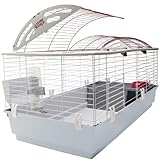
- VERSATILE SMALL ANIMAL HABITAT: Living World Deluxe Habitat provides everything needed for safely housing rabbits, guinea pigs, chinchillas, ferrets, and other small pets; It's a safe, well-ventilated, and comfortable environment for everyday living
- HYBRID CAGE DESIGN: Features a durable plastic bottom base and an upper wire frame with an elegant arcing red wire top and white wire sides; The top opens in two separate sections for easy access, while the front wire door provides additional convenience
- COMFORTABLE & SECURE LIVING SPACE: Includes an elevated balcony with an access ramp, a tip-proof food dish that secures to the balcony floor, and a hideaway area underneath that gives pets a quiet and secure place to rest
- SPACE-SAVING ACCESSORIES INCLUDED: Comes equipped with a drip-proof water bottle and external hay guard that help maximize interior living space while making feeding and maintenance easier
- QUICK TOOL-FREE ASSEMBLY: Assembles in minutes using eight easy-to-use plastic clips with no tools required; Measures 46.9 x 22.8 x 24 inches and provides ample room for bedding, toys, hideouts, litter boxes, and other small animal accessories
Intelligence does not mean domestication. Capuchins investigate their surroundings, learn quickly, and can become bored or aggressive. An animal that seems manageable as a baby may behave differently as it matures. The RSPCA notes that capuchins need other capuchins and substantial space; a living-room cage is not an adequate primate environment.
2. Marmosets
Marmosets are small, active monkeys sometimes marketed as “finger monkeys” or “pygmy marmosets.” “Finger monkey” is a sales nickname, not a formal species name, and can mislead buyers about the animal’s size and needs.
Marmosets are social and should not be treated as solitary pets. They may scent-mark, become aggressive, or develop behavioral problems when bored or isolated. The RSPCA also warns that babies may be removed from their mothers too early, depriving them of important social learning.
Small size does not make them simple to care for. They need species-appropriate food, climbing and foraging opportunities, social companionship, and a veterinarian experienced with nonhuman primates.
What’s actually slowing this PC down?
Pick the symptom - the matching free tool is one click away.
3. Squirrel monkeys
Squirrel monkeys are small-bodied, arboreal monkeys with demanding social and mental needs. The RSPCA says they naturally live in large troops—often around 50 animals and sometimes up to 300—and reports a lifespan of up to 20 years.
They need vertical space, climbing and foraging opportunities, and changing enrichment. Their size does not make them apartment-friendly, and a household cage cannot reproduce the social and environmental complexity they require.
Rank #2
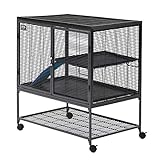
- SPACIOUS HABITAT: Measures 36 x 25 x 38.5 in. with a main level and upper shelf for comfortable living space. The 1/2" horizontal wire spacing safely contains chinchillas, rats, ferrets, sugar gliders & degus while allowing natural climbing behavior.
- DURABLE CONSTRUCTION: Sturdy metal wire design with a gray quartz hammertone finish, Critter Nation resists everyday wear. Complete with removable base pan, textured ramp with cover, and a full-width resting shelf, it's ready for years of use.
- CUSTOMIZE YOUR HABITAT: Height-adjustable design lets you customize the perfect setup for your pet, with a wide expanse shelf and full-width plastic pan floor to maximize play space. Compatible with our Add-On Unit for additional room.
- BUILT FOR DAILY LIFE: Full-width double doors provide maximum accessibility, with a swing-up locking ramp that lets you separate pets or section off areas during cleaning and feeding. Bottom level shelf provides storage area for pet accessories.
- BECAUSE LIFE GOES BETTER WITH PETS: A family-owned business based in Indiana, MidWest Homes for Pets brings over 100 years of pet product expertise and a commitment to quality, rigorous safety testing, and excellent US-based customer service.
4. Tamarins
Tamarin is a group name, not one species. Different tamarins can vary in appearance, diet, social behavior, conservation status, and legal requirements. A seller’s use of “tamarin” is not enough to identify the animal or determine its needs.
Tamarins are social New World monkeys that need appropriate companions and carefully managed environments. Their diets can involve fruit, insects, plant materials, and other species-specific foods; a generic fruit-based diet may cause nutritional problems.
In the United States, tamarins fall within the CDC’s definition of nonhuman primates. They cannot be imported as pets. Captive breeding does not automatically make one legal to buy or keep.
5. Guenons
Guenon refers to a group of African monkeys, not one standardized pet species. Green monkeys, vervets, De Brazza’s monkeys, and other guenons differ in size, behavior, diet, conservation status, and legal treatment.
Some guenons are larger and stronger than inexperienced owners expect. They need secure, spacious enclosures, social management, enrichment, and specialist medical care. Their strength and complex social behavior can make adults particularly difficult to handle safely in a household setting.
There is no general “guenon pet” exemption. Importation rules for nonhuman primates, possible CITES requirements, state wildlife law, and local ordinances may apply. The exact species must be identified before assessing legality or care.
Rank #3

- Two Story Double Unit Design: Features 4-tiers durable frame cage with full middle floor and 1/2-inch wire spacing, allowing pets to access between floors with ladder and durable wrought iron construction that is easy to assemble
- Tight Horizontal Wire Spacing: Narrow 1/2-inch wire spacing recommended for a wide variety of small animal critters to prevent escape and getting stuck, while allowing pets to fulfill their instinct to climb and explore in a secure environment
- Durable Front Access Doors: Features double large hinged front doors measuring 15 inches by 18 inches with improved safety lock, top hook door for easy access from the top measuring 8 inches by 9 inches, and includes 2 easy adjustable washable solid platforms and 2 anti-slip solid ramps safe for small animals
- Large Spacious Dimensions: Measures 24-inches long, 17.5-inches wide, and 53.5-inches high when placed on the rolling stand, providing ample space for small animals to move and play
- Complete Accessories Package: Includes 1 hammock, 1 water bottle, and 1 food bowl to provide everything needed for your small pet's comfort and care
6. Macaques
Macaques are powerful, intelligent social monkeys, and some can become dangerous as they mature. They are not ordinary pets that can be made safe through obedience training or routine vaccination.
Members of the genus Macaca are the reservoir genus for B virus, also called cercopithecine herpesvirus 1. Human infection is uncommon but can cause severe disease, according to the Merck Veterinary Manual. A bite, scratch, or contact with bodily fluids from a macaque calls for urgent medical advice.
Infections can pass in both directions: primates can transmit infections to people, and people can transmit illnesses to primates. A private owner may have difficulty finding a veterinarian, emergency service, or facility equipped to manage these risks.
7. Lemurs
Lemurs are primates from Madagascar, and the term includes many species with different diets, social systems, conservation statuses, and care requirements. A ring-tailed lemur should not be used as a template for every lemur species.
PC Slower Than It Used to Be?
A free scan shows the junk files, broken settings and background clutter dragging Windows down - then fixes them in one click.Free scan · Windows 10 & 11Outdated Drivers Are Slowing You Down
One free scan finds every outdated or missing driver and matches the right update for your exact hardware.Free scan · exact hardware matchLemurs are active, social, scent-marking animals that need appropriate companions, climbing structures, a carefully planned diet, and secure space. Their appearance can lead people to underestimate their wild behavior and long-term needs.
In the United States, lemurs are covered by the CDC’s nonhuman-primate importation rules and cannot be imported as pets. Other federal wildlife protections and state or local restrictions may also apply.
Rank #4

- SPACIOUS 2-STORY HABITAT: Measures 36 x 24 x 63 inches with two full levels of living space. The 1/2" horizontal wire spacing safely contains rats, chinchillas, ferrets, sugar gliders and degus while allowing natural climbing behavior.
- DURABLE CONSTRUCTION: Sturdy metal wire design with a gray quartz hammertone finish, Critter Nation resists everyday wear. Complete with 2 removable base pans, 3 textured ramps with covers, and 2 full-width resting shelves.
- CUSTOMIZE YOUR HABITAT: Height-adjustable design lets you customize the perfect setup for your pet, with 2 wide expanse shelves and 2 full-width plastic pan floors to maximize play space. Compatible with a wide range of accessories.
- BUILT FOR DAILY LIFE: Full-width double doors provide maximum accessibility, with a swing-up locking ramp that lets you separate pets or section off areas during cleaning and feeding. Bottom level shelf provides storage area for pet accessories.
- BECAUSE LIFE GOES BETTER WITH PETS: A family-owned business based in Indiana, MidWest Homes for Pets brings over 100 years of pet product expertise and a commitment to quality, rigorous safety testing, and excellent US-based customer service.
Why primates usually fail as household pets
They are wild, not domesticated
Taming an individual animal is not the same as domesticating a species. Primates retain wild social, behavioral, dietary, and environmental needs. Hand-raising may make a young animal comfortable around people, but it does not remove adult aggression, territorial behavior, or the need for companionship from other primates.
Isolation can cause serious welfare problems
Many primates naturally live in family groups or troops. A person cannot fully replace another primate, regardless of how much attention they provide. Social isolation and boredom can contribute to abnormal repetitive behavior, distress, aggression, self-injury, and destructive behavior.
Recommended Free Tools
Veterinary care is specialized
Before considering any primate, locate a veterinarian with genuine nonhuman-primate experience—not merely a clinic that sees rabbits or reptiles. Primates need species-appropriate preventive care, nutrition, parasite control, diagnostics, anesthesia, and emergency treatment. USDA APHIS classifies nonhuman primates as Category I animals for veterinary accreditation purposes, reflecting the specialized knowledge involved.
They can injure people and spread disease
Primate bites and scratches can involve serious infection risks, particularly with macaques. Other concerns include mpox, simian immunodeficiency viruses, and human respiratory infections such as influenza and RSV. Their biological similarity to humans creates opportunities for infections to pass in both directions.
A cage is not automatically an acceptable enclosure
Responsible primate housing involves secure construction, climbing and retreat areas, feeding and foraging opportunities, enrichment, and appropriate social housing. USDA welfare standards address psychological well-being, enrichment, social grouping, and circumstances in which an animal must be housed where it cannot see or hear other primates. A household enclosure designed around available floor space is rarely enough.
Independent reader supportYour contribution helps us test, update, and keep practical guides available for everyone.What the law means in the United States
The legal question has several separate parts:
- Importation: CDC guidance says nonhuman primates—including monkeys, apes, marmosets, tamarins, lemurs, and lorises—may be imported only for scientific, educational, or exhibition purposes, not as pets.
- Imported animals and offspring: Under 42 CFR § 71.53, imported nonhuman primates and their offspring cannot be accepted, maintained, sold, resold, or distributed for use as pets, hobbies, or occasional public display.
- Wildlife rules: CITES and other federal requirements may restrict particular species or require permits.
- State and local possession: A state may ban private ownership, permit it under strict conditions, or leave additional decisions to counties and municipalities. Zoning, enclosure, insurance, public-health, and veterinary rules may also apply.
Federal rules do not mean every primate already in the United States is automatically illegal for every private owner. They do prohibit importing one as a pet, and possession must be assessed under the rules for the exact animal and jurisdiction.
Free tools Windows power users keep installed
One-click scans. No signup required.
Best Value

- Spacious Living Area: Measures 47 x 24 x 14 inches; Provides 8 square feet of interactive space; meets veterinarian and breeder recommendations for one to three guinea pigs
- Protective Wire Top & Divider Panel: Fully removable mesh top provides added security from other pets or children; hinged divider panel with lock-in-place ramp separates play and care areas-great for cleaning or managing multiple guinea pigs
- Secure Yet Accessible: 14-inch high sides keep guinea pigs safely contained while offering easy access for pet owners; suitable for indoor or outdoor use
- Quick Assembly: Sets up in minutes with no tools required; designed for first-time guinea pig owners and experienced cavy enthusiasts alike
- Expandable & Modular: Connect multiple habitats for endless configurations; lock-in-place doors double as ramps for easy movement between connected enclosures
How to check legality before doing anything
- Identify the exact species, not just a sales label such as “monkey,” “tamarin,” or “finger monkey.”
- Contact your state wildlife or natural-resources agency about possession, importation, permits, and enclosure standards.
- Check with your state veterinarian or public-health department about disease-control and veterinary requirements.
- Ask your county or city about zoning, local exotic-animal ordinances, building permits, and neighborhood restrictions.
- Check federal wildlife and CITES requirements where relevant.
- Find a qualified primate veterinarian and make an emergency plan before acquiring an animal.
- Do not rely on a seller’s claim that “captive-bred,” “licensed,” or “USDA registered” automatically makes private ownership legal.
Claims about pet primates to treat skeptically
| Claim | What it leaves out |
|---|---|
| “Small monkeys are good beginner pets.” | Small primates can still need complex social groups, specialized diets, enrichment, and secure space. |
| “A hand-raised baby will stay cuddly.” | Behavior can change with maturity, and human handling cannot replace primate socialization. |
| “Captive-bred means legal.” | Breeding status does not override federal, state, local, wildlife, or CITES rules. |
| “A USDA license makes personal ownership legal.” | USDA licensing applies to covered dealers, exhibitors, research facilities, and related activities; it is not a universal pet permit. |
| “Finger monkey” is a species. | It is a marketing nickname commonly applied to small marmosets. |
FAQ
What primates can legally be kept as pets in the United States?
There is no single nationwide list of primates that are legal household pets. The CDC prohibits importing nonhuman primates as pets, while state, county, city, wildlife, public-health, and zoning rules determine whether particular animals already in the country may be possessed. Check the exact species and all applicable agencies before acquisition.
Are marmosets and tamarins good pets?
No. They are wild, social monkeys that need compatible companions, complex enrichment, specialized diets, secure space, and experienced veterinary care. Their small size does not make them suitable for ordinary household life.
Is a finger monkey a real species?
No. “Finger monkey” is a sales nickname commonly used for small marmosets. Ask for the animal’s scientific name and verify its legal and care requirements rather than relying on a marketing label.
What should I do if a primate bites or scratches me?
Wash the wound promptly with soap and running water and seek urgent medical advice, especially after contact with a macaque. Tell the clinician that the injury involved a nonhuman primate so zoonotic risks can be assessed.
The Tool Desk
Outbyte PC Repair FREEClear out junk files and repair common Windows errorsFree Scan →Outbyte Driver Updater FREEFix the driver behind crashes, sound loss and screen glitchesFind Drivers →The Bottom Line
Capuchins, marmosets, squirrel monkeys, tamarins, guenons, macaques, and lemurs are sometimes kept privately, but none should be treated as an ordinary companion animal. They are not domesticated, often suffer when isolated, need specialist care and substantial enrichment, and may pose serious safety and disease risks. In the United States, importing any of them as a pet is prohibited, and local possession rules vary. For most households, visiting a reputable sanctuary or observing primates through an accredited facility is a safer and more responsible alternative to ownership.
Quick Recap
Product prices and availability are accurate as of the date/time indicated and are subject to change. Any price and availability information displayed on Amazon at the time of purchase will apply.




