Quick wins for a faster PC:
Clear out junk files and repair common Windows errorsFree Scan →Fix the driver behind crashes, sound loss and screen glitchesFind Drivers →Repair Windows errors before they cause bigger problemsFix Now →A bat indoors is usually trying to escape, not attack. The safest response is to give it one clear route outside, keep people and pets away, and avoid touching it. Because bat bites can be tiny or invisible, treat any possible contact as a rabies concern—even if nobody remembers being bitten.
What to do when a bat is flying inside
- Move people and pets out of the room. Close doors to bedrooms and other parts of the house so the bat cannot disappear deeper into the building. Keep cats and dogs away; a curious pet may catch or mouth the bat.
- Open the outside exits. Open exterior doors and windows in the room where the bat is flying. Remove window screens if necessary. Close doors and windows that lead to other rooms.
- Make the room dark and quiet. Turn off indoor lights and ceiling fans. Leave the room, if possible, and give the bat time to locate the opening. A bat flying in circles may need several minutes to orient itself.
Do not chase, swat at, throw objects at, or try to catch a flying bat. These actions can drive it into another room and increase the chance of a defensive bite. Never handle one with bare hands.
When a bat may have exposed a person or pet to rabies
Contact your local or state health department if:
- Someone was bitten or scratched.
- Bat saliva or nervous tissue may have touched a person’s eyes, nose, mouth, or an open wound.
- The bat was in a room with someone who was sleeping, an unattended child, or a person unable to reliably describe what happened.
- A person or pet may have touched the bat.
Wash any known bite or scratch immediately with soap and water, then seek medical advice promptly. For a dog or cat, call your veterinarian and report the possible bat contact. The vet can check the pet’s rabies vaccination status and advise you on the next step.
Do not release a bat that may have been involved in human contact until public-health officials tell you what to do. The bat may need to be captured and tested. A bite may leave only a tiny mark—or no obvious mark at all.
#1 Best Overall
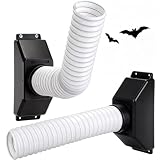
- 2 Pack One-Way Bat Excluder Device: Includes 2 black one way bat doors, each about 19 x 9 x 7 cm; Suitable for covering multiple attic, roof, soffit, vent, siding or wall gap entry points around homes, barns and sheds
- Single Direction Outlet: The bat exclusion tube allows bats to leave through the opening while helping reduce re-entry; A humane bat removal device for outdoor wildlife control without trapping bats inside the structure
- Retractable Flexible Tube: Designed with a stretchable tube to adapt to different gaps, angles and surfaces; Useful for roof edges, eaves, attic vents, siding cracks, chimney gaps and other common bat access areas
- Heavy-Duty Recyclable Plastic: Made of black plastic for repeated outdoor use; Lightweight, compact and easy to store after removal, making this bat deterrent device practical for seasonal pest control and property maintenance
- User-Friendly DIY Setup: Suitable for homeowners, landlords, farm owners and pest control workers; Install over the main bat exit after sealing nearby gaps, then remove once activity stops and complete final gap repairs
How to contain a grounded bat safely
If nobody was asleep, unattended, or in contact with the bat, and it lands rather than leaving, you may be able to contain it for instructions from the health department:
- Put on thick leather work gloves.
- Place a box, jar, or other container over the bat.
- Slide a piece of cardboard underneath the container.
- Tape the cardboard securely to the container.
- Contact the health department for instructions about testing and release.
Do not attempt this if the bat is active, difficult to reach, or likely to escape. Call animal control or the health department instead. Keep children and pets out of the area while you wait.
What if the bat will not leave?
A bat that is exhausted, injured, grounded, active in daylight, unusually easy to approach, or unable to fly may be sick or injured. Do not touch it or encourage a dog or cat to investigate. Keep everyone away and contact animal control, a wildlife agency, or a qualified bat rehabilitator.
If public-health officials have ruled out a rabies concern and you are instructed to release a healthy bat, put the container in an elevated location such as a tree limb, ladder, or second-story deck. Tilt it on its side and let the bat crawl out. Bats need height to drop and begin flying. Do not feed it, and do not release it during dangerous weather.
The Tool Desk
Outbyte Driver Updater FREEScan for outdated or missing drivers - takes under a minuteDriver Scan →Outbyte PC Repair FREERepair Windows errors before they cause bigger problemsFix Now →Repeated bats usually mean an entry point
One bat may have entered through an open door or window. Repeated sightings in the house, attic, walls, or roof usually indicate an access point or a roosting colony.
Rank #2

- CORNER-MOUNT EXCLUDER FOR 90 DEGREE ANGLES - The PRO-Cone Corner fits where round excluders cannot - perfect for inside corners where soffits meet walls, roof peaks, and angled eaves. Bats, birds, and flying squirrels exit through the tapered cone but cannot find their way back in. Clear polycarbonate lets you confirm they have left
- TAPERED ONE-WAY EXIT - Opening narrows from 2-1/4" to 1-1/2" - animals push out easily but the tapered design prevents re-entry. Made from durable clear polycarbonate that will not crack, yellow, or degrade in weather. Mounting holes in the corner flange for easy screw or staple installation. NOTE: This is the CORNER version - see our Round or Square listings for flat surfaces
- HUMANE EXCLUSION - NO TRAPPING - Animals exit on their own (typically at dusk for bats) and simply cannot return. No poisons, no sticky traps, no handling required. Works for bats, starlings, sparrows, flying squirrels, and chipmunks. Install, wait 5-7 days for complete evacuation, then permanently seal the entry point
- STOP DAMAGE BEFORE IT SPREADS - Bat guano and bird droppings cause insulation contamination, ceiling stains, and health hazards. Squirrels and chipmunks chew wiring and create fire risks. The PRO-Cone Corner lets you address infestations in hard-to-reach 90 degree corners without expensive exterminator visits
- IMPORTANT - 90 DEGREE CORNERS ONLY - This PRO-Cone is designed for standard 90-degree inside corners ONLY. The rigid polycarbonate does not bend or flex for other angles. If your entry point is on a flat surface, order our Round or Square PRO-Cone instead. For non-right-angle corners, seal the opening first so the cone fits properly. Angle slightly downward during installation for best results
Watch the building at dusk from a safe distance. Look for bats emerging from roof edges, soffits, vents, chimneys, siding, eaves, and gaps around utility lines. Note every location and roughly how many bats leave. The CDC notes that bats can enter through openings as small as 1/4 inch.
The permanent fix: humane exclusion
Exclusion lets bats leave through their existing exit points while preventing them from getting back inside. It is different from trapping or poisoning the colony.
- Inspect the structure. Check roof edges, soffits, vents, chimneys, siding, eaves, and utility penetrations. Identify all active entrances and exits.
- Close secondary gaps first. Seal openings that are not being used as exits. CDC guidance recommends caulking openings larger than a dime and using suitable screens, chimney caps, draft guards, steel wool, or caulk where appropriate.
- Install one-way exclusion devices. Properly designed devices cover active exits and allow bats to crawl out but not return. Improvised flexible netting can entangle bats.
- Wait and monitor. Leave the devices in place long enough to confirm that the colony has departed. Bad weather can keep bats inside, so a single evening without activity is not proof that the building is empty.
- Seal the exits only after all bats are out. Exterior doors should close tightly, and repairs should use durable exterior materials.
Do not seal a bat entry hole immediately
Watching bats fly out at night and then closing the hole can trap others in the attic or walls. Some bats remain inside during rain, cold, or other poor conditions. Trapped bats may die, create odors, or find their way into living areas.
Do these 3 things before closing this tab:
1Fix the driver behind crashes, sound loss and screen glitches2Clear out junk files and repair common Windows errors3Scan for outdated or missing drivers - takes under a minuteTiming also matters. Do not exclude a colony during the local maternity or pup-rearing season. The dates vary by species and location. May 15 through August 15 is a typical example from the U.S. Fish and Wildlife Service, while Bat Conservation International describes April through September as a general North American pup-rearing period. State or local rules may be stricter.
Before starting exclusion, contact your state wildlife agency or Department of Natural Resources. Many bat species are protected, and a maternity colony may require special timing or methods.
Rank #3

- [One-Way Channel Design] The bat cone features a one-way door mechanism that allows bats to easily exit from the inside, but once they fly out, they cannot re-enter. This clever design ensures bats can leave safely.
- [Right Angle Design] The 90-degree right angle shape allows for flush installation against walls, eaves, or rooflines without requiring additional spacers or modifications. Perfect for tight spaces where straight tubes cannot be installed, easily adapting to various complex positions.
- [Long-Lasting Use] The bat cone is made of heavy-duty material, maintaining structural stability throughout the entire exclusion process. Resistant to cracking and reusable.
- [Easy to Install] This bat removal cone is cleverly designed and easy to install. It protects building surfaces from damage while maintaining the structural appearance.
- [Packaging Includes] 2 Bat cones and 8 screws.
Methods that are unlikely to solve a bat problem
| Method | Why to avoid it |
|---|---|
| Ultrasonic repellents | They have not been scientifically shown to exclude bats from a building. |
| Chemical repellents, pesticides, or poison | They do not provide reliable colony removal and can harm bats, pets, wildlife, or people. |
| Mothballs | They are not a dependable bat-exclusion method and create a chemical hazard. |
| Expandable foam as the main repair | Foam alone is not a durable solution for every exterior gap and can leave other entrances open. |
| Duct tape, rags, paper, or steel wool as permanent seals | These materials can fail outdoors and may trap bats if used before exclusion is complete. |
| Loose netting or a homemade one-way door | Improper devices can entangle or injure bats. |
Cleaning bat droppings safely
A large accumulation of bat droppings should be cleaned by a professional company experienced in wildlife-contamination or hazardous-waste cleanup. Disturbing dried droppings can put Histoplasma spores into the air; inhaling them can cause histoplasmosis, a lung infection.
Do not dry sweep or vacuum a substantial accumulation. Dust should be controlled—for example, by carefully wetting material—and high-risk cleanup may require industrial equipment and appropriate respiratory protection. Keep children and pets away from contaminated areas until cleanup is complete.
Should you install a bat house?
A bat house can provide alternative habitat, but it usually will not persuade bats to abandon an established roost in your attic or walls. Install one only as a supplementary habitat measure, not as a replacement for exclusion and repairs.
Independent reader supportYour contribution helps us test, update, and keep practical guides available for everyone.How to choose a bat-exclusion professional
Get more than one quote when practical, and ask for a written plan. A qualified contractor should:
- Have verifiable experience with bat exclusion, not just general pest control.
- Understand local bat species, maternity seasons, and wildlife regulations.
- Be licensed where required and carry liability insurance.
- Provide references and a written contract.
- Guarantee workmanship and materials for at least two years.
Reject a proposal based on poisoning, chemical repellents, ultrasonic devices, immediate sealing, or exclusion during maternity season. Those approaches can be ineffective, illegal, or fatal to bats trapped inside.
Rank #4

- Upgraded Bat Cone Design: Featuring an innovative elliptical shape and smooth tube taper structure, this bat cone allows easy slide out bats while preventing re-entry. The 15 downward slope and elongated tube ensure a humane one-way exit, making it an effective bats exclusion device for houses. Requires no bait to use, our excluders make for a straightforward and hassle-free way of ridding your property of unwelcome flying guests
- Durable One Way Bat Door: Crafted from robust yet lightweight plastic, anti rust and has a long service life. This reusable tool for roof bat deterrent protects structural surfaces without compromising aesthetics. Its one-way trap expulsion bats safely, ensuring harm-free relocation from attics or walls. Sends bats back into the wild or bat house or box where they belong
- Versatile Bat Removal for Attic and Beyond: This bat removal cone offers flexible installation using Self-tapping screws, duct tape. The uneven spots on the tape can diffuse ultrasonic waves, interfering with the echolocation of bats for a short time and disrupting the correct search for caves. Its narrow opening and tapered design block re-entry, providing a simple yet highly efficient solution for attics, chimneys, and irregular crevices
- Optimized Installation Guidance: Simple to use, just install the product at the main entrance and exit of the Bats, and then just wait for a while to see the effect, no professionalism is required. For maximum effectiveness, Whether installed horizontally or vertically, the opening should face outward and downward to accelerate bat evacuation. Pair with super-sticky cloth tape to seal uneven gaps, ensuring full coverage for attics and roofs
- Compact and Multi-Unit Compatibility: This lightweight bat one-way exit bat repellent can be installed side-by-side for larger openings. Suitable for residential and commercial use, works with common entrance and exit of Bats such as gable vents, ridge vents, frieze boards, brick openings, attic, drip edge, soffit, rake gap, fascia and other gaps. It's a reusable tool for long-term bat exclusion
Quick decision guide
| Situation | Best next step |
|---|---|
| Bat is flying in one room and no contact occurred | Close interior doors, open outside exits, turn off lights and fans, and leave it alone to exit. |
| Bat touched a person or pet, or was in a room with a sleeping person | Call the health department; contact a doctor or veterinarian as appropriate. Do not release the bat. |
| Bat is grounded, injured, active in daylight, or unusually approachable | Keep everyone away and call animal control, a wildlife agency, or a rehabilitator. |
| Bats repeatedly emerge from the roof or attic | Arrange a legally timed inspection and humane exclusion; do not seal the holes immediately. |
| Large amount of droppings is present | Use a professional contamination-cleanup service rather than dry sweeping or vacuuming. |
FAQ
Will a bat attack my dog or cat?
Bats generally try to escape, but they may bite defensively if cornered or handled. Keep pets away from any bat, and contact your veterinarian if your pet may have touched, bitten, or mouthed it.
Can I catch a bat with a towel or bare hands?
No. A bat bite can be tiny and difficult to see. If the bat lands and there was no possible exposure, use thick leather work gloves, a container, and cardboard as a barrier. Otherwise, call animal control or the health department.
Can I seal the hole after the bats fly out?
Not immediately. Some bats may still be inside, especially during bad weather. Use a properly designed one-way exclusion device, confirm the colony has left, and check local maternity-season rules before sealing the opening.
Do ultrasonic bat repellents work?
They have not been scientifically shown to exclude bats reliably. The dependable long-term solution is inspection, humane exclusion, and durable repair of every entry point.
The Bottom Line
For a single bat, make one room dark and quiet, open an outside exit, and keep people and pets away. For any possible bite or contact, call the health department and do not release the bat. Repeated bats require humane exclusion—not poison, ultrasonic devices, or rushed sealing—and large droppings should be handled as a contamination-cleanup job.
Quick Recap
Product prices and availability are accurate as of the date/time indicated and are subject to change. Any price and availability information displayed on Amazon at the time of purchase will apply.




