What’s actually slowing this PC down?
Pick the symptom - the matching free tool is one click away.
A cockatiel is a small Australian parrot recognized by its expressive crest, orange cheek patches, whistled songs, and generally gentle temperament. It belongs to the cockatoo family, Cacatuidae, and needs daily interaction, a spacious cage, a balanced diet, supervised exercise, protection from household fumes, and regular care from an avian veterinarian.
Cockatiel facts at a glance
| Characteristic | Details |
|---|---|
| Scientific name | Nymphicus hollandicus |
| Family | Cacatuidae, the cockatoo family |
| Adult length | About 32 cm (12.5 in), including the long tail (VCA Animal Hospitals) |
| Adult weight | Approximately 80–95 g (2.8–3.5 oz) (VCA Animal Hospitals) |
| Typical lifespan | About 10–14 years; well-cared-for captive birds may live into their late teens or twenties (VCA Animal Hospitals) |
| Natural range | Mainland Australia |
| Communication | Whistling, contact calls, song imitation, body language, and sometimes words |
| Minimum commonly cited cage size | About 60 × 60 × 90 cm (2 × 2 × 3 ft) for one bird, with larger preferred (VCA Animal Hospitals) |
What does a cockatiel look like?
The wild-type cockatiel has mostly gray plumage, a yellow crest and face in adult males, orange cheek patches, and white markings on the wings. Its long, tapered tail accounts for much of its apparent size. The crest can indicate mood:
- Sharply upright: often alarm or intense interest (Animal Diversity Web)
- Relaxed and angled: more consistent with a calm bird
- Flattened close to the head: may indicate fear, anger, or defensive behavior, particularly with hissing or an open beak
Captive color mutations include normal gray, lutino, pied, pearl, cinnamon, whiteface, and combinations. Adult coloration is usually established after the first molt, at approximately 9–12 months. Visual sexing is less reliable in young birds and some mutations, so DNA sexing or a veterinary examination may be needed (VCA Animal Hospitals).
Where do cockatiels come from?
Cockatiels are native to mainland Australia, where they occupy open inland habitats such as grasslands, savannas, open woodland, and areas near freshwater. Some populations are nomadic, following changing food and water supplies, while others make more predictable seasonal movements (Cornell Lab of Ornithology, eBird Status and Trends).
Do these 3 things before closing this tab:
1Scan for outdated or missing drivers - takes under a minute2Repair Windows errors before they cause bigger problems3Fix the driver behind crashes, sound loss and screen glitches#1 Best Overall

- Spacious Bird Cage for Small/Medium Birds: With dimensions of 24"L x 12"W x 46"H and 1/2″ bar spacing, this upgraded encrypted parakeet cage is expertly crafted from sturdy powder-coated metal with hammered paint finish, ensuring enhanced strength, durability and excellent water resistance, making this bird cages a secure and cozy home for parakeets, parrot, lovebirds, cockatiels, cockatoo, conure, canary, budgerigar, finches, myna, pigeon and other feathered friend.
- Detachable Design For Easy Cleaning:VISCOO bird cage is equipped with a plastic slide-out tray at the bottom of this parrot cage that can be removed for easy cleaning, and with removable panels for better convenience, so as to keep a clean and tidy environment. Our birdcage can also be easily assembled with our hammer but no other tools required. Spend less time scrubbing or assemble, but more time interacting with your pets.
- Easy to Move as a Whole Smoothly: 6pcs universal 360-degree caster wheels with locks are equipped, so you can effortlessly relocate the cockatiel cage quickly and safely, it provides portability for outdoor use for fresh air and sunshine.
- Thoughtful Accessories Included: Our bird cage includes 4 wooden perches, 1 plastic food box and 1 water bottle which can be fixed outside the parakeet cage, so you can add the food without disturbing your bird friends, especially for shy or sensitive birds. Provide a cozy home where your birds can perch, snack, and play.
- Ideal for Bird Lovers: Designed for small to medium-sized birds, the flight cage with 2 doors enable close interaction and door locks prevent escapign while maintaining ventilation. Its spacious design and convenient features make it an ideal choice for home, pet stores and pet hospitals. This bird cages for parakeets provides a comfortable and secure living environment.
Wild cockatiels forage on or near the ground for grass and other seeds, vegetation, fruit, berries, and occasionally small invertebrates. Flocking, calling, chewing, and frequent movement are normal behaviors (VCA Animal Hospitals).
In the wild, cockatiels nest in tree hollows, often near water. Both parents incubate the eggs and care for the chicks. A typical clutch contains about four to seven eggs; incubation lasts approximately 17–23 days, and young birds fledge at around three to five weeks (Animal Diversity Web).
Temperament and communication
A well-socialized cockatiel is usually alert, social, and trainable. Compared with many larger parrots, cockatiels are often relatively quiet, but they are not silent pets. Whistling, contact-calling, and copying melodies are more natural than speaking; some learn words, but clear speech should not be the main reason for choosing one (VCA Animal Hospitals).
A single cockatiel can live well with daily human interaction, exercise, and enrichment. A second bird may provide companionship, but compatibility is not guaranteed. Have a new bird examined by an avian veterinarian, quarantine it away from resident birds, and introduce it gradually rather than placing it directly in the same cage (VCA Animal Hospitals).
PC Slower Than It Used to Be?
A free scan shows the junk files, broken settings and background clutter dragging Windows down - then fixes them in one click.Free scan · Windows 10 & 11Outdated Drivers Are Slowing You Down
One free scan finds every outdated or missing driver and matches the right update for your exact hardware.Free scan · exact hardware matchNormal behaviors
- Moving the crest in response to attention or emotion
- Grinding the beak when relaxed or preparing to sleep
- Molting and producing fine feather dust
- Chewing, shredding, climbing, and foraging
- Regurgitating food toward a person, mirror, toy, or cage mate during courtship or bonding
Regurgitation is not automatically a sign of illness. Repeated regurgitation accompanied by lethargy, weight loss, or other abnormal signs needs veterinary attention (Merck Veterinary Manual).
How long do cockatiels live?
Veterinary guidance commonly gives 10–14 years as a general lifespan, while well-cared-for captive cockatiels often live into their late teens or twenties. Genetics, diet, exercise, household safety, preventive veterinary care, and access to an experienced avian veterinarian influence longevity (VCA Animal Hospitals).
A lifespan in the twenties is possible, but claims that every cockatiel routinely lives for 30 years are unrealistic. Treat a cockatiel as a long-term commitment, not a short-lived starter pet.
Rank #2

- Open-Top Design for Extra Freedom: This parakeet cage's roof can be opened and securely locked, creating an additional perch for your birds to enjoy an open-air experience. When it's time to rest, simply close the roof to provide a safe enclosed home
- Spacious Home for Small to Medium Birds: The 18"L × 14"W × 36.5"H cage interior plus 0.4'' bar spacing provides a safe and comfortable living environment for small to medium-sized birds such as parakeets, lovebirds, finches and canaries. The overall dimension including the stand and open top is 18"L × 14"W × 64"H
- Easy Clean Design with Slide Out Tray: Constructed with waterproof metal framing, this cockatiel cage features a slide-out bottom tray for simple cleaning. A bottom grate separates birds from the tray to maintain a tidy cage interior
- Detachable Rolling Stand with Storage Shelf: This budgie cage comes with a 27'' tall detachable rolling stand with 360-degree swivel casters, supporting smooth movement indoors and outdoors. The upper cage can be removed from the stand for tabletop placement or transport
- Smart Storage & Feeding Convenience: The four feeding doors of this cockatiel cage allow for quick seed and water refills, while the extra storage shelf on the stand keeps bird seeds, toys, and cleaning tools neatly organized and within reach
What should a cockatiel eat?
An all-seed diet is not suitable. Commercial seed mixes are often high in fat and carbohydrates, nutritionally incomplete, and prone to selective feeding. Long-term seed-heavy feeding can contribute to nutritional deficiencies, obesity, liver disease, and other health problems (VCA Animal Hospitals).
Free tools Windows power users keep installed
One-click scans. No signup required.
A practical diet usually contains:
- A nutritionally complete formulated pellet as the principal food
- Daily vegetables and leafy greens
- Small portions of fruit
- Seeds or millet in limited amounts, especially as treats or training rewards
- Fresh, clean water available at all times
Published recommendations differ. VCA Animal Hospitals commonly recommends approximately 75–80% pellets, while the Merck Veterinary Manual gives a broader small-bird guideline of roughly 40–50% pellets, 30–40% seed mix, 10–15% vegetables, and 5–10% fruit. These are differing general guidelines, not universal rules for every bird. An avian veterinarian should adjust the plan for age, body condition, reproductive status, health, and current diet.
Changing from seeds to pellets
- Make the change gradually rather than removing all familiar food at once.
- Weigh the bird regularly on a gram scale.
- Check droppings and confirm that the bird is actually eating the new food.
- Contact an avian veterinarian if body weight falls by more than 10% or droppings decrease (Merck Veterinary Manual).
Foods and products to avoid
Do not offer avocado, chocolate, alcohol, caffeine, onions, apple seeds, potentially toxic pits or seeds, or highly processed salty, sugary, or fatty foods. Wash fresh produce and remove it before it spoils; warm, damp food can deteriorate quickly. Cockatiels do not need grit or gravel. They hull seeds before swallowing them, and excess grit can contribute to gastrointestinal obstruction (VCA Animal Hospitals).
Cage and housing requirements
For one cockatiel, a commonly cited minimum enclosure is about 60 × 60 × 90 cm (2 × 2 × 3 ft); larger is better. The bird should be able to stretch and flap without hitting the bars, and horizontal room is important (VCA Animal Hospitals).
Choose a cage with bar spacing no wider than approximately 1.3 cm (½ in), so the head or legs cannot become trapped. Avoid unknown metal coatings, galvanized wire, and unsafe wood. Include:
Recommended Free Tools
- Several safe perches with different diameters
- Food and water dishes placed away from droppings
- Chewable and destructible toys
- Foraging materials and climbing items
- A swing if the bird uses it safely
- A removable tray lined with paper for easy monitoring and cleaning
- Enough quiet, dark space for uninterrupted sleep
Inspect ropes, chains, bells, clips, leather, and metal parts frequently. Remove frayed fibers, sharp wires, loose pieces, or any toy component the bird can swallow. Rotate toys to maintain interest, but do not abruptly remove a strongly favored toy unless it has become dangerous. Mirrors and particular toys can sometimes encourage excessive courtship or obsessive behavior (VCA Animal Hospitals).
Exercise, sleep, and daily routine
Daily supervised time outside the cage gives a cockatiel exercise, exploration, and social contact. Before opening the door:
Rank #3
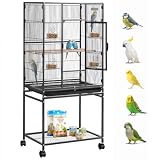
- Spacious Space: Measuring 24.6 x 16.7 x 31.9 in with 0.4 in bar spacing, the bird cage accommodates 3–4 small or medium birds, such as conures, lovebirds, budgies, and canaries. It provides ample space for them to jump and stretch their wings flexibly
- Stable & Reliable: Crafted from wrought iron with a powder-coated finish, our bird flight cage ensures water and rust resistance. Its stable frame structure, thickened tubes, and fences withstand deformation, while a secure lock keeps birds from escaping
- Fully Functional: The cockatiel cage features plastic feeders to reduce beak damage. Its multiple perches and horizontal wires provide ample standing and resting space and firm grip support. It comes with a shelf for storing bird food and other sundries
- Easy Mobility: Equipped with four 360° swivel casters, the parrot cage moves smoothly to any spot, with two lockable wheels to avoid sliding. Whether moving from the living room to the balcony or indoors to outdoors, it moves easily
- Easy to Clean: Our large bird cage provides a slide-out tray at the bottom, allowing you to pull it out for easy cleaning. The bottom metal grate separates birds from droppings, avoiding direct contact of birds with pollutants to ensure the tidiness
- Close windows and doors.
- Turn off ceiling fans.
- Cover or clearly identify glass and mirrors.
- Keep cats and dogs out of the room.
- Remove access to cooking surfaces, open water, electrical cords, toilets, and narrow gaps.
- Keep the bird away from open flames and other active household hazards.
Cats and dogs can cause fatal injuries even when a wound appears small. Predator saliva on a bird is an urgent veterinary concern, and pets should never share the bird’s enclosure (Merck Veterinary Manual).
Cockatiels need a predictable dark, quiet period for sleep. Place the cage where the bird can participate in daytime household life without constant traffic, drafts, or late-night light. If the household remains active after bedtime, a separate sleep cage or carefully managed sleeping area may be necessary (Lafeber Veterinary Hospital).
Household dangers for cockatiels
Birds have highly sensitive respiratory systems. Keep a cockatiel away from:
- PTFE-containing nonstick cookware and overheated nonstick appliances
- Smoke, open flames, and cooking fumes
- Aerosol sprays, perfume, and air fresheners
- Cleaning products, pesticides, and insecticides
- Nail-polish remover and other solvents
- Paint, glue, gasoline, and other volatile chemical fumes
Other serious risks include open windows, uncovered water containers, rotating fans, toxic plants, glue traps, electrical cords, and lead- or zinc-containing materials. Avoid relying on the rule that a nonstick pan is safe until it visibly smokes: fumes from overheated PTFE-coated products can harm birds before visible smoke appears. Avoid these products around the bird altogether (Merck Veterinary Manual).
Veterinary care and warning signs
Arrange an examination with a veterinarian experienced in treating birds soon after acquiring a cockatiel. Annual examinations are generally recommended. The veterinarian may assess weight, body condition, feathers, beak, nails, breathing, and droppings, and may recommend fecal or blood tests (VCA Animal Hospitals).
Birds often hide illness until they are seriously affected. Seek veterinary advice for reduced appetite or drinking, weight loss, fewer droppings, prolonged fluffing, unusual sleepiness, nasal or eye discharge, vomiting, a sudden change in vocalization, loss of balance, or sitting on the cage floor. Tail bobbing or labored breathing also warrants prompt attention (Merck Veterinary Manual).
The Tool Desk
Outbyte PC Repair FREERepair Windows errors before they cause bigger problemsFix Now →Outbyte Driver Updater FREEFix the driver behind crashes, sound loss and screen glitchesFind Drivers →Breathing difficulty, collapse, suspected poisoning, trauma, or inability to pass an egg is an emergency.
Rank #4

- 2 Extra Birdcage Covers -Keep Clean & Protect Birds: Black birdcage cover blocks 90% sunlight & UV rays, creating a dark, cozy rest space for parakeets, cockatiels, and parrots
- Parrot-Proof Lock-No Escape, Even for Smart Birds: Glossy secure lock specially designed for parakeets, cockatiels, and parrots - smarter than traditional latches! No way to open it, ensuring your feathered friends stay safe inside
- Slide-Out Tray & Wrought Iron Wire-1-Minute Cleanup: Large slide-out tray catches bird droppings and food scraps - just pull, dump, and wipe! Durable wrought iron wire resists rust and stains, no more scrubbing hard-to-reach corners.
- For 2-3 Birds: Extra-large flight space for budgies, parakeets, lovebirds, cockatiels, or small parrots to stretch wings! Ample room for perches, and feeders-happy birds-quieter, less destructive pets
- 360° Swivel Wheels + Storage Rack-Move & Organize Effortlessly: 4 universal wheels glide smoothly on any floor-relocate your bird cage in seconds! Built-in storage rack holds bird food, and supplies-no more cluttered pet space
Egg laying and reproductive problems
A female cockatiel can lay infertile eggs without a male. Repeated laying depletes calcium and other resources and increases the risk of egg binding. A female that is weak, sitting low, straining, breathing heavily, has a swollen abdomen, or cannot pass an egg needs urgent avian-veterinary care (PetMD).
To reduce chronic reproductive stimulation, a veterinarian may recommend removing nest-like spaces, huts, mirrors, or favored courtship objects; avoiding stroking the back or body; adjusting light exposure; and reviewing diet and routine (PetMD). Do not attempt to treat suspected egg binding at home.
Quarantine and psittacosis
Cockatiels can carry Chlamydia psittaci, the bacterium responsible for psittacosis, without obvious signs. The infection can spread to people through contaminated droppings and respiratory material. Possible signs in birds include ruffled feathers, lethargy, breathing difficulty, eye or nasal discharge, poor appetite, reduced vocalization, and abnormal yellow-green droppings (Merck Veterinary Manual).
Quick wins for a faster PC:
Scan for outdated or missing drivers - takes under a minuteDriver Scan →Repair Windows errors before they cause bigger problemsFix Now →Keep a newly acquired bird separate from resident birds until it has been examined and quarantined. Set the appropriate quarantine period and testing plan with an avian veterinarian because recommendations and public-health requirements vary by location.
Independent reader supportYour contribution helps us test, update, and keep practical guides available for everyone.Conservation status
Cockatiels are widespread in Australia and are not generally treated as a threatened pet-trade species. Wild-range status is distinct from the status of domestic color mutations and captive-bred birds; a domestic cockatiel is not the same thing as a wild-caught individual. Current distribution information is available through Cornell Lab of Ornithology’s eBird Status and Trends project.
Is a cockatiel right for you?
A cockatiel may suit a home looking for a relatively small, trainable companion that communicates mainly through whistles and calls. It is a poor choice for a household unwilling to provide daily interaction, safe out-of-cage exercise, specialized food, regular cleaning, and access to avian veterinary care.
Its size also makes household safety especially important. A bird can be poisoned by fumes, injured by a fan, or seriously harmed by a cat in seconds. The right owner prepares the environment before bringing the bird home and treats changes in weight, droppings, breathing, appetite, and behavior as meaningful information.
Best Value

- STURDY CONSTRUCTION - Our bird cage is made of the highest-quality metal frame which has been tested to ensure durability; Coated with exquisitely nontoxic hammer-pattern paint, which is corrosion-resistant, it not only ensures beauty but also a healthy and safe living environment for birds
- MULTIPLE FUNCTIONS - The design with a flat top gives you more free space to hang bird toys or put some potted plants to decorate the appearance of your cage, increasing the enjoyment of the bird cage; Different decorations and useful equipment can be hung on either side of the cage or put on the mesh shelf
- CONSIDERATE DESIGN - With the design of the considerate 4 universal casters, you can put the cage where you want and it will not run anywhere; The unique latch design is firm and safe, which can prevent the bird from opening the door by themselves and ensure the protection; The perch is designed to fit the size of a bird's feet and the breeding box can be hung on either side of the cage
- EASY TO CLEAN - Designed with the drawer style tray, all you need to do is to slide out the bottom tray and wash it off, which is easier to observe and clean for you; Additionally, all of the shelves can be easily removed for easy cleaning; Keep a clean and tidy environment and keep your pets safe
- ABUNDANT ACCESSORIES - In addition to the high-quality steel frame bird cage, we also provide you with 4 plastic transparent food boxes, 2 wooden perches, and a tray in the cage; Different food boxes can feed different nutritious food to birds, which is conducive to the better reproduction and growth of diverse birds
Common cockatiel misconceptions
| Claim | What is more accurate |
|---|---|
| “Cockatiels are parakeets.” | They are parrots, but taxonomically they belong to the cockatoo family, Cacatuidae (NCBI Taxonomy). |
| “Seeds are natural, so an all-seed diet is healthy.” | Wild cockatiels eat a varied seasonal diet; a commercial seed mix does not reproduce that variety (VCA Animal Hospitals). |
| “Cockatiels need grit to digest seeds.” | They hull seeds and do not need grit. Excess grit can be dangerous (VCA Animal Hospitals). |
| “Daily free flight makes a small cage acceptable.” | Out-of-cage time does not replace an adequately sized, safe enclosure (VCA Animal Hospitals). |
| “A quiet cockatiel is always content.” | A sudden reduction in vocalization can signal illness, especially with inactivity or appetite and droppings changes (Merck Veterinary Manual). |
| “They are low-maintenance pets.” | They are smaller and often quieter than larger parrots, but still need specialized nutrition, enrichment, safety precautions, and avian care (VCA Animal Hospitals). |
FAQ
Are cockatiels good pets for beginners?
They can suit a prepared first-time bird owner because they are generally social and trainable, and are less vocally intense than many larger parrots. They still require a spacious safe cage, daily interaction, supervised exercise, a balanced diet, household-fume precautions, and avian veterinary care.
Can a cockatiel live alone?
Yes. A single cockatiel can do well with consistent daily human interaction, exercise, and enrichment. A second cockatiel may offer companionship, but the birds need quarantine and gradual introductions because compatibility is not guaranteed (VCA Animal Hospitals).
What is the best diet for a cockatiel?
A complete formulated pellet should form the principal food, supplemented with vegetables and leafy greens, small amounts of fruit, and limited seeds or millet as treats. An avian veterinarian can tailor the proportions, particularly during a change from a seed-heavy diet (VCA Animal Hospitals; Merck Veterinary Manual).
What fumes are dangerous to cockatiels?
Avoid PTFE nonstick cookware and overheated appliances, smoke, aerosols, perfume, air fresheners, cleaning products, pesticides, solvents, paint, glue, gasoline, and other volatile fumes. Cockatiels have highly sensitive respiratory systems; suspected exposure requires urgent veterinary advice (Merck Veterinary Manual).
How can I tell if my cockatiel is sick?
Warning signs include reduced appetite, weight loss, fewer droppings, prolonged fluffing, unusual sleepiness, breathing difficulty, tail bobbing, discharge, vomiting, loss of balance, sitting on the cage floor, or a sudden change in vocalization. Breathing problems, collapse, poisoning, trauma, and egg-laying emergencies require immediate veterinary care (Merck Veterinary Manual).
The Bottom Line
Cockatiels are engaging, expressive companion parrots, but they are not disposable or low-effort pets. Plan for a lifespan that may reach the twenties, provide a spacious enclosure and daily supervised activity, offer balanced nutrition rather than an all-seed diet, protect the bird from fumes and predators, and establish care with an avian veterinarian. Careful observation of weight, droppings, breathing, appetite, and behavior is an important part of keeping a cockatiel healthy.
Quick Recap
Product prices and availability are accurate as of the date/time indicated and are subject to change. Any price and availability information displayed on Amazon at the time of purchase will apply.




