Crashes, No Sound, or Screen Glitches?
Random freezes, missing sound and display glitches usually trace back to one bad driver. Find and replace yours safely.Free scan · under a minuteWindows Errors? Fix Them Before They Spread
Repair common Windows errors and clear accumulated junk for a smoother, more stable PC - no reinstall needed.Free scan · no reinstallThe Galapagos Islands are home to animals found nowhere else—or animals that have developed remarkably unusual traits in isolation. A marine lizard that feeds underwater, a penguin living at the equator, and a bird that uses tools are just a few examples.
“Unique” does not always mean endemic. Blue-footed boobies and Sally Lightfoot crabs also live outside the archipelago, while the animals below are included because of their distinctive biology, behavior, or evolutionary history. For anyone interested in animal behavior, conservation, and responsible wildlife watching, the Galapagos is one of the most important natural laboratories on Earth.

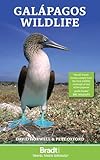


1. Galapagos Giant Tortoise
Chelonoidis spp.
Galapagos giant tortoises are among the largest tortoises in the world. Their populations evolved separately on different islands and around different volcanoes, producing noticeable differences in shell shape, size, and body proportions.
Their classification is still being revised. A 2025 genetic study identified 13 genetically distinct species, while other modern classification systems have grouped the island populations differently. It is therefore more accurate to describe Galapagos giant tortoises as a complex of island and volcano lineages rather than present one fixed species count as settled fact. (Galapagos Conservancy)
#1 Best Overall
Tortoise populations have disappeared from islands including Floreana, Pinta, Santa Fe, and Fernandina. Conservation projects are working to restore tortoise lineages and the ecological functions these large herbivores once provided.
2. Marine Iguana
Amblyrhynchus cristatus
The marine iguana is the only living lizard known to forage in the sea. It clings to rocks and grazes on algae underwater or in the intertidal zone, then returns to land to warm its body in the sun.
Feeding in salt water creates a physiological problem, but marine iguanas have specialized nasal glands that remove excess salt. They expel it through their nostrils, which is why these reptiles often appear to sneeze or blow salt from their faces.
Marine iguanas vary from island to island, and several populations are recognized as distinct subspecies. Young iguanas are vulnerable to introduced predators, particularly cats.
Free tools Windows power users keep installed
One-click scans. No signup required.
3. Galapagos Pink Land Iguana
Conolophus marthae
With pink-and-black skin instead of the yellowish coloring associated with many other Galapagos land iguanas, the pink land iguana is one of the archipelago’s most distinctive reptiles. It is known only from the slopes of Wolf Volcano on northern Isabela Island.
The animal was first observed in 1986 and formally recognized as a separate species in 2009. Its entire known range is concentrated around one volcano, making it exceptionally vulnerable to disease, environmental change, and other local threats.
The pink land iguana is classified as Critically Endangered. Published estimates have placed its wild population at roughly 200 to 300 individuals, although population figures should always be associated with a monitoring date because surveys continue. (IUCN)
4. Galapagos Land Iguana
Conolophus subcristatus and Conolophus pallidus
Galapagos land iguanas feed on low-growing plants, fallen fruit, cactus pads, and other vegetation adapted to the islands’ dry conditions. They shelter in burrows at night and may receive a useful grooming service from Darwin’s finches, which pick ticks from their skin.
What’s actually slowing this PC down?
Pick the symptom - the matching free tool is one click away.
Conolophus pallidus is restricted to Santa Fe, while C. subcristatus occurs on several other islands. A frequently repeated error concerns North Seymour: the island has a large land-iguana population, but those animals descend from iguanas moved there from Baltra in the 1930s. Land iguanas are not native to North Seymour.
Rank #2
- Used Book in Good Condition
5. Galapagos Penguin
Spheniscus mendiculus
The Galapagos penguin is the world’s northernmost penguin and the only penguin regularly found at or north of the equator. Most live around Fernandina and Isabela, where cold, nutrient-rich water supports the fish and other prey they need.
Unlike penguins that nest in colder climates, Galapagos penguins breed at sea level, often using lava rocks and coastal caves for shelter. Their survival is closely tied to ocean conditions. El Niño events can reduce prey availability and trigger major population declines.
Introduced rats and cats can also attack nests and chicks. The species is classified as Endangered.
Recommended Free Tools
6. Flightless Cormorant
Phalacrocorax harrisi
The flightless cormorant is the only cormorant species that has lost the ability to fly. Its wings are reduced, but its legs and swimming ability are powerful and well adapted for pursuing fish, eels, and octopuses.
It lives mainly on Fernandina and along the northern and western coasts of Isabela. The birds generally nest in small groups close to shore. Like the Galapagos penguin, their breeding success can change sharply when El Niño alters the availability of marine prey.
7. Blue-footed Booby
Sula nebouxii
The blue-footed booby’s vivid feet are colored by pigments obtained through its fish- and squid-based diet. Foot color plays a role in courtship, and both sexes participate in displays, although males prominently show off their feet while seeking a mate.
These seabirds hunt by plunge-diving into the ocean. They can dive from heights of up to about 60 feet, or 18 meters. That figure describes the height of the plunge, not a diving speed—a useful distinction because exaggerated speed claims are often repeated in wildlife articles. (Galapagos Conservancy)
The Tool Desk
Outbyte Driver Updater FREEScan for outdated or missing drivers - takes under a minuteDriver Scan →Outbyte PC Repair FREEClear out junk files and repair common Windows errorsFree Scan →Blue-footed boobies occur on several Galapagos islands, including North Seymour and San Cristóbal, but they are not endemic to the archipelago.
8. Waved Albatross
Phoebastria irrorata
The waved albatross is the only albatross species that breeds in the tropics. It breeds primarily on Española Island, then spends much of its life at sea.
Rank #3
Its courtship is a coordinated performance involving bill movements, calls, and other displays. Both parents are needed to raise a chick, so the loss of either adult can have an especially serious effect on reproduction.
Fishing bycatch is a major conservation concern. The waved albatross is one of the Galapagos’ six endemic seabird species.
9. Swallow-tailed Gull
Creagrus furcatus
The swallow-tailed gull is the world’s only fully nocturnal gull. Its large eyes help it locate squid and fish near the ocean surface after dark.
It occurs across much of the archipelago and is often associated with Genovesa, a particularly reliable island for observing the species. However, no wildlife encounter is guaranteed: sightings depend on location, season, weather, and the animals’ own movements.
Swallow-tailed gulls also have an unusual breeding pattern. Their colonies and pairs may nest at different times of year, a pattern known as asynchronous breeding.
10. Galapagos Sea Lion
Zalophus wollebaeki
Galapagos sea lions are the smallest living sea lion species. They are highly social and commonly rest on beaches, docks, and rocky shorelines, sometimes occupying places also used by people.
Their familiarity with human environments does not make them domesticated or safe to approach. Bulls defending territory can be dangerous, and visitors should keep a respectful distance from adults, pups, and animals in the water.
Current estimates place the archipelago-wide population at roughly 17,200 to 24,200 animals. The species is classified as Endangered. (Galapagos Conservancy)
11. Galapagos Fur Seal
Arctocephalus galapagoensis
The Galapagos fur seal is an endemic eared seal that is more closely related to sea lions than to true seals. Its name can cause confusion, but it is not a member of the true-seal family.
Rank #4
It favors rugged, shaded shorelines and cooler coastal areas. Compared with Galapagos sea lions, fur seals have a denser coat, visible protruding ears, a shorter-looking head, and large front flippers. These traits help them conserve heat and move through their preferred rocky habitat.
Estimated numbers are approximately 14,000 to 19,000 animals, and the species is classified as Endangered. (Galapagos Conservancy)
12. Lava Lizard
Microlophus spp.
Seven lava-lizard species are recognized in the Galapagos. They probably descended from one ancestral species, then diversified as populations became isolated on different islands.
This is a clear example of adaptive radiation. Lava lizards can change color to improve camouflage, and a lizard seized by a predator may shed its tail. A replacement tail can grow later, although it is not an exact replica of the original.
Lava lizards are not currently considered threatened as a group, but island populations still need monitoring. Their distribution and appearance can differ depending on which island they inhabit.
Quick wins for a faster PC:
Scan for outdated or missing drivers - takes under a minuteDriver Scan →Clear out junk files and repair common Windows errorsFree Scan →Fix the driver behind crashes, sound loss and screen glitchesFind Drivers →13. Woodpecker Finch
Camarhynchus pallidus
The woodpecker finch is one of Darwin’s finches and is famous for using tools. It selects a twig, cactus spine, or similar object and uses it to extract insect larvae from holes in branches.
This behavior is especially striking because the bird is not simply using its beak as a tool; it selects and manipulates a separate object to reach prey. The species is a useful example of how feeding behavior can evolve alongside beak shape and island ecology.
“Darwin’s finches” describes a group of related species, not one single bird. Their differences in beaks and feeding strategies are classic examples of adaptive radiation.
Independent reader supportYour contribution helps us test, update, and keep practical guides available for everyone.14. Galapagos Hawk
Buteo galapagoensis
The Galapagos hawk is the only diurnal bird of prey native to the islands. It hunts insects, lava lizards, snakes, rodents, young iguanas, and hatchlings of tortoises or sea turtles.
Best Value
Its breeding behavior is unusual. A female may mate with multiple males, and those males can cooperate in incubating eggs and raising the young. The species once occurred across much more of the archipelago but is now absent from several islands.
Its limited distribution, along with the effects of introduced species, makes continued population monitoring important.
Endemic does not mean every famous Galapagos animal
The Galapagos has an unusually high level of endemism: all of its reptile species are endemic except two marine turtles, and approximately 80% of its land birds and 97% of its reptiles and land mammals occur nowhere else, according to UNESCO. Still, some famous animals are also found beyond the islands.
| Animal | How to describe it accurately |
|---|---|
| Galapagos penguin | Endemic and the only penguin regularly found at or north of the equator |
| Flightless cormorant | Endemic and the only cormorant that cannot fly |
| Waved albatross | Endemic and the only albatross that breeds in the tropics |
| Blue-footed booby | Iconic Galapagos species, but not endemic |
| Galapagos sea lion | Endemic sea lion species |
Responsible wildlife watching
- Keep your distance. A sea lion resting on a beach may look approachable, but it remains a wild animal. Give adults, pups, nesting birds, and reptiles room.
- Do not touch, feed, or move animals. Human contact can cause stress, interrupt feeding, or expose wildlife to disease.
- Follow marked trails and guide instructions. Staying on approved routes protects nests, burrows, vegetation, and fragile lava habitats.
- Never bring pets or food near wildlife. Introduced predators and disease are serious threats on islands where native animals evolved without them.
- Expect variation. A species documented at a visitor site may not appear during a particular trip. Weather, season, tides, ocean conditions, and animal behavior all affect sightings.
FAQ
What is the most unique animal in the Galapagos?
There is no single correct answer, but the marine iguana is one of the strongest candidates because it is the only living lizard known to forage in the sea. The flightless cormorant, Galapagos penguin, and waved albatross also have traits found in no other living species within their groups.
Do these 3 things before closing this tab:
1Scan for outdated or missing drivers - takes under a minute2Clear out junk files and repair common Windows errors3Fix the driver behind crashes, sound loss and screen glitchesAre all Galapagos animals endemic?
No. Many are endemic, meaning they occur naturally only in the Galapagos, but some iconic animals also live elsewhere. The blue-footed booby is a well-known example. Endemism is especially high among Galapagos reptiles, land mammals, and land birds.
Can I touch a Galapagos sea lion or marine iguana?
No. They are wild animals, not pets, even when they rest near people. Do not touch, feed, chase, or block them. Keep a respectful distance and follow local guides and park rules.
Where can I see Galapagos penguins?
They are found primarily around the western islands, especially Fernandina and Isabela, where cold, nutrient-rich water supports their prey. Sightings depend on the location, season, weather, and the penguins’ movements, so they are never guaranteed.
The Bottom Line
The Galapagos is unique not because every animal is found nowhere else, but because isolation has produced an extraordinary concentration of specialized species and behaviors. Marine iguanas feed underwater, woodpecker finches use tools, and Galapagos penguins survive near the equator in cold upwelled water. Seeing these animals is a privilege—not an invitation to handle or feed them—so responsible distance is part of protecting the wildlife that makes the islands exceptional.
Quick Recap
Product prices and availability are accurate as of the date/time indicated and are subject to change. Any price and availability information displayed on Amazon at the time of purchase will apply.




