Fostering a mother cat with her kittens is usually less hands-on than bottle-feeding orphaned newborns, but it still takes a quiet, clean space, daily observation, and close coordination with the shelter or rescue. If you have found kittens outside, first decide whether they are in immediate danger or unwell; if they are safe, watch from a distance to see whether their mother returns before moving them.
I found kittens outside, what do I do?
Do not assume kittens are abandoned just because their mother is not beside them. She may be finding food, hiding from people, or moving the litter. ASPCA advises that removing kittens may not be the right choice when their mother could be nearby: “Removing kittens from their current environment may not always be the right answer as the mom cat could be nearby getting food (or hiding from you)—and no one can care for a kitten like their mom can!”
Check their condition and give the mother time
From a safe distance, look for signs such as whether the kittens seem clean, plump, and quiet, or instead appear dirty, thin, injured, ill, or are crying excessively. If they appear safe, ASPCA recommends leaving them in place and checking periodically over a few hours while watching from far enough away that the mother is not deterred from returning. If they look sick or injured, contact a local shelter, rescue, or veterinarian promptly for advice.
Get local help before taking them in
If the mother is caring for them, ask a local shelter or rescue about support, including whether a Trap-Neuter-Return-Monitor plan is appropriate for the mother and community cats. If you do bring kittens into care, check for an ID tag, arrange a microchip scan through a shelter, rescue, or veterinary clinic, and check your local found-animal reporting requirements. Laws and procedures vary by location.
Recommended Free Tools
#1 Best Overall

- SUPPORTS MOTHER & BABYCAT HEALTH: Royal Canin Mother & Babycat Ultra Soft Mousse in Sauce Canned Cat Food is a unique nutritional solution that supports mother cats (pregnant or nursing), and the healthy growth and development of newborn kittens (1-4 months)
- STRONG IMMUNE SYSTEM: An innovative blend of clinically proven antioxidants, including vitamins E and C, helps support the healthy development of your kitten’s immune system
- IDEAL STARTER FOOD FOR KITTENS: Ultra soft mousse texture is easy to eat for baby teeth and facilitates the transition from milk to solid food for newborn baby kittens, making it a perfect complement to Mother & Babycat Dry Cat Food
- MICROBIOME SUPPORT: The combination of prebiotics and highly digestible proteins helps promote a healthy balance of intestinal bacteria for digestive health
- HEALTHY FOUNDATION: A kitten is a kitten for 12 months, no matter their size; keeping them on this formula from 1 to 4 months (after weaning) helps set up a healthy foundation for kittenhood
What is different about fostering a mother and litter?
With a nursing mother present, she provides the kittens’ primary care and nutrition early in life. ASPCA says newborn kittens receive complete nutrition from their mother’s milk during the first four weeks. Your role is to provide a secure, clean environment, care for the mother, monitor the litter, and promptly report concerns to the organization managing the placement.
Set up a quiet, separate nest
Give the family a quiet area away from household traffic and resident pets. Provide clean bedding, food and water for the mother, and a secure nesting area where the kittens can stay together. Follow the shelter or rescue’s instructions for separating the foster family from other animals; Humane Society Silicon Valley, for example, requires its foster cats and kittens to be quarantined away from resident pets for two weeks. That is an organization-specific protocol, not a universal duration.
Rank #2
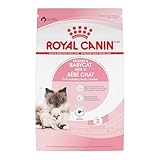
- SUPPORTS MOTHER & BABYCAT HEALTH: Royal Canin Mother & Babycat Dry Cat Food is a unique nutritional solution that supports mother cats (pregnant or nursing) and the healthy growth and development of newborn kittens (1-4 months)
- STRONG IMMUNE SYSTEM: An innovative blend of clinically proven antioxidants, including vitamins E and C, helps support the healthy development of your kitten’s immune system
- REHYDRATABLE KIBBLE: Small, dry kibble is easy-to-chew for baby teeth, and helps a nursing cat transition from milk to solid food; a perfect complement to Mother & Babycat Wet Cat Food
- MICROBIOME SUPPORT: The combination of prebiotics and highly digestible proteins helps promote a healthy balance of intestinal bacteria for digestive health
- HEALTHY FOUNDATION: A kitten is a kitten for at least 12 months, depending on their breed; keeping them on this formula from 1 to 4 months (starting during weaning) helps set up a healthy foundation for kittenhood
Observe without trying to diagnose
Watch whether each kitten is nursing and appears to be thriving. Tell the foster coordinator if a kitten is not nursing, seems weak, or otherwise concerns you. Do not attempt to diagnose, medicate, or change the feeding plan on your own; the organization or veterinarian should direct next steps.
Plan for a variable stay
Length depends on the kittens’ age, health, and the foster program. ASPCA’s Kitten Nursery page lists an average foster period of two to eight weeks; its 2023 overview says some caregivers keep a mother and litter until the kittens are usually eight weeks old. Treat those as program examples rather than a promise about any individual placement.
The Tool Desk
Outbyte PC Repair FREEClear out junk files and repair common Windows errorsFree Scan →Outbyte Driver Updater FREEFix the driver behind crashes, sound loss and screen glitchesFind Drivers →Rank #3
- SUPPORTS MOTHER & BABYCAT HEALTH: Royal Canin Mother & Babycat Dry Cat Food is a unique nutritional solution that supports mother cats (pregnant or nursing) and the healthy growth and development of newborn kittens (1-4 months)
- STRONG IMMUNE SYSTEM: An innovative blend of clinically proven antioxidants, including vitamins E and C, helps support the healthy development of your kitten’s immune system
- REHYDRATABLE KIBBLE: Small, dry kibble is easy-to-chew for baby teeth, and helps a nursing cat transition from milk to solid food; a perfect complement to Mother & Babycat Wet Cat Food
- MICROBIOME SUPPORT: The combination of prebiotics and highly digestible proteins helps promote a healthy balance of intestinal bacteria for digestive health
- HEALTHY FOUNDATION: A kitten is a kitten for at least 12 months, depending on their breed; keeping them on this formula from 1 to 4 months (starting during weaning) helps set up a healthy foundation for kittenhood
How should a nursing mother and kittens be fed?
Support the mother’s extra needs
A nursing cat may need more food than usual. Humane Society Silicon Valley instructs its fosters to keep dry food available at all times and offer wet food several times daily to a mother with kittens. Ask your own foster organization what food and portions to use: some programs provide food and set a specific feeding plan.
Let the mother’s milk lead early on
ASPCA’s nutrition guidance says newborn kittens receive complete nutrition from their mother’s milk for the first four weeks. If the mother is ill, does not produce enough milk, or the kittens are orphaned, contact a veterinarian for product recommendations rather than improvising a replacement diet. Do not give kittens cow’s milk.
Rank #4

- FORMULATED FOR QUEEN CATS & YOUNG KITTENS: Royal Canin Mother & Babycat Ultra-Soft Mousse in Sauce Wet Canned Cat Food helps meet the needs of queen cats and growing young kittens (1-4 months)
- HEALTHY DEVELOPMENT: Wet cat food with an exclusive complex of antioxidants and vitamins helps support a young kitten's growth and development
- EASY TO EAT: Moist cat food with fluffy mousse texture in sauce is easy to eat and helps young kittens transition from milk to solid food; a perfect complement to Mother & Babycat Dry Cat Food
- HEALTHY CAT FOOD DIGESTION: Wet food for cats with highly digestible proteins and prebiotics helps provide digestive support
- BRAIN DEVELOPMENT: Mousse cat food includes DHA to build a strong foundation for brain development, starting in the womb and continuing throughout a pregnant cat's full term
Introduce weaning gradually
Weaning generally starts around four weeks and is usually complete between eight and ten weeks. Introduce kitten food gradually, and avoid abruptly separating kittens from their mother when it is possible to keep them together. ASPCA’s general nutrition guidance says kittens need about two to three times an adult cat’s energy and about 30% of their total energy from protein; by around eight weeks, it says 80% to 90% of nutrient intake should come from kitten food. ASPCA does not state a publication year for these figures, and they are general guidance—not a personalized feeding prescription.
Independent reader supportYour contribution helps us test, update, and keep practical guides available for everyone.How is bottle-feeding an orphan different?
An orphaned neonate placement is a substantially more intensive assignment than fostering a mother with her litter. The caregiver must provide frequent feeds and other hands-on care because no mother is doing that work.
Do these 3 things before closing this tab:
1Repair Windows errors before they cause bigger problems2Fix the driver behind crashes, sound loss and screen glitches3Clear out junk files and repair common Windows errorsBest Value

- FORMULATED FOR QUEEN CATS & YOUNG KITTENS: Royal Canin Mother & Babycat Ultra-Soft Mousse in Sauce Wet Canned Cat Food helps meet the needs of queen cats and growing young kittens (1-4 months)
- HEALTHY DEVELOPMENT: Wet cat food with an exclusive complex of antioxidants and vitamins helps support a young kitten's growth and development
- EASY TO EAT: Moist cat food with fluffy mousse texture in sauce is easy to eat and helps young kittens transition from milk to solid food; a perfect complement to Mother & Babycat Dry Cat Food
- HEALTHY CAT FOOD DIGESTION: Wet food for cats with highly digestible proteins and prebiotics helps provide digestive support
- BRAIN DEVELOPMENT: Mousse cat food includes DHA to build a strong foundation for brain development, starting in the womb and continuing throughout a pregnant cat's full term
Expect overnight care for very young kittens
Humane Society Silicon Valley says its kittens aged one to five weeks need feeding every two to four hours, including overnight, and toileting stimulation at each feeding. These are that program’s instructions; follow the schedule set by the organization or veterinarian overseeing your foster.
Choose a placement that fits your capacity
Before agreeing to a placement, ask the foster coordinator about the kittens’ age, whether their mother is present and nursing, feeding frequency, overnight availability, medical complexity, separation requirements, supplied equipment, veterinary support, and likely duration. Bottle-feeding, medical fostering, and ringworm fostering are distinct assignments; they should not be treated as interchangeable with a typical mother-and-litter foster or assumed suitable for every first-time caregiver.
What supplies do I need for a foster cat or kitten?
Ask the shelter or rescue what it supplies before buying equipment. Needs vary by placement, and many foster programs lend supplies or provide food and medical support.
Confirm these basics with the organization
- Food for the mother and, when appropriate, kitten food for weaning.
- A quiet, secure nesting area, clean bedding, and litter supplies as directed.
- A carrier for transport and any required enclosure.
- Veterinary appointments, medical care, emergency contacts, and approval procedures.
- Quarantine instructions and any requested weight or health tracking.
Examples of program-provided supplies
Humane Society Silicon Valley says it lends formula, bottles and nipples, towels and blankets, warming rice packs, litter and a litter box, a carrier, kitten food, and toys. Depending on donations, it may also lend a kitchen scale, gauze, or an exercise pen. It suggests extras such as a waterproof floor cover, nail clippers, and a humidifier for congested cats. ASPCA’s Los Angeles foster program says it supplies food, supplies, medical services, and support. These are examples from those organizations, not guarantees for other programs.
What’s actually slowing this PC down?
Pick the symptom - the matching free tool is one click away.
Do not buy bottles or formula for a mother-and-litter placement unless the foster organization or veterinarian says they are needed. Commercial kitten milk replacer may be appropriate for orphaned kittens or insufficient maternal milk under veterinary guidance; a scale or enclosure may also be borrowable.
Quick Recap
What to ask before accepting a placement
- How old are the kittens, and is their mother present and nursing?
- What feeding schedule and food should I follow, and who provides it?
- What quarantine, room setup, and separation rules apply in my home?
- Which supplies can I borrow, and what—if anything—must I provide?
- Who arranges veterinary care, and whom do I contact after hours or in an emergency?
- What signs should I report immediately, and how often should I check in?
- What is the likely duration, and what happens if my circumstances change?
Product prices and availability are accurate as of the date/time indicated and are subject to change. Any price and availability information displayed on Amazon at the time of purchase will apply.




