What’s actually slowing this PC down?
Pick the symptom - the matching free tool is one click away.
“Gecko” describes many species, but the two most common pet geckos have very different needs. A leopard gecko is a ground-dwelling insectivore from relatively dry habitats. A crested gecko is an arboreal, tropical omnivore that needs vertical space, climbing cover, and cooler temperatures. Identify the species before buying an enclosure, heater, lighting, or food.
Both can live for many years—often 10–15 years or more for leopard geckos and 15–20 years for crested geckos—so set up the habitat and find a reptile veterinarian before bringing one home.
Prepare before your gecko arrives
- Confirm the species. Do not use a leopard-gecko setup for a crested gecko, or vice versa.
- Find a reptile veterinarian. A vet who regularly treats reptiles can be located through the Association of Reptile and Amphibian Veterinarians’ Find A Vet directory.
- Choose a healthy, captive-bred animal. Look for clear eyes, alert behavior, intact toes, a well-fleshed body, and no retained shed around the toes or eyes. Ask for feeding, shedding, weight, and veterinary records.
- Run the enclosure first. Test temperatures, humidity, lighting, thermostats, and escape-proofing for at least a week. A digital thermometer and hygrometer are more useful than guessing from the room temperature.
Choose and furnish the enclosure
Leopard gecko
Leopard geckos need a secure, well-ventilated enclosure with usable floor space. It should contain a warm end, a cooler retreat, room to move, and several hiding places. Choose housing for the adult gecko rather than buying a very small tank that will soon need replacing.
- A warm hide over or near the heated area
- A cool hide at the opposite end
- A humid hide containing damp sphagnum moss or another safe moisture-retaining material
- Low, stable cover such as cork, branches, artificial plants, or reptile-safe rocks
- A shallow water dish
- Digital thermometers at both the warm and cool ends, plus a hygrometer
The humid hide is important even though the general enclosure should not be constantly damp. It gives the gecko a reliable place to loosen old skin during shedding.
#1 Best Overall

- Precision Health Guardian: Your reptile pets are very sensitive to temperature and humidity, and small changes can affect their comfort and even their health. This humidity thermometer utilizes a built-in high-precision measurement chip that monitors the environment with 0.9°F accuracy, ensuring you are always aware of the actual conditions in your animal's tank. It's not just a matter of caring, it's a consideration for your pet's long-term health.
- Comprehensive Monitoring Experience: With the purchase of this kit, you will receive two humidity thermometers that can monitor multiple areas of your reptile tank or multiple containers at the same time. This gives you a more comprehensive view and control over the environmental status of your entire ecosystem without having to invest in additional monitoring equipment.
- Easy to Read and Operate: The LED screen clearly displays the temperature, making it easy to read, day or night, even in dimly lit rooms. In addition, the simple design of the quick switching function between ℉ and ℃ makes it easy for users with different habits to use and adjust according to their needs.
- Easy to Install: With the help of the included double-sided adhesive, you can fix the humidity thermometer in any ideal position in seconds without complicated tools or tedious steps. The cordless design avoids cumbersome wiring and keeps your animal tank environment neat and undisturbed.
- Energy Efficient and Reliable: This product supports replacement battery power, eliminating the financial burden and waste of resources that comes with frequently purchasing new equipment. Meanwhile, the durable construction and design ensure the long-term stable operation of the product, which is more friendly and economical than other single-use products.
Crested gecko
Crested geckos are arboreal, so height matters more than a long, low tank. An adult enclosure of at least 18 × 18 × 24 inches is a commonly recommended starting point; larger housing gives the gecko more opportunities to climb and select different microclimates.
- Sturdy branches, vines, and elevated resting areas
- Dense foliage or other visual cover, including upper-level cover
- An elevated feeding ledge or cup
- A shallow water dish, even if the gecko usually drinks droplets
- A secure, ventilated top that prevents escape and allows air exchange
- Digital temperature and humidity monitoring
Secure every branch and decoration so it cannot fall. Leave open routes between perches rather than filling the enclosure so tightly that the gecko cannot move.
Temperature, humidity, and lighting
A gecko needs a gradient, not one uniform temperature. The warm and cool areas allow it to regulate its body temperature by moving around. Measure the actual surfaces and air spaces the gecko uses; a single thermometer stuck to one wall can miss dangerous hot spots.
| Species | Key climate goal | Important caution |
|---|---|---|
| Leopard gecko | Provide a warm basking area and a cooler retreat. A general preferred temperature zone is approximately 25–30°C (77–86°F), with a gradient rather than one constant enclosure temperature. | Use a thermostat-controlled heat source and retain a humid hide. Do not heat the entire enclosure uniformly. |
| Crested gecko | Keep the enclosure mild, with a warm area generally in the low-to-mid 70s°F and a cooler area in the upper 60s to low 70s°F. Humidity may rise to 70–80% after misting, then decline during a daily drying period. | Prolonged temperatures above 80°F can be dangerous. Maintain ventilation and monitor especially closely during summer; do not keep the enclosure permanently saturated. |
Humidity should match the species. A crested gecko’s humidity can rise after misting and then fall during a daily drying period. Keeping the enclosure permanently wet, especially with poor ventilation, increases the risk of skin and respiratory problems. A leopard gecko’s general enclosure is drier, but its humid hide should remain available.
The Tool Desk
Outbyte PC Repair FREEClear out junk files and repair common Windows errorsFree Scan →Outbyte Driver Updater FREEFix the driver behind crashes, sound loss and screen glitchesFind Drivers →Current welfare guidance supports a controlled UVB gradient for leopard geckos, with an approximate UVI of 0.7 in the basking zone and shaded areas where UVB is effectively zero. A 12-hour light and 12-hour dark schedule is a reasonable starting point. Crested geckos can also benefit from appropriately installed low-level UVB. Follow the fixture manufacturer’s distance and replacement instructions: a bulb can still look bright after its useful UVB output has declined.
Guard heat and UVB fixtures so the gecko cannot touch a hot bulb or climb dangerously close to it. Never use a hot rock. These devices can develop concentrated hot spots and cause severe burns.
Rank #2

- 【Home Hygrometer Thermometer】Mini digital indoor thermometer humidity meter can help you quickly know the temperature and humidity you want to measure, so the portable digital thermometer humidity meter will be a good helper for your work and life.
- 【Fahrenheit/Celsius】 The Thermometer Humidity Monitor can achieve the mutual conversion between Fahrenheit (°F) and Celsius (°C).Temperature measurement accuracy:±1℉, humidity measurement accuracy: ±3%RH.
- 【Fast Response】This Thermometer mini hygrometer are built in sensitive sensor, readings are automatically updated every 10 seconds.work temperature from 0℃ to 70℃(+32°F ~ +158°F), work humidity from 10% to 99% RH.
- 【Widely Application】The digital LCD monitor can be used in home, office,garage,schools, hotels, laboratories, kindergartens, aquaculture, instrument workshop, warehouse,reptile terrarium,aquarium, hermit crab habitat,crawl pet terrarium and other places where temperature measurement is required.
- 【Long Service Life】This room thermometer Powered by one LR44 button cell and one backup button cell.each button cell’s working time up to 9 months.Any problem in use.contact us directly,We will definitely give you a satisfactory solution
Select a safe substrate
Paper towels are the conservative choice for quarantine, young geckos, sick animals, and any enclosure whose temperature or humidity is not yet stable. They are inexpensive, easy to replace, and make it simple to monitor feces, urates, and appetite.
For leopard geckos, avoid coarse sand, corncob bedding, crushed walnut shells, dusty materials, sharp particles, and chemically treated products. Some experienced keepers use a properly prepared, compacted soil/sand/clay naturalistic substrate for healthy adult leopard geckos. That approach depends on suitable materials, correct temperatures, hydration, and an otherwise healthy animal; it is not a safe shortcut for a poorly managed enclosure or a sick juvenile.
Do these 3 things before closing this tab:
1Clear out junk files and repair common Windows errors2Scan for outdated or missing drivers - takes under a minute3Repair Windows errors before they cause bigger problemsA suitable reptile-safe soil-based or tropical substrate can work for crested geckos. Use paper towels during quarantine or whenever you need to monitor the animal closely. Remove any substrate that becomes moldy, persistently waterlogged, or contaminated.
Feed the right diet
Leopard gecko feeding
Leopard geckos are insectivores. Appropriate commercially raised prey can include crickets, dubia roaches, mealworms, silkworms, and other suitable feeder insects. Gut-load the insects with a nutritious diet before offering them, and dust them with a species-appropriate calcium supplement immediately before feeding.
Juveniles typically eat every one to two days. Adults commonly eat two or three times per week, though portions and frequency should be adjusted for age, growth, activity, body condition, and veterinary advice. Feed appropriately sized insects rather than offering prey that is too large to manage.
- Provide clean, shallow drinking water and replace it daily.
- Remove uneaten insects. Crickets and other live prey can stress or injure a gecko left alone with them.
- Keep a record of feeding and body weight, especially during quarantine.
Crested gecko feeding
Use a commercially prepared, nutritionally complete crested-gecko diet as the staple. Prepare the powdered food exactly as the label directs and remove it before it spoils. Offer appropriately sized, gut-loaded insects as part of a varied diet, supplementing them according to the product instructions or your veterinarian’s advice.
Rank #3

- 1-【Widely Application】The digital LCD monitor can be used in home, office, garage, schools, hotels, laboratories, kindergartens, aquaculture, instrument workshop, warehouse, reptile tank terrarium, aquarium, hermit crab habitat, and other places where temperature/humidity measurement is required.
- 2-【Fast Response】Built in sensitive sensor that measures every 10 seconds with 24 sensitive VENTS to provide updated and accurate readings, wide measuring range: work temperature from 0℃ to 70℃(+32°F ~ +158°F), work humidity from 10% to 99% RH.
- 3-【Healthy Living Monitor】This portable thermo-hygrometer Measures Indoor humidity and temperature in time, help to adjust the humidifier, dehumidifier settings and humidistats, great for monitoring family's living conditions and health by preventing colds, dry skin, great for your work and life.
- 4-【Fahrenheit/Celsius】The Temperature display can achieve the mutual conversion between Fahrenheit (°F) and Celsius (°C). Temperature measurement accuracy: ±1°F, Humidity measurement accuracy: ±3%RH.
- 5-【Long Service Life】This thermo-Hygrometer Powered by one LR44 button cell and one backup button cell. Each LR44 button cell’s working time up to 10 months. Any problem in use, We will definitely Provide you a satisfactory solution.
Fruit, fruit baby food, or insects alone should not replace a complete crested-gecko diet. Provide fresh water every day. Many cresties drink droplets from leaves and glass, but a water dish is still useful.
Avoid supplement mistakes
Unsupplemented insects do not provide a balanced diet. Inadequate calcium, vitamin D3, UVB exposure, or temperatures can contribute to metabolic bone disease. Warning signs include weakness, tremors, poor movement, swollen or distorted jaws, fractures, and difficulty feeding.
Do not combine several calcium and multivitamin products without a plan. Excess supplementation can also cause illness. The correct schedule depends on species, diet, UVB, age, and the product being used, so ask a reptile veterinarian if the instructions are unclear.
Handling a pet gecko
Allow a new gecko to settle before beginning regular handling. Minimal handling during the first week is a sensible starting point; a particularly stressed crested gecko may need longer. Begin with brief sessions and let the gecko walk onto your hands rather than grabbing it.
- Support the body from below.
- Never pick up a gecko by the tail.
- Handle close to the floor or over a soft surface.
- Expect crested geckos to jump unexpectedly.
- Stop if the gecko repeatedly flees, struggles, vocalizes, bites, or otherwise shows distress.
- Keep handling away from other pets, unsafe temperatures, open doors, and food-preparation areas.
A crested gecko’s dropped tail does not regrow. Tail protection and fall prevention are therefore especially important.
Shedding
Geckos often eat their shed skin, so finding no shed in the enclosure does not necessarily mean shedding is abnormal. Leopard geckos should always have access to a humid hide. Crested geckos need suitable humidity, ventilation, and textured surfaces that allow normal shedding.
Rank #4

- Faster and Accurate Monitoring: Our reptile thermometer and humidity gauge use a built-in high-precision measurement chip, provides precise readings to ensure your pet's environment remains optimal for their health and comfort, support Fahrenheit display, a must-have accessory for reptiles & amphibian. Attention: The measurement range and error are 14~122 ° F (± 4 ° F)/20%~90% RH (± 5%)
- Powerful Magnetic Mounting: This reptile thermometer features a strong magnetic back, allowing for effortless installation and ensuring secure attachment without falling, also come with suction cup for option. Suitable for reptile terrarium of different materials. Plus, Compact reptile thermometer and humidity checker is perfect for any size habitat, without taking up unnecessary space
- Long-Lasting Button Battery Power: Our reptile tank thermometer come with 2pcs button batteries(Battery model:LR1130/Ag 10), no frequent charging and no cluttered cables, energy efficient and stable output, easy battery replacement, 2 batteries can last more than 1 year in total, very affordable for temperature and humidity monitoring of your reptiles
- Clear Digital LCD Display: This thermometer hygrometer for reptile tank can get accurate readings in seconds with fast-responding temperature and humidity sensor, and stay informed with real-time temperature and humidity updates. The digital LCD display eliminates any glare or light source that may distract or affect your pet's vision
- Compact & Easy to Use: CAVACHEW reptile hydrometer/thermometer have adopted slim and compact design, and easy to set up and perfect to use it in terrariums, reptile tank, incubators, brooders, cigar humidors, green house. 100% customer satisfaction: if there is a problem with the thermometer, please contact us at any time, we will reply and deal with your problem within 24 hours
Do not pull stuck skin. Retained shed around a toe or tail tip can act like a tourniquet, while shed over an eye can cause injury. Correct the moisture conditions and contact a reptile veterinarian if the skin remains stuck, tissue becomes swollen or dark, or the gecko cannot shed normally.
Independent reader supportYour contribution helps us test, update, and keep practical guides available for everyone.Cleaning and disease prevention
- Spot-clean feces and urates as soon as practical.
- Wash food and water dishes regularly, supplying fresh water daily.
- Deep-clean on a schedule appropriate to the enclosure, substrate, and level of contamination.
- Use a reptile-safe disinfectant, then rinse and dry all items thoroughly before returning them.
- Wash your hands with soap and water after touching the gecko, feeder insects, feces, substrate, or decorations.
Geckos can carry Salmonella while appearing healthy. Keep the animal and its equipment away from kitchens and food areas, and clean supplies outdoors when possible. Children younger than five, adults 65 and older, and people with weakened immune systems are at greater risk of serious illness; they should not handle reptiles or their environments without appropriate professional guidance.
Keep geckos separately
The safest default is one gecko per enclosure. Do not mix species, and never house two male crested geckos together because they are territorial and may fight. A male and female may breed, so keeping them together is not a simple companionship arrangement. Even when multiple animals appear peaceful, competition over heat, food, water, and hiding places can go unnoticed.
Quarantine a new gecko
Keep a new gecko separate from all other reptiles while you monitor its appetite, feces, weight, shedding, and behavior. Use paper towels and simple, easily cleaned furnishings at first. Record enclosure readings and arrange a veterinary examination; fecal testing may be appropriate depending on the gecko’s history and examination.
When to call a veterinarian
Arrange prompt veterinary care for persistent refusal to eat, unexplained weight loss, severe lethargy, weakness, tremors, seizures, inability to walk, swollen or distorted jaws, fractures, abnormal posture, labored breathing, nasal discharge, open-mouth breathing, repeated wheezing, eye swelling or discharge, retained shed over an eye, prolapse, repeated straining, severe diarrhea, blood, abnormal feces, burns, falls, bites, or a tail-tip injury.
Do not force-feed, give human medication, or inject calcium or vitamins without veterinary direction. These interventions can worsen an undiagnosed obstruction, dehydration, kidney problem, metabolic disorder, or temperature-related illness.
Recommended Free Tools
Best Value
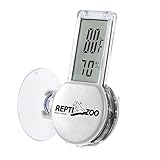
- 【QUICK RESPONSE REPTILE THERMOMETER HYGROMETER 】The 2 in 1 reptile thermometer and hygrometer detects the temperature and humidity with built-in sensitive sensors constantly, provides real-time and clear reading on the LCD screen.
- 【HIGH ACCURACY TEMPERATURE & HUMIDITY GAUGE】Use advanced waterproof humidity and temperature sensors to ensure accuracy and stability; Temperature measuring range: 14°F ~ 122°F(+/- 2°F); Humidity measuring range: 20% RH ~ 99% RH(+/- 5%).
- 【EASY TO INSTALL & ADJUSTABLE ANGLES READING】This thermometer hygrometer for reptile with powerful suction cup can adsorb closely on the flat place of the terrarium. It is perfect to use it in terrariums, reptile tank, incubators, brooders, cigar humidors, green house and indoor outdoor any other places by the two installation methods.
- 【TWO LONG-LASTING BATTERIES】One extra battery is included for standby in the package, two batteries can use for more than one year.
- 【AFTER-SALE SERVICE】100% quality guarantee: we provide 12 months quality guarantee, if you have any question about our product, please contact us, we will reply and help you in 24 hours.
FAQ
Are geckos easy pets for beginners?
They can be manageable, but they are not maintenance-free. A gecko needs a species-specific enclosure, measured heat and humidity, suitable lighting, correct supplementation, safe feeding, regular cleaning, and access to a reptile veterinarian.
Can I keep two geckos together?
Keeping one gecko per enclosure is the safest default. Never house two male crested geckos together, do not mix species, and do not assume that extra space removes territorial, breeding, disease, or resource-competition risks.
How often should I handle my gecko?
Wait for a new gecko to settle, then start with short, calm sessions. Support the body from below, never grab the tail, and stop when the gecko repeatedly struggles, flees, vocalizes, or bites.
What should I do if my gecko has stuck shed?
Do not pull it off. Check the enclosure’s humidity and provide the species-appropriate humid area. Contact a reptile veterinarian if shed remains on the toes, tail tip, or eyes, or if swelling, discoloration, or injury develops.
Free tools Windows power users keep installed
One-click scans. No signup required.
The Bottom Line
Good gecko care starts with identifying the species and building the habitat around its biology. Give a leopard gecko floor space, a thermal gradient, hides, a humid hide, insects, and controlled UVB. Give a crested gecko a cool, well-ventilated vertical enclosure, climbing cover, complete prepared food, and cycling humidity. Monitor rather than guess, quarantine new reptiles, keep them separate, and involve a reptile veterinarian whenever appetite, movement, breathing, shedding, or body condition changes.
Quick Recap
Product prices and availability are accurate as of the date/time indicated and are subject to change. Any price and availability information displayed on Amazon at the time of purchase will apply.




