To get rid of June bugs, first identify whether you have adult beetles, lawn grubs, or both: beetles around lights do not by themselves prove that grubs are damaging your lawn. Hand-pick a few adults, switch off unnecessary outdoor lights, protect susceptible plants with netting, and remove ripe or fallen fruit; treat the lawn only if inspection confirms damaging grubs.
“June bug” can refer to several scarab beetles, including May and June beetles, Japanese beetles, green June beetles, and masked chafers. Adults may gather around lights or feed on plants, while their white, C-shaped grubs can live underground and damage turf roots. Because species and life stages differ, identification matters. See the University of Maryland Extension guide to white grubs.
| # | Preview | Product | Price | |
|---|---|---|---|---|
| 1 |

|
Scotts GrubEx1 Season Long Grub Killer, 5,000 sq. ft. | $29.47 | Buy on Amazon |
| 2 |
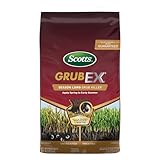
|
Scotts GrubEx1 Season Long Grub Killer, 28.7 lbs | $44.97 | Buy on Amazon |
| 3 |

|
BioAdvanced Season Long Grub Control Granules - 10 lb Bag | $25.88 | Buy on Amazon |
| 4 |

|
Ortho BugClear Lawn Insect Killer1, 20 lbs. | $20.98 | Buy on Amazon |
Before you start: check what you actually have
A few beetles circling a porch light do not prove that your lawn is infested with damaging grubs. Adult beetles and lawn damage are separate problems, so inspect the turf before considering treatment.
- Adults: Beetles around lights or on plants.
- Grubs: White, C-shaped larvae beneath the soil, sometimes associated with irregular brown patches or loose turf.
To inspect the lawn, lift a square foot of sod in a damaged area and count live grubs near the roots. Check several locations because grubs are unevenly distributed. Roughly 5–10 grubs per square foot may justify treatment, depending on the species and grass type, according to the University of Maryland Extension.
#1 Best Overall
- Scotts GrubEx1 Season Long Grub Killer can help prevent turf damage by killing grubs when they are young
- One application of this lawn care treatment kills and prevents grubs for up to 4 months
- This grub killer also controls caterpillars (armyworm), chinchbugs, May/June beetles, and more (as listed), and can help control Japanese beetle infestations when applied annually
- Apply this granular insecticide to a dry lawn in the spring or early summer to kill grubs as they develop before they cause damage to your lawn
- One 14.35 lb. bag of Scotts GrubEx1 Season Long Grub Killer covers 5,000 sq. ft.
Possible signs of grub damage include grass that lifts like a loose carpet, irregular dying patches, and animals digging into the lawn for larvae. Green June beetle tunnels or mounds may be about finger-width, while earthworm tunnels are narrower, according to the same Extension guide.
1. Pick adult beetles into soapy water
For a small number of beetles, shake or pick them from plants and drop them into a container of soapy water. Early morning or evening is usually easiest because beetles are cooler and less active. Hand-picking works best on small plantings, not across a large landscape. The University of Minnesota Extension describes this approach for Japanese beetles.
Removing Japanese beetles regularly can reduce further feeding because damaged foliage releases chemical cues that attract more beetles, according to Colorado State University Extension.
Pet precaution: Keep the container where pets cannot drink from it. Dispose of its contents promptly and rinse the container before reusing it.
Quick wins for a faster PC:
Repair Windows errors before they cause bigger problemsFix Now →Fix the driver behind crashes, sound loss and screen glitchesFind Drivers →2. Turn off unnecessary outdoor lights
Several May and June beetle species are nocturnal and attracted to exterior lighting. Turn off porch, landscape, and other unnecessary outdoor lights, particularly in the early evening and at night. This can reduce beetles gathering near the house, but it will not eliminate grubs in the soil. Nearby streetlights may still attract beetles to the area. See the University of Maryland Extension guide.
3. Cover valuable plants with fine netting
Fine netting or floating row cover can protect susceptible plants from adult beetles. Secure the material around the plant base so beetles cannot crawl underneath. Check that plants still have adequate water and ventilation. The University of Minnesota Extension recommends covers for susceptible plants.
Rank #2
- GRUB CONTROL: Scotts GrubEx1 Season Long Grub Killer can help prevent turf damage by killing grubs when they are young
- APPLICATION: One application of this lawn care treatment kills and prevents grubs for up to 4 months
- FOR GRUBS & OTHER LISTED INSECTS: This grub control for lawns also controls caterpillars (armyworm), May/June beetles, and more (as listed), suppresses chinchbugs, and can help control Japanese beetle infestations when applied annually
- APPLICATION: Apply this lawn grub killer granular insecticide to a dry lawn in the spring or early summer to kill grubs as they develop before they cause damage to your lawn
- COVERAGE: One 28.7 lb.. bag of Scotts GrubEx1 Season Long Grub Killer, insect killer for lawns, covers 10,000 sq. ft.
Do not cover flowering plants that require insect pollination until flowering and fruit set are finished: covers can exclude pollinators as well as beetles. Netting protects foliage; it does not control larvae in the lawn.
4. Remove ripe or damaged fruit
Green June beetles are attracted to ripening peaches, grapes, figs, and other thin-skinned fruit, as well as oozing tree sap. Harvest ripe fruit promptly, remove fallen or overripe fruit beneath trees, and address serious wounds that are leaking sap. This method is most relevant when green June beetles swarm around fruit trees or vines; it will not stop all June bugs. See the University of Maryland Extension guide.
Do these 3 things before closing this tab:
1Fix the driver behind crashes, sound loss and screen glitches2Repair Windows errors before they cause bigger problems3Scan for outdated or missing drivers - takes under a minuteKeep pets away from spoiled fruit. Grapes and raisins are dangerous to dogs.
5. Use beneficial nematodes only when appropriate
Beneficial nematodes are a biological option for some grub problems, but no single nematode species controls every type of white grub. They must be matched to the target pest and applied correctly to moist soil; dry conditions and heavy clay can reduce effectiveness. Check the product directions and local Extension guidance before use. The University of Maryland Extension discusses these limitations.
6. Treat confirmed grub damage, not the entire lawn
If inspection confirms a damaging grub population, choose a product labeled for the target pest and your lawn and location. Active ingredients differ in purpose and timing; follow the current product label rather than treating by calendar alone.
| Active ingredient | Typical use or timing | Important limitation |
|---|---|---|
| Chlorantraniliprole | Generally preventive; typically most effective when applied in May or June | Timing must match the grub life stage and product label. |
| Imidacloprid | Generally preventive; often timed for late June or early August | State laws and restrictions vary. |
| Trichlorfon | Curative treatment, commonly used in late August or early September | Effectiveness depends on grub stage and label directions. |
These are general timing patterns from the University of Maryland Extension, not a substitute for the current product label. Many products must be watered into the soil as directed. Dry soil, excessive thatch, incorrect timing, or repeated use of the same product can lead to poor results. Treat confirmed problem areas rather than the entire lawn when practical.
What’s actually slowing this PC down?
Pick the symptom - the matching free tool is one click away.
Rank #3
- GRUB KILLER: Season-Long Grub Control kills grubs and listed lawn damaging insects above and below the surface
- SEASON-LONG CONTROL: One application kills grubs and protects all season long; For all lawns types
- KILLS MOLE CRICKETS & MORE: Kills 40+ destructive lawn insects, including: ants, ticks, mole crickets, chinch bugs, European crane fly larvae, crickets, and other listed insects
- BARRIER TREATMENT: New, improved formula kills listed insects in the lawn and creates a barrier for season long protection; Use a rotary or drop spreader, then water lawn lightly after applying
- GET MORE FROM THE BLUE BOTTLE: BioAdvanced science-based solutions for insect and pest control* take down the bugs, inside and outside your home, and above and below the ground (*Listed)
Protect pets when using lawn treatments
- Remove pets, toys, bowls, bedding, and food from the treatment area.
- Follow the label’s application, watering, and re-entry instructions exactly.
- Keep pets away for the full label-specified interval; a dry-looking surface does not override the label.
- Store products in their original, closed containers away from pets.
- Prevent pets from licking treated grass, chewing granules, or drinking runoff.
If a pet may have ingested pesticide or shows unusual symptoms after exposure, contact a veterinarian or animal poison-control service promptly. Keep the product label available.
What not to rely on
Japanese beetle traps
Traps can attract more beetles toward nearby plants and are generally a poor choice for home gardens where beetles are established across a wide area. See Colorado State University Extension.
Milky spore for every June bug
Milky-spore products are intended primarily for Japanese beetle grubs; they do not control every white-grub species and have not consistently suppressed Japanese beetle populations in turfgrass. See the University of Maryland Extension guide.
A spring treatment at any time
Many grub products work only against specific grub stages. A convenient application date does not guarantee effectiveness; follow the current label and local guidance.
Recommended Free Tools
Spraying adult beetles to solve a grub problem
Adult beetles and soil-dwelling larvae require different control approaches. A surface spray may have limited activity against grubs underground. See Penn State Extension.
Independent reader supportYour contribution helps us test, update, and keep practical guides available for everyone.FAQ
Do June bugs mean my lawn has grubs?
No. Adult beetles around lights or plants do not prove that damaging grubs are present. Lift several square-foot sections of turf, especially near damaged patches, and count live grubs before deciding whether treatment is warranted.
Rank #4
- LONG-LASTING PROTECTION: This lawn insect and ant killer provides up to 6 months of ant control (excludes pharaoh, carpenter and harvester ants) and 3 months residual protection against other listed pests
- FAST-ACTING BUG BARRIER: This pest control product starts to work in minutes (except against fire ants) to protect your lawn, ornamental plants, home perimeter, flower beds, and listed vegetable plants
- WHEN TO USE: Apply lawn insect killer granules with a Scotts Spreader or other compatible spreader when you first notice insect activity or damage, then water in to activate
- KILLS LAWN PESTS: Outdoor bug killer targets ants, spiders, ticks, fleas, armyworms, grubs, and more, helping you protect your lawn from common listed insects
- COVERAGE: A 20 lb. bag of Ortho BugClear Lawn Insect Killer1 treats up to 33,000 sq. ft., ideal for large outdoor spaces
How many grubs per square foot may justify treatment?
Roughly 5–10 grubs per square foot may justify treatment, depending on the species and grass type, according to the University of Maryland Extension. Check multiple spots because grubs are unevenly distributed.
What is the best way to remove adult June bugs from plants?
For a small number, shake or pick beetles into soapy water, preferably when they are cooler and less active. Hand-picking is most practical on small plantings.
Windows Errors? Fix Them Before They Spread
Repair common Windows errors and clear accumulated junk for a smoother, more stable PC - no reinstall needed.Free scan · no reinstallOutdated Drivers Are Slowing You Down
One free scan finds every outdated or missing driver and matches the right update for your exact hardware.Free scan · exact hardware matchAre June bugs poisonous to dogs and cats?
Pets may develop stomach upset after eating insects. Contact a veterinarian if your pet eats many beetles, may have eaten pesticide-exposed insects, or develops concerning symptoms.
When should I use grub control?
Only consider it after confirming damaging grubs, and choose a product and timing appropriate to the pest, location, and label. Preventive and curative products can have different timing requirements.
The Bottom Line
Start with low-impact steps: turn off unnecessary lights, hand-pick visible beetles, cover susceptible plants, and remove ripe or fallen fruit. Inspect the lawn before treating it. Adult beetles alone do not justify lawn insecticide; use grub control only for confirmed damage and follow the product label, including its pet re-entry directions.
Quick Recap
Product prices and availability are accurate as of the date/time indicated and are subject to change. Any price and availability information displayed on Amazon at the time of purchase will apply.




