Quick wins for a faster PC:
Fix the driver behind crashes, sound loss and screen glitchesFind Drivers →Repair Windows errors before they cause bigger problemsFix Now →Many dogs can have their nails trimmed at home if they can be handled safely and remain calm through each small step. First help your dog accept paw handling and the tool; then remove only tiny amounts, checking the nail often. Stop and seek professional help if your dog is highly distressed or you are unsure where to cut.
Before you start, gather sharp dog nail clippers or an optional grinder or file, treats, good lighting, a non-slip surface, and pet styptic powder. Do not force a full trim: one nail, or even one short training step, is a successful session.
First decide whether home nail trimming is appropriate
Home trimming may be appropriate when your dog allows gentle paw handling, can stay relaxed for a brief step, and you can control the tool safely. You do not need to finish every nail at once.
Try a small home session if:
- Your dog allows you to touch the leg, paw, and toes.
- Your dog can take treats and remain comfortable when you show the tool.
- You can control the clippers or grinder without putting skin at risk.
- The nails are not split, torn, infected, or embedded in a paw pad.
Stop and ask a professional for help if:
- Your dog has bitten or attempted to bite during nail handling.
- Your dog is trembling, drooling excessively, panting, growling, snapping, or repeatedly trying to escape.
- The paw is painful, swollen, bleeding, or persistently licked.
- A nail is split, hanging, partly detached, badly curled, or growing into the pad.
- You cannot confidently identify where to cut or safely control the tool.
A veterinarian, veterinary team, or groomer can demonstrate the technique or trim nails that need prompt attention. If severe fear or pain makes handling unsafe, stop and consult your veterinarian. See VCA’s guidance on reducing nail-trim stress.
#1 Best Overall
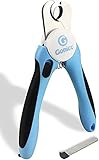
- Vet & Groomer Recommended Professional Design: Preferred by veterinarians, trainers and groomers, these clippers deliver fast, safe and precise trimming for medium and large dogs, ideal for at-home daily grooming.
- Ultra-Sharp 3.5mm Heavy-Duty Stainless Steel Blades: Thick premium stainless steel enables one-snip clean cuts. Long-lasting sharpness prevents nail splitting and crushing to protect paw health.
- Built-In Safety Stop to Avoid Over-Cutting: The integrated safety guard blocks over-cutting and protects the sensitive quick, ensuring beginner-friendly, worry-free safe trimming.
- Hidden Integrated Mini Nail File Included: Comes with a built-in mini file in the handle, letting you smooths rough edges instantly after trimming, leaving your dog's paws neat, soft and comfortable.
- Ergonomic Non-Slip Comfort Handles: Contoured anti-slip grips boost stable control and reduce hand fatigue, avoiding slips and creating a stress-free trimming experience.
Does your dog actually need a trim?
Inspect the nails while your dog stands naturally on a level surface. Nails that touch the ground or click on hard floors may be too long. Also look for nails that affect walking, snag or split, curl toward the pad, or are much longer than the others. Check dewclaws as well.
Use floor contact and your dog’s comfort as clues rather than relying on clicking alone. The goal is a comfortable length that does not press into the ground or affect normal walking, while leaving a margin before the quick.
Understand the nail before you cut
| Part | What it is | Why it matters |
|---|---|---|
| Outer nail | The hard material that can be shortened. | Remove it in small amounts. |
| Quick | The inner tissue containing blood vessels and nerves. | Cutting it can hurt and cause bleeding. |
| Dewclaw | A higher nail on the inside of the leg. | It may not wear down through walking and can become overgrown. |
On light or clear nails, the quick may be visible as a pink area. It can be difficult or impossible to see through dark nails. If you have never identified the quick or feel uncertain, ask a veterinary professional to demonstrate before attempting a full trim.
Check every nail, including front dewclaws and any rear or double dewclaws. Their number and position vary between dogs. See VCA’s nail-trimming guide.
The Tool Desk
Outbyte Driver Updater FREEScan for outdated or missing drivers - takes under a minuteDriver Scan →Outbyte PC Repair FREEClear out junk files and repair common Windows errorsFree Scan →Choose the tool that fits the dog
| Tool | May suit | Safety points |
|---|---|---|
| Scissor- or plier-style clippers | Owners who want a direct, controlled cut and can use the tool comfortably. | Use sharp, dog-appropriate clippers and take small cuts. |
| Grinder | Some dogs and owners who prefer gradual shortening or smoothing. | Introduce its sound and feel gradually. Avoid prolonged contact, skin contact, and hair entanglement. |
| Emery file | Small adjustments or smoothing, when the dog tolerates slow handling. | It can be slow and may not suit substantial shortening. |
| Professional trim | Dogs that are too distressed, owners who need a demonstration, or nails needing prompt attention. | Ask a veterinarian or groomer for help rather than forcing a trim. |
There is no universally best tool. VCA’s handling guidance favors scissor- or plier-style clippers and notes that a grinder or emery file may suit some dogs. Choose an option you can control and that your dog can tolerate.
Rank #2
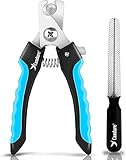
- Precise Pet Nail Trimming: Candure dog nail clipper is designed to help trim pet claws with better control. Suitable for routine grooming at home, this pet nail cutter helps keep nails neat and comfortable for dogs, cats, and similar pets.
- Suitable for Multiple Pets: This pet nail trimmer can be used for medium and large dogs, cats, rabbits, and other small animals with suitable claw size. Always trim carefully and according to your pet’s comfort level.
- Built-In Safety Guard: The dog and cat nail clipper includes a protective safety guard to help guide the nail while trimming. It supports controlled cutting and helps reduce the chance of cutting too much at once when used properly.
- Spring-Assisted Handle Design: The spring-loaded handle helps the clipper reopen smoothly after each cut, making the grooming process easier and more comfortable for regular pet nail care.
- Stainless Steel Cutting Edge: Candure pet nail clipper features a stainless steel cutting edge with an ergonomic handle for a firm and comfortable grip. A practical grooming tool for maintaining your pet’s claws at home.
Gather supplies before touching the first nail
- Sharp, dog-appropriate nail clippers, or an optional grinder or emery file.
- Good lighting.
- Small treats.
- Pet styptic powder.
- A stable, non-slip place where your dog is comfortable.
Prepare the dog before trimming
If your dog is not comfortable with paw handling, do not start by clipping. Introduce handling and tools in small steps, reward calm behavior, and pause or return to an easier step if your dog becomes worried.
- Touch the leg briefly. Reward calm behavior and remove your hand.
- Touch and gently move the paw. Begin with a brief touch; do not force the paw to be held.
- Hold one toe briefly. Reward, then release.
- Show the clipper or switched-off grinder. Reward your dog for remaining comfortable.
- Introduce the grinder’s sound if using one. Turn it on at a distance, reward, and bring it closer gradually only while your dog remains comfortable.
- Touch the tool to a nail without cutting. Reward and stop if that is enough for the session.
- Try one tiny cut. Reward your dog and stop as needed.
Keep early sessions brief. If your dog trembles, pants, growls, snaps, tries to escape, or otherwise seems very fearful, stop and consult a veterinary professional. See VCA’s handling exercises.
How do I trim my dog’s nails at home?
Once your dog is comfortable enough for a small cut, support the paw gently and remove only a little from the tip. Inspect the nail after each cut, reward your dog, and pause or stop if your dog becomes uncomfortable.
Do these 3 things before closing this tab:
1Repair Windows errors before they cause bigger problems2Fix the driver behind crashes, sound loss and screen glitches3Clear out junk files and repair common Windows errors- Choose a calm, well-lit place. Use a non-slip surface where your dog is comfortable.
- Support the paw gently. Keep the dog in a position it tolerates; do not force a struggle.
- Inspect the nail. Look for the quick on light nails. If you cannot confidently judge where it is, stop and ask for a demonstration.
- Make a small cut at the tip. On a light nail, VCA recommends leaving approximately 2–3 mm before the visible quick. This is a practical recommendation, not a guarantee.
- Inspect after every cut. Continue only if your dog remains calm and you are confident you are not approaching the quick.
- Reward and pause as needed. You can trim one nail and stop.
Use sharp clippers that cut cleanly. If the tool crushes or splits the nail or needs excessive force, stop using it. VCA’s nail-trimming guide describes the procedure.
How do I trim black dog nails safely?
Because the quick may be hidden in dark nails, remove only a tiny amount at a time and inspect the cut surface between cuts. Stop if you are unsure what you see.
Rank #3
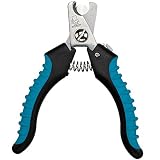
- The perfect nail-clipping solution for professional and amateur groomers alike
- Ergonomic design offers unmatched comfort and control
- Ultra sharp hardened steel cutting blades clip nails with ease
- Safety guard to help prevent cutting the nail too deeply
- Also available in Large 6¼" size
- Start at the tip.
- Remove about 1–2 mm.
- Inspect the cut surface in good light.
- Continue only if you are confident the quick has not been reached and your dog remains comfortable.
- Stop if the center changes in appearance or you cannot judge the surface confidently.
VCA describes a shiny, jellybean-like appearance as a sign to stop. Appearance can vary, so do not rely on a single visual cue if you are uncertain; ask a veterinarian or groomer to demonstrate.
Do not forget the dewclaws
Inspect all dewclaws, including front dewclaws and any rear or double dewclaws. They may not contact the ground and can become overgrown. Use the same small-increment approach. If a dewclaw is painful, split, hanging, or embedded in the pad, ask a veterinary professional for help.
Recommended Free Tools
How to use a nail grinder
Introduce the grinder gradually and use brief contact so the nail does not heat up. Keep hair and skin away from the rotating file.
- Condition the sound. Run the grinder at a distance and reward your dog; bring it closer gradually only while the dog remains comfortable.
- Support the toe gently. Keep paw pads, skin, and long hair away from the rotating file.
- Use brief contact. VCA suggests about 1–2 seconds of contact to limit nail heating.
- Pause and inspect. Continue only if your dog remains comfortable and you can control the tool.
- Stop when unsure. Seek a demonstration if you cannot confidently judge how much to remove.
A grinder may suit some dogs, but it is not risk-free. VCA’s handling guidance covers gradual introduction and safe use.
What do I do if I cut the quick?
- Stop trimming and keep your dog as calm as possible.
- Apply a small amount of pet styptic powder to the bleeding nail.
- If styptic powder is unavailable, flour or cornstarch may help in a pinch.
- Seek emergency veterinary care if bleeding cannot be stopped within 10–15 minutes, as advised by VCA.
A torn or partly detached nail is different from a small nick. Ask a veterinarian to assess a damaged nail, especially if it is painful or bleeding.
Rank #4

- ULTRA QUIET OPERATION. Producing only 30–37 dB, this electric grooming tool works so silently it’s barely noticeable, helping to keep your pet calm and reduce grooming-related anxiety.
- HEAVY DUTY. Our extra-durable diamond wheel guarantees a perfect result every time. And unlike with other grinders, we have replacement heads available, so you nothing can stop you grinding.
- SAFETY IS OUR PRIORITY. We love and value every paw, which is why we created a professional grade animal care product with a protective guard, ensuring every nail, whether soft or thick, is trimmed to perfection.
- Still using dog scissors, nail cutters or clippers? Those are tools of the past. They may seem quick, but they can be dangerous and cause bleeding if the vessel is damaged. Your paws deserve a safe approach.
- ONE DEVICE FOR EASY TRIMMING. Silent Groom Pro is the perfect match for your pet, whether small, medium, or large, from a cat or yorkie to even a German Shepherd.
How often should I trim my dog’s nails?
Check your dog’s nails regularly and trim when they touch the ground or otherwise interfere with comfortable walking. VCA gives general estimates of every 3–4 weeks for most dogs, while noting that some may need weekly trims. Another VCA guide describes approximately monthly trimming and notes that frequent walking on concrete or pavement may extend the interval. These are general guidelines, not a schedule for every dog.
Base the timing on your dog’s nails and walking rather than the calendar alone. For severely overgrown nails, ask a veterinarian or groomer for help instead of trying to remove a large amount at once.
Independent reader supportYour contribution helps us test, update, and keep practical guides available for everyone.What to do when your dog refuses
Do not hold tighter or try to finish quickly. Stop and consult a veterinary professional if your dog is highly distressed or handling is unsafe. You can also:
- Return to brief paw-handling practice and reward calm behavior.
- Work on one nail or one small training step per session.
- Ask a veterinarian or groomer to demonstrate the technique.
- Ask your veterinarian what support is appropriate if fear or pain prevents safe maintenance.
Common mistakes to avoid
- Trying to finish every nail at once. You can stop after one nail.
- Making one large cut. Small cuts let you inspect often.
- Continuing when you are unsure. Ask for a professional demonstration.
- Ignoring signs of fear or pain. Stop and seek guidance rather than forcing the procedure.
- Forgetting dewclaws. Inspect them along with the other nails.
- Holding a grinder in one place. VCA recommends brief 1–2-second contact to limit heating.
FAQ
How short should I cut my dog’s nails?
Aim for a comfortable length that does not press into the ground or interfere with walking. VCA recommends approximately 2–3 mm of clearance from the visible quick on light nails. For dark nails, remove about 1–2 mm at a time and inspect between cuts.
What do I do if I cut the quick?
Apply a small amount of pet styptic powder to the nail. Flour or cornstarch may help if you do not have styptic powder. VCA advises seeking emergency veterinary care if bleeding cannot be stopped within 10–15 minutes.
Best Value

- 7 in 1 Pro Pet Grooming Kit, Keep the House Tidy: oneisall pet grooming kit with vacuum make home grooming easy.The grooming brush and the deshedding tool gently remove loose hair and making pet hair shiny and smooth while eliminating tangles. Electric clipper, dog paw trimmer and dog nail grinder provides excellent cutting. Give your pet a best grooming experience. Nozzle head and Cleaning brush can be used for collecting pet hair falling on the sofa and floor
- Grooming and Vacuuming All at Once : Our pet grooming clippers with vacuum function, can collects 99% of pet hair into a vacuum container. The removed loose hair will be sucked into the vacuum dust box directly when grooming pet hair, no mess, keep your home neat and clean. Even if you are a novice, you can easily complete home grooming
- Low Noise Design: Our pet grooming vacuum's noise only 59 dB. 3 adjustable suction levels to choose ,making your pet dogs feel relaxed and not be scared during grooming
- Dog Grooming Kit with Vacuum:Pet clippers, Paw trimmer and Dog nail grinder.Let you groom your dog anywhere—these tools collect loose hair as you groom.
- Easy Empty Dustbin & Easy to Store: With a detachable 1.5 L dust box, 50% more capacity than others,easy-to-empty, do not need to empty often during grooming. The removable dust cup is equipped with an easy empty lid for quick, mess-free empty after cleaning.The device is highlighted with space-saving feature, we provide storage boards and bags for easy storage
How often should I trim my dog’s nails?
Check them regularly. VCA says many dogs need trims every 3–4 weeks, while some may need weekly trims. The right interval varies, so use the nail’s length and your dog’s comfort as a guide.
Should I use dog nail clippers or a grinder?
It depends on what you can control safely and what your dog tolerates. VCA’s handling guidance favors scissor- or plier-style clippers; a grinder or emery file may suit some dogs. Introduce a grinder gradually and use brief contact to limit heating.
When should I ask a veterinarian or groomer to trim my dog’s nails?
Ask for help if your dog is highly fearful, handling is unsafe, a nail is damaged or embedded, or you are unsure where to cut. A professional can trim the nails and demonstrate the technique.
The Bottom Line
Trim at home only when you and your dog can do so safely. Introduce handling and tools gradually, remove small amounts, inspect often, and check every dewclaw. Stop if your dog is distressed or you are unsure where to cut. A veterinarian or groomer can help when a trim is urgent or home handling is not safe.
Quick Recap
Product prices and availability are accurate as of the date/time indicated and are subject to change. Any price and availability information displayed on Amazon at the time of purchase will apply.




