The Tool Desk
Outbyte PC Repair FREERepair Windows errors before they cause bigger problemsFix Now →Outbyte Driver Updater FREEScan for outdated or missing drivers - takes under a minuteDriver Scan →Yes—there are many dog breeds whose recognizable type was developed in the United States. The 20 breeds below include American hounds, terriers, ranch dogs, retrievers, spaniels, sled dogs, and companion breeds.
There is one important qualification: born and bred in the USA is an editorial description, not a formal canine-history category. Most modern breeds descend partly from dogs imported from other countries. Here, an American breed means one that was substantially developed, standardized, or historically shaped in what is now the United States—even when its foundation stock came from England, Ireland, France, Germany, or elsewhere. That is the same broad distinction used by the American Kennel Club when describing breeds developed on American soil.
What counts as an American dog breed?
A breed does not need to have ancestors that were all born in the United States to qualify as American-developed. The American Foxhound, Boston Terrier, Australian Shepherd, Toy Fox Terrier, and American Staffordshire Terrier all contain substantial imported ancestry, but American breeders shaped them into distinct types for American conditions and jobs.
This list gives preference to breeds with a documented U.S. development story, a distinct breed identity, and recognition by the AKC, United Kennel Club, or another established registry. It also includes the Alaskan Malamute, an indigenous Alaskan sled dog whose history predates the modern breed-registration system.
#1 Best Overall

- 【Train Like a Pro】Heouvo dog treat pouch and clicker kit are designed to help you train your dog like professionals. With easy access to your pet's favorite treats and a training clicker to supercharge your training sessions, you'll see better results in no time
- 【Compact Body, Large Capacity】Compared to other bulky treat bags, our treat pouch is very compact (5*4*2inch), but can hold 1.67 cups of dry or wet food. While other silicone pouch has large openings that tend to result in snack spillage, we have designed a smaller mouth with stronger magnetic closure that effectively prevents food from falling out, thereby extending the food's freshness.
- 【Food-Grade Silicone Material】Heouvo training bag is made of safe and harmless food-grade silicone that is free from bisphenol. Unlike fabric waist pouches, ours is designed to store both dry and wet or freezing food. It features 2pcs strong built-in magnet that allows for convenient one-hand operation, enable quick reach of food to promptly reward obedient dogs. The flexible silicone material allows for easy bending and flipping for easy cleaning the inner compartments.
- 【Effective Dog Clicker】You can use the pet training clicker to train all your pets. Not only for dog but also for cat, bird, chicken and horse. You can use it to train your pet the basic obedience, small trick, and correct the bad behavior. Scientific method of training your pet safely and easily.
- 【Unique Waist Belt Design】Unlike other silicone dog training pouches, we have taken extensive time and effort to address the risk of plastic clips breaking or failing off. After careful consideration, we are proud to present our latest product that eliminates the worry of your pouch accidentally detaching during training sessions or walks. The waist belt is adjustable for waist sizes ranging from 25“ to 47”, ensuring a comfortable fit for users. Now, you can confidently focus on your training or outdoor activities without the concern of your pouch slipping off.
Registry note: Full AKC recognition means a breed is on the AKC’s regular recognized-breed roster. AKC Foundation Stock Service, or FSS, is a separate recording program for developing or less-established breeds; FSS dogs are not fully AKC-recognized and are not eligible for ordinary AKC registration. The status labels below reflect information available in 2026. The AKC breed directory states that the organization recognizes 200 breeds; that is a count of AKC-recognized breeds, not American-developed breeds. FSS remains separate. See the AKC FSS explanation.
20 American dog breeds at a glance
| Breed | Where it developed | Original job | Approximate size | Important ownership issue | Registry status |
|---|---|---|---|---|---|
| American Bulldog | American South | Farm utility, catch work, livestock, property protection | Large | Powerful, athletic, protective | AKC FSS |
| American Hairless Terrier | Southern United States | Vermin control and companionship | Small | Sun and cold protection for bare skin | AKC recognized |
| American Foxhound | Colonial and early United States | Mounted fox hunting | Medium-large | High stamina, prey drive, loud voice | AKC recognized |
| American Staffordshire Terrier | United States | Farm work, hunting, guarding, companionship | Medium | Strength, dog-to-dog variation, local restrictions | AKC recognized |
| American Water Spaniel | Wisconsin and the Great Lakes | Waterfowl and upland-game hunting | Medium | Needs activity and mental work | AKC recognized |
| Alaskan Malamute | Arctic Alaska | Heavy freighting and transportation | Large | Independent, vocal, athletic, digs | AKC recognized |
| Australian Shepherd | American West | Ranch herding | Medium | Needs structured physical and mental work | AKC recognized |
| Black and Tan Coonhound | United States | Tracking and treeing raccoon and larger game | Large | Scent-driven and very vocal | AKC recognized |
| Bluetick Coonhound | American South | Cold-trail scent hunting and treeing | Medium-large | Prey drive, endurance, baying | AKC recognized |
| Boston Terrier | Boston, Massachusetts | Companion and show dog | Small | Heat and breathing management | AKC recognized |
| Boykin Spaniel | South Carolina | Flushing and retrieving from small boats | Medium | Active hunting instincts | AKC recognized |
| Catahoula Leopard Dog | Louisiana | Hog hunting, cattle work, guarding | Medium-large | Independent, intense, protective | AKC FSS |
| Chesapeake Bay Retriever | Maryland and the Chesapeake Bay | Cold-water waterfowl retrieving | Medium-large | Strong, energetic, independent | AKC recognized |
| Chinook | New Hampshire | Sled racing and freighting | Medium-large | Rare and athletic | AKC recognized |
| Miniature American Shepherd | California | Stock work and equestrian companionship | Small-medium | A herding dog despite its size | AKC recognized |
| Plott Hound | North Carolina | Big-game hunting, especially bear and boar | Medium-large | Powerful, courageous, vocal | AKC recognized |
| Rat Terrier | American farms | Vermin control | Small-medium | Prey drive, digging, alertness | AKC recognized |
| Redbone Coonhound | American South | Tracking and treeing raccoon and larger game | Medium-large | Needs exercise, scent outlets, and containment | AKC recognized |
| Toy Fox Terrier | United States | Farm ratter, circus performer, companion | Small | Tiny but bold and prey-driven | AKC recognized |
| Treeing Walker Coonhound | United States | Fast raccoon hunting and treeing | Medium-large | Extremely vocal and scent-focused | AKC recognized |
Energy, vocality, and prey-drive descriptions are practical guidance rather than guarantees. Individual dogs vary, and early socialization, training, breeding, age, and living environment all matter.
American breeds created for hunting
1. American Foxhound
Where it developed: The American Foxhound took shape in colonial and early America from English, Irish, and French hounds. George Washington maintained and selectively bred important Virginia hound lines at Mount Vernon, but he did not single-handedly create the breed. The AKC describes it as one of the first breeds developed in the United States.
Original job: Mounted fox hunting. Foxhounds were bred to follow and chase foxes, not necessarily to kill them.
What’s actually slowing this PC down?
Pick the symptom - the matching free tool is one click away.
Modern fit: This is a friendly-looking but highly specialized endurance athlete. It needs substantial daily exercise and opportunities to use its nose. Its independence can make training less straightforward than its sociable temperament suggests.
Watch-outs: A Foxhound may ignore a recall once it catches a scent. Secure fencing and careful leash management are essential. Its short coat is relatively simple to maintain, but its famously resonant voice can be difficult in close neighborhoods. The AKC’s ownership guidance is a useful reminder that this is not a low-exercise companion dog.
Status: Fully AKC recognized.
2. Black and Tan Coonhound
Where it developed: This American scent hound likely draws on Talbot Hound, Bloodhound, Foxhound, and American Virginia Foxhound ancestry. The history is a mixture of documented breed development and older hound-line theories; the AKC breed history provides the conventional account.
Original job: Tracking and treeing raccoon and larger game. The dog follows a scent trail and announces when quarry has been driven into a tree.
Do these 3 things before closing this tab:
1Repair Windows errors before they cause bigger problems2Fix the driver behind crashes, sound loss and screen glitches3Clear out junk files and repair common Windows errorsModern fit: Black and Tan Coonhounds are often relaxed and friendly at home, but their working switch is real. They need long walks, scent games, and secure outdoor management.
Watch-outs: Baying is part of the job, not a training defect. A scent-driven dog can roam if fencing is inadequate. The short coat needs little elaborate grooming, although long ears and outdoor activity require routine care.
Status: Fully AKC recognized; it became the first coonhound registered by the AKC in 1945.
3. Bluetick Coonhound
Where it developed: The Bluetick Coonhound was developed in the American South from French and English hound lines. French staghounds associated with George Washington and the Marquis de Lafayette are part of the breed’s commonly cited history. It was selected for scenting ability, courage, and persistence on older or cold trails; see the AKC profile.
Original job: Scent hunting and treeing raccoon and other game.
Modern fit: Blueticks can be affectionate and social, but a household must be prepared for stamina, prey drive, and a dog that wants to follow its nose. Exercise should include both movement and deliberate scent work.
Watch-outs: Their bay can carry a long distance. Off-leash freedom is unsafe in unfenced areas unless the dog has exceptionally reliable management. The short coat is easy-care; the hunting instincts are not.
Status: Fully AKC recognized since 2009.
4. Plott Hound
Where it developed: The Plott Hound is an American breed associated with North Carolina. The Plott family brought German hunting dogs to the region in 1750 and maintained the line for generations. It is the AKC-recognized coonhound whose foundation is most strongly associated with German rather than British hound stock; read the AKC history.
Recommended Free Tools
Original job: Big-game hunting, especially bear and boar hunting.
Modern fit: Plotts are courageous, athletic, determined, and capable of working in demanding terrain. They can be devoted companions for active owners, but their intensity is a poor match for a sedentary home.
Watch-outs: Expect a strong prey drive, vocal tracking, and the need for secure containment. The short coat is not demanding, but the dog needs meaningful daily exercise and training. North Carolina recognizes the Plott Hound as its state dog.
Status: Fully AKC recognized. AKC sources differ on whether recognition was in 2006 or 2007, so a single year should not be presented as settled without attribution.
Outdated Drivers Are Slowing You Down
One free scan finds every outdated or missing driver and matches the right update for your exact hardware.Free scan · exact hardware matchWindows Errors? Fix Them Before They Spread
Repair common Windows errors and clear accumulated junk for a smoother, more stable PC - no reinstall needed.Free scan · no reinstallRank #2

- 【No More Stinky Pouches!】Say goodbye to smelly, stained fabric forever! Our revolutionary pouch is crafted entirely from 100% food-grade silicone, creating a waterproof barrier that prevents treat oils and grease from soaking in. No more lingering odors, no more messy residue—just a fresh, clean pouch that wipes clean, rinses under water (The hinge is made of stainless steel, no need to worry about rust issue.), or goes right in the dishwasher.
- 【One-Handed Training】Stop fumbling with treats! Our innovative pull-tab and self-sealing top are engineered for real-world use. Deliver rewards seamlessly with one hand, keeping your focus and your other hand exactly where they need to be—on your pup. This is the ultimate hands-free advantage for flawless training or busy walks.
- 【Pocket-Sized, Packed With Potential】Don't let the compact size fool you! With a 1-cup capacity, this small-but-mighty pouch is perfectly sized for daily drills and walks. It reliably holds everything from dry kibble and moist treats to any high-value reward your dog loves.
- 【Never Forget a Reward Again】Clip it on and go! With an upgraded carabiner and wider 0.5-inch leash clip, it securely fastens to virtually any standard leash (except retractable one) or belt loop. Once attached, you're free to enjoy focused training and walks, with rewards always within reach.
- 【The Last Pouch You'll Ever Need】This superior design meets everyday use durability. We built it to last from rugged, easy-clean silicone and refined the profile to be both compact and capable. Choose from 6 stylish colors to match your gear—this isn't just another accessory, it's the final upgrade your walking essentials deserve.
5. Redbone Coonhound
Where it developed: Southern breeders developed the Redbone from red Foxhound and Irish hound stock, selecting for speed, courage, a cold nose, treeing ability, and its distinctive red coat. The AKC history traces this American development.
Original job: Tracking and treeing raccoon and larger game.
Modern fit: Redbones are athletic, social, and often eager to work with their people, but their nose can override obedience outdoors. Running, hiking, scent games, and structured training are better outlets than expecting them to entertain themselves.
Watch-outs: Baying, prey drive, and escape attempts are the main practical challenges. The short coat is simple to groom. The UKC recognized the breed in 1902; AKC historical sources give either 2009 or 2010 for AKC recognition, so the discrepancy is best acknowledged rather than hidden.
Status: Fully AKC recognized.
6. Treeing Walker Coonhound
Where it developed: The Treeing Walker developed in the United States from Walker Foxhound lines and a dog known as Tennessee Lead. It was selected for speed, a strong nose, and the ability to drive raccoon into a tree; the AKC breed overview explains the working background.
Original job: Fast raccoon hunting and treeing, with a loud voice to tell the hunter where the quarry is.
Modern fit: Treeing Walkers are often social, athletic, and enthusiastic. They can live successfully with active owners who provide long, controlled exercise and scent-based activities.
Watch-outs: This is one of the least suitable breeds for owners who need a quiet, reliably off-leash dog. Secure fencing is important, and baying may be a neighborhood issue. The short coat is easy-care, but the dog’s energy and nose demand daily management.
Status: Fully AKC recognized in 2012.
7. American Water Spaniel
Where it developed: The American Water Spaniel was developed in Wisconsin and the Great Lakes region as a compact all-purpose hunting dog. Its exact ancestry is uncertain; proposed contributors include the English Water Spaniel, Curly-Coated Retriever, Field Spaniel, and Irish Water Spaniel. The AKC history appropriately treats the ancestry as unresolved.
Original job: Flushing and retrieving waterfowl and upland game, including work from small boats in cold water and marshes.
Modern fit: This is an athletic, trainable, versatile dog for an active household that can provide retrieving, swimming where safe, field games, and mental challenges. It is Wisconsin’s state dog.
Watch-outs: Its compact size does not make it low-energy. It is also relatively rare, so prospective owners should expect to research breeders and wait for a suitable litter rather than buy from the first available source. The curly or wavy coat needs regular brushing and routine ear care after water work.
Quick wins for a faster PC:
Repair Windows errors before they cause bigger problemsFix Now →Scan for outdated or missing drivers - takes under a minuteDriver Scan →Clear out junk files and repair common Windows errorsFree Scan →Status: Fully AKC recognized.
8. Boykin Spaniel
Where it developed: The Boykin Spaniel began in South Carolina around a stray brown dog named Dumpy. Alexander White found and trained the dog, and Whit Boykin later developed the line into a useful hunting spaniel. The AKC account documents this unusually specific origin story.
Original job: Flushing and retrieving game from the small boats used in South Carolina’s swamps and waterways.
Modern fit: Boykins are compact, energetic, and generally people-oriented, but they remain genuine hunting dogs. They can suit an active family that enjoys training, retrieving, hiking, or other regular outdoor work.
Watch-outs: A brown coat and manageable size should not be mistaken for a low-drive companion temperament. The medium-length coat needs brushing and occasional grooming, especially after field or water work. South Carolina recognizes the Boykin Spaniel as its state dog.
Free tools Windows power users keep installed
One-click scans. No signup required.
Status: Fully AKC recognized in 2009.
9. Chesapeake Bay Retriever
Where it developed: The Chesapeake Bay Retriever developed around Maryland’s Chesapeake Bay. Its early history includes two St. John’s Water Dogs, Sailor and Canton, rescued from a shipwreck off Maryland in 1807, followed by generations of selection with other local retriever lines. The AKC history describes how the breed was shaped for repeated cold-water work.
Original job: Retrieving waterfowl from icy, rough water, often repeatedly during a hunt.
Modern fit: Chessies are strong, intelligent, energetic, and often more independent and protective than a prospective owner expects from the word retriever. They need swimming or equivalent exercise when appropriate, retrieving, obedience, and a clear relationship with their handler.
Watch-outs: A dense, water-resistant coat needs regular brushing and a home prepared for wet, muddy activity. Early socialization matters, and the breed may be challenging for an inexperienced or inactive owner. Maryland recognizes it as the state dog. AKC pages differ on early recognition—one lists 1878 while a historical essay says 1888—so this article does not treat either date as definitive.
Rank #3
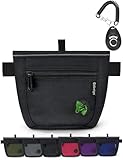
- 【Upgraded Stronger Magnet】 There are two pairs of strong magnets on opening of the bag, auto closing and no food spilling out at all. Open easily by one hand when food needed.
- 【Versatile wearing options】 Gobeigo dog treat bag offers two wearing modes: an adjustable waist belt (25-47 inches) catering to a wide audience, or the option to use the back metal clip independently. Simple and convenient, ensuring a comfortable fit for everyone.
- 【Compact but Large Capacity】 The dog treat bag looks exquisite and compact on waist, but it can hold 2 cups of food, large enough for daily walking with your furry friends.
- 【Effective Dog Clicker Included】You can use the pet training clicker to train all your pets. Not only for dog but also for cat, bird, chicken even horse. You can use it to train your pet the basic obedience, small trick, and correct the bad behavior. Scientific method of training your pet safely and easily.
- 【Convenient Design】There is a zipper pocket in front with poop bag outing, you can get poop bags easily anytime. Also lining material of the fanny pack is water resistant, can be inside out easily for cleaning.
Status: Fully AKC recognized.
American farm, ranch, and working breeds
10. American Bulldog
Where it developed: The American Bulldog descended from Old English Bulldog-type dogs brought to the colonies and was developed primarily in the American South. Its American identity comes from the farm-working type that emerged there, not from purely American ancestry. The AKC breed page and AKC board minutes document its history and 2019 entry into FSS.
Original job: All-purpose farm work, catch work, livestock handling, and property protection.
Modern fit: American Bulldogs are powerful, athletic, and often protective. With responsible breeding, early socialization, reward-based training, and clear household rules, they can be devoted companions for experienced owners.
Watch-outs: Strength magnifies every training and management mistake. Secure fencing, impulse control, supervised interactions, and attention to local housing or insurance rules are practical necessities. The short coat is relatively easy to groom, but the dog needs substantial physical activity and cannot be treated as a sedentary Bulldog.
Windows Errors? Fix Them Before They Spread
Repair common Windows errors and clear accumulated junk for a smoother, more stable PC - no reinstall needed.Free scan · no reinstallCrashes, No Sound, or Screen Glitches?
Random freezes, missing sound and display glitches usually trace back to one bad driver. Find and replace yours safely.Free scan · under a minuteStatus: AKC Foundation Stock Service, not a fully AKC-recognized breed.
11. American Staffordshire Terrier
Where it developed: American breeders developed the American Staffordshire Terrier from Bulldog and terrier stock into a distinct, heavier American type. Its early history included dog fighting, as well as farm work, hunting, guarding, and companionship. The AKC registered it as the Staffordshire Terrier in 1936 and added American to the name in 1972 to distinguish it from the Staffordshire Bull Terrier; see the AKC history.
Original roles: Farm work, guarding, hunting, and companionship, alongside the darker parts of its early history.
Modern fit: A well-bred, well-socialized AmStaff can be affectionate, engaged, and highly trainable. It is also muscular and strong, so owners need to plan for polite leash behavior, safe handling, and careful introductions.
The Tool Desk
Outbyte PC Repair FREERepair Windows errors before they cause bigger problemsFix Now →Outbyte Driver Updater FREEScan for outdated or missing drivers - takes under a minuteDriver Scan →Watch-outs: American Staffordshire Terrier, American Pit Bull Terrier, and the informal term pit bull are not interchangeable registry labels. Different registries classify related dogs differently, and appearance alone cannot establish a dog’s breed. Avoid both demonizing the breed and repeating unqualified nanny-dog mythology: temperament varies by individual, breeding, socialization, and environment. Check local breed-specific laws before adopting. The short coat is easy-care, but the dog needs daily exercise and training.
Status: Fully AKC recognized.
12. Australian Shepherd
Where it developed: Despite its name, the Australian Shepherd was developed in the American West as a ranch dog. Its ancestry is complex and not settled; proposed influences include British, Spanish or Basque, Australian, and other working dogs. The AKC history is more accurate than the simplistic claim that the breed came from Australia.
Original job: Herding livestock and helping manage ranch stock.
Modern fit: Aussies are intelligent, responsive, energetic, and often intensely bonded to their people. They thrive with structured training, dog sports, herding activities, hiking, and problem-solving rather than with exercise alone.
Watch-outs: A bored Aussie may bark, chase, herd children or pets, or invent its own work. The medium-length double coat sheds and needs regular brushing. Herding behavior is not a temperament guarantee of aggression, but it can be inconvenient without management. This is a poor choice for a household seeking a naturally low-maintenance dog.
Status: Fully AKC recognized since 1991.
13. Catahoula Leopard Dog
Where it developed: The Catahoula Leopard Dog is a Louisiana working breed, also called the Louisiana Catahoula Leopard Dog, Catahoula Cur, Catahoula Hog Dog, or Catahoula Hound. Louisiana designated it the state dog in 1979. Its AKC profile covers its regional working history.
Original job: Hog hunting, cattle work, and property protection.
Modern fit: Catahoulas are athletic, independent, protective, and often intense. They may suit an experienced owner with land, livestock experience, or a serious commitment to training and enrichment.
What’s actually slowing this PC down?
Pick the symptom - the matching free tool is one click away.
Watch-outs: The breed’s distinctive merle coloring does not predict temperament. A dog bred to confront difficult stock may struggle in an unstructured suburban home, and secure containment is important. Its short coat is comparatively easy to maintain, but its exercise, socialization, and mental-stimulation needs are substantial.
Status: AKC Foundation Stock Service, not fully AKC recognized.
14. Miniature American Shepherd
Where it developed: California breeders developed the Miniature American Shepherd during the 1960s from small Australian Shepherds. It was initially called the Miniature Australian Shepherd; the later name reflects its development as a separate American breed. The AKC history explains the transition.
Original job: Stock work and companionship for people involved with horses and other equestrian activities.
Rank #4
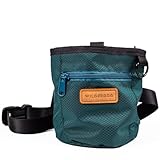
- Two pockets with zipper closures and additional magnetic closure on the big pouch. Adjustable strap fully extended measures up to 52 and 1" wide to fit perfectly through belt loops
- Approximate total capacity: 0.8 L
- Stitched webbing front loop and d-ring make it easy to attach items such as Poop Bag Holder, Crap Carrier, keys, etc.
- Measures 7" x 3" x 6" and weighs 5 oz
- Interior fabric is human food-grade fabric and outer is made of easy-to-clean ripstop
Modern fit: It is compact, intelligent, energetic, and responsive—often a good match for owners who want a trainable dog for agility, obedience, hiking, or other activities.
Watch-outs: Small size does not turn a herding dog into a couch dog. Expect alert barking, herding behavior, and a need for daily mental work. Its double coat sheds and benefits from regular brushing. It is now maintained as a separate AKC breed rather than simply being a small Australian Shepherd.
Status: Fully AKC recognized since 2015.
15. Rat Terrier
Where it developed: The Rat Terrier developed as an American farm dog from Smooth Fox Terrier, Manchester Terrier, Bull Terrier, Whippet, Italian Greyhound, Beagle, and other terrier or feist lines. It was among the most common American farm dogs during the 1910s and 1920s; see the AKC history and breed facts.
Original job: Killing and controlling vermin around farms.
Modern fit: Rat Terriers are alert, lively, clever, and often entertainingly engaged with their owners. They can fit many homes if given walks, play, training, and appropriate outlets for their hunting instincts.
Watch-outs: Small does not mean passive. Digging, chasing, barking, and pursuing small animals are realistic possibilities. A secure yard and supervision around pocket pets are important. The short coat is easy to groom.
Status: Fully AKC recognized since 2013.
American companion and small breeds
16. Boston Terrier
Where it developed: The Boston Terrier was developed in Boston from an English Bulldog and White English Terrier-type foundation dog. Early dogs were called Round Heads or American Bull Terriers before the Boston name became established. The Boston Terrier Club of America formed in 1891, and AKC registration began in 1893; the AKC history documents the breed’s evolution.
Original job: By the time the breed was standardized, it was primarily a companion and show dog rather than a working farm or hunting breed.
Modern fit: Bostons are compact, people-oriented, lively, and usually adaptable. They still need daily walks and training, although their exercise requirements are generally more manageable than those of the hounds and herding breeds on this list.
Watch-outs: Small size does not eliminate health or climate concerns. Owners should discuss respiratory and heat-management risks with a veterinarian, avoid strenuous activity in hot weather, and supervise exercise. The short coat is easy-care. Massachusetts named the Boston Terrier its state dog in 1979; the designation is listed by the Massachusetts government.
Status: Fully AKC recognized.
17. American Hairless Terrier
Where it developed: In the early 1970s, a naturally hairless puppy appeared in a Rat Terrier litter in the southern United States. Breeders developed that mutation into the American Hairless Terrier, described by the AKC as the first hairless breed developed in the United States.
Original job: Its Rat Terrier foundation reflects a history of vermin control; today it is also a companion and family dog.
Quick wins for a faster PC:
Fix the driver behind crashes, sound loss and screen glitchesFind Drivers →Clear out junk files and repair common Windows errorsFree Scan →Scan for outdated or missing drivers - takes under a minuteDriver Scan →Modern fit: This is a small, alert, playful terrier that can work well for an owner who wants a compact dog but still enjoys activity and training.
Watch-outs: Hairlessness reduces loose fur but does not eliminate dander or guarantee an allergy-free household. Bare skin can sunburn and become chilled. The AKC recommends protection from sun and cold, which may include veterinarian-approved sunscreen or protective clothing. The coated variety still needs ordinary coat care, while the hairless variety needs skin care.
Status: Fully AKC recognized in 2016.
18. Toy Fox Terrier
Where it developed: American breeders developed the Toy Fox Terrier from small Smooth Fox Terriers and toy breeds including the Chihuahua, Toy Manchester Terrier, Miniature Pinscher, and Italian Greyhound. Its AKC history traces its development.
Original job: Farm ratter. Its intelligence and agility later made it popular as a circus trick dog before it became primarily a companion.
Modern fit: Toy Fox Terriers are tiny, bold, active, and often very attached to their people. They can live in a smaller home if their daily need for play, training, and movement is taken seriously.
Watch-outs: A toy body still houses a terrier’s prey drive and confidence. Secure doors and fencing, careful supervision around small pets, and early training are sensible. The short coat is easy-care, but the dog is not a decorative, inactive accessory.
Status: Fully AKC recognized in 2003.
Independent reader supportYour contribution helps us test, update, and keep practical guides available for everyone.American sled and northern breeds
19. Alaskan Malamute
Where it developed: The Alaskan Malamute is best described as an indigenous Alaskan breed associated with the Mahlemut people, not simply as a dog created by modern American breeders. Its history in Arctic Alaska predates the United States’ modern breed system. The AKC history describes its traditional role.
Original job: Heavy freighting—pulling substantial loads over long distances. It was not primarily bred for the high-speed racing role associated with some other northern dogs.
Recommended Free Tools
Best Value

- ONE-HAND TREAT ACCESS — TRAIN SMARTER, REWARD FASTER: The OllyDog Goodie Treat Bag’s powerful magnetic closure opens and snaps shut in one smooth motion — no zippers, no fumbling, no missed moments. Reach in and reward your dog’s good behavior the instant it happens, so every training session is sharper, faster, and more effective. Perfect for obedience work, recall training, agility, and everyday walks.
- ECO-FRIENDLY RECYCLED FABRIC: Made from vegan, non-toxic, water-resistant fabric repurposed from 3 recycled plastic bottles, the Goodie Treat Bag is a sustainable choice built to outlast the competition. Our soft recycled fabric is lightweight, flexible, and gentle against your side — whether you’re at the dog park, on a trail, or in a training class. Good for your dog. Better for the planet.
- 3 VERSATILE CARRY OPTIONS — MORE ADAPTABLE: Train hands-free your way: (1) Wear around your waist with the included adjustable quick-release buckle belt, (2) Clip directly onto any belt loop, or (3) Thread onto your own personal belt. Remove the belt entirely and hook the bag straight onto your leash or backpack for effortless on-the-go access. Three carry modes. One bag that adapts to every scenario.
- COMPACT SIZE, SIMPLE CLEANUP — READY FOR EVERY SESSION: At just 4¼” × 5¼” × 3” with a fully adjustable waist belt, the Goodie Treat Bag holds enough treats for a full training session without bulk, bounce, or added weight. When you’re done, simply hand wash in cold water with a pet-safe detergent and air dry — no dishwasher, no complicated disassembly, no lingering odors. Quick, clean, and back in action.
- BACKED BY OLLYDOG'S LIFETIME WARRANTY — BUY ONCE, TRAIN FOR LIFE: Every OllyDog product is backed by a lifetime warranty — if your Goodie Treat Bag ever develops a defect, contact us and we'll make it right, guaranteed. Available in solid colors and expressive prints; pairs perfectly with the OllyDog Scoop Pick Up Bag (sold separately). Note: chewing/biting not covered.
Modern fit: Malamutes are large, powerful, athletic, independent, and often affectionate with their families. They need substantial exercise and activities that engage both body and mind.
Watch-outs: Many are vocal and fond of digging, and their strength makes escape-proof fencing and careful leash handling important. The thick double coat needs regular brushing and sheds heavily. Heat management is essential in warm climates; do not assume a northern coat makes a dog immune to overheating.
Status: Fully AKC recognized since 1935.
20. Chinook
Where it developed: Arthur Treadwell Walden developed the Chinook in the early twentieth century in Wonalancet, New Hampshire. He wanted a sled dog that combined racing speed with the strength needed for freighting. The AKC breed page and AKC history and facts describe its unusually well-documented New Hampshire origin.
Original job: Sled racing and freight hauling.
Modern fit: Chinooks are athletic but are often described as adaptable and family-oriented. They can suit an active household interested in hiking, pulling sports, winter activities, or training.
Free tools Windows power users keep installed
One-click scans. No signup required.
Watch-outs: This is a rare breed, so availability, breeder practices, genetic diversity, and health-testing policies deserve careful research. Its coat needs regular brushing, and its exercise needs are higher than those of a typical companion dog. New Hampshire recognizes the Chinook as its state dog.
Status: Fully AKC recognized in 2013.
American breeds with an important caveat
The 20 above are an editorial selection, not a census of every American breed. Several other dogs deserve recognition, but their histories or current status make them less straightforward fits for a strict born-and-bred-in-the-USA list.
American Eskimo Dog
The American Eskimo Dog was shaped and renamed in the United States, but its ancestors were German Spitz dogs brought to America by German immigrants. It is therefore a reasonable example of a breed developed or standardized in America under a broad definition, but not a literal example of a breed whose ancestral origin is American. The AKC history explains the distinction.
Carolina Dog
The Carolina Dog is associated with free-ranging dogs in the southeastern United States. The AKC discusses possible ancient connections with dogs accompanying Paleo-Indigenous peoples, but the origin story remains partly unresolved and the dog was not created through a conventional modern breeding program. It remains in the AKC Foundation Stock Service. It is better described as a naturally occurring or landrace-derived population being standardized than as an uncontroversial manufactured breed.
Do these 3 things before closing this tab:
1Fix the driver behind crashes, sound loss and screen glitches2Clear out junk files and repair common Windows errors3Scan for outdated or missing drivers - takes under a minuteMountain Cur
The Mountain Cur is a historically important Appalachian and American frontier working dog. The Original Mountain Cur Breeders of America declared it a breed in 1957, and the UKC recognized it in 1998. It is also listed in AKC FSS. The UKC standard and history make it a strong candidate for any broader list of American breeds.
Teddy Roosevelt Terrier
The Teddy Roosevelt Terrier entered AKC FSS in 2016, the Miscellaneous Class in 2019, and became fully AKC recognized on January 1, 2026, according to the AKC’s 2026 announcement. It is a legitimate American farm and ratting breed. Under a current AKC-focused list, it belongs among recognized American breeds and could reasonably replace one of the 20 examples above.
American English Coonhound
The American English Coonhound descended from English Foxhounds brought to America but became a distinct American working type adapted to raccoon hunting and American terrain. It is fully AKC recognized and is a strong alternative if the goal is to emphasize the United States’ coonhound tradition. See the AKC history.
American Leopard Hound
The American Leopard Hound is an American treeing dog and one of the older tree-dog types in the United States. It remains an AKC FSS breed rather than a fully AKC-recognized breed; the AKC coonhound overview provides context.
How to choose among these American breeds
Choose by the job, not the flag
A dog developed to hunt, herd, haul, or catch livestock will usually bring some of that work into a modern home. Consider the following practical groupings:
- Most vocal: American Foxhounds, Black and Tan Coonhounds, Bluetick Coonhounds, Redbones, Treeing Walkers, Plotts, and many other scent hounds. Alaskan Malamutes can also be notably vocal.
- Strongest scent and prey concerns: Foxhounds, coonhounds, Rat Terriers, Toy Fox Terriers, and American Water Spaniels. Secure fencing and supervision around small animals matter.
- Highest mental-work requirement: Australian Shepherds, Miniature American Shepherds, Catahoulas, American Water Spaniels, Chesapeake Bay Retrievers, and Chinooks. A long walk alone may not be enough.
- Most strength and guarding responsibility: American Bulldogs, American Staffordshire Terriers, Catahoulas, and Chesapeake Bay Retrievers. Training, socialization, handling, and local regulations deserve serious attention.
- More compact choices: Boston Terriers, American Hairless Terriers, Toy Fox Terriers, Rat Terriers, and Miniature American Shepherds. Compact does not mean automatically quiet, low-energy, or easy.
- Coat and climate concerns: Alaskan Malamutes, Australian Shepherds, Miniature American Shepherds, Chinooks, and Chesapeake Bay Retrievers need more coat management than short-haired breeds. American Hairless Terriers need protection from sun and cold rather than ordinary shedding management.
Before buying or adopting
- Check the actual registry identity. Ask whether the dog is registered as the breed claimed, with which registry, and whether the paperwork says AKC recognized or AKC FSS.
- Research the parent club and health recommendations. A responsible breeder should discuss relevant screening, temperament, family history, and the reasons particular dogs were paired—not just coat color or novelty.
- Plan for containment. Hounds and terriers may follow prey or scent, while powerful working breeds may test ordinary fencing. Ask how the dog behaves loose before assuming a recall will be reliable.
- Match exercise to the original function. Herding, retrieving, scent work, pulling, tracking, obedience, and controlled running are more useful outlets than simply leaving a high-drive dog in a yard.
- Check local restrictions. Housing, insurance, municipal rules, and breed-specific legislation can affect ownership, especially for powerful breeds.
- Use conditional expectations. No breed is guaranteed to be good with children, other dogs, or apartment living. Children and dogs require supervision, and individual temperament always matters.
The bottom line on American dog breeds
American origin is about where a distinct breed type was formed and what American breeders or communities selected it to do—not about proving that every ancestor was born within current U.S. borders. That broader, historically honest definition includes the Foxhound shaped in colonial America, the Boston Terrier developed in Boston, the Chesapeake bred for Maryland’s icy bay, the Australian Shepherd created in the American West, and indigenous Alaskan dogs such as the Malamute.
For a pet home, the most important question is not whether a dog is American. It is whether the breed’s inherited work—hunting, herding, hauling, guarding, ratting, or retrieving—fits your time, housing, experience, tolerance for noise, and ability to provide safe exercise.
Frequently Asked Questions
Can a dog breed be American if some of its ancestors came from another country?
Yes. American breed identity generally refers to where a recognizable type was developed, standardized, or maintained. The American Foxhound, Boston Terrier, Australian Shepherd, Toy Fox Terrier, and American Staffordshire Terrier all have imported ancestry but became distinct breeds through development in the United States.
Are all 20 breeds fully recognized by the AKC?
No. Eighteen of the 20 main-list breeds are fully AKC recognized. The American Bulldog and Catahoula Leopard Dog are in the AKC Foundation Stock Service, which is separate from full AKC recognition and does not provide ordinary AKC registration.
Is the American Hairless Terrier hypoallergenic?
No breed can be promised to be allergy-free. The American Hairless Terrier produces less loose fur, but hairlessness does not eliminate dander or other allergens. Bare skin also needs protection from sun and cold.
Which American breeds are usually the most difficult for a quiet or sedentary household?
Hounds, Australian Shepherds, Miniature American Shepherds, Catahoulas, American Bulldogs, Chesapeake Bay Retrievers, Alaskan Malamutes, and other working breeds may be challenging when under-exercised. Coonhounds and Foxhounds are especially important to consider if barking or baying would be a problem.
The Bottom Line
These 20 dogs are American-developed breeds, not necessarily dogs with exclusively American ancestry. Before choosing one, look past the patriotic label and match the breed’s original work, energy, vocality, prey drive, grooming, and strength to your real household. Also verify current registry status: the American Bulldog and Catahoula Leopard Dog are AKC FSS breeds, and the Teddy Roosevelt Terrier became fully AKC recognized on January 1, 2026.
Recommended Free Tools
Quick Recap
Product prices and availability are accurate as of the date/time indicated and are subject to change. Any price and availability information displayed on Amazon at the time of purchase will apply.




