What’s actually slowing this PC down?
Pick the symptom - the matching free tool is one click away.
American pikas look like tiny guinea pigs or hamsters, but they are rabbit relatives. The species Ochotona princeps stays active through winter, stores plants in haypiles, and shelters among rocks that can be cooler than the surrounding air. That cold-weather design also leaves pikas unusually vulnerable to heat.
They are more adaptable—and their conservation story more complicated—than the familiar image of an alpine animal disappearing everywhere. Here are eight facts about American pikas.
American pika identification at a glance
| Feature | American pika |
|---|---|
| Scientific name | Ochotona princeps |
| Animal group | Lagomorph, related to rabbits and hares |
| Adult size | About 7–8.4 inches long and 5.3–6.2 ounces, with variation among populations |
| Appearance | Round ears, compact body, short limbs, and no obvious external tail |
| Typical habitat | Rocky talus slopes and other fractured-rock habitats in western North America |
| Winter strategy | Stay active, use rock shelter and snow tunnels, and rely partly on stored vegetation |
An American pika is not a rodent and is not restricted to the highest mountaintops. It is a small, territorial lagomorph specialized for life in cool rock crevices.
1. They look like rodents—but they are rabbit relatives
American pikas belong to the order Lagomorpha, alongside rabbits and hares—not to Rodentia, the group that includes mice, hamsters, guinea pigs, and marmots.
#1 Best Overall

- Known as a mountain-dwelling mammal, this pika plush toy hails from the rabbit family and is ready to hop into fun.
- The cute button nose, perky ears and big smile of this lifelike stuffed animal pika is clearly a showstopper.
- Cuddle day and night with this pika stuffed animal featuring soft brown fur, big curious eyes and small webbed feet.
- Enjoy long-term adventures with this pika animal plush made with durable stitching and ultimate care.
Rounded ears, a blunt-looking face, short legs, and a compact body give pikas a rodent-like appearance. Their tail is not conspicuous from the outside. Adults are generally around 7–8.4 inches long and weigh roughly 5.3–6.2 ounces, though size varies by population. Yellowstone National Park describes the species’ size and appearance.
The collared pika occupies parts of Alaska and northern Canada; the American pika is the pika found throughout the continental United States. The National Park Service provides an overview of American pika taxonomy and range.
2. They do not hibernate—they keep working under the snow
American pikas remain active year-round. They move between dens and feeding areas through spaces beneath the snow and among the rocks, rather than sleeping through winter like a marmot.
- Stored food: Vegetation gathered during the growing season supplements limited winter forage.
- Rock shelter: Gaps in talus provide dens and routes.
- Snow insulation: Snow can buffer the environment around the rocks from severe cold.
- Continued activity: Pikas keep foraging and maintaining access to food rather than hibernating.
Talus is a slope or field of broken rock fragments. In winter, snow-covered talus provides a subnivean—beneath-the-snow—habitat. Deep, persistent snow can protect pikas from extreme cold, while reduced snow may expose them and change conditions in their rocky refuge. Pikas are generally active by day, but warm weather can limit when they venture onto the surface. Yellowstone National Park explains their year-round activity and use of snow and rock shelter.
3. Their haystacks are carefully managed winter pantries
During the growing season, pikas collect leaves, grasses, flowers, and other plants, carrying mouthfuls to protected places among the rocks. The vegetation dries into a cache called a haypile or haystack. Some piles are reused in the same location year after year. Yellowstone reports that some can reach about 3 feet in diameter; this is a documented upper example, not a typical size for every cache.
Pikas select and handle vegetation in ways that affect its nutritional value, preservation, and safety. Drying helps prevent spoilage, and some plant compounds may become less toxic or more palatable during storage. Peer-reviewed research examines the nutritional quality and preservation of pika haypiles.
Rank #2

- POKÉMON PLUSH: Choose to cuddle Pikachu, the Mouse Pokémon
- SPECIAL MATERIAL: Snuggly 8-inch Pokémon plush is made with super soft material
- AUTHENTIC DETAILS: Pikachu looks like it jumped out of the Pokémon Animated Series
- TEAM BUILDING: Collect other 8-inch Pokémon plush and build your own unique team
- OFFICIAL PRODUCT: Officially licensed Pokémon product from Jazwares
Not every pika makes a large haystack. Where plants remain available for much of the year, some low-elevation pikas graze more directly and cache less. USGS research describes differences in food storage among populations.
4. They re-ingest specialized fecal pellets
Like rabbits and hares, American pikas practice cecotrophy: they re-ingest soft, nutrient-rich pellets produced in the cecum, a specialized part of the digestive tract. Gut microorganisms help ferment plant fiber, and re-ingesting cecal pellets lets pikas extract more nutrition.
Quick wins for a faster PC:
Fix the driver behind crashes, sound loss and screen glitchesFind Drivers →Repair Windows errors before they cause bigger problemsFix Now →Scan for outdated or missing drivers - takes under a minuteDriver Scan →These soft pellets are different from the hard, dry waste pellets people usually associate with animal droppings. Re-ingesting cecal pellets is a normal lagomorph digestive adaptation. The National Park Service explains cecotrophy in its pika resource brief.
5. They are tiny, territorial, and vocal
Pikas may defend valuable territories and food supplies. They mark rocks by rubbing their cheeks against them, defend territories against same-sex intruders, and may defend haypiles. Male and female territories may overlap.
They produce shrill and shorter calls associated with territorial behavior, predator warnings, or recognition of nearby pikas. There is no reliable one-call-to-one-meaning translation. Their calls can carry across open talus, so you may hear one before you spot it. Yellowstone National Park describes pika vocalizations, scent marking, and territorial behavior.
6. They can live far below the classic alpine zone
American pikas are strongly associated with cool mountain talus, but they are not strictly above-treeline animals. Researchers have documented populations in low-elevation settings such as lava fields, roadcuts, quarries, and rocky sites in Oregon’s Columbia River Gorge. Some Gorge populations have been recorded at approximately 121–255 meters above sea level. These are exceptional, localized sites—not evidence that warm lowlands are broadly suitable.
Free tools Windows power users keep installed
One-click scans. No signup required.
Rank #3

- CAPTAIN PIKACHU: Get ready to set sail with Captain Pikachu
- SPECIAL HAT: 8-inch Pokémon plush is super soft and wears a special captain’s hat
- AUTHENTIC DETAILS: Plush looks like it jumped right out of the Pokémon Animated Series
- TEAM BUILDING: Collect other 8-inch Pokémon plush and build your own unique team
- OFFICIAL PRODUCT: Officially licensed Pokémon product from Jazwares
Fractured rock, shade, forest cover, and the orientation of rocks can create cool, humid microrefugia: small areas where conditions remain tolerable even as the surrounding landscape warms. Some low-elevation pikas graze more, cache less, use forested microhabitats during hot periods, and occupy smaller home ranges. USGS research discusses pikas in low-elevation habitats, and research on lava landscapes documents pikas in an unusually warm, rocky setting.
7. Their cold-weather design gives them very little heat tolerance
Dense insulation and a high metabolism help pikas remain active in cold environments but can make overheating dangerous. A behavioral thermoregulation study reported a mean resting body temperature of about 40.1°C (104.2°F) and estimated an upper lethal body temperature of approximately 43.1°C (109.6°F). These are body-temperature measurements, not air temperatures.
In modeled conditions, above-talus activity was restricted around 20°C (68°F). National Park Service material warns that exposure to ambient temperatures above roughly 75°F (24°C) can be dangerous. That is not a universal instant-death threshold: risk depends on exposure duration, sun, wind, humidity, activity, and the temperature inside the talus, which may be cooler than the surface.
Pikas limit time above the rocks, use cool crevices, and shift activity toward cooler periods. A peer-reviewed thermoregulation study reports body-temperature and activity findings. Research on subsurface thermal conditions explains the importance of talus microrefuges.
8. They are climate sentinels—but the species is not uniformly disappearing
Pikas depend on several climate-sensitive conditions, including summer heat, snowpack, water balance, forage, talus area, habitat connectivity, and the temperature of their particular rock refuge. Studies have documented local extirpations and upslope retractions in parts of the Great Basin, Utah, California, and other regions.
A USGS-led study surveyed more than 910 locations across three western regions and found that important predictors differed by region: temperature and water balance mattered more in some places, while talus habitat area was more predictive in another. The USGS study compares regional drivers of pika distribution.
Rank #4
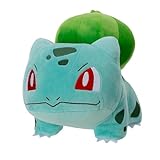
- POKÉMON PLUSH: Choose to cuddle Bulbasaur, the Seed Pokémon.
- SPECIAL MATERIAL: Snuggly 8-inch Pokémon plush is made with super soft material.
- AUTHENTIC DETAILS: Bulbasaur looks like it jumped out of the Pokémon Animated Series.
- TEAM BUILDING: Collect other 8-inch Pokémon plush and build your own unique team.
- OFFICIAL PRODUCT: Officially licensed Pokémon product from Jazwares.
What recent research adds
A 2025 Niwot Ridge study reported that its measure of juvenile recruitment fell by more than 50% over the study period, with recruitment declining as warm-season temperature increased. This was a long-term, single-site result—not a range-wide estimate of pika abundance. Read the 2025 Niwot Ridge recruitment study.
A paper published in January 2026 reported genomic evidence of local adaptation to elevation and climate. Populations may differ in traits associated with their local environments, but this does not prove that genetic adaptation will protect pikas from all future warming. The USGS summarizes the genomic-adaptation research.
Outdated Drivers Are Slowing You Down
One free scan finds every outdated or missing driver and matches the right update for your exact hardware.Free scan · exact hardware matchPC Slower Than It Used to Be?
A free scan shows the junk files, broken settings and background clutter dragging Windows down - then fixes them in one click.Free scan · Windows 10 & 11What is the American pika’s conservation status?
As of August 10, 2026, the Mammal Diversity Database lists the American pika as Least Concern, and the U.S. Fish and Wildlife Service’s federal review found that listing under the Endangered Species Act was not warranted. These broad assessments do not mean every population is secure: local extirpations, declining recruitment, fragmented habitat, reduced snowpack, and regional heat stress remain concerns.
Some warm or low-elevation sites remain occupied, including Craters of the Moon, Lava Beds, the Columbia River Gorge, and parts of the Sierra Nevada, while other populations have been lost or are declining. Check the current Mammal Diversity Database entry and the U.S. Fish and Wildlife Service federal finding.
Independent reader supportYour contribution helps us test, update, and keep practical guides available for everyone.A short note about reproduction
American pikas generally breed in spring, and National Park Service material reports that they can produce two litters in a year. The first litter is generally more successful. Breeding and juvenile survival are tied to snowmelt and seasonal forage, so outcomes vary by location and year; there is no single litter-size figure that applies to every population. Yellowstone National Park provides additional natural-history details.
If you see an American pika
Watch quietly from a distance. Do not approach, chase, touch, or feed it, and do not move plants or disturb a haypile. Use binoculars or a zoom lens, stay on required trails, and follow local park rules. Feeding wildlife can alter natural behavior, while disturbing a cache can remove food the pika needs for winter. The National Park Service’s wildlife-viewing guidance covers safe, low-impact observation.
Recommended Free Tools
Best Value

- VIBRANT PIKACHU DESIGN: Silk Touch throw features bold, high-energy artwork of Pikachu with lightning bolts and Poké Balls, perfect for lounging, travel, or decorating a bedroom.
- 3D PLUSH POCKET PILLOW INCLUDED: Includes a matching plush pillow with a 3D Pikachu character design, complete with a convenient pocket and carry straps to store or transport the blanket.
- GENEROUS SIZING FOR COMFORT: Throw measures 50" x 60" and pillow measures 14" x 20", offering the perfect size for relaxing at home, sleepovers, or on-the-go naps.
- EASY-CARE INSTRUCTIONS: Machine wash cold separately on delicate cycle with mild detergent. Do not bleach. Tumble dry low separately on gentle cycle. Remove promptly. Do not iron.
- SOFT & DURABLE MATERIALS: Throw is made from 100% polyester with a smooth Silk Touch finish; pillow character crafted from a polyester-spandex blend and filled with plush polyester fiber for lasting comfort.
FAQ
What is an American pika?
It is a small lagomorph, related to rabbits and hares, with the scientific name Ochotona princeps.
Do American pikas hibernate?
No. They remain active through winter, using rock shelter and routes beneath snow, and rely partly on stored vegetation.
Are American pikas endangered?
The species is listed as Least Concern in the Mammal Diversity Database, and a federal review found listing unwarranted. Those species-level assessments do not rule out local population declines or risks from warming and habitat change.
Can pikas live at low elevations?
Yes. Some occupy localized low-elevation rocky habitats, including lava fields and sites in the Columbia River Gorge. These microrefugia do not mean warm lowlands are generally suitable.
Should I feed or approach a pika?
No. Observe from a distance and do not disturb the animal, its habitat, or its haypile.
The Bottom Line
American pikas are small lagomorphs, not rodents. They stay active through winter, store vegetation, defend rocky territories, and use cool talus refuges to avoid overheating. Their conservation story is neither “they are fine everywhere” nor “the entire species is already disappearing”: local conditions shape outcomes, making continued monitoring and responsible wildlife viewing important.
Quick Recap
Product prices and availability are accurate as of the date/time indicated and are subject to change. Any price and availability information displayed on Amazon at the time of purchase will apply.




