Outdated Drivers Are Slowing You Down
One free scan finds every outdated or missing driver and matches the right update for your exact hardware.Free scan · exact hardware matchWindows Errors? Fix Them Before They Spread
Repair common Windows errors and clear accumulated junk for a smoother, more stable PC - no reinstall needed.Free scan · no reinstallFishermen’s actions depend on whether they keep or release a fish. For a legally retained fish, Maine’s fishing guide describes quick dispatch by a blow to the head or bleeding through the gill arches, followed by prompt cooling and cleaning; for a fish released alive, NOAA recommends minimizing handling and air exposure. Catch and release does not guarantee survival.
These are different paths: dispatch and food handling apply to a retained catch, while release practices aim to reduce injury and post-release mortality. Methods and legal requirements vary by fishery, species, and location.
Key takeaways
- Not every fish caught is killed; anglers may retain a legal catch or return it to the water.
- Maine’s official guide describes dispatching a retained fish with a blow to the head or by cutting the gill arches to bleed it, then cooling and cleaning it promptly.
- NOAA recommends limiting fight and handling stress, dehooking in the water when possible, and minimizing air exposure when releasing fish.
- A fish released alive may still die later from severe injury, predation, or effects associated with capture and handling stress.
- Deep-water fish showing signs of barotrauma may need an appropriate descending or recompression tool; the right response depends on the fishery and conditions.
How do fishermen kill fish?
There is no single method used by all fishermen. For a fish kept for food, Maine’s Department of Inland Fisheries and Wildlife says it can be dispatched quickly with a blow to the head or by bleeding through a cut to the gill arches. That is guidance from Maine, not a universal rule or legal instruction for every location.
Fish intended for release follow a different path. The goal is to return the fish to the water with as little injury and stress as possible, though release cannot guarantee that it will survive.
#1 Best Overall

- 【Premium High Carbon Steel】This professional fish fillet knife is made from high-quality Japanese stainless steel 10Cr15CoMoV, which makes the HOSHANHO fillet knife more durable, harder, and sharper than other meat knives. With a hand polished edge at 15 degrees per side, the boning knife can achieves ultimate sharpness.
- 【Excellent Cutting Results】With a 7 inch long, thin blade, the fillet knife makes it easy to slice, bone, trim, skin and butterfly different types of meat and fish. The slender blade helps to cut through fish bones and flesh with more precision and less waste, resulting in a neat and beautifully cut fillet.
- 【Ergonomic Design】The ergonomic shape of the fish knife's handle provides a more comfortable grip and reduces user fatigue. The handle of the boning knife is made of durable pakkawood, these materials have good resistance to corrosion and abrasion, which ensures a long service life of the fillet knife.
- 【Mutifunctional Use】In addition to easily cutting fish bones and removing fish scales, this fish knife can also be used to cut other types of meat. It is a practical and multifunctional kitchen tool, the frosted texture will be the most unique knife among all your knives and a perfect gift for your family and friends.
- 【Flexible and Lightweight】The blade of the fish knife is relatively soft and can better adapt to the shape of the fish ingredients, making it easier to operate and control. Its portability allows chefs to switch between different kitchen utensils more freely, improving work efficiency.
Do fishermen kill fish as soon as they catch them?
Not always. An angler may release a fish, or retain it for food. For retained fish, Maine’s guide recommends quick dispatch, prompt cooling, and cleaning. Local retention laws and consumption advisories should be checked separately.
| Situation | Guidance described in the sources | Intended outcome |
|---|---|---|
| Retained fish | Quick dispatch by a blow to the head or bleeding through the gill arches, followed by prompt cooling and cleaning | Prepare and preserve the catch |
| Fish released near the surface | Minimize the fight and handling; dehook in the water when possible and limit air exposure | Reduce injury and improve the chance of survival |
| Deep-water fish showing barotrauma signs | Consider an appropriate descending or recompression tool, following fishery-specific guidance | Help the fish return to depth |
How are retained fish dispatched and processed?
Maine’s Department of Inland Fisheries and Wildlife states: “Fish can be dispatched quickly with a blow to the head or with bleeding by cutting the gill arches with a knife or scissors.” The guide connects quick dispatch with humane handling and flesh quality, and recommends cooling the catch promptly because deterioration depends on time and temperature.
After dispatch, the guide recommends prompt removal of the entrails. It describes filleting larger fish as one way to prepare the meat and identifies a long, slender, flexible fillet knife for the job. These are recommendations from a state guide; follow local fishing rules and check consumption advisories.
- Confirm that the fish may legally be retained.
- Dispatch the fish promptly using an appropriate method, such as those described in Maine’s guide.
- Cool the catch promptly.
- Clean or fillet it as appropriate, and follow local food-safety advice and consumption advisories.
Maine’s guide to bringing home a quality catch explains its dispatch, cooling, and preparation recommendations. Its guidance should not be treated as a substitute for local regulations.
Quick wins for a faster PC:
Repair Windows errors before they cause bigger problemsFix Now →Fix the driver behind crashes, sound loss and screen glitchesFind Drivers →Clear out junk files and repair common Windows errorsFree Scan →Rank #2

- Complete Fishing Tool Combo: The KastKing SteelStream 6 piece Tool Combo includes essential fishing tools for a seamless fishing experience
- High-Quality Materials: Crafted with precision, the combo features a 7” fishing pliers made from S45C carbon steel with a polymer corrosion-resistant coating for longevity. The fishing pliers saltwater also come with a coiled lanyard and a rubber handle
- Razor-Sharp Fillet Knife: The 7” fillet knife is constructed from 420 Stainless steel, known for its toughness, corrosion resistance, and ease of sharpening. With a non-slip rubber handle, the fishing knife offers excellent grip and comfort during use
- Corrosion-Resistant Fishing Scissors: The combo includes braid scissors made from 420 stainless steel, featuring a serrated edge and a corrosion-resistant titanium coating. The soft rubber handle ensures easy and comfortable cutting
- Secure and Durable Accessories: This combo also provides a floating fish lip gripper designed to prevent sinking and fish lip punctures. Additionally, a tool retractor keeps your tools securely tethered to your fishing tackle bag or person
What is the difference between dispatch and processing?
Dispatch refers to killing a retained fish; processing refers to subsequent preparation, such as cooling, cleaning, or filleting. A 2006 review of recreational fishing and fish welfare discusses stunning followed by bleeding, or pithing the brain and spinal cord, as approaches to euthanasia. It also emphasizes that handling should suit the fish’s size and strength and the capture environment, and that local regulations must be obeyed. The review is not a current local regulation or a guarantee of welfare outcomes.
| Term or action | What it means here | Important qualification |
|---|---|---|
| Dispatch | Killing a fish retained for food; Maine’s guide describes a blow to the head or bleeding through the gill arches | Follow applicable local rules and species-specific guidance |
| Cooling | Keeping the retained catch cool after dispatch | Prompt cooling matters; the guide does not establish one universal timing rule for all fisheries |
| Cleaning or filleting | Preparing the fish for use as food | Check harvest laws and consumption advisories |
Do fishermen kill fish they release?
Catch-and-release fishing is intended to return a recreationally caught fish to the water, not retain and kill it. NOAA Fisheries’ guidance recommends suitable tackle, avoiding a fight that exhausts the fish, dehooking in the water when possible, and keeping handling brief. If the fish must be lifted, use wet hands, avoid the eyes and gills, and support its body.
NOAA says less than 60 seconds of air exposure is ideal. NOAA’s Office of National Marine Sanctuaries advises under 20 seconds. These are source-specific recommendations, not a single universal threshold. Keeping a fish out of the water for less time does not guarantee survival.
NOAA defines discard and release mortality as death after a fish is caught alive and released. Severe injury or predation can cause immediate death, while capture or handling stress and injury can contribute to delayed death. NOAA also notes that gaps remain in understanding and estimating release mortality. Do not assume one survival rate applies across species or fishing conditions.
The Tool Desk
Outbyte PC Repair FREERepair Windows errors before they cause bigger problemsFix Now →Outbyte Driver Updater FREEScan for outdated or missing drivers - takes under a minuteDriver Scan →Rank #3

- Razor Sharp Stainless Blades – All new KastKing fishing fillet knives and the 5” Bait Knife utilize premium, razor sharp G4116 German Stainless-Steel blades with a beautiful black finish. KastKing fillet knives will maintain their edge longer in both fresh and saltwater applications and make the job of cutting baits, filleting fish of all sizes and steaking large game fish easier than ever before.
- Non-Slip Super Polymer Grip - We use the most comfortable and slip-resistant, super polymer grips for your safety and comfort. These handles feel great in your hand and ensure that you always have a solid grip on your fillet knife. These handles also clean up easily and stay looking good longer.
- The Right Knife For The Job - The 5” Bait Knife is stiff and strong, it has a serrated top edge that makes cutting frozen bait quick and easy. The razor-sharp leading edge allows the fisherman to easily prepare both chunk and cut plug style baits. The 6”, 7” & 9” Fillet Knives are not only sharp and but also have the perfect flexibility so the knife will follow natural contours for perfect fillets. The 9” Steaking Knife is a powerhouse for steaking big game fish like salmon, tuna and more.
- Includes Protective Knife Sheath – Each knife includes a light-weight and durable sheath to protect the blade and keep you safe in between jobs. The unique design of the sheath will lock the handle in for safety but removes easily when needed. The open slots in the sheath are design to allow water to drain easily so that your knives stay dry and sharp.
- Affordable Innovation – KastKing fishing knives are available in the most requested lengths and shapes so that you’ll always have the right tool for the job. Available from a beautiful 5” bait knife all the way to a tough 9” steaking knife for the biggest game fish. All KastKing fishing tools are covered by our total peace of mind warranty against the workmanship and materials for the original owner. We have total confidence in the quality of all KastKing fishing tools and so will you.
Why can deep-water fish die after release?
Barotrauma is pressure-related injury associated with the expansion of gases as a fish is brought up from depth. NOAA lists signs such as bulging eyes, bloating, sluggish swimming, and a stomach protruding from the mouth. Affected fish may have difficulty swimming back down.
NOAA national guidance says fish caught deeper than 30 feet will generally suffer some effects, while NOAA’s Return ‘Em Right feature says fish from beyond 50 feet likely need extra help. These statements come from different sources and contexts, not a universal depth cutoff.
NOAA describes descending devices, release weights, and release baskets as tools used for recompression. Follow local rules and fishery- or species-specific guidance; the right procedure depends on the circumstances. NOAA’s sanctuaries guidance warns against puncturing a protruding stomach.
NOAA’s Return ‘Em Right feature says the project was funded as part of the 2019 Open Ocean Restoration Plan, with $30 million in funding. That is a project funding amount, not a fish mortality or survival statistic.
Free tools Windows power users keep installed
One-click scans. No signup required.
Rank #4
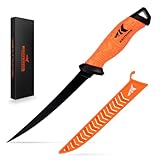
- Razor Sharp Stainless Blades – All new KastKing fishing fillet knives and the 5” Bait Knife utilize premium, razor sharp G4116 German Stainless-Steel blades with a beautiful black finish. KastKing fillet knives will maintain their edge longer in both fresh and saltwater applications and make the job of cutting baits, filleting fish of all sizes and steaking large game fish easier than ever before.
- Non-Slip Super Polymer Grip - We use the most comfortable and slip-resistant, super polymer grips for your safety and comfort. These handles feel great in your hand and ensure that you always have a solid grip on your fillet knife. These handles also clean up easily and stay looking good longer.
- The Right Knife For The Job - The 5” Bait Knife is stiff and strong, it has a serrated top edge that makes cutting frozen bait quick and easy. The razor-sharp leading edge allows the fisherman to easily prepare both chunk and cut plug style baits. The 6”, 7” & 9” Fillet Knives are not only sharp and but also have the perfect flexibility so the knife will follow natural contours for perfect fillets. The 9” Steaking Knife is a powerhouse for steaking big game fish like salmon, tuna and more.
- Includes Protective Knife Sheath – Each knife includes a light-weight and durable sheath to protect the blade and keep you safe in between jobs. The unique design of the sheath will lock the handle in for safety but removes easily when needed. The open slots in the sheath are design to allow water to drain easily so that your knives stay dry and sharp.
- Affordable Innovation – KastKing fishing knives are available in the most requested lengths and shapes so that you’ll always have the right tool for the job. Available from a beautiful 5” bait knife all the way to a tough 9” steaking knife for the biggest game fish. All KastKing fishing tools are covered by our total peace of mind warranty against the workmanship and materials for the original owner. We have total confidence in the quality of all KastKing fishing tools and so will you.
What should anglers do when releasing a fish?
NOAA guidance recommends keeping the fish in the water while unhooking it when possible, minimizing handling, wetting hands before touching it, and avoiding the eyes and gills. A wet, knotless rubber net can reduce handling damage. NOAA also advises against gaffing a fish intended for release, suspending it by the lip or mouth, or throwing it overboard. If a hook is deeply buried and cannot be removed, NOAA’s national guidance advises cutting the line close to the hook.
- Use suitable tackle and avoid fighting the fish to exhaustion.
- Keep the fish in the water while dehooking whenever possible.
- Handle it as little as possible; use wet hands and support its body if lifting is necessary.
- For a fish showing barotrauma signs, use appropriate release guidance and equipment for the fishery and conditions.
Is there a humane way to kill a fish?
There is no single method established by the cited sources as best for every fish, species, and fishery. Maine’s guide describes a quick blow to the head or bleeding through the gill arches for retained fish. A peer-reviewed review discusses stunning followed by bleeding or pithing, while emphasizing that handling should match the fish and capture conditions. Follow local regulations and do not treat any method as a guarantee of a particular welfare outcome.
Frequently Asked Questions
How does Maine recommend dispatching a retained fish?
Maine’s official guide says a fish can be dispatched quickly with a blow to the head or by cutting the gill arches to bleed it. The guide also recommends prompt cooling and cleaning. This is Maine guidance, not a universal rule.
Does catch and release guarantee that a fish survives?
No. A fish may die after release from severe injury, predation, or effects associated with capture and handling stress. Careful handling aims to reduce risk but cannot guarantee survival.
Best Value
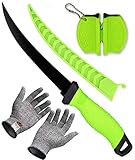
- 🐟Muti-functional Use Fillet Knife Fishing: High quality stainless steel blade, makes it sharp enough to cut fish easily. The Black Corrosion-resitant Coating, keeps it shiny and beautiful. And it's Rust-resistant, Tough and Durable. A good choice for your outdoor or home use!
- 🐟Soft Non-slip Rubber Handle: ThIS fish fillet knife with Ergonomic Design of its handle, which is Comfortable and Safe, enable you to cut fish smoothly without causing any pain of your hands during using, providing you a better using experience. Good fishing gear and equipment.
- 🐟Lightweight & Portable: The 7-inch Size of the fishing fillet knife makes it a perfect balance between carrying and using. The Lightweight Scabbard prevents the knife from causing harms and doesn't increase any burden during carrying!
- 🐟Gloves to Protect Your Hands: Level 5 Resistance Cut-resistant Gloves, enable you to hold the handle well and protect your hands from being hurt by the blade during using. Perfect fillet knife set.
- 🐟Portable Sharpener: Two-sided Sharpening material, one side is used for quick recovery of the blade, and the other side is used for fine polishing of the blade. Easy for using and carrying.
How long should a released fish be kept out of the water?
Keep air exposure as short as possible. NOAA Fisheries says less than 60 seconds is ideal, while NOAA’s Office of National Marine Sanctuaries advises under 20 seconds. These source-specific recommendations are not a guarantee of survival.
What should anglers do if a deep-water fish shows barotrauma signs?
Follow local and fishery-specific guidance. NOAA describes descending devices, release weights, and release baskets as recompression tools, and its sanctuaries guidance warns against puncturing a protruding stomach.
The Bottom Line
Fishermen do not kill every fish they catch. For a retained fish, Maine’s guide describes quick dispatch by a blow to the head or bleeding through the gill arches, followed by prompt cooling and cleaning. For a fish released alive, NOAA recommends minimizing handling and air exposure, but release mortality remains possible.
Quick Recap
Product prices and availability are accurate as of the date/time indicated and are subject to change. Any price and availability information displayed on Amazon at the time of purchase will apply.




