Quick wins for a faster PC:
Scan for outdated or missing drivers - takes under a minuteDriver Scan →Repair Windows errors before they cause bigger problemsFix Now →To reduce yellow-jacket activity without insecticides, secure garbage, clean up food and drink spills, remove fallen fruit, and cover outdoor food and drinks. Traps may catch some foragers and lower activity locally, but they do not eliminate an established nest. Leave an out-of-the-way nest undisturbed; for a nest near people or pets, or inside a building, keep away and contact a licensed pest professional.
First, make sure they are yellow jackets
Yellow jackets commonly scavenge human food and garbage. Their presence around outdoor meals or trash can be a clue, but do not approach or disturb insects to identify them.
Correct identification matters because different wasps and bees may need different management. If you are unsure what is visiting, keep your distance and seek local extension or pest-management guidance.
If you see bees visiting flowers rather than scavenging food, do not assume they are yellow jackets. Avoid trapping or disturbing them unnecessarily.
#1 Best Overall

- Lure & Eliminate Yellowjackets – This disposable yellowjacket trap targets and traps all major species of yellowjackets found in Mountain & Pacific States. Please consult the map to ensure you are purchasing the correct trap.
- Most Effective During Summer – This trap is most effective during summer months when the weather is warm and dry. (Please note: this trap only targets yellowjackets; it will not catch wasps or hornets).
- Easy to Use – Just add water to activate the powdered attractant and hang the trap outside! The attractant lasts for weeks, and no rebaiting is necessary. Once it’s full, dispose in the trash.
- Mountain & Pacific Formula – Make sure you choose the right trap! The attractant in this model is specially formulated to lure yellowjacket species found in states that fall in the Pacific and Mountain Time Zones.
- Made in the USA – At RESCUE!, our goal is to design and manufacture the safest and most effective pest control solutions available. We proudly manufacture our products in the USA!
1. Remove what is attracting yellow jackets
Making food harder to reach is a safe first step, especially if you have pets or children. Yellow jackets may be drawn to:
- Garbage that is not tightly covered
- Spilled food and drinks
- Outdoor food and uncovered drinks
- Fallen fruit
Keep garbage tightly covered, clean up spills promptly, remove fallen fruit, and cover food and drinks served outdoors. These steps reduce access to food; they do not destroy a nest or guarantee that foraging will stop immediately.
For outdoor meals and events
- Keep outdoor food and drinks covered when they are not being served.
- Clean up spills and food scraps promptly.
- Keep children away from active yellow-jacket areas.
- Do not swat at yellow jackets or disturb a nest.
2. Keep people and pets away from nests
Yellow jackets can nest in the ground or in protected cavities. A visible opening may not be the nest’s only entrance, and a concealed nest can be difficult to manage safely. Yellow jackets defend their nests and can sting repeatedly. If you accidentally disturb a nest, leave the area immediately.
Do not dig up, flood, burn, or physically remove an active nest. Non-insecticidal removal can expose people to a greater risk of stings; it is not a generally safe homeowner solution.
Recommended Free Tools
Rank #2
- Lure & Eliminate Yellowjackets – This disposable yellowjacket trap targets and traps all major species of yellowjackets found in Central & Eastern States. Please consult the map to ensure you are purchasing the correct trap.
- Most Effective During Summer – This trap is most effective during summer months when the weather is warm and dry. (Please note: this trap only targets yellowjackets; it will not catch wasps or hornets).
- Easy to Use – Just add water to activate the powdered attractant and hang the trap outside! The attractant lasts for weeks, and no rebaiting is necessary. Once it’s full, dispose in the trash.
- Central & Eastern Formula – Make sure you choose the right trap! The attractant in this model is specially formulated to lure yellowjacket species found in states falling in Central & Eastern Time Zones.
- Made in the USA – At RESCUE!, our goal is to design and manufacture the safest and most effective pest control solutions available. We proudly manufacture our products in the USA!
Keep children and pets away from an active nest area. Do not plug an entrance to a nest in a wall or building: workers may chew another route into the structure. Leave an out-of-the-way nest undisturbed if it poses no risk. For a nest near people or pets, or in a concealed building space, contact a licensed pest professional.
3. Use traps only to reduce local activity
A baited trap may catch some foraging workers and lower yellow-jacket activity in a local area. It is not a cure for an established colony, and effectiveness depends on the species and circumstances. Some commercial traps were developed for a western species, so do not assume that every retail trap works equally well everywhere.
If you use a trap, follow its instructions and place it away from people, pets, and outdoor gathering areas. A reusable or refillable yellow-jacket trap may be an option for catching foragers, but no specific product or brand has been evaluated here. A trap does not show that a nearby nest has been eliminated.
4. Choose bait and traps carefully
NC State Extension describes a simple meat- or fish-baited trap over soapy water as one way to lower yellow-jacket populations locally. This is not a nest-removal method. Keep any trap inaccessible to children and pets, and do not use it if you cannot place it safely.
Do these 3 things before closing this tab:
1Clear out junk files and repair common Windows errors2Fix the driver behind crashes, sound loss and screen glitches3Repair Windows errors before they cause bigger problemsRank #3

- THE ORIGINAL – There’s a reason you see this trap everywhere: it’s the original, and it works! There are roughly a dozen species of stinging yellow jackets throughout North America, and this trap is designed to lure them all.
- HIGHLY EFFECTIVE – Lured in by our specially formulated attractant, yellowjackets fly in through the holes in the bottom of the trap, continue upward through the interior cone, and become trapped. Once inside, they die from dehydration—no killing agent required.
- NON-TOXIC – Unlike potentially harmful sprays, this trap relies on a non-toxic mode of action to eliminate yellowjackets. Its durable plastic construction is built to withstand many seasons of use. Attractant refills are available.
- SMARTER PEST CONTROL – Our Reusable Yellowjacket Trap is specially designed to attract and kill yellowjackets, not beneficial honeybees. The included attractant lasts for weeks without daily maintenance.
- MADE IN THE USA – At RESCUE!, our goal is to design, manufacture, and market the safest and most effective pest control solutions available for homeowners. We are proud to manufacture our products in the USA!
Trap performance and bait suitability vary by species and circumstances. Follow the trap’s instructions, and do not assume that a generic lure or trap will work everywhere. Trapping can catch some foragers, but Virginia Cooperative Extension notes that traps do not completely eliminate foragers.
5. Time the effort to the season
| Seasonal context | What to expect | What to prioritize |
|---|---|---|
| Through summer | Colonies grow, and yellow jackets defend their nests. | Secure food sources and avoid disturbing nests. |
| Late summer and early fall | Oregon State Extension says colonies peak during this period. | Keep food covered, maintain distance, and seek professional help for a risky nest. |
| After a hard freeze | In many parts of Oregon, a hard freeze kills the colony; newly mated queens survive elsewhere to start nests the following spring. | Treat this as Oregon-specific guidance, not a universal rule. |
Seasonal patterns vary by region. Trapping may catch some foragers, but it does not eliminate an established colony.
6. Know when chemical-free DIY control is the wrong choice
Contact a licensed pest professional for an assessment when:
- The nest is near people or pets, including a high-traffic area.
- The nest is in a concealed building space or otherwise difficult to reach.
- You have a known sting allergy or are uncomfortable handling the situation.
Ask about appropriate measures for the specific nest and structure, and verify licensing where you live. Local recommendations and licensing requirements vary.
The Tool Desk
Outbyte Driver Updater FREEScan for outdated or missing drivers - takes under a minuteDriver Scan →Outbyte PC Repair FREERepair Windows errors before they cause bigger problemsFix Now →Rank #4
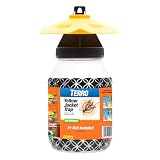
- ATTRACT & KILL YELLOW JACKETS: Attracts and traps yellow jackets outdoors
- INSECTICIDE FREE: Contains no chemical insecticides
- EASY TO USE: The yellow jacket trap is easy to use - add the included bait, fill with water, and hang to catch yellow jackets
- HIDES DEAD INSECTS: The trap bottle's decorative pattern hides trapped insects from view
- REUSABLE TRAP: The T362 is a reusable trap that can be emptied and re-baited once full
7. Protect people and pets from stings
Keep children and pets away from active nest areas. Do not swat at yellow jackets or strike a nest. If a nest is accidentally disturbed, leave the area immediately. Anyone with a known sting allergy should follow their clinician-provided emergency plan; if you are uncomfortable handling a colony, hire a professional.
Remedies that should not be promised
The reviewed extension guidance supports food-source management, distance from nests, and limited use of baited traps to catch foragers. It does not support promising that a home remedy or physical nest-removal method will safely eliminate an established colony.
“Chemical-free” should mean prevention and separation, with trapping used only for limited local activity—not assuming that a non-insecticidal method is automatically safe or effective.
Independent reader supportYour contribution helps us test, update, and keep practical guides available for everyone.A practical decision guide
- Yellow jackets are visiting food or garbage, but you do not see a nest: Secure garbage, clean spills, remove fallen fruit, and cover outdoor food and drinks. A trap may catch some foragers but will not resolve an established nest.
- You see a nest opening away from people and pets: Leave it undisturbed if it does not pose a risk.
- The nest is near people or pets, difficult to reach, or inside a building: Keep away and contact a licensed pest professional. Do not plug a building entrance.
- You accidentally disturb a nest: Leave the area immediately.
What success looks like
The realistic goal is to make food less accessible and reduce encounters with foraging yellow jackets. Traps may catch some foragers, but neither cleanup nor trapping proves that a nest is gone.
Best Value

- QUICK-DROWN FORMULA: Designed to keep insects submerged for quick drowning.
- QUICK & EASY SETUP: No tools are needed to complete the setup.
- FAST ACTING: Starts working immediately with no activation time. Most effective time to use trap is June – October.
- LOW ODOR: Lure is made with simple food ingredients.
- REUSABLE TRAP: Empty trap after 3-4 weeks or when 2/3 full of insects. Refills available for purchase separately.
Keep food covered, garbage tightly covered, and children and pets away from active nests. If a nest is near people or pets, concealed in a building, or otherwise difficult to reach, contact a licensed pest professional rather than trying to remove or seal it yourself.
FAQ
Will a trap eliminate a yellow-jacket nest?
No. Traps may catch some foraging workers and lower activity locally, but they do not eliminate an established colony.
What should I do if I find a yellow-jacket nest?
Leave an out-of-the-way nest undisturbed if it poses no risk. For a nest near people or pets, or in a concealed building space, keep away and contact a licensed pest professional.
Can I plug a yellow-jacket nest entrance in a wall?
No. University of Minnesota Extension cautions that workers may chew another route into the structure. Keep away and seek professional help for a nest in a building.
What should I do if I accidentally disturb a nest?
Leave the area immediately. Yellow jackets defend their nests and can sting repeatedly.
The Bottom Line
Start with prevention and distance: tightly cover garbage, clean up spills, remove fallen fruit, and cover outdoor food and drinks. Traps can catch some foragers but do not eliminate an established nest. Leave an out-of-the-way nest alone; for a nest near people or pets or inside a building, contact a licensed pest professional.
Quick Recap
Product prices and availability are accurate as of the date/time indicated and are subject to change. Any price and availability information displayed on Amazon at the time of purchase will apply.




